
Recent from talks
George Howell (soldier)
Knowledge base stats:
Talk channels stats:
Members stats:
George Howell (soldier)
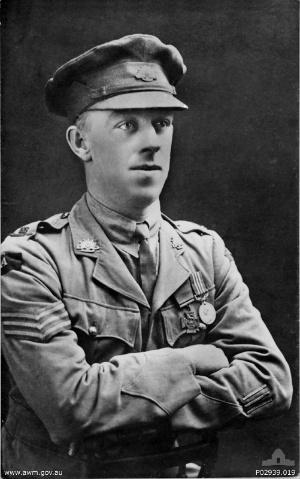
George Julian "Snowy" Howell, VC, MM (19 November 1893 – 23 December 1964) was an Australian recipient of the Victoria Cross, the highest decoration for gallantry "in the face of the enemy" that can be awarded to members of the British and Commonwealth armed forces. Howell was decorated with the Victoria Cross following his actions during the Second Battle of Bullecourt, in which he ran along the parapet of a trench bombing the German forces attacking his position through the use of grenades, and thus driving them back.
Born in a suburb of Sydney, New South Wales, Howell was employed as a builder before enlisting in the Australian Imperial Force in June 1915. Allotted to the force's 1st Battalion, he served at Gallipoli prior to transferring to the Western Front. Participating in the Somme offensive of 1916, Howell was wounded at Pozières and promoted to corporal in early 1917. During an attack on a German held village, he led a rifle bombing section and was awarded the Military Medal for his actions. Severely wounded in his Victoria Cross action, Howell underwent a prolonged hospitalisation period before returning to Australia and receiving his discharge on medical grounds. Settling in Coogee, he gained employment by working on the advertising staff of several newspapers. Following the outbreak of the Second World War, Howell served with the Australian Eastern Command Headquarters but soon sought his discharge and enlisted with the United States Sea Transport Service. He died in 1964 at the age of 71.
Howell was born in the Sydney suburb of Enfield, New South Wales, on 19 November 1893, the fourth son of English-born carpenter, Francis John Howell, and his Australian wife, Martha (née Sweeny). Howell was educated at Croydon Park and Burwood Public Schools, before receiving an apprenticeship as a bricklayer. Becoming a builder, he was employed in his native Enfield area of Sydney.
On 3 June 1915, Howell enlisted in the Australian Imperial Force for service in the First World War. Allotted to the 7th Reinforcements of the 1st Battalion as a private, he embarked from Sydney for Egypt on 14 July aboard HMAT Orsova. Joining the 1st Battalion at Gallipoli on 1 November, Howell served on the peninsula until the Allied evacuation the following month. Returning to Egypt, the battalion spent several months training in the desert in preparation for service on the Western Front.
The 1st Battalion embarked for France in March 1916, and by April the unit was entrenched in the Fromelles sector. In the third week of July, Howell was wounded in the Battle of Pozières while taking part in the Somme offensive. Evacuated to a hospital in Sheffield, England, during early August, Howell attended a training school before returning to his battalion on 26 November. Appointed lance corporal on 10 December, he was promoted to corporal on 6 February 1917.
On 9 April 1917, Howell took part in the 1st Battalion's attack on the German held village of Demicourt. During the engagement, Howell led a rifle bombing section at the forefront of his company against the German position. The section was held up several times in their advance due to heavy machine gun fire, but managed to overcome the opposition and continue the advance each time. For his actions during the battle, Howell was awarded the Military Medal, the recommendation of which cited his "... courage and devotion to duty ... was of great assistance to his company in the capture of its objectives". The notification of the award was published in a supplement to the London Gazette on 26 May 1917.
In preparation for an attack on the Hindenburg Line at Bullecourt, the 1st Australian Brigade—of which the 1st Battalion was part—was attached to the 2nd Australian Division. The attack commenced in the morning of 3 May 1917, with the 2nd Division lined up in conjunction with thirteen other divisions. Despite some progress made early in the attack, the Australian forces were soon held up by strong opposition, and in the evening the 1st Battalion was entrenched in the old German line known as 'OG1'. Three of the battalion's companies occupied the line, while a fourth was placed in reserve. Their position was such that they occupied a wedge into the German line, while two flanks were in German held territory.
From the initial attack, only the Canadians on the extreme right and the 3rd Australian Brigade on the extreme left were able to capture and hold their set objectives. Over the course of the next three days, severe fighting took place and further troops were drawn in to hold and extend the gains of 3 May. On 6 May, the Germans launched a counter-attack which forced the 3rd Brigade to withdraw from their trenches; it was during this engagement that Howell was to perform the act which was to earn him the Victoria Cross.
Hub AI
George Howell (soldier) AI simulator
(@George Howell (soldier)_simulator)
George Howell (soldier)
George Julian "Snowy" Howell, VC, MM (19 November 1893 – 23 December 1964) was an Australian recipient of the Victoria Cross, the highest decoration for gallantry "in the face of the enemy" that can be awarded to members of the British and Commonwealth armed forces. Howell was decorated with the Victoria Cross following his actions during the Second Battle of Bullecourt, in which he ran along the parapet of a trench bombing the German forces attacking his position through the use of grenades, and thus driving them back.
Born in a suburb of Sydney, New South Wales, Howell was employed as a builder before enlisting in the Australian Imperial Force in June 1915. Allotted to the force's 1st Battalion, he served at Gallipoli prior to transferring to the Western Front. Participating in the Somme offensive of 1916, Howell was wounded at Pozières and promoted to corporal in early 1917. During an attack on a German held village, he led a rifle bombing section and was awarded the Military Medal for his actions. Severely wounded in his Victoria Cross action, Howell underwent a prolonged hospitalisation period before returning to Australia and receiving his discharge on medical grounds. Settling in Coogee, he gained employment by working on the advertising staff of several newspapers. Following the outbreak of the Second World War, Howell served with the Australian Eastern Command Headquarters but soon sought his discharge and enlisted with the United States Sea Transport Service. He died in 1964 at the age of 71.
Howell was born in the Sydney suburb of Enfield, New South Wales, on 19 November 1893, the fourth son of English-born carpenter, Francis John Howell, and his Australian wife, Martha (née Sweeny). Howell was educated at Croydon Park and Burwood Public Schools, before receiving an apprenticeship as a bricklayer. Becoming a builder, he was employed in his native Enfield area of Sydney.
On 3 June 1915, Howell enlisted in the Australian Imperial Force for service in the First World War. Allotted to the 7th Reinforcements of the 1st Battalion as a private, he embarked from Sydney for Egypt on 14 July aboard HMAT Orsova. Joining the 1st Battalion at Gallipoli on 1 November, Howell served on the peninsula until the Allied evacuation the following month. Returning to Egypt, the battalion spent several months training in the desert in preparation for service on the Western Front.
The 1st Battalion embarked for France in March 1916, and by April the unit was entrenched in the Fromelles sector. In the third week of July, Howell was wounded in the Battle of Pozières while taking part in the Somme offensive. Evacuated to a hospital in Sheffield, England, during early August, Howell attended a training school before returning to his battalion on 26 November. Appointed lance corporal on 10 December, he was promoted to corporal on 6 February 1917.
On 9 April 1917, Howell took part in the 1st Battalion's attack on the German held village of Demicourt. During the engagement, Howell led a rifle bombing section at the forefront of his company against the German position. The section was held up several times in their advance due to heavy machine gun fire, but managed to overcome the opposition and continue the advance each time. For his actions during the battle, Howell was awarded the Military Medal, the recommendation of which cited his "... courage and devotion to duty ... was of great assistance to his company in the capture of its objectives". The notification of the award was published in a supplement to the London Gazette on 26 May 1917.
In preparation for an attack on the Hindenburg Line at Bullecourt, the 1st Australian Brigade—of which the 1st Battalion was part—was attached to the 2nd Australian Division. The attack commenced in the morning of 3 May 1917, with the 2nd Division lined up in conjunction with thirteen other divisions. Despite some progress made early in the attack, the Australian forces were soon held up by strong opposition, and in the evening the 1st Battalion was entrenched in the old German line known as 'OG1'. Three of the battalion's companies occupied the line, while a fourth was placed in reserve. Their position was such that they occupied a wedge into the German line, while two flanks were in German held territory.
From the initial attack, only the Canadians on the extreme right and the 3rd Australian Brigade on the extreme left were able to capture and hold their set objectives. Over the course of the next three days, severe fighting took place and further troops were drawn in to hold and extend the gains of 3 May. On 6 May, the Germans launched a counter-attack which forced the 3rd Brigade to withdraw from their trenches; it was during this engagement that Howell was to perform the act which was to earn him the Victoria Cross.
Recent media