
Recent from talks
George Martinuzzi
Knowledge base stats:
Talk channels stats:
Members stats:
George Martinuzzi
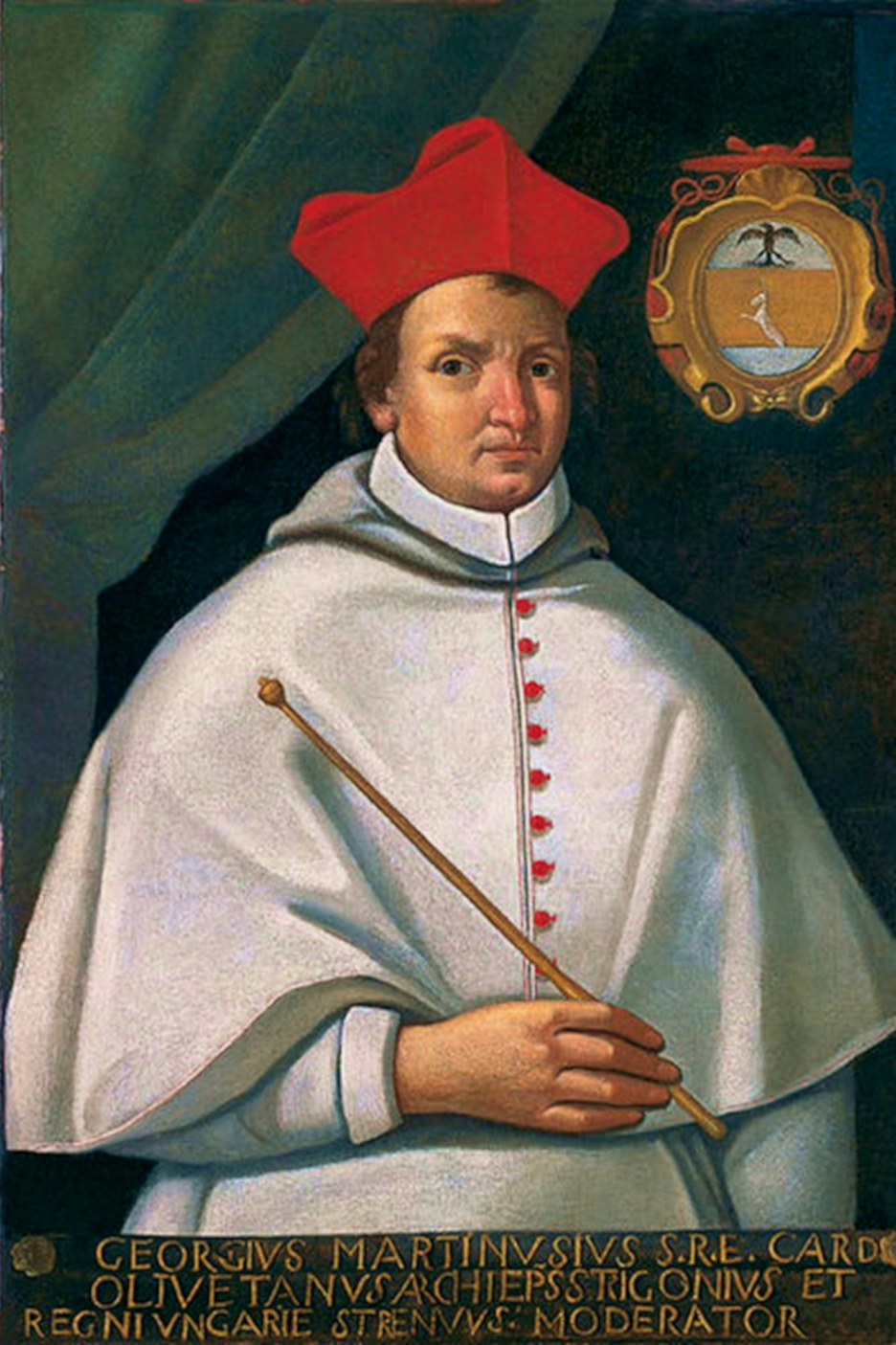
George Martinuzzi, O.S.P.P.E. (born Juraj Utješenović, also known as György Martinuzzi, Brother György, Georg Utiessenovicz-Martinuzzi[citation needed] or György Fráter, Hungarian: Fráter György; 1482 – 16 December 1551), was a Croatian nobleman, Pauline monk and Hungarian statesman who supported King John Zápolya and his son, King John Sigismund Zápolya. He was Bishop of Nagyvárad (now Oradea), Archbishop of Esztergom and a cardinal.
Since he usually identified himself as "Frater Georgius", he is known in Hungarian history as "Fráter György".
Most details of Martinuzzi's life before 1528 are uncertain. He was the youngest son of a Croatian lesser nobleman, Grgur Utješenović, and Anna Martinuzzi, who was descended from a Venetian patrician family. He was born in Kamičak Castle, near Skradin, on 18 June 1482. On the father's side, he is originating from a Hungarian noble family (Fráter from Dobra genus). His grandfather was András Mátyok-Kézi. He was still a child when his father and his two oldest brothers died and the Ottomans occupied the family estates. Duke John Corvinus took care of the orphan in 1490. Martinuzzi was sent to Corvin's castle at Hunyad (now Hunedoara in Romania). He lived in wretched conditions for years, because young noblemen were intentionally treated like servants for pedagogical purposes.
Martinuzzi moved to the court of Hedwig of Cieszyn in Szepes Castle (now Spiš Castle in Slovakia) around 1503. She was the widow of his father's patron, Count Stephen Zápolya. Initially, he served as a page, then he was made a guard of the palace. He decided to abandon his military career and entered the Pauline Order at the age of 24. He most probably settled in the Budaszentlőrinc Monastery where he learnt to read and write. He was sent to continue his studies in the Jasna Góra Monastery in Częstochowa. He was made the head of the monastery, according to unproved theories. After he returned to Hungary in 1527, he became the prior of the Sajólád Monastery, which had recently received grants from the Zápolyas.
Martinuzzi's sister, Ana, married Bartol Drašković and had three sons (one of whom was Croatian Ban (viceroy) and cardinal Juraj Drašković).
The Ottoman Sultan Suleiman the Magnificent annihilated the Hungarian royal army in the Battle of Mohács on 29 August 1526. King Louis II of Hungary drowned in a stream fleeing from the battlefield. The Diet of Hungary elected the wealthy Count John Zápolya—the son of Martinuzzi's patroness, Hedwig—king in November, but the most powerful barons ignored this decision and proclaimed Ferdinand of Habsburg the lawful monarch in December. A civil war broke out and a supporter of Ferdinand, Gáspár Serédy, pillaged the Sajólád Monastery shortly before Martinuzzi returned to Hungary.
Ferdinand's troops defeated John in the Battle of Szina (near present-day Seňa in Slovakia) on 8 March 1528. John decided to flee to Poland and wanted to lodge a part of his wealth at the Sajólád Monastery. Martinuzzi denied to store John's property, but he accompanied the king to Poland. He acted as John's personal envoy and visited Hungary three times to convince the expelled king's supporters—including Stephen Báthory of Somlyó, Jakab Tornallyai and Pál Ártándy—to remain loyal to him. Suleiman acknowledged John as the lawful king. The sultan's support enabled him to return to Hungary and seize the eastern and central territories of the kingdom by the end of 1529, but he could not reunite Hungary.
Martinuzzi came back with John to Hungary, but the details of his life from 1529 to 1532 are unknown. The king made Alvise Gritti—a Venetian adventurer who was the favourite of the Ottoman Grand Vizier, Pargalı Ibrahim Pasha—governor of Hungary. Gritti appointed Martinuzzi the provisor of Buda Castle, entrusting him with the administration of the royal demesne in 1532. Gritti's other henchman, János Dóczy, murdered the popular bishop of Várad (now Oradea in Romania), Imre Czibak, in August 1534. The crime outraged the bishop's relatives and supporters who captured and killed Gritti on 28 September. Martinuzzi did not lose the king's favor. He succeeded Gritti as royal treasurer and the king also made him the new bishop of Várad. The bishops of Várad were also the ispáns (or heads) of Bihar County.
Hub AI
George Martinuzzi AI simulator
(@George Martinuzzi_simulator)
George Martinuzzi
George Martinuzzi, O.S.P.P.E. (born Juraj Utješenović, also known as György Martinuzzi, Brother György, Georg Utiessenovicz-Martinuzzi[citation needed] or György Fráter, Hungarian: Fráter György; 1482 – 16 December 1551), was a Croatian nobleman, Pauline monk and Hungarian statesman who supported King John Zápolya and his son, King John Sigismund Zápolya. He was Bishop of Nagyvárad (now Oradea), Archbishop of Esztergom and a cardinal.
Since he usually identified himself as "Frater Georgius", he is known in Hungarian history as "Fráter György".
Most details of Martinuzzi's life before 1528 are uncertain. He was the youngest son of a Croatian lesser nobleman, Grgur Utješenović, and Anna Martinuzzi, who was descended from a Venetian patrician family. He was born in Kamičak Castle, near Skradin, on 18 June 1482. On the father's side, he is originating from a Hungarian noble family (Fráter from Dobra genus). His grandfather was András Mátyok-Kézi. He was still a child when his father and his two oldest brothers died and the Ottomans occupied the family estates. Duke John Corvinus took care of the orphan in 1490. Martinuzzi was sent to Corvin's castle at Hunyad (now Hunedoara in Romania). He lived in wretched conditions for years, because young noblemen were intentionally treated like servants for pedagogical purposes.
Martinuzzi moved to the court of Hedwig of Cieszyn in Szepes Castle (now Spiš Castle in Slovakia) around 1503. She was the widow of his father's patron, Count Stephen Zápolya. Initially, he served as a page, then he was made a guard of the palace. He decided to abandon his military career and entered the Pauline Order at the age of 24. He most probably settled in the Budaszentlőrinc Monastery where he learnt to read and write. He was sent to continue his studies in the Jasna Góra Monastery in Częstochowa. He was made the head of the monastery, according to unproved theories. After he returned to Hungary in 1527, he became the prior of the Sajólád Monastery, which had recently received grants from the Zápolyas.
Martinuzzi's sister, Ana, married Bartol Drašković and had three sons (one of whom was Croatian Ban (viceroy) and cardinal Juraj Drašković).
The Ottoman Sultan Suleiman the Magnificent annihilated the Hungarian royal army in the Battle of Mohács on 29 August 1526. King Louis II of Hungary drowned in a stream fleeing from the battlefield. The Diet of Hungary elected the wealthy Count John Zápolya—the son of Martinuzzi's patroness, Hedwig—king in November, but the most powerful barons ignored this decision and proclaimed Ferdinand of Habsburg the lawful monarch in December. A civil war broke out and a supporter of Ferdinand, Gáspár Serédy, pillaged the Sajólád Monastery shortly before Martinuzzi returned to Hungary.
Ferdinand's troops defeated John in the Battle of Szina (near present-day Seňa in Slovakia) on 8 March 1528. John decided to flee to Poland and wanted to lodge a part of his wealth at the Sajólád Monastery. Martinuzzi denied to store John's property, but he accompanied the king to Poland. He acted as John's personal envoy and visited Hungary three times to convince the expelled king's supporters—including Stephen Báthory of Somlyó, Jakab Tornallyai and Pál Ártándy—to remain loyal to him. Suleiman acknowledged John as the lawful king. The sultan's support enabled him to return to Hungary and seize the eastern and central territories of the kingdom by the end of 1529, but he could not reunite Hungary.
Martinuzzi came back with John to Hungary, but the details of his life from 1529 to 1532 are unknown. The king made Alvise Gritti—a Venetian adventurer who was the favourite of the Ottoman Grand Vizier, Pargalı Ibrahim Pasha—governor of Hungary. Gritti appointed Martinuzzi the provisor of Buda Castle, entrusting him with the administration of the royal demesne in 1532. Gritti's other henchman, János Dóczy, murdered the popular bishop of Várad (now Oradea in Romania), Imre Czibak, in August 1534. The crime outraged the bishop's relatives and supporters who captured and killed Gritti on 28 September. Martinuzzi did not lose the king's favor. He succeeded Gritti as royal treasurer and the king also made him the new bishop of Várad. The bishops of Várad were also the ispáns (or heads) of Bihar County.
Recent media