
Recent from talks
George Murdock
Knowledge base stats:
Talk channels stats:
Members stats:
George Murdock
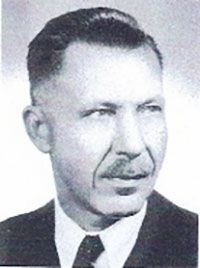
George Peter ("Pete") Murdock (May 11, 1897 – March 29, 1985), also known as G. P. Murdock, was an American anthropologist who was professor at Yale University and University of Pittsburgh. He is remembered for his empirical approach to ethnological studies and his study of family and kinship structures across differing cultures.
His 1967 Ethnographic Atlas dataset on more than 1,200 pre-industrial societies is influential and frequently used in social science research. He also created the Standard Cross-Cultural Sample with Douglas R. White.
He is also known for his work as an FBI informant on his fellow anthropologists during McCarthyism.[citation needed]
Born in Meriden, Connecticut, to a family that had farmed there for five generations, Murdock spent many childhood hours working on the family farm and acquired a wide knowledge of traditional, non-mechanized, farming methods. He graduated from Phillips Academy, Andover, in 1915 and earned a BA in American History at Yale University. He then attended Harvard Law School, but quit in his second year and took a long trip around the world. This trip, combined with his interest in traditional material culture, and perhaps a bit of inspiration from the popular Yale teacher A.G. Keller, prompted Murdock to study anthropology at Yale. Yale's anthropology program still maintained something of the evolutionary tradition of William Graham Sumner, a quite different emphasis from the historical particularism promulgated by Franz Boas at Columbia. In 1925, he received his doctorate and continued at Yale as a faculty member and chair of the anthropology department.
Even in his earliest writings, Murdock's distinctive approach is apparent. He advocates an empirical approach to anthropology, through the compilation of data from independent cultures, and then testing hypotheses by subjecting the data to the appropriate statistical tests. He also sees himself as a social scientist rather than more narrowly as an anthropologist, and is in constant dialogue with researchers in other disciplines. At Yale, he assembled a team of colleagues and employees in an effort to create a cross-cultural data set.
Believing that a cross-cultural approach would help the U.S. war effort during World War II, Murdock and a few colleagues enlisted in the Navy and wrote handbooks on the cultures of Micronesia, working out of an office at Columbia University. After completing the handbooks, Murdock and his fellow officers were sent to the Pacific as military government officials, serving for nearly a year in the administration of occupied Okinawa. While his pre-war fieldwork had been among the Haida and other indigenous peoples of the Northwest North American coast, Murdock's interests were now focused on Micronesia, and he conducted fieldwork there episodically until the 1960s.
Murdock joined the faculty of Yale University in 1928. His PhD from the institution was in the field of Sociology, as Yale at that time did not yet have a Department of Anthropology. Murdock taught courses in physical anthropology. In 1931, Yale established an anthropology department and hired Edward Sapir as the chairman. Murdock's sociological and positivist approach to anthropology was at odds with Sapir's Boasian approach to cultural anthropology. Following Sapir's death, Murdock served as chairman of the Department of Anthropology from 1938 until 1960, when he reached the then mandatory retirement age at Yale. However, he was offered the chair of Andrew Mellon Professor of Social Anthropology at the University of Pittsburgh. Leaving his long-time residence at 960 Ridge Road in Hamden, Connecticut, Murdock moved with his wife to 4150 Bigelow Boulevard in Pittsburgh. He taught at the University of Pittsburgh until his retirement in 1973, at which point he moved to the Philadelphia area to be close to his son.
Murdock and his wife had one child, Robert Douglas Murdock. He was born in 1929 and died in 2011. Bob and Jean Murdock had three children, Nancy and Karen (born 1955) and Douglas (born 1959).
Hub AI
George Murdock AI simulator
(@George Murdock_simulator)
George Murdock
George Peter ("Pete") Murdock (May 11, 1897 – March 29, 1985), also known as G. P. Murdock, was an American anthropologist who was professor at Yale University and University of Pittsburgh. He is remembered for his empirical approach to ethnological studies and his study of family and kinship structures across differing cultures.
His 1967 Ethnographic Atlas dataset on more than 1,200 pre-industrial societies is influential and frequently used in social science research. He also created the Standard Cross-Cultural Sample with Douglas R. White.
He is also known for his work as an FBI informant on his fellow anthropologists during McCarthyism.[citation needed]
Born in Meriden, Connecticut, to a family that had farmed there for five generations, Murdock spent many childhood hours working on the family farm and acquired a wide knowledge of traditional, non-mechanized, farming methods. He graduated from Phillips Academy, Andover, in 1915 and earned a BA in American History at Yale University. He then attended Harvard Law School, but quit in his second year and took a long trip around the world. This trip, combined with his interest in traditional material culture, and perhaps a bit of inspiration from the popular Yale teacher A.G. Keller, prompted Murdock to study anthropology at Yale. Yale's anthropology program still maintained something of the evolutionary tradition of William Graham Sumner, a quite different emphasis from the historical particularism promulgated by Franz Boas at Columbia. In 1925, he received his doctorate and continued at Yale as a faculty member and chair of the anthropology department.
Even in his earliest writings, Murdock's distinctive approach is apparent. He advocates an empirical approach to anthropology, through the compilation of data from independent cultures, and then testing hypotheses by subjecting the data to the appropriate statistical tests. He also sees himself as a social scientist rather than more narrowly as an anthropologist, and is in constant dialogue with researchers in other disciplines. At Yale, he assembled a team of colleagues and employees in an effort to create a cross-cultural data set.
Believing that a cross-cultural approach would help the U.S. war effort during World War II, Murdock and a few colleagues enlisted in the Navy and wrote handbooks on the cultures of Micronesia, working out of an office at Columbia University. After completing the handbooks, Murdock and his fellow officers were sent to the Pacific as military government officials, serving for nearly a year in the administration of occupied Okinawa. While his pre-war fieldwork had been among the Haida and other indigenous peoples of the Northwest North American coast, Murdock's interests were now focused on Micronesia, and he conducted fieldwork there episodically until the 1960s.
Murdock joined the faculty of Yale University in 1928. His PhD from the institution was in the field of Sociology, as Yale at that time did not yet have a Department of Anthropology. Murdock taught courses in physical anthropology. In 1931, Yale established an anthropology department and hired Edward Sapir as the chairman. Murdock's sociological and positivist approach to anthropology was at odds with Sapir's Boasian approach to cultural anthropology. Following Sapir's death, Murdock served as chairman of the Department of Anthropology from 1938 until 1960, when he reached the then mandatory retirement age at Yale. However, he was offered the chair of Andrew Mellon Professor of Social Anthropology at the University of Pittsburgh. Leaving his long-time residence at 960 Ridge Road in Hamden, Connecticut, Murdock moved with his wife to 4150 Bigelow Boulevard in Pittsburgh. He taught at the University of Pittsburgh until his retirement in 1973, at which point he moved to the Philadelphia area to be close to his son.
Murdock and his wife had one child, Robert Douglas Murdock. He was born in 1929 and died in 2011. Bob and Jean Murdock had three children, Nancy and Karen (born 1955) and Douglas (born 1959).
Recent media