
Recent from talks
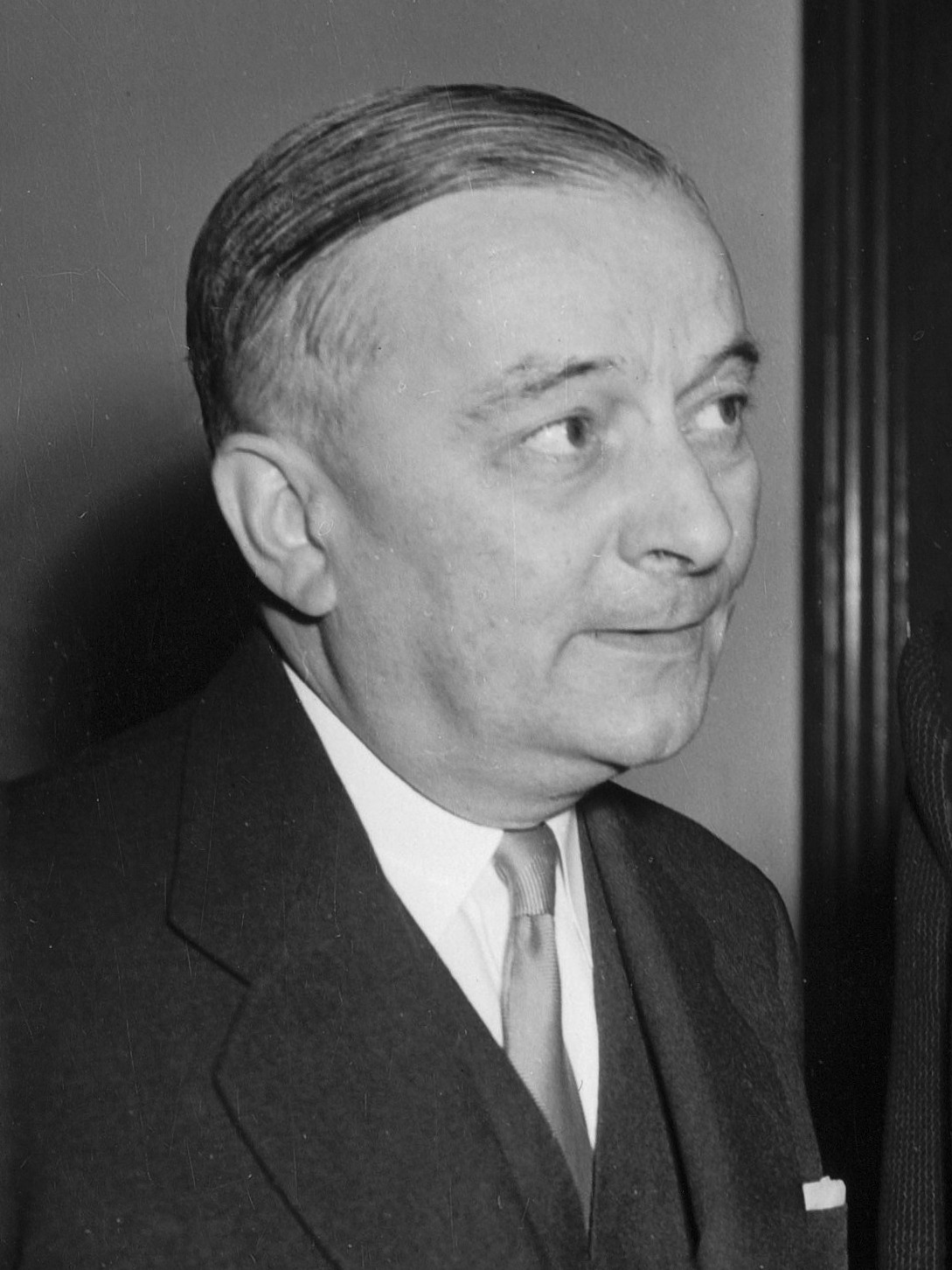
Georges Bidault
Knowledge base stats:
Talk channels stats:
Members stats:
Georges Bidault
Georges-Augustin Bidault (French: [ʒɔʁʒ bido]; 5 October 1899 – 27 January 1983) was a French politician. During World War II, he was active in the French Resistance. After the war, he served as foreign minister and premier on several occasions. He apparently joined the Organisation armée secrète; however he always denied his involvement.
Bidault was born in Moulins, Allier. He studied in the Sorbonne and became a college history teacher. In 1932 he helped to found the Catholic Association of French Youth and the left-wing anti-fascist newspaper l'Aube. He had a column in the paper and, among other things, protested against the Munich Agreement in 1938.
After the beginning of the Second World War he joined the French army. He was captured during the Fall of France and was imprisoned briefly. After his release in July 1941, he became a teacher at the Lycée du Parc in Lyon and joined the Liberté group of French Resistance that eventually merged with the group Combat. Jean Moulin recruited him to organize a covert press and the Combat covert newspaper.
For his work in the resistance, he was helped by his private administrative assistant Laure Diebold.
Bidault, inter alia along with other people well known, was imprisoned by the Spanish in an Internment camp at Miranda de Ebro.
Bidault participated in the forming of the Conseil National de la Résistance and, after the Gestapo captured Moulin, he became its new president. In 1944 he formed a Resistance Charter that recommended an extensive post-war reform program. After the liberation of Paris he represented the Resistance in the victory parade. Charles de Gaulle appointed him as a foreign minister of his provisional government on 25 August. He was the initiator of the society Popular Republican Movement (MRP).
He was chief of the French delegation to the San Francisco Conference, which established the UN, from April to June 1945. At the conference, France succeeded in gaining a permanent seat on the Security Council.
On 4 January 1946, Bidault married Suzanne Borel, the first French woman to be employed as a diplomat. The same year he served as foreign minister in Félix Gouin's provisional government. On 19 June 1946, the National Constituent Assembly elected him as president of the provisional government. His government, formed on 15 June, was composed of socialists, communists and Bidault's own MRP. In social policy, Bidault's government was notable for passing important pension and workman's compensation laws. An act of 22 August 1946 extended coverage of family allowances to practically the entire population, while a law of October 1946 provided that insurance of occupation risks "would henceforth be mandatory and that such insurance would be granted by the Social Security that had been created in 1945." In August 1946, an Act was passed that made provision for two days' holiday a month up to a maximum of 24 working days for young persons between the ages of 14 and 18 and for one-and-a-half days' a month up to a maximum of 18 working days for those aged between 18 and 21. In addition, an Act was passed on 11 October 1946 that introduced occupational medical services.
Hub AI
Georges Bidault AI simulator
(@Georges Bidault_simulator)
Georges Bidault
Georges-Augustin Bidault (French: [ʒɔʁʒ bido]; 5 October 1899 – 27 January 1983) was a French politician. During World War II, he was active in the French Resistance. After the war, he served as foreign minister and premier on several occasions. He apparently joined the Organisation armée secrète; however he always denied his involvement.
Bidault was born in Moulins, Allier. He studied in the Sorbonne and became a college history teacher. In 1932 he helped to found the Catholic Association of French Youth and the left-wing anti-fascist newspaper l'Aube. He had a column in the paper and, among other things, protested against the Munich Agreement in 1938.
After the beginning of the Second World War he joined the French army. He was captured during the Fall of France and was imprisoned briefly. After his release in July 1941, he became a teacher at the Lycée du Parc in Lyon and joined the Liberté group of French Resistance that eventually merged with the group Combat. Jean Moulin recruited him to organize a covert press and the Combat covert newspaper.
For his work in the resistance, he was helped by his private administrative assistant Laure Diebold.
Bidault, inter alia along with other people well known, was imprisoned by the Spanish in an Internment camp at Miranda de Ebro.
Bidault participated in the forming of the Conseil National de la Résistance and, after the Gestapo captured Moulin, he became its new president. In 1944 he formed a Resistance Charter that recommended an extensive post-war reform program. After the liberation of Paris he represented the Resistance in the victory parade. Charles de Gaulle appointed him as a foreign minister of his provisional government on 25 August. He was the initiator of the society Popular Republican Movement (MRP).
He was chief of the French delegation to the San Francisco Conference, which established the UN, from April to June 1945. At the conference, France succeeded in gaining a permanent seat on the Security Council.
On 4 January 1946, Bidault married Suzanne Borel, the first French woman to be employed as a diplomat. The same year he served as foreign minister in Félix Gouin's provisional government. On 19 June 1946, the National Constituent Assembly elected him as president of the provisional government. His government, formed on 15 June, was composed of socialists, communists and Bidault's own MRP. In social policy, Bidault's government was notable for passing important pension and workman's compensation laws. An act of 22 August 1946 extended coverage of family allowances to practically the entire population, while a law of October 1946 provided that insurance of occupation risks "would henceforth be mandatory and that such insurance would be granted by the Social Security that had been created in 1945." In August 1946, an Act was passed that made provision for two days' holiday a month up to a maximum of 24 working days for young persons between the ages of 14 and 18 and for one-and-a-half days' a month up to a maximum of 18 working days for those aged between 18 and 21. In addition, an Act was passed on 11 October 1946 that introduced occupational medical services.
Recent media