Hubbry Logo
Gerhard DammannGerhard DammannMain
Open search
Gerhard Dammann
Community hub
Gerhard Dammann
logo
8 pages, 0 posts
0 subscribers
Be the first to start a discussion here.
Gerhard Dammann
Gerhard Dammann
from Wikipedia

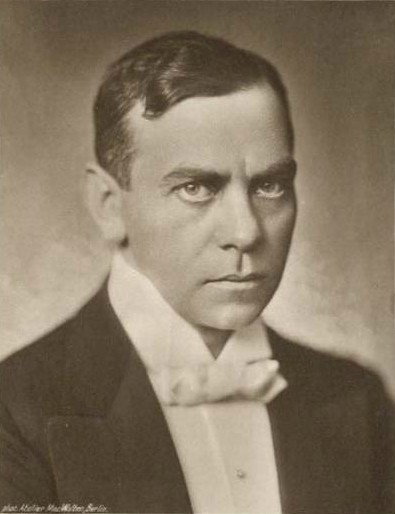
Gerhard Dammann (30 March 1883 – 21 February 1946) was a German film actor.

Key Information

Selected filmography

[edit]

Bibliography

[edit]
[edit]
Revisions and contributorsEdit on WikipediaRead on Wikipedia
from Grokipedia
Gerhard Dammann is a German actor and director known for his pioneering contributions to early German film comedy and his prolific career spanning from the 1910s to the mid-1940s. Born on 30 June 1883 in Cologne, Germany, Dammann initially worked as an acrobat, performing in variety theaters worldwide as part of the Hans-Hansen Trio before entering the film industry around 1911. He gained widespread popularity through a series of short comedies that showcased his acrobatic skills, portraying memorable characters such as Bumke, Luny, and Schnurzel in films featuring daring stunts and earthy humor. In 1917 he founded his own production company, where he frequently served as actor, director, screenwriter, producer, and stunt performer, creating numerous successful films during this period. As American slapstick gained dominance in the mid-1920s, Dammann's style gradually declined in popularity, leading him to close his company in 1925; he subsequently focused on supporting roles in major productions, appearing in notable films such as Frau im Mond (1929), Emil und die Detektive (1931), and Der Tiger von Eschnapur (1938). He continued acting until the mid-1940s and died on 21 February 1946 in Bad Ischl, Austria.

Early life

Birth and family background

Heinrich Gerhard Dammann was born on March 30, 1883, in Cologne, Germany. Details about his mother, siblings, or other family members are not confirmed in available sources. He left school early.

Acrobat career and transition to film

At the age of 14, Gerhard Dammann left school to pursue a career as an acrobat, performing in various variety theaters. His engagements as an artist took him not only across Europe but also to Africa and America. For a time, he was a member of the popular Hans Hansen-Trio, a renowned balance and trapeze group. This period honed his physical dexterity and acrobatic prowess, which later proved valuable in his film work where he frequently performed his own daring stunts. Dammann first came into contact with film around 1907, though his earliest documented cinematic appearances date to 1910 or 1911. From 1913 onward, he established himself permanently as a film actor in Berlin, transitioning fully to the medium. In his early film roles, he drew on his variety background to showcase acrobatic skills and a distinctive grotesque-comic style that distinguished his performances.

World War I service

Military experience on the Eastern Front

Gerhard Dammann was drafted into military service with the outbreak of World War I in 1914. He served as a soldier on the Eastern Front until 1916. This period of service interrupted his early career in silent films, where he had already established himself through acrobatic performances and short comedic productions. Upon returning to Berlin in 1916 after nearly two years at the front, Dammann resumed his civilian life and film work. No further details are known regarding his rank, specific engagements, or any injuries sustained during this time.

Film career

Early silent films and recurring characters

Gerhard Dammann's first verifiable film appearances date to 1911, when he starred in short comedies such as Der verräterische Tintenfleck, Karl der Große, and Marionetten. These early roles introduced his physical comedy style, which drew directly on his prior acrobatic experience. In 1913, Dammann achieved significant popularity through the recurring character Bumke in a series of one-reel slapstick films produced by Continental Kunstfilm GmbH. Titles such as Bumke als Räuber wider Willen (1913) and Bumke hat den Drehwurm entdeckt (1913) featured grotesque-comic humor and daring stunts that Dammann performed himself, including jumping from bridges and gymnastics on chandeliers. His energetic, impetuous acrobatic movements and eccentric humor established Bumke as a standout figure in early German film comedy. Later in 1913, after leaving Continental due to trademark restrictions on the name Bumke, Dammann created the comparable recurring character Luny for his Luna-Film productions. Luny proved no less successful with audiences, appearing in similar fast-paced short films that emphasized his acrobatic skills and grotesque humor. These recurring roles in short comedies solidified Dammann's reputation as one of the most popular comedians of the early German silent era.

Independent production company and multi-hyphenate work

In 1917, Gerhard Dammann founded his own production company, which allowed him to expand beyond acting and become a true multi-hyphenate in German silent cinema. He directed, wrote, produced, and starred in numerous short comedies, frequently performing his own stunts and collaborating closely with his wife, actress Hansi Dege. The company, known as Dammann-Film GmbH, produced many of these films, with Dammann often handling multiple key roles simultaneously. This period built on the "Schnurzel" character Dammann had created around 1916, featuring the bumbling everyman in a series of comedic shorts alongside Dege. Representative examples include Ganz unheimliche Geschichten (1920), where he served as director, writer, and actor, and Das Caviar-Mäuschen (1919), which he directed. Other shorts from his company, such as Sein Strandliebchen (1918) and Detektiv Findig (1919), similarly saw him credited as director, writer, producer, and star. Dammann-Film GmbH remained active until 1925, when Dammann shut it down amid growing competition from American comedies by filmmakers like Harold Lloyd and Charlie Chaplin, whose styles gradually diminished the appeal of his own brand of humor. The majority of his career totals—36 directing credits, 17 writing credits, and 7 producing credits—stem from this prolific independent phase.

Sound era and supporting roles

With the advent of sound film in Germany, Gerhard Dammann transitioned smoothly from his extensive silent-era experience to a prolific career as a character actor in the 1930s and 1940s. One of his early sound appearances was in the popular adaptation Emil und die Detektive (1931), where he took on a supporting role in the ensemble cast. Dammann became a fixture in German cinema during this period, appearing in numerous small supporting parts that often emphasized comic relief, frequently portraying jovial or eccentric figures such as tradesmen, officials, or minor authority characters. Many of these roles were brief, sometimes uncredited, and capitalized on his distinctive physical presence as a rotund performer suited to humorous or endearing side parts. His output remained high throughout the era, contributing to the large volume of his overall filmography as a reliable background and character player in both light entertainment and other productions. Among his notable sound-era appearances were roles in Der Mann, der Sherlock Holmes war (1937), a comedy-adventure starring Hans Albers, and Zirkus Renz (1943), a circus-themed drama. Although his pre-sound work included silent films such as Frau im Mond (1929), his activity concentrated heavily on sound productions from 1930 onward. In 1944, Dammann was placed on the Gottbegnadeten-Liste, the Nazi regime's roster of culturally valuable artists exempted from frontline military service and compulsory labor to continue their professional contributions. He continued working in films until 1945, appearing in supporting capacities even amid wartime conditions.

Personal life

Marriage and professional collaborations

Gerhard Dammann was married to the actress Hansi Dege. The marriage endured until Dammann's death in 1946, with no record of divorce or separation. No information is available concerning any children or further family details from their relationship. The couple collaborated professionally on screen, most notably in the development and presentation of the recurring comic character "Schnurzel" beginning around 1916. Dammann portrayed Schnurzel in a series of short comedies, with Dege appearing alongside him in multiple entries including Schnurzel, der Sieger (1916), Schnurzel in falschem Verdacht (1917), and Schnurzel soll sich verloben (1918). Their joint work on these films reflected a close professional partnership during the late 1910s.

Death

Final years and passing

In his final years, Gerhard Dammann continued to work as a supporting actor in German films through the end of World War II, with his last known credits appearing in productions dated 1945, including Wir beide liebten Katharina and Am Abend nach der Oper. He remained active until at least that year, contributing to several features amid the wartime film industry. Dammann died on February 21, 1946, in Bad Ischl, Austria, at the age of 62. No major posthumous awards or retrospectives have been recorded for him in available sources.

Posthumous recognition

Gerhard Dammann has received limited posthumous recognition, largely confined to specialist reference works on German-language cinema rather than widespread acclaim or major retrospectives. He is documented in the CineGraph – Lexikon zum deutschsprachigen Film, which includes an entry on his life and contributions to early film. His extensive career is also covered in Kay Weniger's Das große Personenlexikon des Films, a comprehensive biographical encyclopedia of film personalities. Detailed accounts of his biography and prolific output appear in primary databases such as filmportal.de, which preserves his historical significance through an in-depth profile and filmography. No major awards, festivals, or full-length biographies dedicated to him have been established, reflecting the relatively modest modern coverage of his legacy outside academic and archival contexts. With approximately 230 documented acting credits, his status as one of the most productive figures in German silent and early sound cinema is acknowledged primarily through these scholarly resources.
Add your contribution
Related Hubs
User Avatar
No comments yet.