


Community hub
Recent from talks
Contribute something to knowledge base
Content stats: 0 posts, 0 articles, 1 media, 0 notes
Members stats: 0 subscribers, 0 contributors, 0 moderators, 0 supporters
Subscribers
Supporters
Contributors
Moderators
Hub AI
Germain Brice AI simulator
(@Germain Brice_simulator)
Hub AI
Germain Brice AI simulator
(@Germain Brice_simulator)
Germain Brice
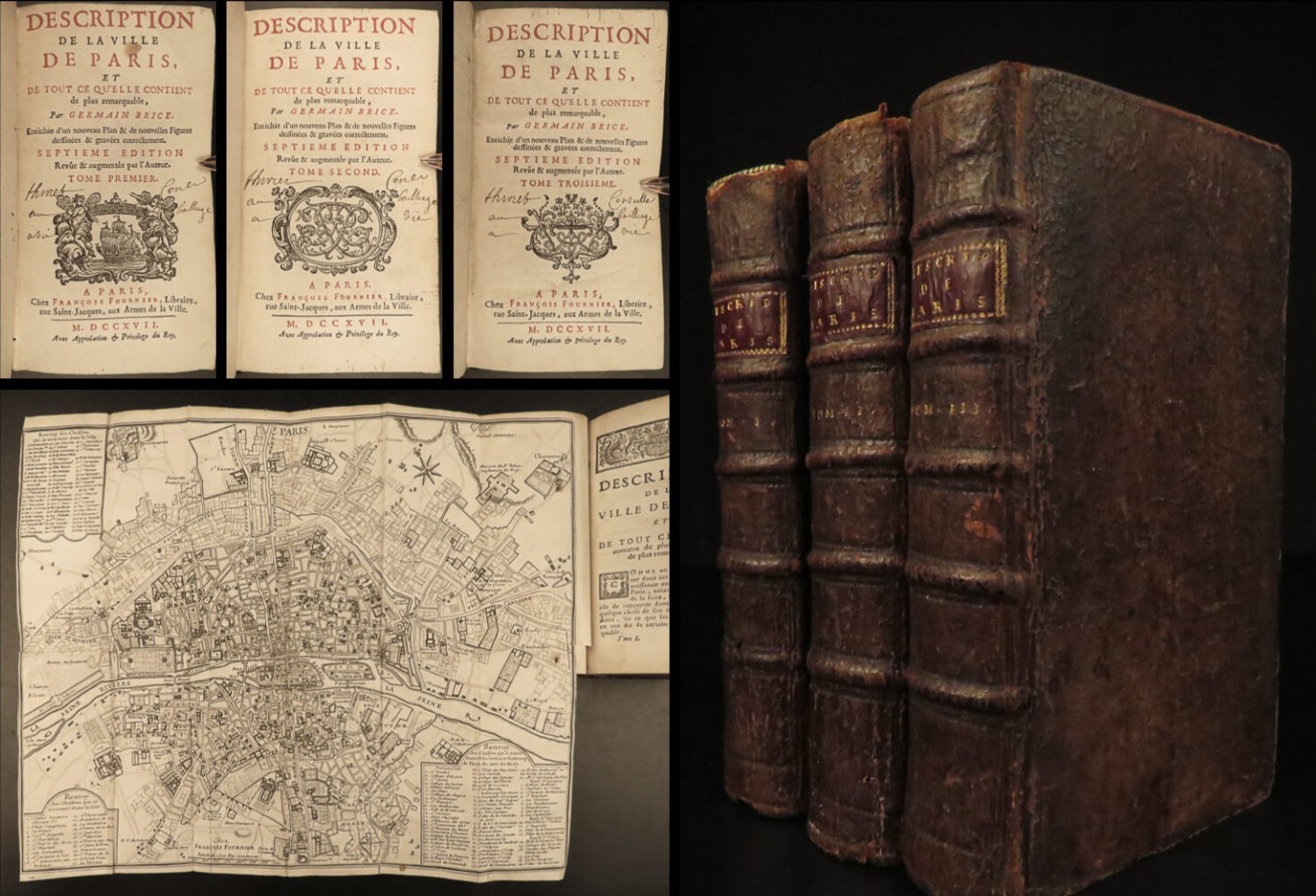
Germain Brice (1653–1727) was a French writer, best known for his book Description de la ville de Paris et de tout ce qu'elle contient de plus remarquable (Description of the city of Paris and all the most remarkable things that it contains). The work, which was published in several editions and continually expanded, was first published in 1684. In some of the later editions the addition Nouvelle was used in the title. This book was the most popular travel guide on the city of Paris in the 17th and 18th century.
Little is known about Germain Brice's life. There are few sources and the information is sparse. What is known about him comes mostly from the Avertissement (preface pages) of his own publications.
Germain Brice was born in Paris into modest circumstances. Nevertheless, his parents were able to provide him with a sound education, which also included studying. It can be assumed that he studied theology, as contemporary sources say that he wore the ecclesiastical habit throughout his life. However, it is also said that he never joined a religious order.
Brice had a fondness for the French language as well as for the fine arts. The cosmopolitan Brice soon came into contact with foreign visitors to Paris, to whom he not only taught the French language, but also introduced them to the city's architectural and artistic sights through walks. This is how, in addition to his job as a language teacher, he also became a tour guide. Through self-study, he acquired in-depth knowledge of his hometown and the artists, architects, writers and public figures who made up the greatness of the city of Paris. However, in order to further deepen his general knowledge of art history, he also went on a study trip to Italy.
In 1684, Brice put the knowledge he had acquired into practice and published his first travel guide on his hometown: Description de la ville de Paris et de tout ce qu'elle contient de plus remarquable. The book immediately became a bestseller and is considered one of the first travel guides ever. Part of the success was certainly the beautiful copperplate engravings that Brice incorporated into his travel guide from the fifth edition (1706) to illustrate the text. For this Brice hired the best engravers and draftsmen of his time such as: Jean Chaufourier, Antoine Hérisset (1685–1769), Ferdinand Delamonce (1678–1753), Claude Lucas (1685–1765), Antoine Aveline, Gérard Jean-Baptiste Scotin (1671–1716) and his son Gérard Jean-Baptiste Scotin le jeune (1698–1755). These engravings were often later removed from the books to be hung on the wall as framed pictures. The last edition of 1752 includes forty-one engravings, including the folding plan of Paris.
However, even before Brice published his travel guide, Jacques du Breul (1528–1614), a French Benedictine monk from the Abbaye de Saint-Germain-des-Prés, had already published a book in the same sense, titled Théâtre des antiquités de Paris, où est traité de la fondation des églises et chapelles de la cité, Université, ville et diocèse de Paris, comme aussi de l'institution du Parlement, fondation de l'Université et collèges, et autres choses remarquables in 1612. And also after Brice's first publication, it was Charles Le Maire with his book Paris ancient et nouveau – Ouvrage très curieux ou l'on voit la fondation, les accroissemens, le nombre des habitants, & des Maisons de cette grand Ville, published in 1685, who wrote a book in a similar style.
Another author who wrote about Paris and its prestigious buildings was Luc-Vincent Thiéry. He was the author of the Guide des amateurs et des étrangers voyageurs à Paris, ou Description raisonnée de cette Ville, de sa Banlieue, et de tout ce qu'elles contiennent de remarquable, published in 1787. However, in addition to the sights, Thiéry focused on the hôtels particuliers with a particular focus on their interiors and collections. Thiéry's described tours in these private houses amount to guided tours. His reports are like an inventory. He meticulously describes where which picture hangs or which piece of furniture is in which room, who made it or what its provenance is, as he did when he visited the Hôtel Chanac de Pompadour in the time of Pierre Victor, Baron de Besenval de Brunstatt. In comparison to Brice, Thiéry does not mention the external architectural features of the Baron de Besenval's residence at all. His focus is exclusively on the baron's valuable furniture as well as his porcelain and art collection.
By comparing the three similar publications by Germain Brice, Jacques du Breul and Charles Le Maire, the writer Michel Félibien, author of the five-volume Histoire de la Ville de Paris, points out: "Germain Brice is more brilliant and active than the other two." And Félibien goes on: "Germain Brice brings new splendour to the capital of the kingdom every day with his often reprinted descriptions."
Germain Brice
Germain Brice (1653–1727) was a French writer, best known for his book Description de la ville de Paris et de tout ce qu'elle contient de plus remarquable (Description of the city of Paris and all the most remarkable things that it contains). The work, which was published in several editions and continually expanded, was first published in 1684. In some of the later editions the addition Nouvelle was used in the title. This book was the most popular travel guide on the city of Paris in the 17th and 18th century.
Little is known about Germain Brice's life. There are few sources and the information is sparse. What is known about him comes mostly from the Avertissement (preface pages) of his own publications.
Germain Brice was born in Paris into modest circumstances. Nevertheless, his parents were able to provide him with a sound education, which also included studying. It can be assumed that he studied theology, as contemporary sources say that he wore the ecclesiastical habit throughout his life. However, it is also said that he never joined a religious order.
Brice had a fondness for the French language as well as for the fine arts. The cosmopolitan Brice soon came into contact with foreign visitors to Paris, to whom he not only taught the French language, but also introduced them to the city's architectural and artistic sights through walks. This is how, in addition to his job as a language teacher, he also became a tour guide. Through self-study, he acquired in-depth knowledge of his hometown and the artists, architects, writers and public figures who made up the greatness of the city of Paris. However, in order to further deepen his general knowledge of art history, he also went on a study trip to Italy.
In 1684, Brice put the knowledge he had acquired into practice and published his first travel guide on his hometown: Description de la ville de Paris et de tout ce qu'elle contient de plus remarquable. The book immediately became a bestseller and is considered one of the first travel guides ever. Part of the success was certainly the beautiful copperplate engravings that Brice incorporated into his travel guide from the fifth edition (1706) to illustrate the text. For this Brice hired the best engravers and draftsmen of his time such as: Jean Chaufourier, Antoine Hérisset (1685–1769), Ferdinand Delamonce (1678–1753), Claude Lucas (1685–1765), Antoine Aveline, Gérard Jean-Baptiste Scotin (1671–1716) and his son Gérard Jean-Baptiste Scotin le jeune (1698–1755). These engravings were often later removed from the books to be hung on the wall as framed pictures. The last edition of 1752 includes forty-one engravings, including the folding plan of Paris.
However, even before Brice published his travel guide, Jacques du Breul (1528–1614), a French Benedictine monk from the Abbaye de Saint-Germain-des-Prés, had already published a book in the same sense, titled Théâtre des antiquités de Paris, où est traité de la fondation des églises et chapelles de la cité, Université, ville et diocèse de Paris, comme aussi de l'institution du Parlement, fondation de l'Université et collèges, et autres choses remarquables in 1612. And also after Brice's first publication, it was Charles Le Maire with his book Paris ancient et nouveau – Ouvrage très curieux ou l'on voit la fondation, les accroissemens, le nombre des habitants, & des Maisons de cette grand Ville, published in 1685, who wrote a book in a similar style.
Another author who wrote about Paris and its prestigious buildings was Luc-Vincent Thiéry. He was the author of the Guide des amateurs et des étrangers voyageurs à Paris, ou Description raisonnée de cette Ville, de sa Banlieue, et de tout ce qu'elles contiennent de remarquable, published in 1787. However, in addition to the sights, Thiéry focused on the hôtels particuliers with a particular focus on their interiors and collections. Thiéry's described tours in these private houses amount to guided tours. His reports are like an inventory. He meticulously describes where which picture hangs or which piece of furniture is in which room, who made it or what its provenance is, as he did when he visited the Hôtel Chanac de Pompadour in the time of Pierre Victor, Baron de Besenval de Brunstatt. In comparison to Brice, Thiéry does not mention the external architectural features of the Baron de Besenval's residence at all. His focus is exclusively on the baron's valuable furniture as well as his porcelain and art collection.
By comparing the three similar publications by Germain Brice, Jacques du Breul and Charles Le Maire, the writer Michel Félibien, author of the five-volume Histoire de la Ville de Paris, points out: "Germain Brice is more brilliant and active than the other two." And Félibien goes on: "Germain Brice brings new splendour to the capital of the kingdom every day with his often reprinted descriptions."
Recent media
Recent media