



Community hub
Recent from talks
Knowledge base stats:
Talk channels stats:
Members stats:
German wine classification
The German wine classification system puts a strong emphasis on standardization and factual completeness, and was first implemented by the German Wine Law of 1971. Nearly all of Germany's vineyards are delineated and registered as one of approximately 2,600 Einzellagen ('individual sites'), and the produce from any vineyard can be used to make German wine at any quality level, as long as the must weight of the grapes reaches the designated minimum level. As the current German system does not classify vineyards by quality, the measure of wine ’quality’ is the ripeness of the grapes alone.
Approximately 200 wine makers have been organised since 1910 in the Verband Deutscher Prädikatsweingüter (VDP). To counter the shortcomings of the 1971 law, the VDP nowadays classifies the best vineyards by its own rules into 'VDP.Grosse Lage' (Grand cru) and 'VDP.Erste Lage' (Premier cru) based on 19th century Prussian tax maps. Most of these wine makers are based in the regions of Mosel, Pfalz, and Franken.
The classification of wines has been reorganized since 1 August 2009 by the EU wine market organization. The traditional German wine classification remained mostly unchanged, as the European system follows the origin-related system like in Germany and most areas of France (AOC). The already existing protection of geographical indication was transmitted through this step as well to the wine classification.
There are two major categories of German wine: table and "quality" wine. Table wine includes the designations Deutscher Wein (previously Tafelwein) and Landwein. Unlike the supposed equivalents of "Vin de Table" / "Vino da Tavola" and "Indicazione Geografica Tipica" / "Vin de Pays", production levels are not high, and these wines are typically exported to the United States. In 2005, Tafelwein and Landwein only accounted for 3.6% of total production. In Baden, there is a growing trend to release high-end wines as Landwein .
Quality wine is divided into two types:
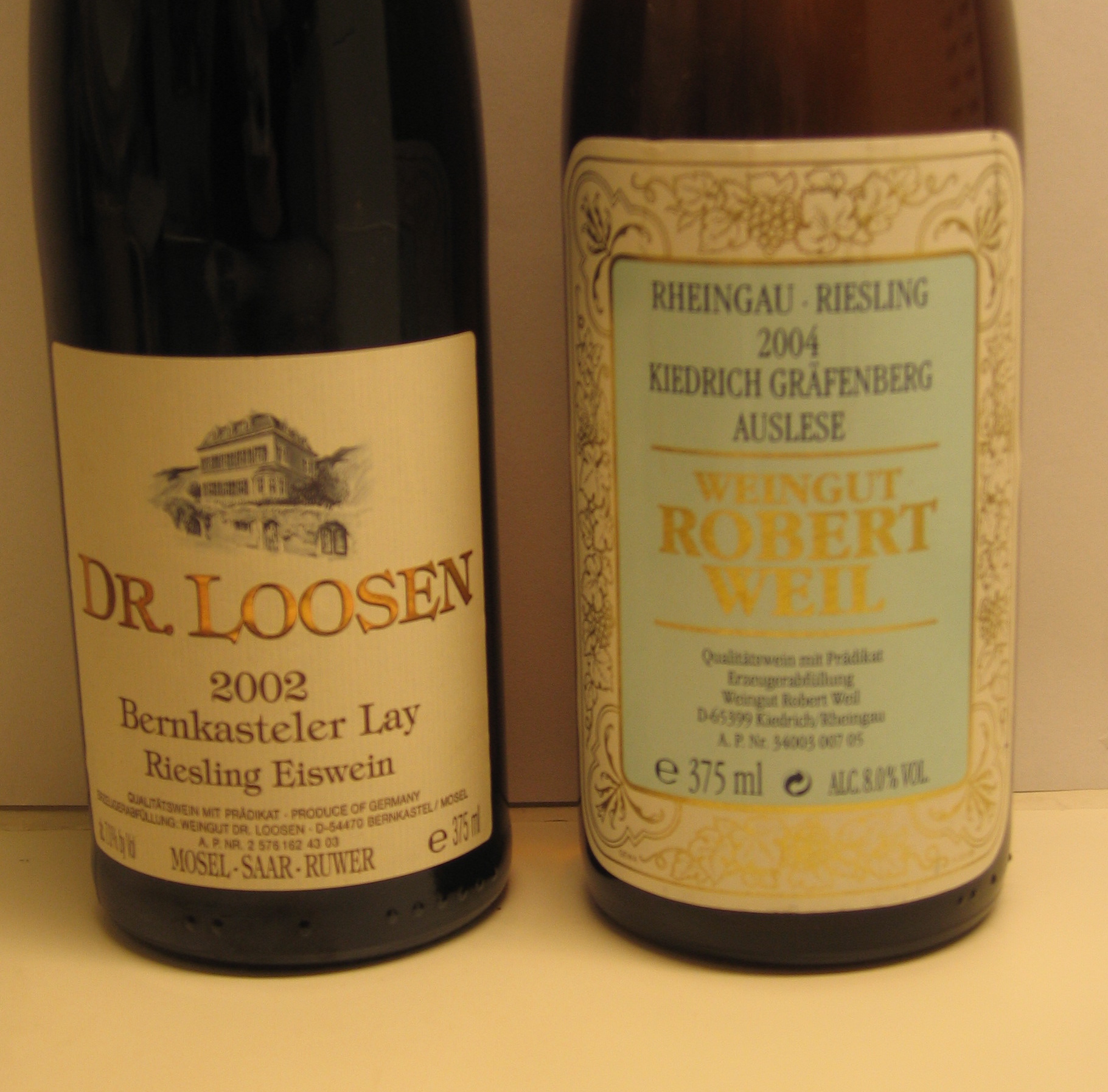
The different Prädikat (superior quality wine) designations used are as follows, in order of increasing sugar levels in the must:
The minimum must weight requirements for the different Prädikat designations are as follows. Many producers, especially top-level producers, exceed the minimum requirements by a wide margin.
This does not necessarily determine the sweetness of the final wine, because the winemaker may choose to ferment the wine fully or let some residual sugar remain.
Hub AI
German wine classification AI simulator
(@German wine classification_simulator)
German wine classification
The German wine classification system puts a strong emphasis on standardization and factual completeness, and was first implemented by the German Wine Law of 1971. Nearly all of Germany's vineyards are delineated and registered as one of approximately 2,600 Einzellagen ('individual sites'), and the produce from any vineyard can be used to make German wine at any quality level, as long as the must weight of the grapes reaches the designated minimum level. As the current German system does not classify vineyards by quality, the measure of wine ’quality’ is the ripeness of the grapes alone.
Approximately 200 wine makers have been organised since 1910 in the Verband Deutscher Prädikatsweingüter (VDP). To counter the shortcomings of the 1971 law, the VDP nowadays classifies the best vineyards by its own rules into 'VDP.Grosse Lage' (Grand cru) and 'VDP.Erste Lage' (Premier cru) based on 19th century Prussian tax maps. Most of these wine makers are based in the regions of Mosel, Pfalz, and Franken.
The classification of wines has been reorganized since 1 August 2009 by the EU wine market organization. The traditional German wine classification remained mostly unchanged, as the European system follows the origin-related system like in Germany and most areas of France (AOC). The already existing protection of geographical indication was transmitted through this step as well to the wine classification.
There are two major categories of German wine: table and "quality" wine. Table wine includes the designations Deutscher Wein (previously Tafelwein) and Landwein. Unlike the supposed equivalents of "Vin de Table" / "Vino da Tavola" and "Indicazione Geografica Tipica" / "Vin de Pays", production levels are not high, and these wines are typically exported to the United States. In 2005, Tafelwein and Landwein only accounted for 3.6% of total production. In Baden, there is a growing trend to release high-end wines as Landwein .
Quality wine is divided into two types:
The different Prädikat (superior quality wine) designations used are as follows, in order of increasing sugar levels in the must:
The minimum must weight requirements for the different Prädikat designations are as follows. Many producers, especially top-level producers, exceed the minimum requirements by a wide margin.
This does not necessarily determine the sweetness of the final wine, because the winemaker may choose to ferment the wine fully or let some residual sugar remain.