Hubbry Logo
Gernot RollGernot RollMain
Open search
Gernot Roll
Community hub
Gernot Roll
logo
8 pages, 0 posts
0 subscribers
Be the first to start a discussion here.
Gernot Roll
Gernot Roll
from Wikipedia

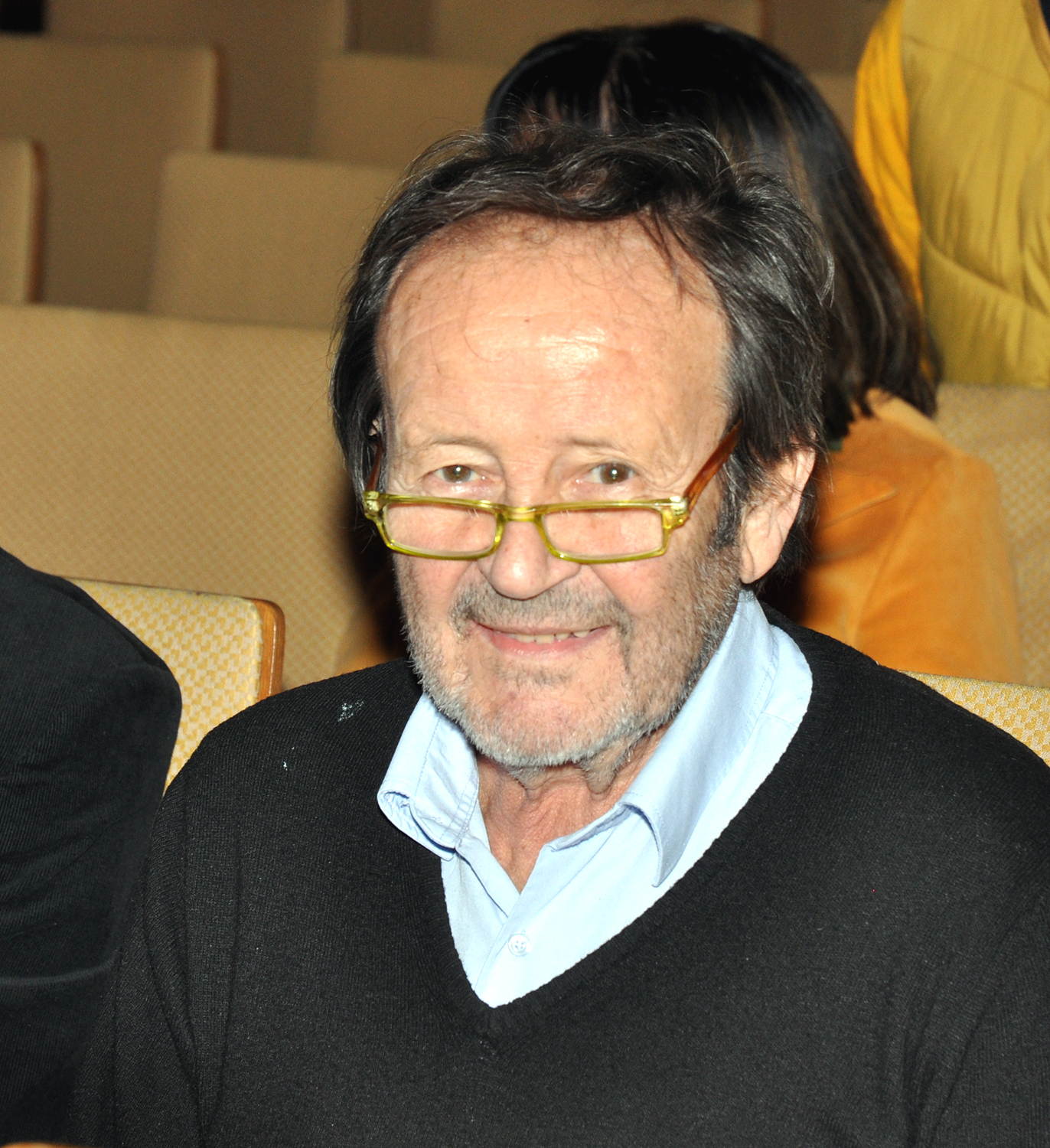
Gernot Roll (9 April 1939 – 12 November 2020) was a German cinematographer, film director and script writer. He collaborated on several films with directors Edgar Reitz and Sönke Wortmann. He was regarded as an expert on literary adaptations and film biographies, such as The Buddenbrooks, filming Thomas Mann's novel in eleven television episodes directed by Franz Peter Wirth, and the same work again in 2008 in the film directed by Heinrich Breloer.

Key Information

Life

[edit]

Roll was born in Dresden and grew up in Pirna.[1] At the age of 14 he began training as a cameraman and then worked at the DEFA Studios in Berlin-Babelsberg.[2][3] His first film as a camera assistant was the fairy tale film The Singing Ringing Tree.[2] In 1960 he went to West Germany to work at Bavaria Film in Munich.[2][4] He filmed literary works such as Geschlossene Gesellschaft [de],[1] and television series such as Graf Yoster gibt sich die Ehre and Tatort.[2] From 1976, he worked as a freelance cinematographer.[4] He was considered an expert in literary adaptations and film biographies.[3] In 1979, he was the cinematographer for The Buddenbrooks, eleven episodes for television of Thomas Mann's novel, directed by Franz Peter Wirth.[5]

Roll's breakthrough came with the celebrated 16-hour TV series Heimat – Eine deutsche Chronik by Edgar Reitz in 1984.[2] Among his films were Caroline Link's Jenseits der Stille and Helmut Dietl's Rossini [de]. He worked with Sönke Wortmann for Der bewegte Mann, with Peter Sehr [de] for Kaspar Hauser [de], and with Link again for Oscar-winning Nirgendwo in Afrika (Nowhere in Africa).[1][6] He also worked with directors including Jo Baier, Axel Corti and Peter Keglevic.[4]

Roll's debut as a director was in the film Radetzkymarsch [de].[7] Roll was the director for films including the children's classic The Robber Hotzenplotz [de] in 2006.[2] In 2008, he was the cinematographer for Heinrich Breloer's film Die Buddenbrooks.[5]

Roll was one of the founding members of the Deutsche Filmakademie in 2003.[8]

He was married to the producer Rita Serra-Roll;[1] their son is the actor Michael Roll (born 1961).[1] They lived in the Hunsrück.

Roll died on 12 November 2020 in Munich after a severe illness, at the age of 81.[2][9]

Filmography

[edit]

Films for which Roll was the cinematographer include:[9][10]

Filmography
Year Title Director Notes
1970 The Last Escape Walter Grauman
1971–72 Salto Mortale Michael Braun [de] TV series
1977 Zero Hour Edgar Reitz
1979 The Buddenbrooks Franz Peter Wirth[11] TV series
1980 Car-napping Wigbert Wicker [de]
1980 Ein Stück Himmel Wirth
1984 Heimat – eine deutsche Chronik Reitz TV series
1985 Morenga Egon Günther
1985 Mit meinen heißen Tränen Fritz Lehner
1989 The Rose Garden Fons Rademakers
1982 Kleine Haie Sönke Wortmann
1994 Der bewegte Mann Wortmann
1996 Das Mädchen Rosemarie Bernd Eichinger TV film
1996 Beyond Silence Caroline Link
2001 Nowhere in Africa Link
2001 Die Manns – Ein Jahrhundertroman Heinrich Breloer miniseries
2002 Jedermanns Fest Lehner
2005 Speer und Er Breloer
2008 Buddenbrooks Breloer[5]
2010 Henri 4 Jo Baier
2013 Home from Home Reitz
2019 Brecht Breloer

Awards

[edit]

References

[edit]
[edit]
Revisions and contributorsEdit on WikipediaRead on Wikipedia
from Grokipedia
Gernot Roll is a German cinematographer, film director, and screenwriter known for his influential work in German cinema, particularly as the cinematographer on Edgar Reitz's landmark Heimat series and Caroline Link's Academy Award-winning Nowhere in Africa. Born on 9 April 1939 in Dresden, Germany, Roll trained at the DEFA studios in East Germany before relocating to West Germany in 1960, where he established himself as a leading director of photography at Bavaria Film and later as a freelancer. He gained widespread acclaim for his visual storytelling in literary adaptations and historical dramas, including long-term collaborations with Reitz on multiple Heimat projects, Heinrich Breloer on Buddenbrooks and Speer und Er, and Link on Beyond Silence and Nowhere in Africa. From the mid-1990s onward, Roll also directed several films, ranging from family entertainment like Der Räuber Hotzenplotz (2006) to comedies such as Ballermann 6 (1997) and Männersache (2008). His contributions earned him recognition in German film awards, and he remained active in the industry until his death on 12 November 2020 in Munich, Germany.

Early life

Birth and childhood

Gernot Roll was born on 9 April 1939 in Dresden, Germany. He lived through the post-World War II period in East Germany.

Training and entry into film industry

Gernot Roll was trained as a cinematographer from 1953 to 1956 at the DEFA studios in Potsdam-Babelsberg. His early practical experience included working as an assistant cameraman on feature films produced at the East German studios. His first credited film work came as a camera assistant on the DEFA fairy tale film Das singende, klingende Bäumchen (The Singing Ringing Tree). In 1960, Roll left the German Democratic Republic for West Germany. The following year, he joined the Bavaria Film studios in Munich, where he initially worked as a camera assistant and operator on various television productions. From the mid-1960s onward, he contributed to numerous film and television projects in West Germany as a cameraman.

Career

Cinematography career

Gernot Roll began working as a freelance cinematographer in 1976, marking the start of his independent career after earlier positions at DEFA and Bavaria Film. His breakthrough arrived through his collaboration with director Edgar Reitz on the landmark television series Heimat – Eine deutsche Chronik (1984), where he captured the black-and-white sequences that he later described as a pinnacle of his professional life. Reitz praised Roll's unerring instinct for powerful imagery and his dedication to the craft, noting their first meeting in 1976 and the long, intensive partnership that defined the Heimat chronicle project. This collaboration extended to the sequels Die zweite Heimat (1992), which experimented with alternating black-and-white days and color nights, and Die andere Heimat (2013). Roll developed enduring professional relationships with several directors renowned for character-driven and historical narratives. He served as cinematographer for Caroline Link on Jenseits der Stille (Beyond Silence, 1996) and the Oscar-winning Nirgendwo in Afrika (Nowhere in Africa, 2001), contributing to their visual sensitivity and emotional depth. His frequent work with Heinrich Breloer included major literary and biographical productions such as Die Manns – Ein Jahrhundertroman (2001), Speer und Er (2005), Buddenbrooks (2008), and Brecht (2019), where he applied dramatic lighting to underscore the historical and psychological complexity of the adaptations. Other significant cinematography credits include the comedies Kleine Haie (1992) and Der bewegte Mann (1994) directed by Sönke Wortmann, the historical film Morenga (1985), and the Welcome in Vienna trilogy (1985–1986) with Axel Corti, as well as early contributions to episodes of the crime series Tatort. Roll became recognized for his expertise in literary adaptations and historical dramas, favoring dramatic and aesthetically rich lighting over purely documentary styles to create immersive, played worlds. In 2003, Roll was a founding member of the Deutsche Filmakademie.

Directing career

Gernot Roll began his directing career in 1994 when he took over as director of the television miniseries Radetzkymarsch following the death of original director Axel Corti during production, also serving as cinematographer on the project. The experience marked his transition into directing, building on his established expertise as a cinematographer. From the mid-1990s onward, Roll directed a series of feature films and television productions, frequently handling both directing and cinematography duties himself. His work in this period encompassed a range of genres, including light mainstream comedies, family entertainment, and occasional historical dramas. Notable comedies he directed include Ballermann 6 (1997), ’ne günstige Gelegenheit (1999), Pura Vida Ibiza (2004), Männersache (2009), Die Superbullen – Sie kennen keine Gnade (2011), and Werner – Eiskalt! (2011). Among his family-oriented projects, the 2006 children's film Der Räuber Hotzenplotz, an adaptation of Otfried Preußler's classic book, stands out as a stylistically confident work. Roll also directed the historical costume drama Trenck – Zwei Herzen gegen die Krone (2003), demonstrating versatility across more ambitious material alongside his comedic output. His directing credits after 2011 are limited, with projects such as the TV film Die kleine Lady (2012) among his later works.

Personal life

Family

Gernot Roll was married to the film producer Rita Serra-Roll. The couple had a daughter, Laura Roll. He had a son from a previous marriage, the actor Michael Roll, born on April 29, 1961 in Munich.

Death

Death

Gernot Roll died on 12 November 2020 in Munich at the age of 81 following a severe illness. He passed away peacefully surrounded by his family, as announced by relatives shortly after his death. The news prompted tributes from colleagues in the German film industry, reflecting the end of a long career in cinematography and directing.

Awards and honors

Major awards

Gernot Roll received multiple Adolf-Grimme-Preise in Gold for his outstanding contributions to television productions, including for the series Heimat in 1985–1986, for Mit meinen heißen Tränen and Wohin und zurück in 1987, for Radetzkymarsch in 1995, and for Die Manns in 2000. These awards recognized his cinematography and directing in acclaimed multi-part series that marked significant achievements in German television. He was honored with the Deutscher Filmpreis (Lola) for Best Cinematography on three occasions: for Wildfeuer in 1992, for Kleine Haie and Krücke in 1993, and for Nirgendwo in Afrika in 2002. These wins highlighted his mastery in visual storytelling across diverse narrative films. Roll also received the Deutscher Kamerapreis in 1987 and the Lifetime Achievement award in 1998. Other notable recognitions include the Telestar in 1984 for Heimat, multiple Goldener Gong awards, the Verdienstkreuz in 2013, and the Honorary Award of the Bayerischer Filmpreis in 2014.

Other recognitions

Gernot Roll received several honorary awards and recognitions in acknowledgment of his extensive contributions to German cinematography and directing. In 1998, he was awarded the Ehrenpreis für das Lebenswerk by the Deutscher Kamerapreis for his lifetime achievements in the field. In 2006, he received the Der weiße Elefant award for his cinematography in the children's film Der Räuber Hotzenplotz. In 2013, he was honored with the Verdienstkreuz am Bande des Verdienstordens der Bundesrepublik Deutschland, recognizing his services to German culture and film. In 2014, Roll was awarded the Ehrenpreis des Bayerischen Ministerpräsidenten at the Bayerischer Filmpreis for his distinguished career as a cinematographer and director. That same year, he received a star on the Boulevard der Stars in Berlin.

References

Add your contribution
Related Hubs
User Avatar
No comments yet.