
Recent from talks
Giambattista Vico
Knowledge base stats:
Talk channels stats:
Members stats:
Giambattista Vico
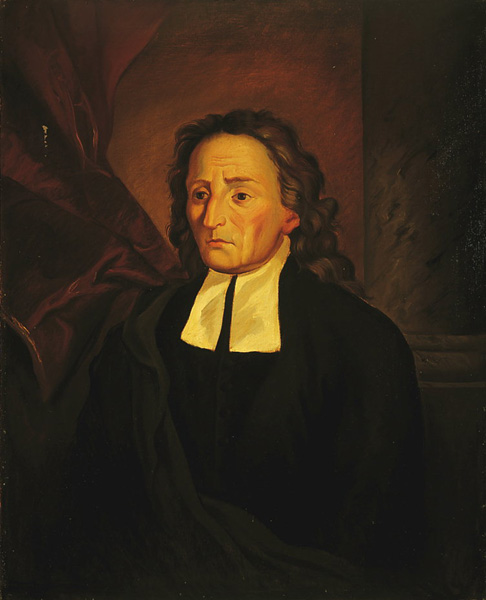
Giambattista Vico (born Giovan Battista Vico /ˈviːkoʊ/; Italian: [ˈviko]; 23 June 1668 – 23 January 1744) was an Italian philosopher, rhetorician, historian, and jurist during the Italian Enlightenment. He criticized the expansion and development of modern rationalism, finding Cartesian analysis and other types of reductionism impractical to human life, and he was an apologist for classical antiquity and the Renaissance humanities, in addition to being the first expositor of the fundamentals of social science and of semiotics. He is recognised as one of the first Counter-Enlightenment figures in history.
The Latin aphorism "Verum esse ipsum factum" ("truth is itself something made") coined by Vico is an early instance of constructivist epistemology. He inaugurated the modern field of the philosophy of history, and, although the term philosophy of history is not in his writings, Vico spoke of a "history of philosophy narrated philosophically." Although he was not an historicist, contemporary interest in Vico usually has been motivated by historicists, such as Isaiah Berlin, a philosopher and historian of ideas, Edward Said, a literary critic, and Hayden White, a metahistorian.
Vico's intellectual magnum opus is the book Scienza Nuova or New Science (1725), which attempts a systematic organization of the humanities as a single science that records and explains the historical cycles by which societies rise and fall.
Born to a bookseller in Naples, Italy, Giovan Battista Vico attended several schools, but ill health and dissatisfaction with the scholasticism of the Jesuits led to his being educated at home by tutors. Evidence from his autobiographical work indicates that Vico likely was an autodidact educated under paternal influence, during a three-year absence from school, consequence of an accidental fall when the boy was seven years old. Giovan Battista's formal education was at the University of Naples from which he graduated in 1694, as Doctor of Civil and Canon Law.
In 1686, after surviving a bout of typhus, he accepted a job as a tutor, in Vatolla, south of Salerno, which became a nine-year professional engagement that lasted till 1695. Four years later, in 1699, Vico married Teresa Caterina Destito, a childhood friend, and accepted a chair in rhetoric at the University of Naples, which he held until ill-health retirement, in 1741. Throughout his academic career, Vico would aspire to, but never attain, the more respectable chair of jurisprudence; however, in 1734, he was appointed historiographer royal, by Charles III, King of Naples, at a salary greater than he had earned as a university professor.
Vico's version of rhetoric is a product of his humanistic and pedagogic concerns. In the 1708 commencement speech De Nostri Temporis Studiorum Ratione (On the Order of the Scholarly Disciplines of Our Times), Vico said that whoever "intends a career in public life, whether in the courts, the senate, or the pulpit" should be taught to "master the art of topics and [to] defend both sides of a controversy, be it on Nature, Man, or politics, in a freer and brighter style of expression, so he can learn to draw on those arguments which are most probable and have the greatest degree of verisimilitude"; yet, in Scienza Nuova, Vico denounced defending both sides in controversies as false eloquence.
As Royal Professor of Latin Eloquence, Vico prepared students for higher studies in the fields of Law and of Jurisprudence; thus, his lessons were about the formal aspects of the canon of rhetoric, including the arrangement and the delivery of an argument. Yet he chose to emphasize the Aristotelian connection of rhetoric with logic and dialectic, thereby placing ends (rhetoric) at their center. Vico's objection to modern rhetoric is that it is disconnected from common sense (sensus communis), defined as the "worldly sense" that is common to all men.
In lectures and throughout the body of his work, Vico's rhetoric begins from a central argument (medius terminus), which is to be clarified by following the order of things as they arise in our experience. Probability and circumstance retain their proportionate importance, and discovery—reliant upon topics (loci)—supersedes axioms derived through reflective, abstract thought. In the tradition of classical Roman rhetoric, Vico sets out to educate the orator (rhetorician) as the transmitter of the oratio, a speech with ratio (reason) at the centre. What is essential to the oratorical art (Gr. ῥητορική, rhētorikē) is the orderly link between common sense and an end commensurate with oratory; an end that is not imposed upon the imagination from above (in the manner of the moderns and dogmatic Christianity), but that is drawn from common sense, itself. In the tradition of Socrates and Cicero, Vico's true orator will be midwife to the birth of "the true" (as an idea) from "the certain", the ignorance in the mind of the student.
Hub AI
Giambattista Vico AI simulator
(@Giambattista Vico_simulator)
Giambattista Vico
Giambattista Vico (born Giovan Battista Vico /ˈviːkoʊ/; Italian: [ˈviko]; 23 June 1668 – 23 January 1744) was an Italian philosopher, rhetorician, historian, and jurist during the Italian Enlightenment. He criticized the expansion and development of modern rationalism, finding Cartesian analysis and other types of reductionism impractical to human life, and he was an apologist for classical antiquity and the Renaissance humanities, in addition to being the first expositor of the fundamentals of social science and of semiotics. He is recognised as one of the first Counter-Enlightenment figures in history.
The Latin aphorism "Verum esse ipsum factum" ("truth is itself something made") coined by Vico is an early instance of constructivist epistemology. He inaugurated the modern field of the philosophy of history, and, although the term philosophy of history is not in his writings, Vico spoke of a "history of philosophy narrated philosophically." Although he was not an historicist, contemporary interest in Vico usually has been motivated by historicists, such as Isaiah Berlin, a philosopher and historian of ideas, Edward Said, a literary critic, and Hayden White, a metahistorian.
Vico's intellectual magnum opus is the book Scienza Nuova or New Science (1725), which attempts a systematic organization of the humanities as a single science that records and explains the historical cycles by which societies rise and fall.
Born to a bookseller in Naples, Italy, Giovan Battista Vico attended several schools, but ill health and dissatisfaction with the scholasticism of the Jesuits led to his being educated at home by tutors. Evidence from his autobiographical work indicates that Vico likely was an autodidact educated under paternal influence, during a three-year absence from school, consequence of an accidental fall when the boy was seven years old. Giovan Battista's formal education was at the University of Naples from which he graduated in 1694, as Doctor of Civil and Canon Law.
In 1686, after surviving a bout of typhus, he accepted a job as a tutor, in Vatolla, south of Salerno, which became a nine-year professional engagement that lasted till 1695. Four years later, in 1699, Vico married Teresa Caterina Destito, a childhood friend, and accepted a chair in rhetoric at the University of Naples, which he held until ill-health retirement, in 1741. Throughout his academic career, Vico would aspire to, but never attain, the more respectable chair of jurisprudence; however, in 1734, he was appointed historiographer royal, by Charles III, King of Naples, at a salary greater than he had earned as a university professor.
Vico's version of rhetoric is a product of his humanistic and pedagogic concerns. In the 1708 commencement speech De Nostri Temporis Studiorum Ratione (On the Order of the Scholarly Disciplines of Our Times), Vico said that whoever "intends a career in public life, whether in the courts, the senate, or the pulpit" should be taught to "master the art of topics and [to] defend both sides of a controversy, be it on Nature, Man, or politics, in a freer and brighter style of expression, so he can learn to draw on those arguments which are most probable and have the greatest degree of verisimilitude"; yet, in Scienza Nuova, Vico denounced defending both sides in controversies as false eloquence.
As Royal Professor of Latin Eloquence, Vico prepared students for higher studies in the fields of Law and of Jurisprudence; thus, his lessons were about the formal aspects of the canon of rhetoric, including the arrangement and the delivery of an argument. Yet he chose to emphasize the Aristotelian connection of rhetoric with logic and dialectic, thereby placing ends (rhetoric) at their center. Vico's objection to modern rhetoric is that it is disconnected from common sense (sensus communis), defined as the "worldly sense" that is common to all men.
In lectures and throughout the body of his work, Vico's rhetoric begins from a central argument (medius terminus), which is to be clarified by following the order of things as they arise in our experience. Probability and circumstance retain their proportionate importance, and discovery—reliant upon topics (loci)—supersedes axioms derived through reflective, abstract thought. In the tradition of classical Roman rhetoric, Vico sets out to educate the orator (rhetorician) as the transmitter of the oratio, a speech with ratio (reason) at the centre. What is essential to the oratorical art (Gr. ῥητορική, rhētorikē) is the orderly link between common sense and an end commensurate with oratory; an end that is not imposed upon the imagination from above (in the manner of the moderns and dogmatic Christianity), but that is drawn from common sense, itself. In the tradition of Socrates and Cicero, Vico's true orator will be midwife to the birth of "the true" (as an idea) from "the certain", the ignorance in the mind of the student.
Recent media