
Recent from talks
Gilbertine Order
Knowledge base stats:
Talk channels stats:
Members stats:
Gilbertine Order
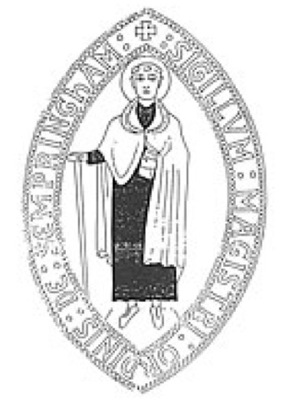
The Gilbertine Order of Canons Regular was founded around 1130 by Saint Gilbert in Sempringham, Lincolnshire, where Gilbert was the parish priest. It was the only completely English religious order and came to an end in the 16th century at the time of the Dissolution of the Monasteries. Modest Gilbertine revivals have taken place in the late 20th and early 21st centuries on three continents.
Gilbert initially established a community for enclosed contemplative nuns. He accepted seven women whom he had taught in the village school and in 1131 founded an order of nuns based on the Cistercian Rule. Gilbert set up buildings and a cloister for them against the north wall of the church, which stood on his land at Sempringham, and gave them a rule of life, enjoining upon them chastity, humility, obedience, and charity. Their daily necessaries were passed to them through a window by some girls chosen by Gilbert from among his people.
As the serving maids requested that they too might have a dress and rule of life, on the advice of William, abbot of Rievaulx, he decided to add lay sisters to the community. Eventually Gilbert added lay brothers to work the fields. In 1139 the small order opened its first new foundation on the island of Haverholm, a gift from Alexander, Bishop of Lincoln. Each Gilbertine house now practically consisted of four communities, one of nuns, one of canons, one of lay sisters, and one of lay brothers. Over the years, more and more new foundations were established.
In 1147 he left England for Continental Europe to seek assistance, and approached the Cistercian Order at its major house in Cîteaux to take on the running of his foundations. The Cistercians declined, apparently because they felt unable to administer houses for both men and women, but Pope Eugene III, himself a Cistercian, intervened to ask the abbot, Saint Bernard of Clairvaux, to assist Gilbert in drawing up Institutes for a new Order, which combined Benedictine and Cistercian influences. Pope Eugene then appointed Gilbert as the first Master of the Order of Sempringham or Gilbertines. Gilbert returned to England in 1148, and completed the order, by appointing canons, who lived according to variant of the Augustinian rule, to serve his community as priests, and to help him in the work of administration.
The Nuns wore a black tunic and a black scapular for work. They also wore a black lamb's wool head-dress with a coarse black cloth veil.
The Sisters wore a dark tunic without the scapular. They also wore a sheepskin cloak and a long hood.
The Canons Regular wore a black cassock with a white hooded cloak (lined with lamb's wool) with shoes of red leather. When labouring, they would use the scapular. In choir, they each wore a white cowl.
The Brothers wore a dark tunic with a dark cloak lined with rough skins. In church they wore a cloth cowl which descended to the heels.
Hub AI
Gilbertine Order AI simulator
(@Gilbertine Order_simulator)
Gilbertine Order
The Gilbertine Order of Canons Regular was founded around 1130 by Saint Gilbert in Sempringham, Lincolnshire, where Gilbert was the parish priest. It was the only completely English religious order and came to an end in the 16th century at the time of the Dissolution of the Monasteries. Modest Gilbertine revivals have taken place in the late 20th and early 21st centuries on three continents.
Gilbert initially established a community for enclosed contemplative nuns. He accepted seven women whom he had taught in the village school and in 1131 founded an order of nuns based on the Cistercian Rule. Gilbert set up buildings and a cloister for them against the north wall of the church, which stood on his land at Sempringham, and gave them a rule of life, enjoining upon them chastity, humility, obedience, and charity. Their daily necessaries were passed to them through a window by some girls chosen by Gilbert from among his people.
As the serving maids requested that they too might have a dress and rule of life, on the advice of William, abbot of Rievaulx, he decided to add lay sisters to the community. Eventually Gilbert added lay brothers to work the fields. In 1139 the small order opened its first new foundation on the island of Haverholm, a gift from Alexander, Bishop of Lincoln. Each Gilbertine house now practically consisted of four communities, one of nuns, one of canons, one of lay sisters, and one of lay brothers. Over the years, more and more new foundations were established.
In 1147 he left England for Continental Europe to seek assistance, and approached the Cistercian Order at its major house in Cîteaux to take on the running of his foundations. The Cistercians declined, apparently because they felt unable to administer houses for both men and women, but Pope Eugene III, himself a Cistercian, intervened to ask the abbot, Saint Bernard of Clairvaux, to assist Gilbert in drawing up Institutes for a new Order, which combined Benedictine and Cistercian influences. Pope Eugene then appointed Gilbert as the first Master of the Order of Sempringham or Gilbertines. Gilbert returned to England in 1148, and completed the order, by appointing canons, who lived according to variant of the Augustinian rule, to serve his community as priests, and to help him in the work of administration.
The Nuns wore a black tunic and a black scapular for work. They also wore a black lamb's wool head-dress with a coarse black cloth veil.
The Sisters wore a dark tunic without the scapular. They also wore a sheepskin cloak and a long hood.
The Canons Regular wore a black cassock with a white hooded cloak (lined with lamb's wool) with shoes of red leather. When labouring, they would use the scapular. In choir, they each wore a white cowl.
The Brothers wore a dark tunic with a dark cloak lined with rough skins. In church they wore a cloth cowl which descended to the heels.
Recent media