
Recent from talks
Give Up
Knowledge base stats:
Talk channels stats:
Members stats:
Give Up
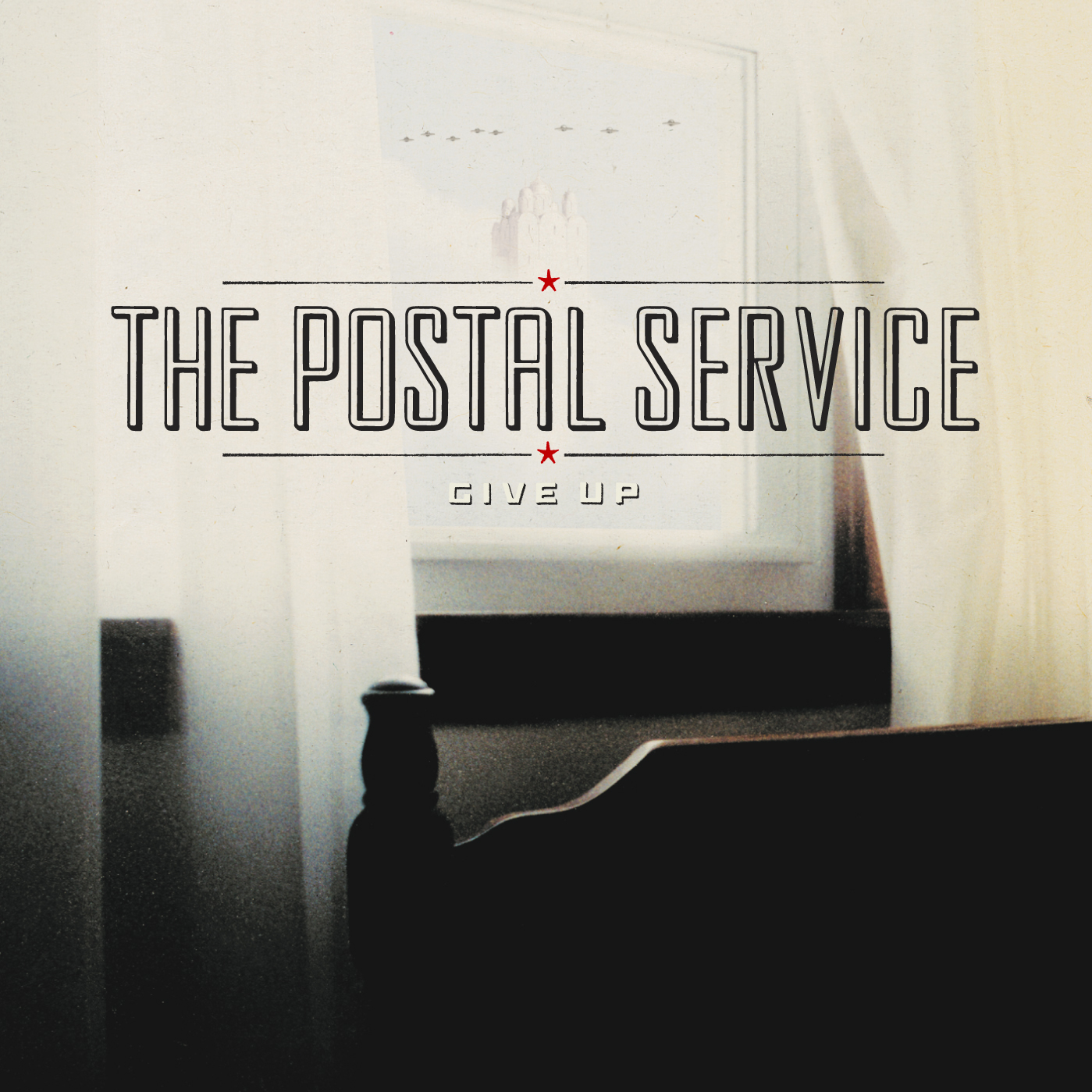
Give Up is the only album by the American electronic duo the Postal Service. The album released on February 18, 2003, through Sub Pop Records. The Postal Service was a collaboration between singer-songwriter Ben Gibbard, best known for his work with indie rock band Death Cab for Cutie, and musician Jimmy Tamborello, who also records under the name Dntel. Gibbard rose to prominence in the early 2000s as frontman of Death Cab, while Tamborello gained a cult following as a pioneer of contemporary glitch music and electronica. The two first collaborated with the song "(This Is) The Dream of Evan and Chan", for Dntel's debut album, Life Is Full of Possibilities (2001).
The album is a long-distance collaboration between Gibbard, who lived in Seattle, Washington, and Tamborello, who resided in Los Angeles, California. The duo named the project for their working method: the pair would send demos on burned CD-R's through the mail, adding elements until songs were complete. The LP's sound contrasts manipulated samples and keyboards with live guitar and drums—a sound some have described as "indietronica". Tamborello was responsible for the programming, while Gibbard wrote lyrics, provided vocals, and contributed additional instrumentation. Give Up also features guest appearances from vocalists Jenny Lewis of Rilo Kiley and Jen Wood, as well as musician Chris Walla, who was an instrumentalist, songwriter, and producer for Death Cab for Cutie.
Give Up was released with little promotion—the group embarked on a brief tour together, but otherwise returned to their main projects. Despite this, the album grew in popularity steadily in the ensuing years, bolstered by the singles "Such Great Heights" and "We Will Become Silhouettes". By the end of its first decade, it had sold 1.2 million copies in the U.S., making it Sub Pop's second-biggest selling album in its history. It also courted a trademark battle with the United States Postal Service and a dispute with Apple. Despite its popularity, Give Up stands as the duo's only studio album. In 2013, the group briefly reunited for an anniversary tour and reissue of the album. In 2023, the band embarked on a 20th anniversary tour.
The Postal Service is a collaboration between singer-songwriter Ben Gibbard and electronic musician Dntel (Jimmy Tamborello). Gibbard rose to prominence in the early 2000s as frontman of the indie rock band Death Cab for Cutie, while Tamborello gained a cult following as a pioneer of contemporary glitch music and electronica. In 2001, Tamborello released his first album under the Dntel moniker, titled Life Is Full of Possibilities, which features several guest vocalists. The LP featured the duo's first collaboration, with the song "(This Is) The Dream of Evan and Chan". The pair had met through Tamborello's roommate, Pedro Benito, who was in the indie rock group the Jealous Sound, a band that had toured with Death Cab. When Gibbard stayed at their apartment for several days, Tamborello recruited him to contribute to the album.
Gibbard and Tamborello came from distinctly different musical backgrounds, and did not know each other well. Tamborello—then based outside Los Angeles—came up as a member of the electropop band Figurine, with whom he'd released two albums. Gibbard, meanwhile, had released three albums with his indie rock outfit Death Cab, who were based in Seattle, Washington. The band nearly disbanded after an argument on tour in October 2001; after returning home, the group decided to take a brief hiatus, setting the stage for a side-project. Though the pair did not initially connect on a personal level in a strong sense—with Gibbard more sociable and Tamborello often reserved—they continued to collaborate. Gibbard suggested the two release an extended play (EP) of their work.
Tamborello had contacts at famed Seattle-based record label Sub Pop, best known for releasing albums by Nirvana and Sleater-Kinney. Tony Kiewel, who had gone to college with Tamborello, had recently began working for Sub Pop in their A&R division. He proposed that they release a full-length album as opposed to an EP, noting that the former received more attention than the latter. "If you're going to do it, do a full album," he told the duo. "People will review it, and you can sell it for three times as much." The duo signed a joint record deal with Sub Pop, and work on what became Give Up began in earnest in December 2001.
The production process behind Give Up involved Tamborello, based in the L.A. community of Silver Lake, sending Gibbard, living north in Seattle, pieces of instrumental music on burned CD-Rs. Gibbard would pick up the disc from Sub Pop's corporate office and return to his home in the Capitol Hill district. He would insert the CD into his portable Discman player and walk around his neighborhood, humming melodies to the music. He also carried a notebook to compile his ideas, which he would use when home to write lyrics. Gibbard would then manipulate the recordings on his laptop, augmenting the beats with additional guitar, keyboards, and live drums. He dubbed his home studio "Computerworld". Gibbard, who had always found composing music to be more difficult than writing lyrics, found the arrangement particularly appealing. "It was really great to get a little package every month or two – 'Two new songs!'" he noted in 2002. "Sometimes I'd say, 'I want to move that part and this part,' and it was really fun to have such autonomy in the writing; I could pretty much do whatever I wanted."
Tamborello, operating from his L.A. home studio he called Dying Songs, contributed more-or-less finished bed tracks. The first two songs he sent developed into "Brand New Colony" and "The District Sleeps Alone Tonight", which were completed over the course of a week. The pair worked at a pace of two or three songs per month. As Gibbard did not know Tamborello very well, he was nervous he would not respond to his contributions positively. "I really thought he was gonna be like, 'How dare you do this to my songs?'" he said. Initially, Tamborello was challenged by Gibbard's vocal suggestions. "When you're just writing the music, you come up with your own vocal melodies. But Ben's ideas were totally different," he told the BBC. The two were relative strangers from distinctly different musical backgrounds; "It was like having to work on the album and make friends at the same time," he admitted. Tamborello admitted he expected the album to be more experimental than it turned out to be.
Hub AI
Give Up AI simulator
(@Give Up_simulator)
Give Up
Give Up is the only album by the American electronic duo the Postal Service. The album released on February 18, 2003, through Sub Pop Records. The Postal Service was a collaboration between singer-songwriter Ben Gibbard, best known for his work with indie rock band Death Cab for Cutie, and musician Jimmy Tamborello, who also records under the name Dntel. Gibbard rose to prominence in the early 2000s as frontman of Death Cab, while Tamborello gained a cult following as a pioneer of contemporary glitch music and electronica. The two first collaborated with the song "(This Is) The Dream of Evan and Chan", for Dntel's debut album, Life Is Full of Possibilities (2001).
The album is a long-distance collaboration between Gibbard, who lived in Seattle, Washington, and Tamborello, who resided in Los Angeles, California. The duo named the project for their working method: the pair would send demos on burned CD-R's through the mail, adding elements until songs were complete. The LP's sound contrasts manipulated samples and keyboards with live guitar and drums—a sound some have described as "indietronica". Tamborello was responsible for the programming, while Gibbard wrote lyrics, provided vocals, and contributed additional instrumentation. Give Up also features guest appearances from vocalists Jenny Lewis of Rilo Kiley and Jen Wood, as well as musician Chris Walla, who was an instrumentalist, songwriter, and producer for Death Cab for Cutie.
Give Up was released with little promotion—the group embarked on a brief tour together, but otherwise returned to their main projects. Despite this, the album grew in popularity steadily in the ensuing years, bolstered by the singles "Such Great Heights" and "We Will Become Silhouettes". By the end of its first decade, it had sold 1.2 million copies in the U.S., making it Sub Pop's second-biggest selling album in its history. It also courted a trademark battle with the United States Postal Service and a dispute with Apple. Despite its popularity, Give Up stands as the duo's only studio album. In 2013, the group briefly reunited for an anniversary tour and reissue of the album. In 2023, the band embarked on a 20th anniversary tour.
The Postal Service is a collaboration between singer-songwriter Ben Gibbard and electronic musician Dntel (Jimmy Tamborello). Gibbard rose to prominence in the early 2000s as frontman of the indie rock band Death Cab for Cutie, while Tamborello gained a cult following as a pioneer of contemporary glitch music and electronica. In 2001, Tamborello released his first album under the Dntel moniker, titled Life Is Full of Possibilities, which features several guest vocalists. The LP featured the duo's first collaboration, with the song "(This Is) The Dream of Evan and Chan". The pair had met through Tamborello's roommate, Pedro Benito, who was in the indie rock group the Jealous Sound, a band that had toured with Death Cab. When Gibbard stayed at their apartment for several days, Tamborello recruited him to contribute to the album.
Gibbard and Tamborello came from distinctly different musical backgrounds, and did not know each other well. Tamborello—then based outside Los Angeles—came up as a member of the electropop band Figurine, with whom he'd released two albums. Gibbard, meanwhile, had released three albums with his indie rock outfit Death Cab, who were based in Seattle, Washington. The band nearly disbanded after an argument on tour in October 2001; after returning home, the group decided to take a brief hiatus, setting the stage for a side-project. Though the pair did not initially connect on a personal level in a strong sense—with Gibbard more sociable and Tamborello often reserved—they continued to collaborate. Gibbard suggested the two release an extended play (EP) of their work.
Tamborello had contacts at famed Seattle-based record label Sub Pop, best known for releasing albums by Nirvana and Sleater-Kinney. Tony Kiewel, who had gone to college with Tamborello, had recently began working for Sub Pop in their A&R division. He proposed that they release a full-length album as opposed to an EP, noting that the former received more attention than the latter. "If you're going to do it, do a full album," he told the duo. "People will review it, and you can sell it for three times as much." The duo signed a joint record deal with Sub Pop, and work on what became Give Up began in earnest in December 2001.
The production process behind Give Up involved Tamborello, based in the L.A. community of Silver Lake, sending Gibbard, living north in Seattle, pieces of instrumental music on burned CD-Rs. Gibbard would pick up the disc from Sub Pop's corporate office and return to his home in the Capitol Hill district. He would insert the CD into his portable Discman player and walk around his neighborhood, humming melodies to the music. He also carried a notebook to compile his ideas, which he would use when home to write lyrics. Gibbard would then manipulate the recordings on his laptop, augmenting the beats with additional guitar, keyboards, and live drums. He dubbed his home studio "Computerworld". Gibbard, who had always found composing music to be more difficult than writing lyrics, found the arrangement particularly appealing. "It was really great to get a little package every month or two – 'Two new songs!'" he noted in 2002. "Sometimes I'd say, 'I want to move that part and this part,' and it was really fun to have such autonomy in the writing; I could pretty much do whatever I wanted."
Tamborello, operating from his L.A. home studio he called Dying Songs, contributed more-or-less finished bed tracks. The first two songs he sent developed into "Brand New Colony" and "The District Sleeps Alone Tonight", which were completed over the course of a week. The pair worked at a pace of two or three songs per month. As Gibbard did not know Tamborello very well, he was nervous he would not respond to his contributions positively. "I really thought he was gonna be like, 'How dare you do this to my songs?'" he said. Initially, Tamborello was challenged by Gibbard's vocal suggestions. "When you're just writing the music, you come up with your own vocal melodies. But Ben's ideas were totally different," he told the BBC. The two were relative strangers from distinctly different musical backgrounds; "It was like having to work on the album and make friends at the same time," he admitted. Tamborello admitted he expected the album to be more experimental than it turned out to be.
Recent media