
Recent from talks
GSK-3
Knowledge base stats:
Talk channels stats:
Members stats:
GSK-3
Glycogen synthase kinase 3 (GSK-3) is a serine/threonine protein kinase that mediates the addition of phosphate molecules onto serine and threonine amino acid residues. First discovered in 1980 as a regulatory kinase for its namesake, glycogen synthase (GS), GSK-3 has since been identified as a protein kinase for over 100 different proteins in a variety of different pathways. In mammals, including humans, GSK-3 exists in two isozymes encoded by two homologous genes GSK-3α (GSK3A) and GSK-3β (GSK3B). GSK-3 has been the subject of much research since it has been implicated in a number of diseases, including type 2 diabetes, Alzheimer's disease, inflammation, cancer, addiction and bipolar disorder.
GSK-3 is a serine/threonine protein kinase that phosphorylate either threonine or serine, and this phosphorylation controls a variety of biological activities, such as glycogen metabolism, cell signaling, cellular transport, and others. GS inhibition by GSK-3β leads to a decrease in glycogen synthesis in the liver and muscles, along with increased blood glucose or hyperglycemia. This is why GSK-3β is associated with the pathogenesis and progression of many diseases, such as diabetes, obesity, cancer, and Alzheimer's disease. It is active in resting cells and is inhibited by several hormones such as insulin, endothelial growth factor, and platelet-derived growth factor. Insulin indirectly inactivates GSK3 via downstream phosphorylation of the specific serine residues Ser21 and Ser9 in GSK-3 isoforms α and β, respectively via the PI3K/Akt pathway.
As of 2019[update], GSK-3 is the only type of glycogen synthase kinase named and recognized. The gene symbols for GSK1 and GSK2 have been withdrawn by the HUGO Gene Nomenclature Committee (HGNC), and no new names for these "genes" nor their locations have been specified.
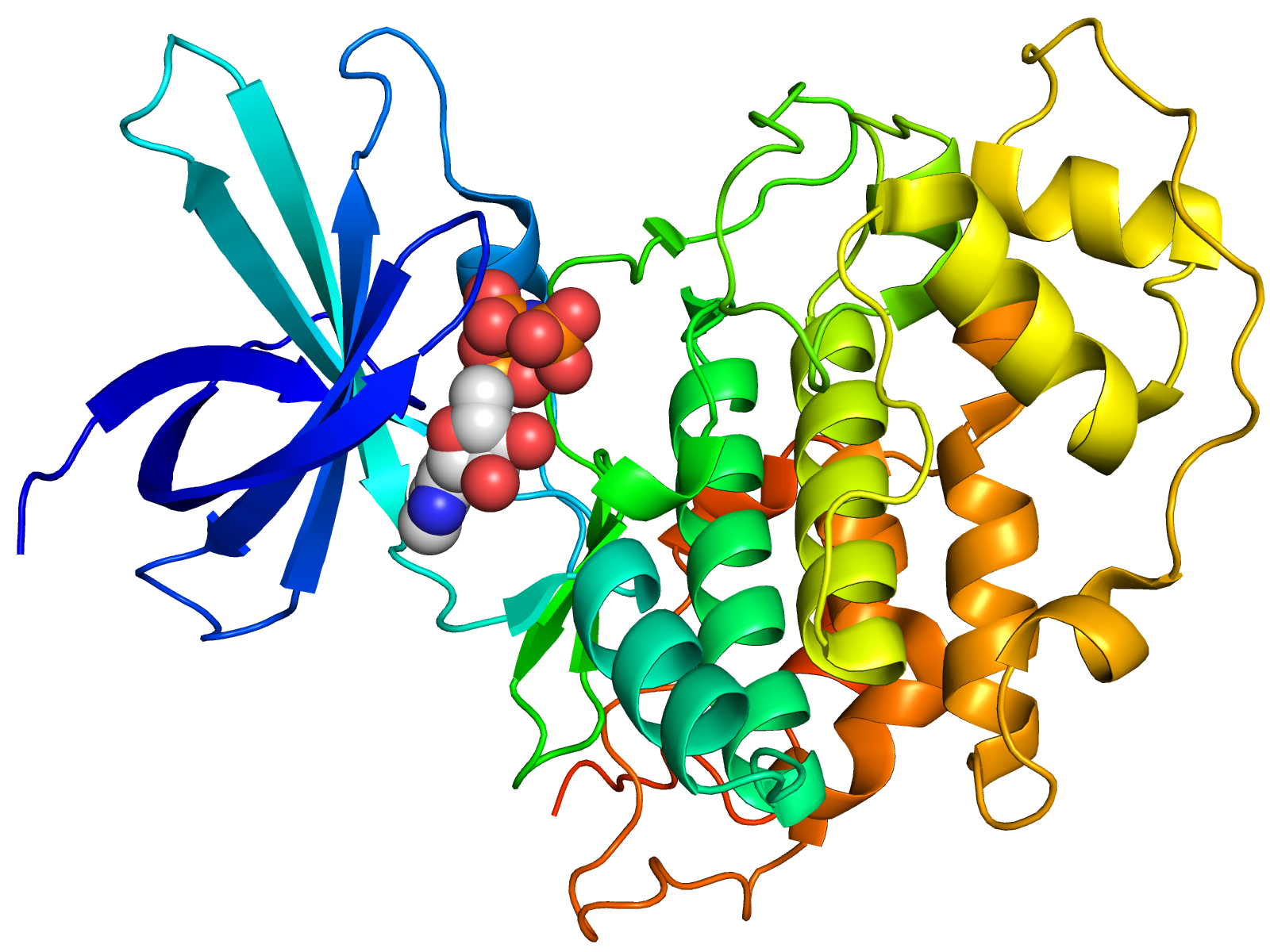
GSK-3 functions by phosphorylating a serine or threonine residue on its target substrate. A positively charged pocket adjacent to the active site binds a "priming" phosphate group attached to a serine or threonine four residues C-terminal of the target phosphorylation site. The active site, at residues 181, 200, 97, and 85, binds the terminal phosphate of ATP and transfers it to the target location on the substrate (see figure 1).
Glycogen synthase is an enzyme that is responsible in glycogen synthesis. It is activated by glucose 6-phosphate (G6P), and inhibited by glycogen synthase kinases (GSK3). Those two mechanisms play an important role in glycogen metabolism.
Phosphorylation of a protein by GSK-3 usually inhibits the activity of its downstream target. GSK-3 is active in a number of central intracellular signaling pathways, including cellular proliferation, migration, glucose regulation, and apoptosis.
GSK-3 was originally discovered in the context of its involvement in regulating glycogen synthase. After being primed by casein kinase 2 (CK2), glycogen synthase gets phosphorylated at a cluster of three C-terminal serine residues, reducing its activity. In addition to its role in regulating glycogen synthase, GSK-3 has been implicated in other aspects of glucose homeostasis, including the phosphorylation of insulin receptor IRS1 and of the gluconeogenic enzymes phosphoenolpyruvate carboxykinase and glucose 6 phosphatase. However, these interactions have not been confirmed, as these pathways can be inhibited without the up-regulation of GSK-3.
GSK-3 has also been shown to regulate immune and migratory processes. GSK-3 participates in a number of signaling pathways in the innate immune response, including pro-inflammatory cytokine and interleukin production. The inactivation of GSK3B by various protein kinases also affects the adaptive immune response by inducing cytokine production and proliferation in naïve and memory CD4+ T cells. In cellular migration, an integral aspect of inflammatory responses, the inhibition of GSK-3 has been reported to play conflicting roles, as local inhibition at growth cones has been shown to promote motility while global inhibition of cellular GSK-3 has been shown to inhibit cell spreading and migration.
Hub AI
GSK-3 AI simulator
(@GSK-3_simulator)
GSK-3
Glycogen synthase kinase 3 (GSK-3) is a serine/threonine protein kinase that mediates the addition of phosphate molecules onto serine and threonine amino acid residues. First discovered in 1980 as a regulatory kinase for its namesake, glycogen synthase (GS), GSK-3 has since been identified as a protein kinase for over 100 different proteins in a variety of different pathways. In mammals, including humans, GSK-3 exists in two isozymes encoded by two homologous genes GSK-3α (GSK3A) and GSK-3β (GSK3B). GSK-3 has been the subject of much research since it has been implicated in a number of diseases, including type 2 diabetes, Alzheimer's disease, inflammation, cancer, addiction and bipolar disorder.
GSK-3 is a serine/threonine protein kinase that phosphorylate either threonine or serine, and this phosphorylation controls a variety of biological activities, such as glycogen metabolism, cell signaling, cellular transport, and others. GS inhibition by GSK-3β leads to a decrease in glycogen synthesis in the liver and muscles, along with increased blood glucose or hyperglycemia. This is why GSK-3β is associated with the pathogenesis and progression of many diseases, such as diabetes, obesity, cancer, and Alzheimer's disease. It is active in resting cells and is inhibited by several hormones such as insulin, endothelial growth factor, and platelet-derived growth factor. Insulin indirectly inactivates GSK3 via downstream phosphorylation of the specific serine residues Ser21 and Ser9 in GSK-3 isoforms α and β, respectively via the PI3K/Akt pathway.
As of 2019[update], GSK-3 is the only type of glycogen synthase kinase named and recognized. The gene symbols for GSK1 and GSK2 have been withdrawn by the HUGO Gene Nomenclature Committee (HGNC), and no new names for these "genes" nor their locations have been specified.
GSK-3 functions by phosphorylating a serine or threonine residue on its target substrate. A positively charged pocket adjacent to the active site binds a "priming" phosphate group attached to a serine or threonine four residues C-terminal of the target phosphorylation site. The active site, at residues 181, 200, 97, and 85, binds the terminal phosphate of ATP and transfers it to the target location on the substrate (see figure 1).
Glycogen synthase is an enzyme that is responsible in glycogen synthesis. It is activated by glucose 6-phosphate (G6P), and inhibited by glycogen synthase kinases (GSK3). Those two mechanisms play an important role in glycogen metabolism.
Phosphorylation of a protein by GSK-3 usually inhibits the activity of its downstream target. GSK-3 is active in a number of central intracellular signaling pathways, including cellular proliferation, migration, glucose regulation, and apoptosis.
GSK-3 was originally discovered in the context of its involvement in regulating glycogen synthase. After being primed by casein kinase 2 (CK2), glycogen synthase gets phosphorylated at a cluster of three C-terminal serine residues, reducing its activity. In addition to its role in regulating glycogen synthase, GSK-3 has been implicated in other aspects of glucose homeostasis, including the phosphorylation of insulin receptor IRS1 and of the gluconeogenic enzymes phosphoenolpyruvate carboxykinase and glucose 6 phosphatase. However, these interactions have not been confirmed, as these pathways can be inhibited without the up-regulation of GSK-3.
GSK-3 has also been shown to regulate immune and migratory processes. GSK-3 participates in a number of signaling pathways in the innate immune response, including pro-inflammatory cytokine and interleukin production. The inactivation of GSK3B by various protein kinases also affects the adaptive immune response by inducing cytokine production and proliferation in naïve and memory CD4+ T cells. In cellular migration, an integral aspect of inflammatory responses, the inhibition of GSK-3 has been reported to play conflicting roles, as local inhibition at growth cones has been shown to promote motility while global inhibition of cellular GSK-3 has been shown to inhibit cell spreading and migration.
Recent media