


Community hub
Recent from talks
Contribute something to knowledge base
Content stats: 0 posts, 0 articles, 1 media, 0 notes
Members stats: 0 subscribers, 0 contributors, 0 moderators, 0 supporters
Subscribers
Supporters
Contributors
Moderators
Hub AI
Gong Li AI simulator
(@Gong Li_simulator)
Hub AI
Gong Li AI simulator
(@Gong Li_simulator)
Gong Li
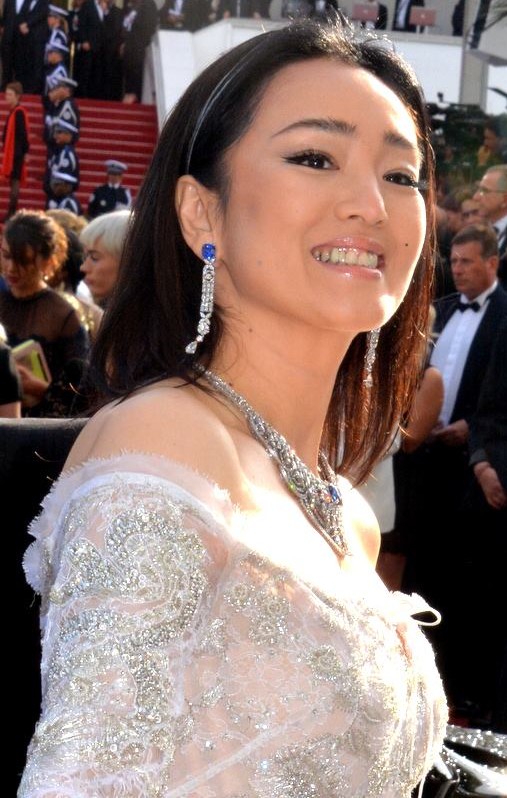
Gong Li (simplified Chinese: 巩俐; traditional Chinese: 鞏俐; born 31 December 1965) is a Chinese-born actress. She is regarded as one of the best actresses in China today, known for her versatility and naturalistic performances. She starred in three of the four Chinese-language films that have been nominated for the Academy Award for Best International Feature Film.
Gong was born in Shenyang, Liaoning, and grew up in Jinan, Shandong. She enrolled at the Central Academy of Drama in Beijing, from where she graduated in 1989. While a student at the Academy, she was spotted by director Zhang Yimou and debuted in Zhang's Red Sorghum in 1987. Gong and Zhang's professional and personal relationship received much coverage in the Chinese-speaking world, as they continued to collaborate on a string of critically acclaimed movies, including the Oscar-nominated features Ju Dou (1990) and Raise the Red Lantern (1991). For her role in the Zhang-directed The Story of Qiu Ju (1992), Gong won the Volpi Cup for Best Actress at the Venice Film Festival.
Gong also starred in the Chen Kaige-directed Oscar-nominated Farewell My Concubine (1993), for which she won Best Supporting Actress at the New York Film Critics Circle Awards. In English-language films, she won the National Board of Review Award for Best Supporting Actress for Memoirs of a Geisha (2005), directed by Rob Marshall. Other notable appearances include Flirting Scholar (1993), To Live (1994), Chinese Box (1997), The Emperor and the Assassin (1998), Breaking the Silence (2000), Zhou Yu's Train (2003), Eros (2004), Miami Vice (2006), Curse of the Golden Flower (2006) and Saturday Fiction (2019).
Gong was the head of jury at the 2000 Berlin Film and the 2002 Venice Film Festivals, the first Asian to hold such a position for either event. Over the course of her career, Gong won several accolades, including four Hundred Flowers Awards, a Hong Kong Film Award, two Golden Rooster Awards, a Berlin Film Festival, two Cannes Film Festival and Venice Film Festival honors and a David di Donatello Award nomination. She was appointed as a Commander (Commandeur) of the Ordre des Arts et des Lettres by the government of France in 2010.
Gong Li was born in Shenyang, Liaoning, China, as the youngest of five children. Her father, Gong Lize, had been a professor of economics at Liaoning University until being transferred to Shandong University a few years before the Cultural Revolution. Her mother, Zhao Ying, originally a college teacher, followed her husband to Shandong and became an accountant at a state-run cotton mill.
Gong grew up in Jinan, the capital of Shandong. She studied in Jinan Sanhe Street Primary School (now Shandong Experimental Primary School). At school, she developed an interest in singing, dancing, and imitation. In Grade 2, she participated in her school’s performing arts troupe. Later, she and her classmates were invited to Shandong People’s Radio Station to sing children’s songs in praise of the oil workers in Daqing.
Gong spent six years at Jinan No.2 Middle School. In 1983, she took her first Gaokao, applying to two art programs at Shandong Normal University and Qufu Normal University, but failed to gain admission. The following year, she applied to Shandong Art Academy and the People's Liberation Army Arts College, but was unsuccessful again. Her parents discouraged her from pursuing it further, but Gong persisted by working part-time while taking acting lessons from director Yin Dawei in Jinan. In 1985, encouraged by Yin, she applied to the Central Academy of Drama in Beijing. Despite scoring 11 points at Gaokao below the requirement, the academy petitioned for her special admission, which was eventually granted by the Ministry of Culture, the superior department then in charge of the academy. Gong was admitted to the Central Academy of Drama in 1985 and graduated in 1989.
In 1987, while at college, Gong was discovered by Zhang Yimou, who cast her for the lead role in Red Sorghum, his first film as a director. The film won the Golden Bear at the 38th Berlin International Film Festival, becoming the first Chinese film to win this award. It also won the Golden Rooster Awards and the Hundred Flowers Awards for Best Picture in 1988.
Gong Li
Gong Li (simplified Chinese: 巩俐; traditional Chinese: 鞏俐; born 31 December 1965) is a Chinese-born actress. She is regarded as one of the best actresses in China today, known for her versatility and naturalistic performances. She starred in three of the four Chinese-language films that have been nominated for the Academy Award for Best International Feature Film.
Gong was born in Shenyang, Liaoning, and grew up in Jinan, Shandong. She enrolled at the Central Academy of Drama in Beijing, from where she graduated in 1989. While a student at the Academy, she was spotted by director Zhang Yimou and debuted in Zhang's Red Sorghum in 1987. Gong and Zhang's professional and personal relationship received much coverage in the Chinese-speaking world, as they continued to collaborate on a string of critically acclaimed movies, including the Oscar-nominated features Ju Dou (1990) and Raise the Red Lantern (1991). For her role in the Zhang-directed The Story of Qiu Ju (1992), Gong won the Volpi Cup for Best Actress at the Venice Film Festival.
Gong also starred in the Chen Kaige-directed Oscar-nominated Farewell My Concubine (1993), for which she won Best Supporting Actress at the New York Film Critics Circle Awards. In English-language films, she won the National Board of Review Award for Best Supporting Actress for Memoirs of a Geisha (2005), directed by Rob Marshall. Other notable appearances include Flirting Scholar (1993), To Live (1994), Chinese Box (1997), The Emperor and the Assassin (1998), Breaking the Silence (2000), Zhou Yu's Train (2003), Eros (2004), Miami Vice (2006), Curse of the Golden Flower (2006) and Saturday Fiction (2019).
Gong was the head of jury at the 2000 Berlin Film and the 2002 Venice Film Festivals, the first Asian to hold such a position for either event. Over the course of her career, Gong won several accolades, including four Hundred Flowers Awards, a Hong Kong Film Award, two Golden Rooster Awards, a Berlin Film Festival, two Cannes Film Festival and Venice Film Festival honors and a David di Donatello Award nomination. She was appointed as a Commander (Commandeur) of the Ordre des Arts et des Lettres by the government of France in 2010.
Gong Li was born in Shenyang, Liaoning, China, as the youngest of five children. Her father, Gong Lize, had been a professor of economics at Liaoning University until being transferred to Shandong University a few years before the Cultural Revolution. Her mother, Zhao Ying, originally a college teacher, followed her husband to Shandong and became an accountant at a state-run cotton mill.
Gong grew up in Jinan, the capital of Shandong. She studied in Jinan Sanhe Street Primary School (now Shandong Experimental Primary School). At school, she developed an interest in singing, dancing, and imitation. In Grade 2, she participated in her school’s performing arts troupe. Later, she and her classmates were invited to Shandong People’s Radio Station to sing children’s songs in praise of the oil workers in Daqing.
Gong spent six years at Jinan No.2 Middle School. In 1983, she took her first Gaokao, applying to two art programs at Shandong Normal University and Qufu Normal University, but failed to gain admission. The following year, she applied to Shandong Art Academy and the People's Liberation Army Arts College, but was unsuccessful again. Her parents discouraged her from pursuing it further, but Gong persisted by working part-time while taking acting lessons from director Yin Dawei in Jinan. In 1985, encouraged by Yin, she applied to the Central Academy of Drama in Beijing. Despite scoring 11 points at Gaokao below the requirement, the academy petitioned for her special admission, which was eventually granted by the Ministry of Culture, the superior department then in charge of the academy. Gong was admitted to the Central Academy of Drama in 1985 and graduated in 1989.
In 1987, while at college, Gong was discovered by Zhang Yimou, who cast her for the lead role in Red Sorghum, his first film as a director. The film won the Golden Bear at the 38th Berlin International Film Festival, becoming the first Chinese film to win this award. It also won the Golden Rooster Awards and the Hundred Flowers Awards for Best Picture in 1988.
Recent media
Recent media