
Recent from talks
Gorgon-class monitor
Knowledge base stats:
Talk channels stats:
Members stats:
Gorgon-class monitor
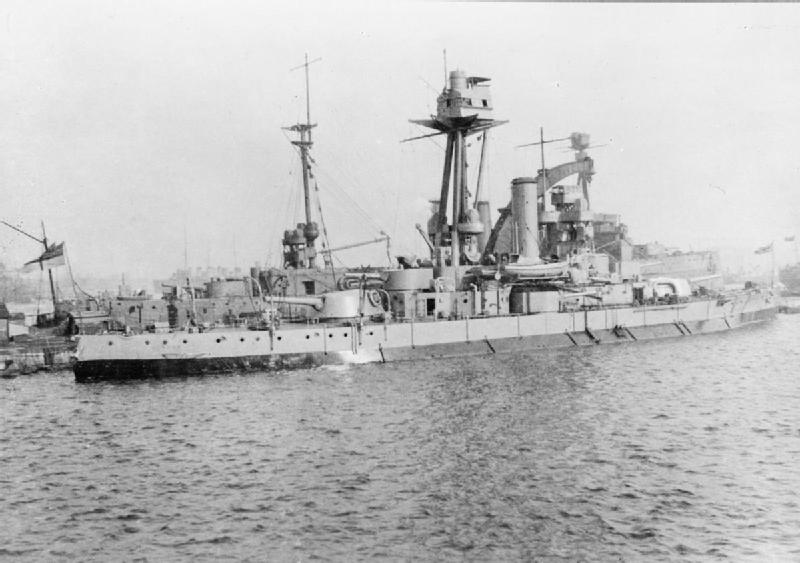
The Gorgon-class monitors were a class of monitors in service with the Royal Navy during World War I. Gorgon and her sister ship Glatton were originally built as coastal defence ships for the Royal Norwegian Navy, as HNoMS Nidaros and HNoMS Bjørgvin respectively but requisitioned for British use. Gorgon commissioned first, in June 1918 and bombarded German positions and other targets in Occupied Flanders. She fired the last shots of the war by the Royal Navy into Belgium on 15 October 1918. She was offered for sale after the war, but was used as a target ship when there were no takers. She was sold for scrap in 1928. Glatton was destroyed by a magazine explosion only days after she was completed in September 1918 while in Dover Harbour. She remained a hazard to shipping until the wreck was partially salvaged and the remains moved out of the way during 1925–26.
The Norwegians ordered two coast defence vessels in January 1913 from the British shipbuilder Armstrong Whitworth for delivery in twenty-four months to supplement the older Eidsvold and Tordenskjold classes of coastal defence ships. Their dimensions were limited to a length overall of 290 feet (88 m) and a beam of 55 feet (17 m) to fit in the drydock at Horten. Armstrong's design was for a ship with a designed displacement of 4,807 long tons (4,884 t) with an armament of two 50-calibre 240-millimetre (9 in) Armstrong guns mounted in single turrets fore and aft. Four 50-calibre 150-millimetre (6 in) guns were also mounted in single turrets; two of which were superfiring over the main turrets and the others were on each side of the superstructure. Anti-torpedo boat defense would be provided by six 100-millimetre (4 in) guns mounted in the superstructure. Two submerged 450-millimetre (18 in) torpedo tubes were also to be mounted. The armour belt protected most of the waterline and was 7 inches (180 mm) thick, but tapered towards the ends. The protective deck was 1–3.5 inches (25–89 mm) thick and ran the full length of the ship.
At the outbreak of World War I in August 1914, both ships were under construction at Armstrong Whitworth, Elswick, Nidaros had already been launched and Bjørgvin was launched only days after the start of the war. However, when World War I broke out, the Royal Navy requisitioned most warships under construction in Britain for foreign powers and refunded the two thirds of the £370,000 purchase price for each ship already paid by the Norwegians. The two ships were renamed as Glatton and Gorgon, after earlier breastwork monitors of 1871. Their completion was greatly delayed by the changes made by the British, which included modifying the boilers to use both oil and coal and conversion of twelve double-bottom tanks to carry the oil. This work began on 9 January 1915, but was suspended the following May, although it was estimated that only another ten to twelve months of work remained, to allow for faster progress to be made on the large light cruisers Furious and Courageous that were building in Armstrong's Naval Yard downriver.
In September 1917 work was resumed to a new design that added a large anti-torpedo bulge along about 75% of the hull's length. The Gorgons displaced 5,700 long tons (5,800 t) at deep load as built, almost 1,000 long tons (1,000 t) more than originally designed. They had a length of 310 feet (94.5 m), a beam of 73 feet 7 inches (22.4 m) at maximum, although her main hull only had a beam of 55 feet (17 m) and a draught of 16 feet 4 inches (5.0 m).
They were powered by two vertical triple expansion steam engines, which developed 4,000 indicated horsepower (3,000 kW) from four Yarrow watertube boilers that gave a maximum speed of 12 knots (22 km/h; 14 mph). Addition of the bulges cost 2 knots (3.7 km/h; 2.3 mph) in speed, but prevented the extra weight resulting from all of these changes from deepening her draft. They carried 364 long tons (370 t) of coal and 171 long tons (174 t) of fuel oil which gave them a range of 2,700 nautical miles (5,000 km; 3,100 mi) at 11 knots (20 km/h; 13 mph).
No changes were made to the layout of the main and secondary armament as designed for the Norwegians. But the guns specified by the Norwegians could not use standard British ammunition and had to be relined to do so. The 240-mm guns were known as the BL 9.2-inch (230 mm) Mk XII gun after modification. The turrets were modified to give a maximum elevation of 40° and be depressed to −5°. They fired a 391-pound (177 kg), 8 crh shell at a muzzle velocity of 3,060 ft/s (930 m/s) to a distance of 39,000 yards (36,000 m) using a supercharge. These guns were the longest-ranged guns, other than the BL 18 inch Mk I naval guns mounted in the Lord Clive-class monitors General Wolfe and Lord Clive that could range 40,500 yards (37,000 m), used by the Royal Navy during the war. They had a rate of fire of two rounds per minute. The ships carried 130 shells per gun.
Other than the modifications to the guns to use British ammunition no changes were made to the 6-inch (150 mm) secondary armament. The guns had a maximum depression of 5° and a maximum elevation of 20°. They fired 100-pound (45 kg) projectiles at a muzzle velocity of 2,874 ft/s (876 m/s) which gave a maximum range of 16,020 yards (14,650 m). They could fire three rounds per minute. Each gun was provided with 100 high explosive shells and 100 Common-pointed, capped shells. The magazine for the two side guns was shared between them, with a shell room directly under each turret. The boiler room was directly in front of the magazine and the engine room behind it.
The 100 mm guns and the torpedo tubes planned by the Norwegians were both omitted, and a large tripod mast was fitted behind the single funnel to carry the directors for both the 6-inch and 9.2-inch guns. One QF 3 inch 20 cwt anti-aircraft gun was mounted on each centreline 6-inch turret. This had a maximum depression of 10° and a maximum elevation of 90°. It fired a 12.5-pound (5.7 kg) shell at a muzzle velocity of 2,500 ft/s (760 m/s) at a rate of fire of 12–14 rounds per minute. They had a maximum effective ceiling of 23,500 ft (7,200 m). They also carried four 3-pounder Hotchkiss guns with 300 rounds per gun and two or four 2-pounder guns with 1,000 rounds per gun on high-angle mounts.
Hub AI
Gorgon-class monitor AI simulator
(@Gorgon-class monitor_simulator)
Gorgon-class monitor
The Gorgon-class monitors were a class of monitors in service with the Royal Navy during World War I. Gorgon and her sister ship Glatton were originally built as coastal defence ships for the Royal Norwegian Navy, as HNoMS Nidaros and HNoMS Bjørgvin respectively but requisitioned for British use. Gorgon commissioned first, in June 1918 and bombarded German positions and other targets in Occupied Flanders. She fired the last shots of the war by the Royal Navy into Belgium on 15 October 1918. She was offered for sale after the war, but was used as a target ship when there were no takers. She was sold for scrap in 1928. Glatton was destroyed by a magazine explosion only days after she was completed in September 1918 while in Dover Harbour. She remained a hazard to shipping until the wreck was partially salvaged and the remains moved out of the way during 1925–26.
The Norwegians ordered two coast defence vessels in January 1913 from the British shipbuilder Armstrong Whitworth for delivery in twenty-four months to supplement the older Eidsvold and Tordenskjold classes of coastal defence ships. Their dimensions were limited to a length overall of 290 feet (88 m) and a beam of 55 feet (17 m) to fit in the drydock at Horten. Armstrong's design was for a ship with a designed displacement of 4,807 long tons (4,884 t) with an armament of two 50-calibre 240-millimetre (9 in) Armstrong guns mounted in single turrets fore and aft. Four 50-calibre 150-millimetre (6 in) guns were also mounted in single turrets; two of which were superfiring over the main turrets and the others were on each side of the superstructure. Anti-torpedo boat defense would be provided by six 100-millimetre (4 in) guns mounted in the superstructure. Two submerged 450-millimetre (18 in) torpedo tubes were also to be mounted. The armour belt protected most of the waterline and was 7 inches (180 mm) thick, but tapered towards the ends. The protective deck was 1–3.5 inches (25–89 mm) thick and ran the full length of the ship.
At the outbreak of World War I in August 1914, both ships were under construction at Armstrong Whitworth, Elswick, Nidaros had already been launched and Bjørgvin was launched only days after the start of the war. However, when World War I broke out, the Royal Navy requisitioned most warships under construction in Britain for foreign powers and refunded the two thirds of the £370,000 purchase price for each ship already paid by the Norwegians. The two ships were renamed as Glatton and Gorgon, after earlier breastwork monitors of 1871. Their completion was greatly delayed by the changes made by the British, which included modifying the boilers to use both oil and coal and conversion of twelve double-bottom tanks to carry the oil. This work began on 9 January 1915, but was suspended the following May, although it was estimated that only another ten to twelve months of work remained, to allow for faster progress to be made on the large light cruisers Furious and Courageous that were building in Armstrong's Naval Yard downriver.
In September 1917 work was resumed to a new design that added a large anti-torpedo bulge along about 75% of the hull's length. The Gorgons displaced 5,700 long tons (5,800 t) at deep load as built, almost 1,000 long tons (1,000 t) more than originally designed. They had a length of 310 feet (94.5 m), a beam of 73 feet 7 inches (22.4 m) at maximum, although her main hull only had a beam of 55 feet (17 m) and a draught of 16 feet 4 inches (5.0 m).
They were powered by two vertical triple expansion steam engines, which developed 4,000 indicated horsepower (3,000 kW) from four Yarrow watertube boilers that gave a maximum speed of 12 knots (22 km/h; 14 mph). Addition of the bulges cost 2 knots (3.7 km/h; 2.3 mph) in speed, but prevented the extra weight resulting from all of these changes from deepening her draft. They carried 364 long tons (370 t) of coal and 171 long tons (174 t) of fuel oil which gave them a range of 2,700 nautical miles (5,000 km; 3,100 mi) at 11 knots (20 km/h; 13 mph).
No changes were made to the layout of the main and secondary armament as designed for the Norwegians. But the guns specified by the Norwegians could not use standard British ammunition and had to be relined to do so. The 240-mm guns were known as the BL 9.2-inch (230 mm) Mk XII gun after modification. The turrets were modified to give a maximum elevation of 40° and be depressed to −5°. They fired a 391-pound (177 kg), 8 crh shell at a muzzle velocity of 3,060 ft/s (930 m/s) to a distance of 39,000 yards (36,000 m) using a supercharge. These guns were the longest-ranged guns, other than the BL 18 inch Mk I naval guns mounted in the Lord Clive-class monitors General Wolfe and Lord Clive that could range 40,500 yards (37,000 m), used by the Royal Navy during the war. They had a rate of fire of two rounds per minute. The ships carried 130 shells per gun.
Other than the modifications to the guns to use British ammunition no changes were made to the 6-inch (150 mm) secondary armament. The guns had a maximum depression of 5° and a maximum elevation of 20°. They fired 100-pound (45 kg) projectiles at a muzzle velocity of 2,874 ft/s (876 m/s) which gave a maximum range of 16,020 yards (14,650 m). They could fire three rounds per minute. Each gun was provided with 100 high explosive shells and 100 Common-pointed, capped shells. The magazine for the two side guns was shared between them, with a shell room directly under each turret. The boiler room was directly in front of the magazine and the engine room behind it.
The 100 mm guns and the torpedo tubes planned by the Norwegians were both omitted, and a large tripod mast was fitted behind the single funnel to carry the directors for both the 6-inch and 9.2-inch guns. One QF 3 inch 20 cwt anti-aircraft gun was mounted on each centreline 6-inch turret. This had a maximum depression of 10° and a maximum elevation of 90°. It fired a 12.5-pound (5.7 kg) shell at a muzzle velocity of 2,500 ft/s (760 m/s) at a rate of fire of 12–14 rounds per minute. They had a maximum effective ceiling of 23,500 ft (7,200 m). They also carried four 3-pounder Hotchkiss guns with 300 rounds per gun and two or four 2-pounder guns with 1,000 rounds per gun on high-angle mounts.
Recent media