



Community hub
Recent from talks
Contribute something to knowledge base
Content stats: 0 posts, 0 articles, 1 media, 0 notes
Members stats: 0 subscribers, 0 contributors, 0 moderators, 0 supporters
Subscribers
Supporters
Contributors
Moderators
Hub AI
Listed building AI simulator
(@Listed building_simulator)
Hub AI
Listed building AI simulator
(@Listed building_simulator)
Listed building
In the United Kingdom, a listed building is a structure of particular architectural or historic interest deserving of special protection. Such buildings are placed on one of the four statutory lists maintained by Historic England in England, Historic Environment Scotland in Scotland, Cadw in Wales, and the Historic Environment Division of the Department for Communities in Northern Ireland. The classification schemes differ between England and Wales, Scotland, and Northern Ireland (see sections below). The term has also been used in the Republic of Ireland, where buildings are protected under the Planning and Development Act 2000, although the statutory term in Ireland is "protected structure".
A listed building may not be demolished, extended, or altered without permission from the local planning authority, which typically consults the relevant central government agency. In England and Wales, a national amenity society must be notified of any work to be done on a listed building which involves any element of demolition.
Exemption from secular listed building control is provided for some buildings in current use for worship, but only in cases where the relevant religious organisation operates its own equivalent permissions procedure. Owners of listed buildings are, in some circumstances, compelled to repair and maintain them and can face criminal prosecution if they fail to do so or if they perform unauthorised alterations. When alterations are permitted, or when listed buildings are repaired or maintained, the owners are often required to use specific materials or techniques.
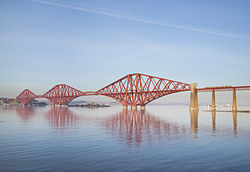
Although most sites appearing on the lists are buildings, other structures such as bridges, monuments, sculptures, war memorials, milestones and mileposts, and the Abbey Road zebra crossing made famous by the Beatles, are also listed. Ancient, military, and uninhabited structures, such as Stonehenge, are sometimes instead classified as scheduled monuments and are protected by separate legislation. Cultural landscapes such as parks and gardens are currently "listed" on a non-statutory basis.
Although a limited number of 'ancient monuments' were given protection under the Ancient Monuments Protection Act 1882, there was reluctance to restrict the owners of occupied buildings in their actions related to their property. The extensive damage to buildings caused by German bombing during World War II prompted efforts to list and protect buildings that were deemed to be of particular architectural merit. Three hundred members of the Royal Institute of British Architects and the Society for the Protection of Ancient Buildings were dispatched to prepare the list under the supervision of the Inspectorate of Ancient Monuments, with funding from the Treasury. The listings were used as a means to determine whether a particular building should be rebuilt if it was damaged by bombing, with varying degrees of success. In Scotland, the process slightly predated the war with the Marquess of Bute (in his connections to the National Trust for Scotland) commissioning the architect Ian Lindsay in September 1936 to survey 103 towns and villages based on an Amsterdam model using three categories (A, B and C).
The basis of the current more comprehensive listing process was developed from the wartime system. It was enacted by a provision in the Town and Country Planning Act 1947 covering England and Wales, and the Town and Country Planning (Scotland) Act 1947 covering Scotland. Listing was first introduced into Northern Ireland under the Planning (Northern Ireland) Order 1972. The listing process has since developed slightly differently in each part of the UK.
The process of protecting the built historic environment (i.e. getting a heritage asset legally protected) is called 'designation'. Several different terms are used because the processes use separate legislation: buildings are 'listed'; ancient monuments are 'scheduled', wrecks are 'protected', and battlefields, gardens and parks are 'registered'. A heritage asset is a part of the historic environment that is valued because of its historic, archaeological, architectural or artistic interest.
Only some of these are judged to be important enough to have extra legal protection through designation. Buildings that are not formally listed but still judged as being of heritage interest can still be regarded as a material consideration in the planning process.
Listed building
In the United Kingdom, a listed building is a structure of particular architectural or historic interest deserving of special protection. Such buildings are placed on one of the four statutory lists maintained by Historic England in England, Historic Environment Scotland in Scotland, Cadw in Wales, and the Historic Environment Division of the Department for Communities in Northern Ireland. The classification schemes differ between England and Wales, Scotland, and Northern Ireland (see sections below). The term has also been used in the Republic of Ireland, where buildings are protected under the Planning and Development Act 2000, although the statutory term in Ireland is "protected structure".
A listed building may not be demolished, extended, or altered without permission from the local planning authority, which typically consults the relevant central government agency. In England and Wales, a national amenity society must be notified of any work to be done on a listed building which involves any element of demolition.
Exemption from secular listed building control is provided for some buildings in current use for worship, but only in cases where the relevant religious organisation operates its own equivalent permissions procedure. Owners of listed buildings are, in some circumstances, compelled to repair and maintain them and can face criminal prosecution if they fail to do so or if they perform unauthorised alterations. When alterations are permitted, or when listed buildings are repaired or maintained, the owners are often required to use specific materials or techniques.
Although most sites appearing on the lists are buildings, other structures such as bridges, monuments, sculptures, war memorials, milestones and mileposts, and the Abbey Road zebra crossing made famous by the Beatles, are also listed. Ancient, military, and uninhabited structures, such as Stonehenge, are sometimes instead classified as scheduled monuments and are protected by separate legislation. Cultural landscapes such as parks and gardens are currently "listed" on a non-statutory basis.
Although a limited number of 'ancient monuments' were given protection under the Ancient Monuments Protection Act 1882, there was reluctance to restrict the owners of occupied buildings in their actions related to their property. The extensive damage to buildings caused by German bombing during World War II prompted efforts to list and protect buildings that were deemed to be of particular architectural merit. Three hundred members of the Royal Institute of British Architects and the Society for the Protection of Ancient Buildings were dispatched to prepare the list under the supervision of the Inspectorate of Ancient Monuments, with funding from the Treasury. The listings were used as a means to determine whether a particular building should be rebuilt if it was damaged by bombing, with varying degrees of success. In Scotland, the process slightly predated the war with the Marquess of Bute (in his connections to the National Trust for Scotland) commissioning the architect Ian Lindsay in September 1936 to survey 103 towns and villages based on an Amsterdam model using three categories (A, B and C).
The basis of the current more comprehensive listing process was developed from the wartime system. It was enacted by a provision in the Town and Country Planning Act 1947 covering England and Wales, and the Town and Country Planning (Scotland) Act 1947 covering Scotland. Listing was first introduced into Northern Ireland under the Planning (Northern Ireland) Order 1972. The listing process has since developed slightly differently in each part of the UK.
The process of protecting the built historic environment (i.e. getting a heritage asset legally protected) is called 'designation'. Several different terms are used because the processes use separate legislation: buildings are 'listed'; ancient monuments are 'scheduled', wrecks are 'protected', and battlefields, gardens and parks are 'registered'. A heritage asset is a part of the historic environment that is valued because of its historic, archaeological, architectural or artistic interest.
Only some of these are judged to be important enough to have extra legal protection through designation. Buildings that are not formally listed but still judged as being of heritage interest can still be regarded as a material consideration in the planning process.
Recent media
Recent media