Hubbry Logo
Grand Chute, WisconsinGrand Chute, WisconsinMain
Open search
Grand Chute, Wisconsin
Community hub
Grand Chute, Wisconsin
logo
8 pages, 0 posts
0 subscribers
Be the first to start a discussion here.
Grand Chute, Wisconsin
from Wikipedia

Grand Chute (French: great fall or "large rapids") is a town in Outagamie County, Wisconsin, United States. The population was 23,831 at the 2020 census.[1] It is part of the Appleton metropolitan area. The unincorporated community of Apple Creek is partially located in the town.

Key Information

History

[edit]

The Town of Grand Chute was formed on April 3, 1849 inside what was then Brown County. By state legislative act, Grand Chute was split off of the Town of Kaukaulan (later Kaukauna). The Town of Grand Chute's boundary at its establishment comprised a much larger area than it has today, formed by what today are the towns of Dale, Hortonia, Greenville, Ellington, and present-day Grand Chute.[5] By 1850, due to a large influx of new settlers, the towns of Hortonia (which included Dale at the time), Greenville, and Ellington had all been split away from Grand Chute to form new towns.[5]

Outagamie County was set up by law in February 1851 and had its county government formally organized on April 1, 1851. At that time, the Town of Grand Chute (which by definition changed from Brown to Outagamie County) was established as the seat of county government affairs.[6][7]

Grand Chute's population in 1984 was estimated to be 10,874.[8] In March of that year, residents overwhelmingly approved using town funds to attempt incorporation into a village. After town hearings in late 1984, Grand Chute petitioned to the State of Wisconsin. The Wisconsin Department of Development denied the town's request to incorporate on March 25, 1985. At the time of the denial, the DOD's findings were that some (but not necessarily all) government services would be better provided by the City of Appleton, and that the proposed village was not compact or homogenous.[9]

Geography

[edit]

According to the United States Census Bureau, the town has a total area of 25.0 square miles (64.6 km2), of which 24.9 square miles (64.5 km2) is land and 0.1 square mile (0.2 km2) (0.32%) is water.

Grand Chute is the largest town in Wisconsin, both in terms of population (20,919 at the 2010 census)[10] and valuation (over $2.4 billion).[11] It is part of the Fox Cities metroplex that includes Oshkosh, Neenah, Menasha, and Appleton.

Demographics

[edit]
Historical population
CensusPop.Note
200018,392
201020,91913.7%
202023,83113.9%
U.S. Decennial Census[12]

2000 census

[edit]

As of the census[3] of 2000, there were 18,392 people, 7,586 households, and 4,688 families living in the town. The population estimate in 2008 was about 27,000. The population density was 739.1 people per square mile (285.3/km2). There were 7,965 housing units at an average density of 320.1 per square mile (123.6/km2). The racial makeup of the town was 94.28% White, 0.77% African American, 0.40% Native American, 1.52% Asian, 0.08% Pacific Islander, 1.87% from other races, and 1.08% from two or more races. 3.53% of the population were Hispanic or Latino of any race.

There were 7,586 households, out of which 29.6% had children under the age of 18 living with them, 53.2% were married couples living together, 5.9% had a female householder with no husband present, and 38.2% were non-families. 28.6% of all households were made up of individuals, and 8.5% had someone living alone who was 65 years of age or older. The average household size was 2.38 and the average family size was 3.00.

In the town, the population was spread out, with 23.4% under the age of 18, 11.2% from 18 to 24, 31.2% from 25 to 44, 22.6% from 45 to 64, and 11.6% who were 65 years of age or older. The median age was 35 years. For every 100 females there were 99.2 males. For every 100 females age 18 and over, there were 96.6 males.

The median income for a household in the town was $50,772, and the median income for a family was $61,780. Males had a median income of $42,084 versus $27,346 for females. The per capita income for the town was $25,189. 5.3% of the population and 2.7% of families were below the poverty line, including 4.7% of those under the age of 18 and 7.5% of those ages 65 and older.

2010 census

[edit]

As of the census[13] of 2010, there were 20,919 people, 9,378 households, and 5,390 families living in the town. The population density was 836.8 people per square mile (323.8/km2). There were 9,932 housing units at an average density of 397.3 per square mile (153.7/km2). The racial makeup of the town was 89.3% White, 1.4% African American, 0.4% Native American, 4.5% Asian, 0.1% Pacific Islander, 2.5% from other races, and 1.6% from two or more races. 4.9% of the population were Hispanic or Latino of any race.

There were 9,378 households, out of which 25.0% had children under the age of 18 living with them, 45.9% were married couples living together, 7.9% had a female householder with no husband present, and 42.5% were non-families. 32.9% of all households were made up of individuals, and 10.1% had someone living alone who was 65 years of age or older. The average household size was 2.21 and the average family size was 2.84.

In the town, the population was spread out, with 20.0% under the age of 18, 10.3% from 18 to 24, 27.3% from 25 to 44, 28.0% from 45 to 64, and 14.4% who were 65 years of age or older. The median age was 38.8 years. For every 100 females there were 94.6 males.

The median income for a household in the town was $52,813, and the median income for a family was $69,224. Males had a median income of $50,483 versus $37,073 for females. The per capita income for the town was $32,557. 8.9% of the population and 3.4% of families were below the poverty line. 9.3% of those under the age of 18 and 5.6% of those 65 and older were living below the poverty line.

Economy

[edit]

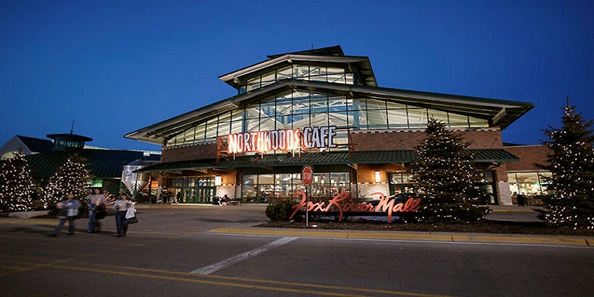
Grand Chute, home to Fox River Mall, is the most concentrated retail center in Wisconsin.[14]

Transportation

[edit]

The town is served by Valley Transit, a network of bus lines serving the Fox Valley. There are also several taxi operators in the town. Valley Transit operates routes that generally operate from as early as 5:45 AM until as late as 10:40 PM Monday through Saturday. Frequencies are usually every hour and every half-hour on certain routes during peak morning and afternoon times on weekdays. There is no service on Sunday. Greyhound and Lamers offer intercity buses serving such locations as Green Bay, Madison, Oshkosh, Fond du Lac, Milwaukee, and Chicago.

Roads

[edit]
Interstate 41 Northbound routes to Green Bay. Southbound I-41 routes to Oshkosh, Fond du Lac, and Milwaukee. This is a full interstate grade freeway that runs on the west and north sides of the town. It has 5 exits in Grand Chute at:

Hwy BB Prospect Ave. (Exit 136) WIS 125/Hwy CA College Ave.(Exit 137), WIS 96 Wisconsin Ave. (Exit 138), WIS 15/Hwy OO Northland Ave.(Exit 139), WIS 47 Richmond St. (Exit 142)

US 41 runs entirely concurrently with Interstate 41 through the city of Appleton.
WIS 15 Westbound routes to New London. This is partly Northland Ave.
WIS 96 travels west to Fremont and travels east to Little Chute and Kaukauna. This is Wisconsin Ave.
WIS 125 travels between US 41 and WIS 47 on College Ave. College Ave. west of I-41 is Hwy CA.
County CA travels west to Greenville. It connects I-41 with Appleton International Airport.

Airport

[edit]

The Appleton International Airport (ATW) is located at the west end of College Avenue, 2 miles (3.2 km) west of Interstate 41. The airport is served by 4 airlines that service 16 destinations around the United States.

Points of interest

[edit]
[edit]

Notable people

[edit]

References

[edit]
[edit]
Revisions and contributorsEdit on WikipediaRead on Wikipedia
from Grokipedia

Grand Chute is a civil town in , situated within the Fox Cities metropolitan area adjacent to the city of Appleton. As of the , it had a population of 23,831, making it the most populous town in . Originally established on April 3, 1849, encompassing territory that later formed part of Appleton, the town has developed into the region's primary commercial and retail center, anchored by the Fox River Mall and over 100 associated stores and restaurants. Its economy emphasizes retail trade, supported by strategic access to major highways including and , contributing to a median household income of approximately $71,331 in recent assessments.

History

Early Settlement and Town Formation

The region encompassing present-day Grand Chute was originally utilized by Native American tribes such as the , Winnebago, and Outagamie for hunting and fishing along the Fox River, with the Outagamie tribe lending its name to the later county. French explorer traversed the Fox River and in 1634, establishing early European awareness of the area, followed by fur trading posts like that of Dominique DuCharme from 1760 to 1793. Permanent European settlement began nearby in Kaukauna with Augustin Grignon acquiring and expanding DuCharme's post around 1813, constructing a by 1818 to exploit local timber resources. In the adjacent Grand Chute area, Hippolyte Grignon, Augustin's brother, erected the first known structure—a called "White Heron" serving as a and —in 1835, marking the initial white settlement in what would become Appleton within Grand Chute's bounds. Settlement accelerated in the late amid growing interest in the Fox River's rapids, known as "Grand Chute" (French for "great rapids"), which provided water power potential. Fur traders engaged with local Native Americans as early as 1847, but families like John F. Johnston's arrived on August 25, 1848, followed by J.S. Buck and others, establishing claims near the rapids for farming and industry. By 1850, influxes led to subdivisions, with portions of Grand Chute forming new towns like Hortonia, Greenville, and Ellington. The Town of Grand Chute was formally organized on April 3, 1849, carved from the Town of Kaukauna (later Kaukauna) in Brown County, encompassing the rapids area and surrounding lands. Outagamie County was established by legislative act on March 4, 1851, with Grand Chute selected as the initial due to its central location and settler population of around 4,000. This formation facilitated governance for the burgeoning settlements, though parts including Appleton village (incorporated 1853) were later detached as urban growth intensified.

19th-Century Development and Expansion

The Town of Grand Chute was established on April 3, 1849, through an act of the state legislature that separated it from the Town of Kaukauna (formerly Kaukaulan). The inaugural town meeting took place on the first Tuesday of May 1849 at the residence of John H. Ledyard, marking the formal organization of local governance. Following the creation of Outagamie County from Brown County in 1851, Grand Chute initially served as the , a role it held until 1852 when it transferred to the adjacent settlement of Appleton. This period saw rapid settlement driven by the fertile lands and access to the Fox River's rapids, known as the Grand Chute, which provided for early mills. The town's boundaries encompassed areas that would later form Appleton, leading to territorial adjustments as population increased. Economic development centered on lumber processing and , with sawmills exploiting the region's timber resources; by 1866, operations like George St. Louis's mill in Grand Chute were producing substantial lumber output for regional markets. Farmsteads proliferated in the township, supporting grain and dairy production amid the influx of European immigrants. Expansion manifested through subdivisions, including the detachment of portions for new townships such as Hortonia, Greenville, and Ellington in the early 1850s, alongside the 1857 incorporation of Appleton as a city from town lands, which reduced Grand Chute's footprint but reflected broader regional growth.

20th-Century Industrial and Suburban Growth

The early in Grand Chute featured limited industrial activity, primarily agricultural pursuits with spillover from Appleton's paper manufacturing sector along the Fox River. Population levels stayed modest, recording 1,722 residents in 1900 and showing minimal growth through the , as the town functioned largely as a rural complement to urban centers. Post-World War II suburbanization accelerated, driven by improved transportation and economic expansion in the Fox Valley. The completion of in 1969 enhanced accessibility, positioning Grand Chute as a gateway for regional commerce and residential development, transforming farmland into housing subdivisions and commercial strips. A landmark in this evolution was the opening of Fox River Mall on July 18, 1984, a 1.21 million-square-foot complex that became Wisconsin's largest enclosed and catalyzed further growth. The mall, anchoring over 130 stores, spurred the construction of hotels, restaurants, and support businesses, establishing Grand Chute as the state's premier retail concentration and shifting the local economy toward service-oriented suburban commerce rather than traditional . This period saw robust population gains, with the town adding over 4,300 residents in the —a 30.6% increase—reaching 18,332 by 2000, fueled by suburban appeal and proximity to Appleton's employment base in manufacturing and services. Light industrial zones, such as business parks, emerged in the late to accommodate and smaller manufacturers, complementing the retail surge without dominating the landscape.

Late 20th and 21st-Century Modernization

The construction and opening of the Fox River Mall in July 1984 represented a cornerstone of Grand Chute's transition to a modern commercial center, drawing major anchor stores and positioning the town as a retail destination in northeastern . At 1.21 million square feet, it was the state's largest enclosed complex upon completion, catalyzing the development of adjacent retail areas and contributing to the region's designation as 's "shopping capital." This project aligned with broader suburban expansion trends, as the mall's economic pull facilitated from approximately 13,000 residents in 1980 to over 18,000 by 2000, underscoring the shift from rural township to industrialized suburbia driven by accessible consumer infrastructure. Into the 21st century, Grand Chute prioritized infrastructure enhancements to support sustained economic vitality, particularly through upgrades to , a critical north-south artery. The Wisconsin Department of Transportation's I-41 expansion project, initiated in the 2010s and advancing through 2025, widened 23 miles of the highway from four to six lanes between WIS 96 and other key points, including auxiliary lanes and modernized interchanges in Grand Chute to alleviate congestion and improve freight mobility. Notable completions included the at WIS 15/Northland Avenue in September 2025, featuring a new bridge designed to enhance and by allowing vehicles to cross to the opposite side before merging. These improvements, part of a multi-phase effort costing hundreds of millions, bolstered the town's appeal and integrated it more seamlessly with the Fox Cities . Complementary modernization initiatives focused on economic diversification and , such as the 2017 donation of town land for an indoor sports facility projected to generate $4.8 million in annual economic impact through and events. Recent collaborative efforts with Outagamie County and Appleton aim to redevelop the West College Avenue corridor, incorporating mixed-use developments to attract businesses, residents, and visitors while promoting via enhanced and . By 2020, the town's exceeded 23,000, reflecting these investments' role in fostering a balanced less reliant on traditional and more oriented toward services and retail.

Geography

Location and Administrative Boundaries

The Town of Grand Chute is situated in Outagamie County, in northeastern Wisconsin, within the Fox Cities metropolitan area. It lies along the Fox River, serving as a key commercial and retail hub for the region. The town's approximate central coordinates are 44°17′38″N 88°27′07″W. According to the town's 2024 budget documents, Grand Chute covers approximately 22.44 square miles, predominantly land with minimal water features. As a , Grand Chute's administrative boundaries are defined by state and county lines, encompassing unincorporated territory adjacent to urbanized areas. It borders the City of Appleton primarily to the south and east, integrating seamlessly with the city's expansion while retaining rural and suburban zones in its northern and western extents. To the west, the boundary follows features such as Mayflower Drive, separating it from the Town of Greenville. Detailed delineations, including zoning districts and infrastructure, are maintained in the Official Zoning Atlas and the Town's Official Map, accessible through the Community Development Department. These boundaries support a mix of retail corridors, residential developments, and agricultural remnants, reflecting the town's evolution from rural origins to a suburban-commercial enclave.

Topography, Climate, and Environmental Features

Grand Chute occupies a portion of the Fox River Valley in east-central , characterized by gently rolling glacial terrain with subtle elevation changes, particularly near waterways. The town's average is approximately 804 feet (245 meters) above , reflecting the broader glacial till plains and outwash deposits left by the , which shaped much of the region's flat to undulating landscape without steep hills. The climate is classified as humid continental (Dfb under the Köppen system), featuring cold, snowy winters and warm, humid summers. Average annual totals around 33 inches (84 cm), with rainfall distributed fairly evenly but peaking in summer months; snowfall averages contribute to about 45 inches (114 cm) annually, primarily from to . Temperatures typically range from a low of 12°F (-11°C) to a high of 81°F (27°C), with extremes occasionally reaching below -10°F (-23°C) in winter or above 90°F (32°C) in summer. Environmental features include segments of the Fox River, which bisects the region and supports riparian habitats, alongside and remnant hardwood forests preserved in municipal parks. Telulah Park, spanning over 725 acres in northern Grand Chute, encompasses trails through deciduous woodlands, restored prairies, and areas that provide hotspots for local and . The town maintains a program emphasizing urban tree canopy, though historical industrial , including polychlorinated biphenyls (PCBs) in Fox River sediments, has necessitated ongoing remediation efforts by state and federal agencies to mitigate ecological impacts.

Demographics

The population of Grand Chute has grown steadily since 2000, reflecting suburban expansion adjacent to Appleton and broader regional economic development in Outagamie County. This growth has been consistent across decennial censuses, with increases driven by residential development and proximity to employment centers like the Fox River Mall area. U.S. Census Bureau decennial data records the following figures:
Census YearPercent Change from Prior Census
200018,393-
201020,919+13.7%
202023,831+13.9%
These figures indicate an average decennial growth rate of approximately 13.8% over the two intervals, outpacing the national average of 9.7% from 2000 to 2010 and 7.4% from 2010 to 2020. Post-2020 annual estimates from the U.S. Census Bureau show continued upward trends, with the population estimated at 24,759 as of July 1, 2024, representing a 3.9% increase from the 2020 base. As of the 2020 , Grand Chute held the distinction of being Wisconsin's most populous town.

Racial, Ethnic, and Cultural Composition

According to the U.S. Census Bureau's 2018–2022 5-year estimates, Grand Chute's population is predominantly White, comprising 85.0% of residents identifying as White alone. Asian residents account for 3.3%, while those identifying with two or more races represent 6.0%. Black or African American residents make up 1.8%, Native Hawaiian and Other Pacific Islander 0.2%, and American Indian and Alaska Native 0.1%. Hispanic or Latino residents of any race constitute approximately 4.1% of the population, reflecting modest growth in this group consistent with broader trends in Outagamie County. form the overwhelming majority, at around 81–83% when excluding those identifying solely as or Latino, underscoring the town's homogeneity relative to more diverse urban centers. Ancestry data from the American Community Survey indicate that residents primarily trace their heritage to European roots, with German ancestry reported by over 40% of the population, aligning with historical settlement patterns in eastern Wisconsin. Other common ancestries include Irish, Polish, and English, reflecting 19th-century immigration waves that shaped the Fox Valley region. Cultural composition remains oriented toward Midwestern norms, with limited visible markers of non-European traditions due to low foreign-born rates (under 5%) and minimal concentrations of recent immigrant communities.
Racial/Ethnic GroupPercentage (ACS 2018–2022)
White alone85.0%
Two or more races6.0%
Asian alone3.3%
Hispanic or Latino (any race)4.1%
Black alone1.8%
Other races<1.0%
This distribution highlights Grand Chute's evolution from near-uniform European-descended settlement to gradual diversification, primarily through domestic migration and limited international inflows, without significant shifts in cultural dominance.

Socioeconomic Characteristics

The median household income in Grand Chute was $78,632 (in 2023 dollars) for the 2019–2023 period, exceeding the national median of $78,538. stood at $42,052 in 2023. The rate was approximately 5.1% during 2018–2022, lower than the Outagamie County rate of 6.4% and about half the statewide figure of 10.6%. Educational attainment levels reflect a skilled workforce, with 95.0% of residents aged 25 and older holding a or higher in 2023, compared to 93.3% in 2017. or higher attainment reached 35.5% in 2023, up from 33.1% in 2017; this includes 26% with a bachelor's and 9% with a master's or higher. Housing characteristics indicate suburban stability, with a median owner-occupied home value of $220,700 in 2023. Homeownership predominates, with most residents owning their homes rather than renting at a median of $1,072 monthly. Recent market data shows median listing prices around $379,900 as of September 2025, reflecting appreciation driven by regional demand. Labor force participation aligns with low regional unemployment, at 2.9% for the Appleton in 2025, below the national average. Occupations emphasize , retail, and professional services, supported by proximity to major employers in the Fox Cities.

Government and Politics

Local Governance Structure

The Town of Grand Chute is governed by an elected Town Board, consisting of a chairperson and four supervisors, in accordance with Wisconsin statutes for town . This five-member board holds legislative and executive authority, enacting ordinances, approving the annual budget, and overseeing departmental operations including , police, and services. The board meets regularly at the located at 1900 W. Grand Chute Boulevard. As of October 2025, the Town Board chairperson is Beth English, who was elected on April 1, 2025, defeating incumbent Jason Van Eperen in a nonpartisan spring . The current supervisors are Mark Heling (Seat 1), Tim Bantes (Seat 2), Anthony Lehrer (Seat 3), and Brad Gehring (vice-chair, Seat 4). Supervisors are elected to staggered two-year terms in nonpartisan held in the spring, with Seats 2 and 4 typically up for election in even-numbered years and the others in odd-numbered years. The chairperson is also elected for a two-year term. The Town Clerk, currently Kayla Raatz, is an elected official responsible for maintaining records, conducting elections, and serving as custodian for board documents. Additional administrative support is provided by a town administrator, appointed by the board to manage daily operations and ensure efficient government functioning. The town holds an annual meeting for residents to vote on major financial matters and elect certain officials, supplementing the board's authority.

Political Composition and Representation

The Town Board of Grand Chute comprises a chairperson and four supervisors, all elected to staggered two-year terms in nonpartisan spring elections held in even-numbered years for two seats and odd-numbered years for the remaining seats and chairperson. As of April 2025, the board consists of Chairperson Beth English (elected by defeating incumbent Jason Van Eperen with approximately 52% of the vote), Vice Chairperson Brad Gehring (Seat 4), and supervisors Mark Heling (Seat 1), Tim Bantes (Seat 2), and Anthony Lehrer (Seat 3). Local elections emphasize , development, and disputes, with recent contests involving complaints and lawsuits over board conduct but no declared partisan endorsements. Voter preferences in Grand Chute exhibit a Republican-leaning composition, as evidenced by partisan primary participation. In the August 13, 2024, state partisan primary, 1,029 voters (55.29%) selected the Republican presidential preference, compared to 733 (39.39%) for Democratic, with the remainder scattering or abstaining from party choice. This aligns with Outagamie County's broader trends, where Republican presidential candidates have consistently outperformed Democrats since 2016, including Trump's 52.4% to Joe Biden's 46.3% margin in the 2020 countywide; precinct-level data for Grand Chute specifically mirrors this, with Trump securing a plurality in the November 2020 canvass amid low third-party support (Libertarian at 1.63%). Recent nonpresidential races, such as the April 2024 Republican presidential primary, further showed strong support for Trump (80% of participants), underscoring conservative dominance in turnout. At higher levels, Grand Chute falls within , represented by Republican since 2023, who won reelection in 2024 with 58% of the district vote. State legislative representation includes portions of Assembly District 55 (Republican Scott Johnson) and Senate District 2 (Republican André Jacobson, elected 2024), reflecting the area's alignment with GOP majorities in Outagamie County's (Waukesha, Ozaukee, Washington analogs in the Fox Valley), which have trended rightward in recent cycles despite statewide competitiveness. No formal party control exists locally due to nonpartisan structure, but empirical voting data indicates sustained conservative electoral strength driven by suburban demographics prioritizing low taxes and public safety.

Election Processes and Integrity Measures

Elections in the Town of Grand Chute are administered by the town clerk's office in accordance with state statutes, including provisions for , in-person voting, and absentee balloting. Voters must present valid at polling places, as required by Wisconsin's voter ID law enacted in 2011 and upheld by state courts. Registration can occur by mail up to the third Wednesday before an election or same-day at the polls on , provided eligibility is verified through proof of residence. Absentee ballots are processed through a centralized system overseen by the Municipal Board of Absentee Canvassers, consisting of the town (or designee) and two appointed qualified electors serving two-year terms. This board publicly canvasses absentee ballots at a designated location, such as Appleton Alliance Church at 2693 Grand Chute Boulevard, beginning after polls open and concluding before 10:00 p.m. on , with at least 48 hours' public notice required. The posts preliminary absentee ballot counts (excluding voter names and addresses) at the town office and website by poll closing time, facilitating transparency in early processing. Integrity measures include bipartisan composition of boards to mitigate , public observation of counting procedures, and post-election audits mandated by state law for select precincts to verify machine tabulation against paper ballots. Wisconsin's use of paper ballots scannable by optical machines allows for manual recounts if margins are within 1% of total votes cast, as demonstrated in statewide risk-limiting audits following the 2020 election, which found no systemic discrepancies. Local officials in Grand Chute adhere to chain-of-custody protocols for ballots and equipment, with secure storage in locked facilities accessible only to authorized personnel. No widespread irregularities specific to Grand Chute's administration have been substantiated by official investigations, though isolated complaints, such as a 2022 filing regarding an individual's voting history, have prompted reviews by the Elections Commission without evidence of broader fraud. State-level scrutiny, including a 2023 audit of voting machines across 307 municipalities, confirmed mechanical accuracy in tabulation processes applicable to Grand Chute.

Economy

Economic Overview and Growth Drivers

Grand Chute serves as the primary commercial and retail hub for the Fox Cities region in northeastern , with its economy heavily oriented toward , , and services. The town's median household income stood at $78,632 based on 2019-2023 data, reflecting a stable socioeconomic base supported by proximity to Appleton and regional employment opportunities. Employment in the broader Outagamie County, which encompasses Grand Chute, averaged 107,771 jobs in 2023, with , transportation, and utilities comprising the largest sector at 19.6% of total employment. Unemployment rates in the region remain low, aligning with 's statewide figure of 3.1% in August 2025. Key growth drivers include the Fox River Mall, which opened in 1984 and anchors a expansive shopping district that draws visitors from across the state, fostering related hospitality and entertainment developments. The mall's presence has spurred commercial expansion, contributing to the town's role as a regional attractor for retail and spending. Additionally, via facilities like the Community First Champion Center generated $11 million in economic activity in 2023, demonstrating resilience even in economic downturns. Municipal strategies further bolster growth, including the use of (TIF) districts to attract investments, such as the $15 million Werner Electric Supply Co. headquarters in 2015. Net new construction grew by 1.16% from 2023 to 2024, signaling ongoing development amid a business-friendly climate enhanced by access to major highways and . These factors, combined with low regional and a focus on efficient , position Grand Chute for sustained economic expansion tied to consumer-driven sectors.

Key Industries and Major Employers

Grand Chute's key industries center on , which dominates local employment alongside retail trade and , reflecting the town's integration into the Fox Cities' industrial ecosystem. These sectors leverage proximity to major highways and the Fox River for and distribution. The manufacturing base includes production of specialized vehicles, consumer packaging, and educational supplies, while food processing focuses on frozen products. Major employers encompass , with facilities in the town producing custom fire trucks and emergency apparatus; Presto Products, operating an industrial site for plastic packaging and consumer goods; and USA, whose Grand Chute plant at 555 Hickory Farm Lane processes and added 100 jobs in 2021 to meet demand. Additional significant operations include Pacon Corporation for art and educational materials, and Werner Electric Supply Co. for electrical distribution. alone supports around 1,500 regional positions, underscoring manufacturing's scale. Retail contributes through the Fox River Mall, a 1.2 million complex serving as a regional draw for over 100 stores, generating jobs in sales, management, and support services while bolstering and . This anchors Grand Chute's $2.3 billion commercial tax base, fostering ancillary economic activity.

Fiscal Management and Business Climate

The Town of Grand Chute employs a structured fiscal management framework, with budgets prepared annually for the calendar year from January 1 to December 31, functioning as a comprehensive encompassing , expenditures, and fund balances across general, special , service, capital projects, and enterprise funds. For fiscal year 2025, projected expenditures reached $27,656,794, offset by a budgeted drawdown of $1,535,000 from fund balances to address the operating deficit after estimated . The town adheres to conservative practices, including retiring bond anticipation notes within six months of project completion or the next general issuance, and maintains a Moody's Aa2 bond rating, the third-highest available, signifying very low and supporting favorable borrowing terms. In October 2024, Grand Chute issued $5,510,000 in taxable general obligation promissory notes, Series 2024B, to finance infrastructure and public improvements. Grand Chute's fiscal prudence is recognized through the Government Finance Officers Association's Distinguished Budget Presentation Award for its 2024 report, highlighting transparency and adherence to professional standards. Property taxes form a primary source, with mill rates determined annually and applied to assessed values; the town ceased levying taxes starting with the 2024 assessment year per Act 12. The local rate stands at a minimum of 5.5%, comprising state and county components without additional town levies. In terms of business climate, the town prioritizes via its Department, focusing on attracting and retaining enterprises through , enhancements, and housing diversification to foster and resident . This approach leverages Grand Chute's proximity to major routes and commercial hubs, such as the Fox River Mall area, while maintaining regulatory processes for building and zoning that support business expansion without excessive barriers. The high bond rating and stable fiscal position further contribute to a predictable environment for , as low facilitates funding essential for commercial viability.

Education

Public School System

The public schools in Grand Chute are primarily served by the Appleton Area School District (AASD), which encompasses the town along with the city of Appleton and operates as the sixth-largest district in . AASD enrolls approximately 15,270 students across 38 schools, including 15 elementary schools, three middle schools, three high schools, and multiple and programs. The district's student body reflects a minority enrollment of 40% and an economically disadvantaged rate of 32%. Among facilities physically located in Grand Chute is Appleton Public Montessori, a offering programs from through fifth grade at 1545 East Broadway Drive. Other elementary and magnet options, such as Odyssey-Magellan and Classical School, draw residents based on attendance boundaries that extend into the town. Secondary students typically attend Appleton North, , or West High Schools, with enrollment determined by residency and open enrollment policies under state law. On the 2023-24 Department of Public Instruction (DPI) accountability , AASD earned an overall score of 65.6 out of 100, placing it in the "Meets Expectations" category; 87% of its individual schools met or exceeded expectations in metrics including student achievement, growth, and chronic absenteeism. District-wide proficiency rates align with or surpass state averages in core subjects, supported by Outagamie County's public schools averaging 48% math proficiency versus the benchmark of 40%. derives mainly from local property taxes, state aid, and federal grants, with per-pupil expenditures around the state median as of 2023 data.

Access to Higher Education and Libraries

Residents of Grand Chute benefit from the presence of Fox Valley Technical College's main campus within the town, a public two-year institution focused on technical and . Established as part of the Wisconsin Technical College System, FVTC offers more than 200 associate degrees, technical diplomas, and programs tailored to high-demand careers in fields such as manufacturing, health sciences, business, and . The campus, spanning a state-of-the-art facility in Grand Chute, supports enrollment services, hands-on training labs, and partnerships with local employers to facilitate workforce entry. In the 2023-2024 , FVTC served over 50,000 individuals across its programs, with the Grand Chute location serving as the primary hub for the Fox Cities region. Access to four-year higher education is available through nearby institutions in the adjacent city of Appleton, including , a private founded in and recognized for its strong undergraduate programs in the , sciences, and . Lawrence enrolls approximately 1,500 students and emphasizes small class sizes and conservatory-style . Additional options within a short commute include the University of Wisconsin-Oshkosh Fox Cities Campus, about 10 miles away, which provides lower-division courses and pathways to bachelor's degrees through the UW system. These institutions are accessible via local roadways, with average commute times under 15 minutes from central Grand Chute, enabling residents to pursue advanced studies without relocating. Grand Chute lacks a standalone municipal public library but is integrated into the Outagamie Waupaca Library System (OWLS), a cooperative network serving Outagamie County residents with shared borrowing privileges across 17 member libraries. Primary access for Grand Chute patrons is the Appleton Public Library, located roughly 4-6 miles away in downtown Appleton, offering extensive collections of over 400,000 physical items, digital resources, and community programs including literacy support and technology access. OWLS cardholders, available to all county residents, can borrow materials interlibrary loan-free within the system and access online databases, e-books, and audiobooks via the InfoSoup platform. The system emphasizes equitable resource distribution, with Appleton's library handling the bulk of circulation—exceeding 1 million items annually—while smaller branches like those in nearby Kaukauna or Little Chute supplement local needs. This setup ensures convenient library services, often reachable within a 10-minute drive, supporting educational and recreational pursuits without dedicated town facilities.

Transportation

Road Infrastructure and Major Routes

Interstate 41 (I-41) serves as the primary north-south artery through Grand Chute, facilitating high-volume traffic between Green Bay to the north and the to the south. The highway spans approximately 23 miles through the region as part of a broader Department of Transportation (WisDOT) expansion project converting it from four to six lanes between WIS 96 in Grand Chute and in Brown County. This upgrade includes auxiliary lanes, collector-distributor roads, and interchange reconstructions to accommodate growing commercial and commuter demands. Key interchanges within Grand Chute include those at WIS 96 (Wisconsin Avenue) and WIS 15 (Northland Avenue), both featuring recent enhancements. The WIS 15 interchange, completed with a diverging diamond design in September 2025, improves by allowing vehicles to cross to the opposite side of the road before merging, reducing congestion at signalized intersections. Similarly, the southbound I-41 off-ramp to WIS 96 reopened in August 2025 following reconstruction. State Trunk Highways (WIS) 15, 96, and 125 provide essential east-west connectivity. WIS 15, designated as Northland Avenue in the town, extends westward toward New London and eastward into Appleton, serving local commercial corridors. WIS 96 follows Wisconsin Avenue, linking Grand Chute to Fremont westward and Little Chute and Kaukauna eastward. WIS 125, known as College Avenue, originates at I-41 and proceeds east into Appleton, supporting access to educational and retail hubs. The town's local road network, maintained by the Department's Streets Division, consists of county highways such as CA, CB, and , alongside urban and rural town roads totaling over 100 miles. These support residential and industrial access, with heavy truck routes designated along state and county trunks to minimize impacts on lighter-traffic local streets. Ongoing capital improvements include reconstructions like those on Colorado Avenue and Westfield Drive, funded through the town's five-year Capital Improvement Plan.

Aviation and Regional Connectivity

Appleton International Airport (ATW), situated in the adjacent town of Greenville approximately 5 miles west of central Grand Chute and accessible via and Wisconsin Highway 15, serves as the primary aviation hub for the town and the broader Fox Cities region. The facility, Wisconsin's third-largest commercial airport, handled a record 1,088,980 passengers in 2024, reflecting a 110% increase from 2014 and sustained post-pandemic growth driven by expanded service. This volume supports regional economic activity, with average daily departures rising to nearly 21 in 2024 from 13 in 2015. ATW accommodates four major airlines—American Airlines, Delta Air Lines, United Airlines, and Allegiant Air—offering nonstop flights to 22 domestic destinations. These include key connecting hubs such as Chicago O'Hare, Minneapolis-St. Paul, , and , facilitating onward travel to national and international points, alongside seasonal leisure routes to Orlando, Phoenix-Mesa, Fort Myers, and Nashville. provides low-cost service to several and markets, while mainline carriers emphasize business-oriented connectivity. For , Appleton Flight Center operates as the primary (FBO) at ATW, delivering fueling, maintenance, hangar space, and services tailored to private and corporate pilots in northeast . Additionally, the ATW (ARFF) Training Center, affiliated with Fox Valley Technical College and located proximate to Grand Chute, functions as a leading national facility for emergency response training specific to incidents. These resources enhance local infrastructure without a dedicated airfield within Grand Chute boundaries, underscoring reliance on ATW for both commercial and private regional connectivity.

Public and Alternative Transit Options

Grand Chute is served by Valley Transit, the regional fixed-route bus system operating across the Fox Cities, including routes that connect the town to Appleton, Kaukauna, Menasha, Neenah, and other nearby areas. Specific routes, such as Route 12 to Fox Valley Technical College, provide service through Grand Chute, with stops near key locations like Appleton West High School and the Fox River Mall. The town partners with Valley Transit to facilitate these services, emphasizing safe and reliable public options within its framework. Fares start at $1.50 for a one-way adult ride, with discounted rates of $0.75 for seniors aged 62 and older or individuals with disabilities, and free transfers valid for 90 minutes. For those unable to use fixed routes, Valley Transit II offers origin-to-destination service under contract with Outagamie County, targeting riders with disabilities or those aged 60 and older who qualify via eligibility certification. This door-to-door option operates within the Fox Cities boundary, with bookings required in advance and fares aligned with fixed-route pricing. Alternative transportation emphasizes active modes, supported by Grand Chute's Pedestrian and Bicycle Strategy, which aims to close gaps in networks for walking and cycling to promote healthier commuting. The town integrates with the broader East Central Wisconsin trail system, encompassing over 600 miles of paved and unpaved paths suitable for biking and pedestrian use, including family-friendly options in the Fox Valley area. Ridesharing services like Uber and Lyft are available through proximity to Appleton, though no town-specific carpool programs are formalized.

Community and Culture

Parks, Recreation, and Quality of Life

The Town of Grand Chute maintains eight public parks spanning more than 134 acres, providing residents with access to passive and active recreational spaces. These include features such as walking trails, playgrounds, sports courts for , , , and , soccer fields, and a ; five parks offer pavilion rentals from May through , while the Town Center Park Community Building supports year-round events. In winter, amenities expand to two sledding hills, cross-country ski trails, fat tire biking paths, and an at Prairie Hill Park. The Parks, Recreation, and Forestry Department administers programs aimed at promoting health and wellness across age groups, including fitness classes held weekly at Town Center Park, summer adventure camps for children, and seasonal lessons. These offerings, registered through an online portal, emphasize sustainable resource use and . Grand Chute exhibits a high , bolstered by low crime rates that enhance resident safety and appeal. The rate stands at 20.8 incidents per 100,000 residents, 80% below the national average, while is 432.9 per 100,000, also significantly under national benchmarks. Independent assessments rank the town highly, with an overall livability score of 78 out of 100, driven by strong education access, amenities, and employment opportunities. The police department prioritizes quality-of-life enforcement, responding promptly to nuisances like noise or litter to maintain community standards.

Points of Interest and Local Events

The Fox River Mall serves as the primary in Grand Chute, functioning as a major regional shopping destination since its opening on July 18, 1984. Spanning 1.21 million square feet, it was the largest enclosed mall in upon completion and continues to anchor the local economy by drawing shoppers from the Fox Cities area with over 100 stores, including anchor retailers like and JCPenney. Its development catalyzed the expansion of Grand Chute's retail district, transforming the town into a commercial hub. Other notable attractions include the Gordon Bubolz Nature Preserve, an 800-acre woodland area offering hiking trails, educational programs, and wildlife observation opportunities, managed to promote environmental conservation. The Community First Champion Center, a multi-purpose facility, hosts sports events, trade shows, and community gatherings, including its annual anniversary celebrations that feature public access to exhibits and activities. Local events in Grand Chute emphasize family-oriented and recreational activities coordinated by the Department. The annual Touch a event allows participants to interact with municipal and equipment, fostering with public services. Seasonal festivals, such as the Fall Family Fest held in at Vernon Street and Royer Park, provide free games, crafts, and entertainment for residents. These gatherings, typically occurring in parks and public spaces, highlight the town's focus on accessible, low-cost community recreation rather than large-scale festivals.

Notable Residents

Joseph McCarthy (1908–1957), a United States Senator from Wisconsin serving from 1947 until his death, was born on November 14, 1908, on a family farm in Grand Chute. McCarthy, a Republican, first worked as a circuit court judge in Appleton before entering national politics, where he became known for public accusations of communist subversion within the federal government, military, and other sectors, prompting Senate hearings and contributing to the era termed McCarthyism. His investigations, starting with a 1950 speech claiming over 200 communists in the State Department, led to widespread scrutiny but also criticism for unsubstantiated claims and tactics that harmed individuals' reputations. Clinton B. Ballard (1860–after 1909), a farmer and Republican politician, resided in Grand Chute and represented Outagamie County's 2nd Assembly District, encompassing Grand Chute and Appleton, in the Wisconsin State Legislature from 1909 onward. Born in Appleton to early settlers, Ballard farmed in the township and served on local boards before his election.

References

Add your contribution
Related Hubs
User Avatar
No comments yet.