
Recent from talks
Grantham Canal
Knowledge base stats:
Talk channels stats:
Members stats:
Grantham Canal
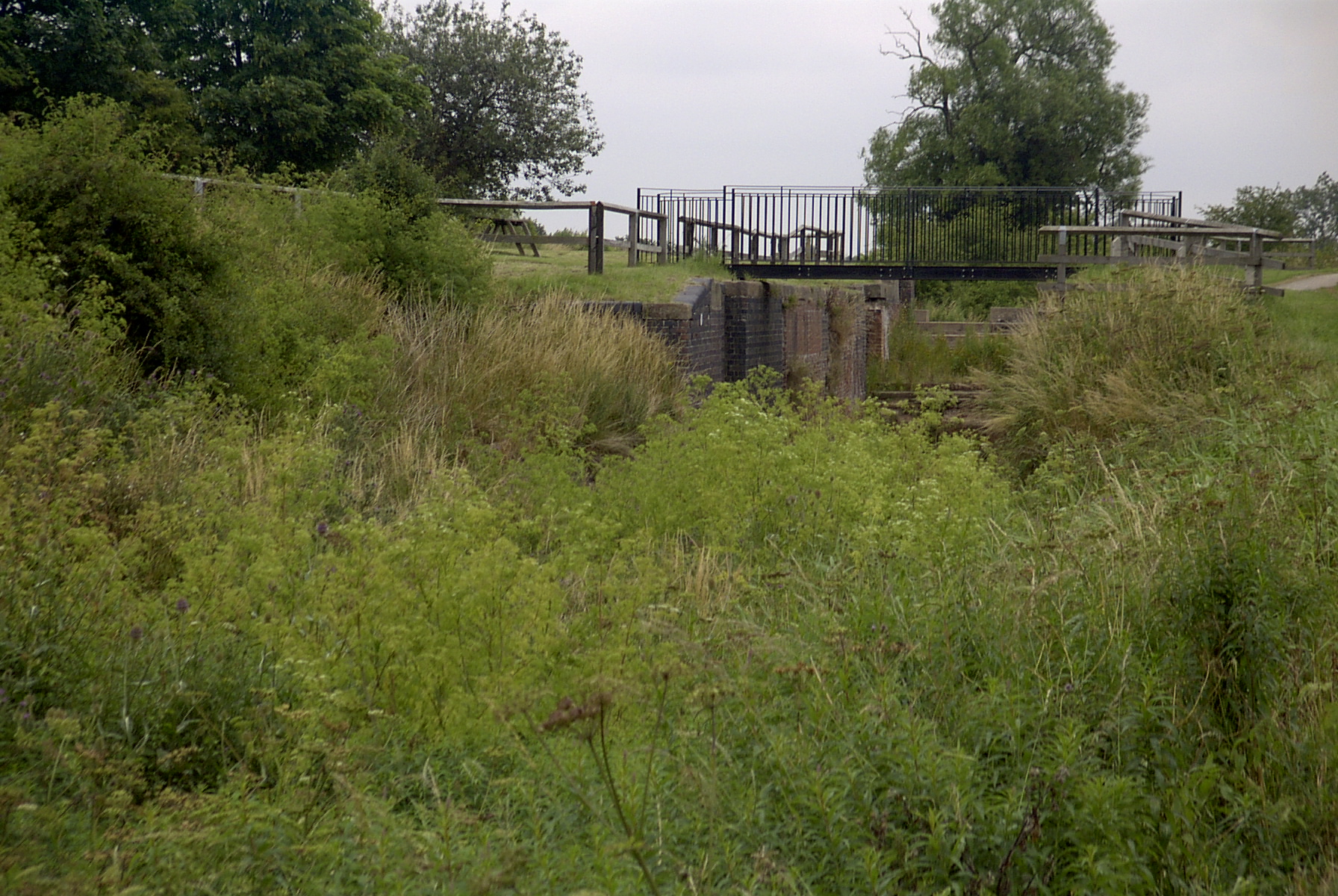
The Grantham Canal ran 33 miles (53 km) from Grantham through 18 locks to West Bridgford, where it joined the River Trent. It was built primarily for the transportation of coal to Grantham. It opened in 1797 and its profitability steadily increased until 1841. It was then sold to a railway company, declined, and was finally closed in 1936. It was used as a water supply for agriculture, and so most of it remained in water after closure, although bridges were lowered. Since the 1970s, the Grantham Canal Society have been working to restore parts of it. Two stretches are now navigable to small vessels. A new route will be required where the canal joins the Trent, as road building has severed the original one.
The concept of a canal from the River Trent to Grantham was first raised on 27 August 1791, as a way of supplying the district with cheaper coal. The intent was for the navigation to join the Trent below Nottingham at Radcliffe-on-Trent. As William Jessop was surveying the Nottingham Canal at the time, he was asked to survey the Grantham route as well, and a bill was put before Parliament in 1792. It was defeated, as there was opposition from coal suppliers, who delivered coal by road to Grantham, and from those who thought that the River Witham would be damaged by the project. A revised route was developed, with the junction now at West Bridgford, and an additional 3.6-mile (5.8 km) branch to Bingham. A second bill was put forward and the act of Parliament, the Grantham Canal Act 1793 (33 Geo. 3. c. 94), received royal assent on 30 April 1793. Building work on the canal started in 1793, with Jessop in overall charge, but with James Green and William King as resident engineers: Green, who was from Wollaton, was appointed engineer for the section of canal from the Trent to the Leicestershire border, while King, who was the agent for the Duke of Rutland, was responsible for the rest of the canal, including two reservoirs, one at Denton and the other at Knipton on the River Devon.
The act authorised an initial £75,000 to be raised to pay for construction, together with an option to raise a further £30,000, of which £20,000 should be raised by shares of £100 each among the initial subscribers, and £10,000 by mortgaging the future income of the canal. However, this amount proved insufficient, and there was also disagreement between the shareholders as to their liability to raise the additional £20,000. As a result, a second act of Parliament was sought. This received royal assent as the Grantham Canal Act 1797 (37 Geo. 3. c. 30) on 3 March 1797, and made clear the obligations of existing shareholders to pay the extra subscription, and also authorised an additional £24,000 to be raised. The second act also removed restrictions in the first act, and allowed the company to set whatever rates it chose for using the canal.
The eastern section from the Leicestershire border was opened on 1 February 1797, with the rest of the canal later that year. The canal was built with locks 75 by 14 feet (22.9 by 4.3 m), the same size as those on the Nottingham Canal to allow boats to use both. The branch to Bingham authorised by the first act of Parliament was not built. The 18 locks raised the level of the canal by 140 feet (43 m) from the Trent to Grantham. Eleven of them were in the first 4 miles (6.4 km) above the Trent, after which there was a level pound of around 20 miles (32 km) before a flight of seven locks at Woolsthorpe, and a much shorter upper pound to Grantham. At Harlaxton, the canal passed through a deep cutting (effectively crossing the watershed between the River Witham and the River Trent), which was only wide enough for a single boat, but this situation was partially rectified in 1801 when the cutting was widened in two places to allow boats travelling on opposite directions to cross. At Cropwell Bishop and Cropwell Butler, the route passed through gypsum beds, which resulted in problems with leakage.
The canal made sufficient money to repay substantial debts in 1804 and 1805, after which dividends were paid to the shareholders, beginning at 2 per cent in 1806, rising to 5 per cent in 1815, and reaching their highest level of 8.6 per cent in 1839. The tolls brought in an income which remained below £9,000 until 1823, but then rose steadily to reach £13,079 in 1841. Traffic towards Grantham included coal and coke, lime, groceries and building materials. Some of it supplied villages along the line of the canal, and some of that which travelled the full distance was distributed by land to villages beyond Grantham. Downward traffic was largely agricultural produce, including corn, beans, malt and wool. Such produce was normally loaded at Grantham or Harby.
Initially, some of the coal carried on the canal had been transported in boats owned by the canal company, but they had given up this practice in 1812. They resumed carrying coal in 1827, because they felt that coal stocks at Grantham were not adequate, but were accused of price-fixing. Although the penalty imposed by Lincoln Assizes was small, they ceased this trade, and the coal merchants agreed to maintain stocks of 2,660 tons at Grantham. In 1833, J. Rofe and his son made a proposal for a canal to connect Grantham and Sleaford, but this was not pursued.
In common with most canals, competition from railways posed a major threat, and in 1845 the canal owners agreed to sell it to the Ambergate, Nottingham, Boston and Eastern Junction Railway when their line from Ambergate to Grantham was opened. Although the railway was completed in 1850, the railway company did not honour the agreement. The canal company brought a large number of cases against the railway company, and successfully opposed several bills which the railway were trying to get passed in Parliament. Eventually the railway company agreed to pay, and shareholders received £45 per share in cash, with the balance being in railway mortgages. The agreement was reached on 1 June 1854, and the transfer of ownership took place on 20 December. Railway mergers meant that the canal came under the control of the Great Northern Railway in 1861, and later the London and North Eastern Railway.
Traffic declined as the railway companies neglected the canal, and were down to 18,802 tons in 1905, on which the tolls amounted to £242 and the London and North Eastern Railway (General Powers) Act 1936 (26 Geo. 5 & 1 Edw. 8. c. cxxvii) formally closed the canal, though there had been no boat traffic since 1929. The closure act stipulated that water levels should be maintained at 2 feet (60 cm) to support agricultural needs. This effectively guaranteed the continued existence of the canal channel, but structures such as locks and bridges deteriorated, and in the 1950s 46 of the 69 bridges over the canal were lowered as part of road improvement schemes. Although the low bridges act as barriers to navigation, large parts of the canal are still in water.
Hub AI
Grantham Canal AI simulator
(@Grantham Canal_simulator)
Grantham Canal
The Grantham Canal ran 33 miles (53 km) from Grantham through 18 locks to West Bridgford, where it joined the River Trent. It was built primarily for the transportation of coal to Grantham. It opened in 1797 and its profitability steadily increased until 1841. It was then sold to a railway company, declined, and was finally closed in 1936. It was used as a water supply for agriculture, and so most of it remained in water after closure, although bridges were lowered. Since the 1970s, the Grantham Canal Society have been working to restore parts of it. Two stretches are now navigable to small vessels. A new route will be required where the canal joins the Trent, as road building has severed the original one.
The concept of a canal from the River Trent to Grantham was first raised on 27 August 1791, as a way of supplying the district with cheaper coal. The intent was for the navigation to join the Trent below Nottingham at Radcliffe-on-Trent. As William Jessop was surveying the Nottingham Canal at the time, he was asked to survey the Grantham route as well, and a bill was put before Parliament in 1792. It was defeated, as there was opposition from coal suppliers, who delivered coal by road to Grantham, and from those who thought that the River Witham would be damaged by the project. A revised route was developed, with the junction now at West Bridgford, and an additional 3.6-mile (5.8 km) branch to Bingham. A second bill was put forward and the act of Parliament, the Grantham Canal Act 1793 (33 Geo. 3. c. 94), received royal assent on 30 April 1793. Building work on the canal started in 1793, with Jessop in overall charge, but with James Green and William King as resident engineers: Green, who was from Wollaton, was appointed engineer for the section of canal from the Trent to the Leicestershire border, while King, who was the agent for the Duke of Rutland, was responsible for the rest of the canal, including two reservoirs, one at Denton and the other at Knipton on the River Devon.
The act authorised an initial £75,000 to be raised to pay for construction, together with an option to raise a further £30,000, of which £20,000 should be raised by shares of £100 each among the initial subscribers, and £10,000 by mortgaging the future income of the canal. However, this amount proved insufficient, and there was also disagreement between the shareholders as to their liability to raise the additional £20,000. As a result, a second act of Parliament was sought. This received royal assent as the Grantham Canal Act 1797 (37 Geo. 3. c. 30) on 3 March 1797, and made clear the obligations of existing shareholders to pay the extra subscription, and also authorised an additional £24,000 to be raised. The second act also removed restrictions in the first act, and allowed the company to set whatever rates it chose for using the canal.
The eastern section from the Leicestershire border was opened on 1 February 1797, with the rest of the canal later that year. The canal was built with locks 75 by 14 feet (22.9 by 4.3 m), the same size as those on the Nottingham Canal to allow boats to use both. The branch to Bingham authorised by the first act of Parliament was not built. The 18 locks raised the level of the canal by 140 feet (43 m) from the Trent to Grantham. Eleven of them were in the first 4 miles (6.4 km) above the Trent, after which there was a level pound of around 20 miles (32 km) before a flight of seven locks at Woolsthorpe, and a much shorter upper pound to Grantham. At Harlaxton, the canal passed through a deep cutting (effectively crossing the watershed between the River Witham and the River Trent), which was only wide enough for a single boat, but this situation was partially rectified in 1801 when the cutting was widened in two places to allow boats travelling on opposite directions to cross. At Cropwell Bishop and Cropwell Butler, the route passed through gypsum beds, which resulted in problems with leakage.
The canal made sufficient money to repay substantial debts in 1804 and 1805, after which dividends were paid to the shareholders, beginning at 2 per cent in 1806, rising to 5 per cent in 1815, and reaching their highest level of 8.6 per cent in 1839. The tolls brought in an income which remained below £9,000 until 1823, but then rose steadily to reach £13,079 in 1841. Traffic towards Grantham included coal and coke, lime, groceries and building materials. Some of it supplied villages along the line of the canal, and some of that which travelled the full distance was distributed by land to villages beyond Grantham. Downward traffic was largely agricultural produce, including corn, beans, malt and wool. Such produce was normally loaded at Grantham or Harby.
Initially, some of the coal carried on the canal had been transported in boats owned by the canal company, but they had given up this practice in 1812. They resumed carrying coal in 1827, because they felt that coal stocks at Grantham were not adequate, but were accused of price-fixing. Although the penalty imposed by Lincoln Assizes was small, they ceased this trade, and the coal merchants agreed to maintain stocks of 2,660 tons at Grantham. In 1833, J. Rofe and his son made a proposal for a canal to connect Grantham and Sleaford, but this was not pursued.
In common with most canals, competition from railways posed a major threat, and in 1845 the canal owners agreed to sell it to the Ambergate, Nottingham, Boston and Eastern Junction Railway when their line from Ambergate to Grantham was opened. Although the railway was completed in 1850, the railway company did not honour the agreement. The canal company brought a large number of cases against the railway company, and successfully opposed several bills which the railway were trying to get passed in Parliament. Eventually the railway company agreed to pay, and shareholders received £45 per share in cash, with the balance being in railway mortgages. The agreement was reached on 1 June 1854, and the transfer of ownership took place on 20 December. Railway mergers meant that the canal came under the control of the Great Northern Railway in 1861, and later the London and North Eastern Railway.
Traffic declined as the railway companies neglected the canal, and were down to 18,802 tons in 1905, on which the tolls amounted to £242 and the London and North Eastern Railway (General Powers) Act 1936 (26 Geo. 5 & 1 Edw. 8. c. cxxvii) formally closed the canal, though there had been no boat traffic since 1929. The closure act stipulated that water levels should be maintained at 2 feet (60 cm) to support agricultural needs. This effectively guaranteed the continued existence of the canal channel, but structures such as locks and bridges deteriorated, and in the 1950s 46 of the 69 bridges over the canal were lowered as part of road improvement schemes. Although the low bridges act as barriers to navigation, large parts of the canal are still in water.
Recent media