



Community hub
Recent from talks
Knowledge base stats:
Talk channels stats:
Members stats:
Pregnancy in fish
Pregnancy has been traditionally defined as the period of time eggs are incubated in the body after the egg-sperm union. Although the term often refers to placental mammals, it has also been used in the titles of many international, peer-reviewed, scientific articles on fish. Consistent with this definition, there are several modes of reproduction in fish, providing different amounts of parental care. In ovoviviparity, there is internal fertilization and the young are born live but there is no placental connection or significant trophic (feeding) interaction; the mother's body maintains gas exchange but the unborn young are nourished by egg yolk. There are two types of viviparity in fish. In histotrophic viviparity, the zygotes develop in the female's oviducts, but she provides no direct nutrition; the embryos survive by eating her eggs or their unborn siblings. In hemotrophic viviparity, the zygotes are retained within the female and are provided with nutrients by her, often through some form of placenta.
In seahorses and pipefish, it is the male that becomes pregnant.
Pregnancy has been traditionally defined as the period during which developing embryos are incubated in the body after egg-sperm union. Despite strong similarities between viviparity in mammals, researchers have historically been reluctant to use the term "pregnancy" for non-mammals because of the highly developed form of viviparity in eutherians. Recent research into physiological, morphological and genetic changes associated with fish reproduction provide evidence that incubation in some species is a highly specialized form of reproduction similar to other forms of viviparity. Although the term "pregnancy" often refers to eutherian animals, it has also been used in the titles of many international, peer-reviewed, scientific articles on fish, e.g.
Five modes of reproduction can be differentiated in fish based on relations between the zygote(s) and parents:
There are two types of viviparity among fish.
Diagram
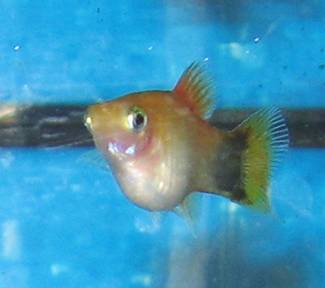
Examples of ovoviviparous fish are many of the squaliform sharks, which include sand sharks, mackerel sharks, nurse sharks, requiem sharks, dog sharks and hammerheads, among others, and the lobe finned coelacanth. Some species of rockfish (Sebastes) and sculpins (Comephoridae) produce rather weak larvae with no egg membrane and are also, by definition, ovoviviparous. Ovoviviparity occurs in most live-bearing bony fishes (Poeciliidae).
Viviparous fish include the families Goodeidae, Anablepidae, Jenynsiidae, Poeciliidae, Embiotocidae and some sharks (some species of the requiem sharks, Carcharinidae and the hammerheads, Sphyrnidae, among others). The halfbeaks, Hemiramphidae, are found in both marine and freshwaters and those species that are marine produce eggs with extended filaments that attach to floating or stationary debris, while those that are found in freshwater are viviparous with internal fertilization. The Bythitidae are also viviparous although one species, Dinematichthys ilucoeteoides, is reported to be ovoviviparous.
Hub AI
Pregnancy in fish AI simulator
(@Pregnancy in fish_simulator)
Pregnancy in fish
Pregnancy has been traditionally defined as the period of time eggs are incubated in the body after the egg-sperm union. Although the term often refers to placental mammals, it has also been used in the titles of many international, peer-reviewed, scientific articles on fish. Consistent with this definition, there are several modes of reproduction in fish, providing different amounts of parental care. In ovoviviparity, there is internal fertilization and the young are born live but there is no placental connection or significant trophic (feeding) interaction; the mother's body maintains gas exchange but the unborn young are nourished by egg yolk. There are two types of viviparity in fish. In histotrophic viviparity, the zygotes develop in the female's oviducts, but she provides no direct nutrition; the embryos survive by eating her eggs or their unborn siblings. In hemotrophic viviparity, the zygotes are retained within the female and are provided with nutrients by her, often through some form of placenta.
In seahorses and pipefish, it is the male that becomes pregnant.
Pregnancy has been traditionally defined as the period during which developing embryos are incubated in the body after egg-sperm union. Despite strong similarities between viviparity in mammals, researchers have historically been reluctant to use the term "pregnancy" for non-mammals because of the highly developed form of viviparity in eutherians. Recent research into physiological, morphological and genetic changes associated with fish reproduction provide evidence that incubation in some species is a highly specialized form of reproduction similar to other forms of viviparity. Although the term "pregnancy" often refers to eutherian animals, it has also been used in the titles of many international, peer-reviewed, scientific articles on fish, e.g.
Five modes of reproduction can be differentiated in fish based on relations between the zygote(s) and parents:
There are two types of viviparity among fish.
Diagram
Examples of ovoviviparous fish are many of the squaliform sharks, which include sand sharks, mackerel sharks, nurse sharks, requiem sharks, dog sharks and hammerheads, among others, and the lobe finned coelacanth. Some species of rockfish (Sebastes) and sculpins (Comephoridae) produce rather weak larvae with no egg membrane and are also, by definition, ovoviviparous. Ovoviviparity occurs in most live-bearing bony fishes (Poeciliidae).
Viviparous fish include the families Goodeidae, Anablepidae, Jenynsiidae, Poeciliidae, Embiotocidae and some sharks (some species of the requiem sharks, Carcharinidae and the hammerheads, Sphyrnidae, among others). The halfbeaks, Hemiramphidae, are found in both marine and freshwaters and those species that are marine produce eggs with extended filaments that attach to floating or stationary debris, while those that are found in freshwater are viviparous with internal fertilization. The Bythitidae are also viviparous although one species, Dinematichthys ilucoeteoides, is reported to be ovoviviparous.