Hubbry Logo
SqualiformesSqualiformesMain
Open search
Squaliformes
Community hub
Squaliformes
logo
8 pages, 0 posts
0 subscribers
Be the first to start a discussion here.
Squaliformes
Squaliformes
from Wikipedia

Squaliformes
Temporal range: Late Jurassic–Recent[1]
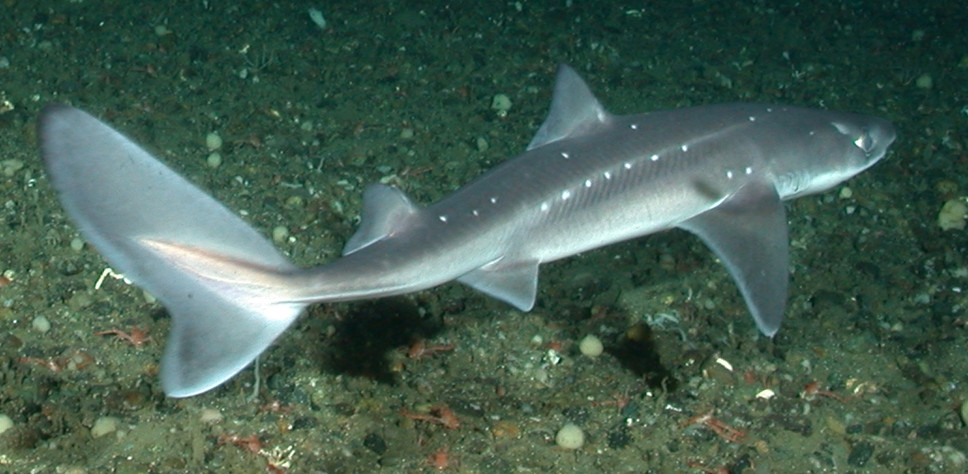
Pacific spiny dogfish, Squalus suckleyi
Scientific classification Edit this classification
Kingdom: Animalia
Phylum: Chordata
Class: Chondrichthyes
Subclass: Elasmobranchii
Division: Selachii
Superorder: Squalomorphi
Series: Squalida
Order: Squaliformes
Goodrich, 1909
Type species
Squalus acanthias

The Squaliformes /ˌskwɒlɪˈfɔːrmz/ are an order of sharks that includes about 126 species in seven families.

Members of the order have two dorsal fins, which usually possess spines, they usually have a sharp head, no anal fin or nictitating membrane, and five to seven gill slits. In most other respects, however, they are quite variable in form and size. Most species of the squaliform order live in saltwater or brackish water. They are found worldwide, from northern to tropical waters, and from shallow coastal seas to the open ocean.[2]

All members of the family Etmoperidae and Dalatiidae and Zameus squamulosus possess photophores, luminous organs, and exhibit intrinsic bioluminescence.[3] Bioluminescence evolved once in Squaliformes, approximately 111–153 million years ago, and helped the Squaliformes radiate and adapt to the deep sea.[3][4] The common ancestor of Dalatiidae, Etmopteridae, Somniosidae, and Oxynotidae possessed a luminous organ and used bioluminescence for camouflage by counterillumination.[3][5] Counterillumination is an active form of camouflage in which an organism emits light to match the intensity of downwelling light to hide from predators below.[6] Currently, bioluminescence provides different functions for Squaliformes based on the family. Dalatiidae and Zameus squamulosus possess simple photophores and use bioluminescence for ventral counter-illumination.[5] Etmopteridae possess more complex photophores [7] and utilize bioluminescence for ventral counter illumination as well as species recognition.[8]

Many squaliforms have a spine in front of each of the two dorsal fins, likely a trait of the common ancestor of this clade. The clade likely originated in the post-Jurassic shallow waters of the northern Tethyal margin.[9]

Classification

[edit]

Family Centrophoridae Bleeker, 1859 (gulper sharks)

Family Dalatiidae (J. E. Gray, 1851) (kitefin sharks)

Family Etmopteridae Fowler, 1934 (lantern sharks)

Family Oxynotidae Gill, 1872 (rough sharks)

Family Somniosidae D. S. Jordan, 1888 (sleeper sharks)

Family Squalidae Blainville, 1816 (dogfish sharks)

Family Image Common name Genera Species Description
Centrophoridae Gulper sharks 2 20 Gulper sharks are usually deepwater fish. While some, such as the gulper shark Centrophorus granulosus, are found worldwide and fished commercially, others are uncommon and little-known. Their usual prey is other fish; some are known to feed on squid, octopus, and shrimp. Some species live on the bottom (benthic), while others are pelagic. They are ovoviviparous, with the female retaining the egg-cases in her body until they hatch.[10] They are small to medium sharks, ranging from 79 centimetres (2.59 ft) to 164 centimetres (5.38 ft) in adult body length.
Dalatiidae Kitefin sharks 7 10 Kitefin sharks are small, under 2 m (6.6 ft) long, and are found worldwide. They have cigar-shaped bodies with narrow heads and rounded snouts. Several species have specialized bioluminescent organs.[11] The term kitefin shark is also used as the common name for the type species of the family, Dalatias licha.
Echinorhinidae Bramble sharks 1 2 Bramble sharks are usually benthic fish found in tropical and temperate waters worldwide, while the prickly shark is found in the deep waters of the Pacific Ocean. Their usual prey is small fish, cephalopods, and crustaceans. They are ovoviviparous, with the female retaining the egg cases in her body until they hatch.[12] They are relatively large sharks, ranging from 3.1 to 4 metres (10 to 13 ft) in adult body length.
Etmopteridae Lantern sharks 5 45 Lantern sharks are deepwater fish with light-producing photophores on their bodies. The members of this family are small, under 90 cm (35 in) long, and are found worldwide.[13]
Oxynotidae Rough sharks 1 5 Rough sharks are characterised by two large dorsal fins, each with a sharp spine, and with the first fin placed far forward above the head. Their bodies are compressed, giving them a triangular cross-section. Their skins are even rougher and more prickly than the dogfishes (below). Rough sharks are small to medium in size, ranging from 49 to 150 centimetres (1.61 to 4.92 ft) in adult body length, depending on species. They are deepwater sharks possessing a luminous organ which live in Atlantic and western Pacific oceans.[14]
Somniosidae Sleeper sharks 7 20 Sleeper sharks are a poorly studied[15] deep-sea shark found in all oceans.[16] They contain antifreeze to survive in cold temperatures, and may feed on colossal squid. In Iceland, they are hunted for food. They are allowed to rot for months until the poisonous antifreeze degrades, and they are safe to eat.[17]
Squalidae Dogfish sharks 3 31 Dogfish sharks have two dorsal fins, each with smooth spines, but no anal fin. Their skin is generally rough to the touch.[18] These sharks are characterized by teeth in upper and lower jaws similar in size; caudal peduncle with lateral keels; upper precaudal pit usually present; and a caudal fin without a subterminal notch. Unlike nearly all other shark species, dogfish possess venom, which coats their dorsal spines and is mildly toxic to humans. Their livers and stomachs contain also the compound squalamine, which possesses the property of reduction of small blood vessel growth in humans.[19]

References

[edit]

Further reading

[edit]
Revisions and contributorsEdit on WikipediaRead on Wikipedia
from Grokipedia
Squaliformes is an order of sharks within the subclass Elasmobranchii, commonly known as dogfish or sleeper sharks, distinguished by the absence of an anal fin, two dorsal fins (often bearing spines), five gill slits, the presence of spiracles, and the lack of a nictitating membrane. This order encompasses approximately 130 species across seven families, including Squalidae, Centrophoridae, Etmopteridae, Dalatiidae, Somniosidae, Oxynotidae, and Echinorhinidae (though the latter is sometimes classified separately), with a monophyletic radiation originating in the Lower Cretaceous. These sharks exhibit a wide range of sizes, from the diminutive pygmy sharks of the genus Squaliolus (reaching just 22–27 cm in length) to the massive Greenland shark (Somniosus microcephalus), which can exceed 6 meters and is among the longest-lived vertebrates, potentially surviving over 400 years. Many species are deep-sea inhabitants, occurring in benthic and pelagic zones from coastal shallows to abyssal depths beyond 3,000 meters, with a global distribution spanning tropical to polar waters in all major oceans. Notable adaptations include ovoviviparity in reproduction, dermal denticles providing a rough skin texture, and bioluminescence in several families (such as Etmopteridae and Dalatiidae), where photophores enable counter-illumination for camouflage in the deep sea—a trait that evolved during the Cretaceous period. Phylogenetically, Squaliformes form a well-supported clade within the Squalomorphi, sister to Squatiniformes and Pristiophoriformes, with fossil records dating back to the Late Jurassic—highlighting their ancient lineage among modern sharks. Ecologically, they play key roles in marine food webs as mid-level predators, though many face threats from bycatch in fisheries targeting more commercially valuable species, such as the spiny dogfish (Squalus acanthias).

Taxonomy

Classification

Squaliformes belongs to the kingdom Animalia, phylum Chordata, class Chondrichthyes, subclass Elasmobranchii, and superorder Squalomorphi. The order was established by Goodrich in 1909 to distinguish these sharks based on shared morphological features. Diagnostic traits of Squaliformes include the presence of two dorsal fins, typically bearing spines, and the absence of an anal fin and nictitating membrane. They possess five gill slits and exhibit a primitive orbitostylic jaw suspension, in which the upper jaw is primarily connected to the cranium via the hyomandibula and anterior ligaments. As of 2025, Squaliformes encompasses approximately 143 valid species across six families, according to Eschmeyer's Catalog of Fishes; the family Echinorhinidae (2 species) is sometimes included as a seventh but is now often classified in the separate order Echinorhiniformes based on molecular evidence. Historically, these sharks were initially classified within broader groups such as the Squali of Linnaeus, but Goodrich's 1909 revision separated them into Squaliformes based on distinctive fin structures and jaw morphology. Subsequent refinements by Compagno in 1973 solidified the order's boundaries. Recent molecular phylogenies (e.g., 2015) confirm the monophyly of Squaliformes excluding Echinorhinidae, with insights into family relationships such as the paraphyly of Somniosidae.

Families and species

The order Squaliformes includes six core families (plus Echinorhinidae sometimes classified separately), totaling approximately 143 species as of 2025, with ongoing taxonomic revisions potentially adjusting these figures as new research uncovers cryptic diversity and resolves synonyms. These families exhibit varied adaptations to marine environments, particularly deep-sea habitats, contributing to the order's global distribution. Echinorhinidae is noted separately below due to its disputed placement.
FamilyCommon NameNumber of Species (as of 2025)Example SpeciesDistinguishing Features
CentrophoridaeGulper sharks15Centrophorus squamosus (leafscale gulper shark)Slender bodies with large mouths for gulping prey; often found on continental slopes.
DalatiidaeKitefin and pygmy sharks10Squaliolus laticaudus (spiny pygmy shark)Tiny size (under 30 cm) to larger forms; some species possess bioluminescent organs for deep-water navigation.
EtmopteridaeLantern sharks54Etmopterus lucifer (blackbelly lanternshark)Presence of photophores for bioluminescence, enabling counter-illumination and species-specific patterns in the deep sea; highest species diversity in the order due to adaptations for abyssal life.
OxynotidaeRough sharks5Oxynotus centrina (angular roughshark)High-backed bodies covered in coarse, thorn-like denticles; inhabit upper continental slopes.
SomniosidaeSleeper sharks17Somniosus microcephalus (Greenland shark)Large-bodied species tolerant of extreme deep-sea conditions, including low temperatures and high pressures; known for slow metabolism and longevity.
SqualidaeDogfish sharks42Squalus acanthias (spiny dogfish)Slender forms with prominent dorsal spines; some species, like the spiny dogfish, hold commercial value in fisheries.
Echinorhinidae (often separate order)Bramble sharks2Echinorhinus cookei (prickly shark)Stout bodies adorned with large, spine-like denticles resembling thorns; rare and poorly known deep-water inhabitants.
The elevated species count in Etmopteridae reflects their specialization for deep-sea niches, where photophore-mediated behaviors facilitate survival in low-light conditions. Taxonomic work continues, particularly in Squalidae and Etmopteridae, as molecular analyses reveal previously unrecognized diversity.

Morphology

External features

Squaliformes exhibit a distinctive fin configuration that distinguishes them from other shark orders, featuring two dorsal fins armed with prominent spines along their leading edges, while lacking an anal fin entirely. The pectoral fins are typically broad and triangular, providing enhanced hydrodynamic stability during slow, cruising movements in deep-water environments. This arrangement supports the order's predominantly benthic or midwater lifestyles, with variations in fin size and spine robustness across families; for instance, in Squalidae, the first dorsal fin originates just behind the pectoral fin tips, contributing to agile maneuvering. The skin of Squaliformes is covered in rough placoid scales, also known as dermal denticles, which form a protective, abrasive layer adapted for reducing drag and deterring ectoparasites. These scales vary in morphology, with most species displaying small, overlapping denticles that create a sandpaper-like texture; however, in the family Echinorhinidae, such as the bramble shark (Echinorhinus brucus), the denticles are enlarged and thorn-like, often fusing into compound plates up to 1.5 cm in diameter, scattered irregularly over the body and fins for added defense. In bioluminescent species, ventral scales may be modified with translucent or pavement-shaped forms to facilitate light emission without obstruction. Head morphology in Squaliformes includes a relatively short, pointed snout that houses key sensory structures, paired with large, almond-shaped eyes optimized for vision in low-light conditions through expanded pupils and enhanced retinal sensitivity. They possess five pairs of gill slits, a diagnostic trait for the order, along with prominent spiracles behind the eyes for supplementary respiration. The ampullae of Lorenzini, clusters of jelly-filled pores concentrated on the snout and ventral head, enable electroreception to detect prey bioelectric fields in murky or dark habitats. Size varies dramatically within the order, from the diminutive dwarf lanternshark (Etmopterus perryi) at a maximum of 18 cm to the massive Greenland shark (Somniosus microcephalus) reaching 6.4 m, reflecting adaptations to diverse ecological niches. Bioluminescent organs, in the form of photophores, are present in select families such as Dalatiidae and Etmopteridae, appearing as dense clusters of cup-shaped structures on the ventral surfaces from the snout to the caudal peduncle. These organs produce blue-green light via photocytes for counterillumination, matching ambient downwelling light to camouflage the shark's silhouette against predators below. Photophore density can reach up to 34 per mm² in some species, with patterns varying by family to optimize stealth in the mesopelagic zone.

Internal anatomy

The skeletal system of Squaliformes consists primarily of cartilage rather than bone, a characteristic feature of chondrichthyans that provides flexibility and reduces weight for buoyancy in aquatic environments. This cartilaginous framework is reinforced through superficial mineralization via prismatic calcifications known as tesserae, particularly in the vertebrae, where calcified neural and haemal arches enhance structural support without compromising mobility. The jaw suspension in these sharks employs a hyostylic mechanism, in which the upper jaw is not rigidly fused to the cranium but articulates loosely with the hyomandibula, allowing for greater protrusibility and effective prey capture in varied habitats. The digestive system features a spiral valve intestine, a coiled structure that significantly increases the internal surface area for nutrient absorption, enabling efficient processing of prey in nutrient-scarce deep-sea conditions typical of many squaliform species. A prominent adaptation is the enlarged liver, which in species such as those in the family Centrophoridae contains up to 90% squalene oil by mass, providing hydrodynamic lift for buoyancy control and minimizing energy expenditure on constant swimming. This lipid-rich organ, comprising a substantial portion of body mass in deep-water forms, supports neutral buoyancy at depths exceeding 1,000 meters, where pressure gradients would otherwise challenge locomotion. Circulatory and respiratory systems in Squaliformes are adapted for osmoregulation in saline environments through urea retention, where high levels of urea and trimethylamine oxide in the blood maintain osmotic balance with seawater, preventing dehydration without excessive energy costs. Gill structures exhibit modifications for oxygen extraction in hypoxic deep waters, including enlarged gill filaments and increased lamellar surface area in species like those in Somniosidae, facilitating ram ventilation during slow cruising in low-oxygen zones below 200 meters. These adaptations ensure adequate oxygenation despite reduced ambient dissolved oxygen levels, supporting metabolic demands in cold, oxygen-poor abyssal habitats. The nervous system emphasizes chemosensory dominance, with enlarged olfactory bulbs in deep-sea representatives such as the Greenland shark (Somniosus microcephalus), which possess some of the largest relative olfactory structures among vertebrates, enhancing detection of chemical cues in visually obscured environments. The optic tectum, while variably proportioned, integrates visual and somatosensory inputs for spatial awareness in dim conditions, though it is relatively reduced in profundal species to prioritize olfactory processing over vision. This neural configuration supports heightened sensory acuity for navigation and foraging where light penetration is minimal, reflecting evolutionary pressures in low-visibility deep-sea niches. In the family Somniosidae, a notably low metabolic rate—evidenced by minimal oxygen consumption and slow growth—underpins exceptional longevity, as seen in the Greenland shark, which achieves lifespans exceeding 400 years through efficient energy conservation in frigid, stable deep waters. These traits collectively enable survival in extreme conditions, with the low metabolic demands reducing resource needs and enhancing resilience to environmental stressors.

Distribution and habitat

Geographic range

Squaliformes exhibit a global distribution, occurring in all major oceans including the Atlantic, Pacific, Indian, Arctic, and Southern Oceans. They inhabit waters ranging from polar regions, such as the Arctic where the Greenland shark (Somniosus microcephalus) is prevalent in the northern North Atlantic and Arctic basins, to tropical latitudes across equatorial zones. This broad latitudinal spread encompasses temperate, subarctic, and tropical environments, with many species demonstrating circumglobal or transoceanic ranges; for instance, the spiny dogfish (Squalus acanthias) is found in both the North Atlantic and North Pacific Oceans. While the order is predominantly associated with deep-sea habitats, depth ranges vary significantly among species and families. Most squaliforms, particularly those in families like Centrophoridae and Etmopteridae, occupy benthopelagic zones between 200 and 2000 meters, with records extending to over 2600 meters for species such as the Greenland shark. In contrast, some coastal species like the spiny dogfish inhabit shallower waters, from near-surface levels up to approximately 730 meters, often along continental shelves. Endemism is notable within Squaliformes, especially in the Squalidae and Etmopteridae families, where numerous species are restricted to specific regions. For example, certain Etmopterus species are endemic to the Indo-Pacific, such as the lined lanternshark (Etmopterus dislineatus) confined to northeastern Australian waters, while the angular roughshark (Oxynotus centrina) is primarily limited to the eastern Atlantic and Mediterranean Sea, from the Bay of Biscay to Senegal. This pattern of regional restriction contrasts with the more widespread distributions observed in a minority of cosmopolitan taxa.

Environmental preferences

Squaliformes, commonly known as dogfish sharks, predominantly inhabit deep-sea environments, with most species favoring bathyal depths ranging from 200 to 4000 meters, though some extend into abyssal zones beyond 4000 meters. Families such as Dalatiidae occupy mesopelagic layers (200-1000 meters), while others like Squalidae are more versatile, occurring from shallow coastal waters to depths exceeding 1400 meters. These sharks associate with continental slopes, seamounts, and submarine canyons, where prey is abundant, and they exhibit both benthic and pelagic lifestyles depending on the species. The order is adapted to cold, stable water conditions typical of deep oceans, with temperatures generally between 0°C and 15°C, and many species preferring below 7°C. Low temperatures in these habitats are tolerated through physiological adjustments, including reduced metabolic rates that conserve energy in food-scarce environments. Salinity levels are typically high at around 35 parts per thousand in fully marine settings, though some species, such as the spiny dogfish (Squalus acanthias) in the family Squalidae, show tolerance for brackish waters near estuaries. High pressure at depth is managed via large, oil-filled livers that provide neutral buoyancy and compressibility similar to seawater, preventing structural damage; this adaptation is particularly pronounced in deep-dwelling families like Somniosidae and Dalatiidae. Squaliformes demonstrate resilience to low-oxygen conditions prevalent in deep-sea oxygen minimum zones, with species in families like Etmopteridae and Somniosidae enduring dissolved oxygen levels as low as 1-4 mg/L. Substrates vary from soft mud and sand to rocky outcrops, influencing habitat selection for ambush predation or foraging. In polar regions, genera within Somniosidae, such as Somniosus, withstand near-freezing temperatures (0.6-4°C) in Arctic and Antarctic waters, supported by high concentrations of urea and trimethylamine oxide (TMAO), along with lipid-rich livers, that maintain functionality in extreme cold.

Biology and ecology

Behavior

Squaliform sharks typically exhibit slow cruising locomotion, propelled primarily by undulations of the body and caudal fin in a subcarangiform or carangiform mode, which is well-suited to their often deep-water habitats where energy efficiency is advantageous. Deep-sea species within the order, such as those in the family Somniosidae, maintain low cruise speeds, often below 0.5 body lengths per second, reflecting adaptations to low-oxygen environments and reduced metabolic demands. However, certain species demonstrate burst capabilities for ambush predation; for instance, the cookiecutter shark (Isistius brasiliensis) uses its powerful caudal fin to achieve rapid accelerations, enabling sudden attacks on larger prey. In the dim conditions of their preferred depths, squaliform sharks rely heavily on electroreception via the ampullae of Lorenzini to detect bioelectric fields from prey or conspecifics, a sensory modality particularly vital in low-visibility waters. Olfaction also plays a key role, with enlarged olfactory rosettes allowing detection of chemical cues over considerable distances in the water column, aiding navigation and orientation in dark environments. Many deep-sea squaliforms, such as lanternsharks in the family Etmopteridae, employ bioluminescence from ventral photophores for counterillumination, matching the intensity of downwelling light to reduce their silhouette visibility to predators below. Most squaliform species lead solitary lives, foraging and resting independently to minimize competition in resource-limited deep-sea habitats, though some in the family Squalidae, like the spiny dogfish (Squalus acanthias), form large schools segregated by size and sex, potentially for enhanced predator detection or coordinated foraging. Shallow-water representatives often display nocturnal activity patterns, increasing movement and interaction during low-light periods to exploit diel prey availability while reducing exposure to diurnal threats. Defensive strategies in Squaliformes include the erection of sharp spines preceding the dorsal fins, which can be raised to deter close-range attackers, as seen in species like the spiny dogfish where these spines may also deliver venomous punctures. Certain members of the family Somniosidae, such as the Greenland shark (Somniosus microcephalus), produce toxins in their skin and tissues, including high levels of trimethylamine oxide, which render them unpalatable or harmful to potential predators. Horizontal migrations are generally limited in Squaliformes, with many species showing site fidelity to specific depth zones, but vertical movements are common; for example, species in the genus Etmopterus undertake diel vertical migrations, ascending toward shallower waters at night to follow prey concentrations and descending during the day.

Diet and feeding

Squaliformes exhibit a primarily carnivorous diet, consisting mainly of teleost fishes, cephalopods, and crustaceans, with variations across species and habitats. For instance, mesopelagic species like Deania calcea predominantly consume small to medium-sized teleost fishes, while more adaptable forms such as the spiny dogfish (Squalus acanthias) incorporate both benthic and pelagic fishes into their diet. Cephalopods and crustaceans form significant portions in many deep-sea representatives, including members of the Centrophoridae and Etmopteridae families. Deep-sea squaliforms, particularly in the Squalidae and Dalatiidae, often supplement active predation with opportunistic scavenging of natural food falls or fishery discards, enhancing their resilience in nutrient-poor environments. Feeding strategies among Squaliformes are diverse, reflecting adaptations to their often dim and sparse habitats. Ambush predation is prominent in the cookiecutter shark (Isistius brasiliensis, Dalatiidae), which employs a parasitic-like tactic by attaching to larger prey—such as cetaceans, pinnipeds, or large teleosts—using powerful pharyngeal muscles and lips to excise circular plugs of flesh, often without killing the host immediately. In contrast, active pursuit characterizes many Squalidae species; the spiny dogfish, for example, utilizes ram ventilation to maintain oxygen flow over its gills while chasing fast-swimming prey like herring or squid, combining biting and suction mechanisms for capture. Centrophoridae sharks, such as the large-eyed gulper (Centrophorus squamosus), possess a broad gape that enables them to swallow large prey items whole, including hake and other teleosts up to 40% of their body length. Squaliformes generally occupy mid-trophic levels as predators of smaller mesopelagic organisms, but certain species function as apex predators in deep-sea niches. The Greenland shark (Somniosus microcephalus, Somniosidae) exemplifies this, preying on seals, seabirds, and large fish like cod through slow, stealthy ambushes, potentially targeting resting or sleeping marine mammals. This positioning underscores their role in regulating mesopelagic communities by controlling populations of fishes and invertebrates, thereby influencing energy transfer in oceanic food webs. Long-lived squaliforms, particularly deep-sea dwellers, play a critical ecological role in bioaccumulating contaminants like mercury due to their high trophic positions and slow metabolisms. The Greenland shark accumulates high mercury levels in muscle and liver tissues—with concentrations in muscle often exceeding 1 mg/kg wet weight and reaching up to 4.7 mg/kg wet weight in some populations—through consumption of contaminated prey such as seals and deep-water fish, potentially amplifying toxin transfer to higher predators and highlighting their vulnerability in polluted ecosystems.

Reproduction and life history

Reproductive strategies

Squaliformes exhibit predominantly aplacental viviparity, also known as yolk-sac ovoviparity, in which embryos develop within the uterus and derive nutrition primarily from yolk reserves. This reproductive mode provides protection from predators while avoiding the energy costs of placental structures seen in other elasmobranchs. Internal fertilization is universal across the order, achieved through the insertion of male claspers—paired extensions of the pelvic fins—into the female's oviductal gland to deliver sperm. The absence of an anal fin, a defining morphological trait of Squaliformes, correlates with the expanded functionality of the pelvic region, allowing unobstructed clasper operation during copulation. Mating behaviors in Squaliformes often involve aggressive interactions, with males biting females to grasp and position them, leaving characteristic scars that suggest coercive elements and potential polygyny, particularly in families like Squalidae. These bite marks, observed on the flanks and fins of mature females, indicate forceful male competition for access to receptive partners during breeding aggregations. Such behaviors align with the order's low population densities and segregated sex ratios outside breeding seasons, where males may opportunistically mate with multiple females. Fecundity in Squaliformes is generally low, with litter sizes ranging from 1 to 20 pups, reflecting their K-selected life history strategy that prioritizes fewer, larger offspring. For example, the spiny dogfish (Squalus acanthias) typically produces litters of 4 to 12 pups, while the great lanternshark (Etmopterus princeps) averages 11 pups per brood. The Greenland shark (Somniosus microcephalus) is estimated to produce small litters of up to 10 pups, though direct observations are scarce. Gestation periods are extended, often exceeding 18 months; in S. acanthias, it lasts 18 to 24 months, contributing to biennial or triennial reproductive cycles in many species. Sexual maturity is typically delayed, enhancing longevity but limiting reproductive output over the lifespan. In S. acanthias, maturity varies by population; for example, in the Black Sea, females reach maturity at approximately 12 years and 103 cm total length, with males at about 10.5 years and 88 cm, while in the Aegean Sea, females mature at around 7.5 years and 66 cm, males at 5.5 years and 58 cm. Aseasonal or biennial cycles predominate, as seen in deep-sea species like Centrophorus granulosus and E. princeps, where ovarian development overlaps with gestation in some cases. Unique nutritional adaptations occur in certain taxa, such as limited matrotrophy in etmopterids, where mothers provide supplemental uterine secretions to embryos beyond yolk provisions, resulting in minimal organic matter loss (e.g., 7.7% in E. princeps). This histotrophy supports embryonic growth in nutrient-poor deep-sea environments, distinguishing these species from strictly lecithotrophic congeners. Life history parameters such as maturity age and growth rates vary by population and region, influenced by environmental factors.

Development and growth

Squaliformes exhibit yolk-sac viviparity, primarily a lecithotrophic form in which embryos develop directly within the uterus and rely mainly on nutrients from a large initial yolk sac, which is gradually absorbed as development progresses, supporting growth until the external yolk sac is depleted near the end of gestation. Some species show limited additional nutrient provision via uterine secretions. Gestation periods in Squaliformes are notably extended, reflecting their slow-paced life histories. For instance, the spiny dogfish (Squalus acanthias) has a gestation of 18 to 24 months, with one study estimating approximately 23 months based on embryonic staging. In the Greenland shark (Somniosus microcephalus), gestation is estimated at 8 to 18 years, derived from models incorporating growth rates, maturity age, and litter size, though these projections carry uncertainty due to limited observational data. Pups are born live, with birth sizes varying by species, typically ranging from 10 to 40 cm in total length, enabling immediate independence in their environments. For S. acanthias, modal birth sizes range from 21 to 22 cm. The juvenile phase follows, characterized by growth that slows with age; sexual maturity onset varies regionally from about 6 to 35 years, with individuals reaching maturity sizes around 80 cm at ages depending on population (e.g., 12-20 years in some Atlantic populations). Lifespans vary widely across Squaliformes, with many species living 20 to 50 years, as seen in S. acanthias where maximum reported ages reach up to 100 years, with regional variations such as 35 to 74 years in the northwest Atlantic. Exceptionally, the Greenland shark achieves extreme longevity, with radiocarbon dating of eye lens nuclei indicating a minimum lifespan of 272 years and potential ages up to 512 years for the oldest individuals. Growth rates are generally slow, typically 1 to 5 cm per year, driven by low metabolic demands adapted to cold, deep-water habitats. For S. acanthias, annual increments average about 3.5 cm, though rates can vary with environmental factors such as water temperature and prey availability, which influence metabolic efficiency and resource allocation.

Evolution

Fossil record

The fossil record of Squaliformes primarily consists of isolated teeth, denticles, and occasional vertebrae, as their cartilaginous skeletons rarely preserve well. The order's temporal range extends from the Early Cretaceous to the present, spanning approximately 125 million years, with significant gaps in the record due to the scarcity of complete skeletons. The earliest known squaliform fossils are isolated teeth attributed to the genus Protosqualus, dating to the Barremian stage of the Early Cretaceous (about 125–130 million years ago), discovered in marine deposits of northern Germany. These specimens represent primitive dogfish-like sharks adapted to shallow neritic environments, marking the initial appearance of the group in the fossil record. No compelling evidence supports an earlier Late Jurassic origin, despite some phylogenetic estimates suggesting a possible soft bound around 163 million years ago. Squaliformes underwent a major radiation during the Late Cretaceous (approximately 100–66 million years ago), diversifying into deeper-water niches as evidenced by teeth from genera like Protoxynotus and Paraphorosoides. This expansion coincided with the evolution of bioluminescence, estimated to have originated once between 111 and 153 million years ago based on molecular phylogenies and comparisons with modern deep-sea taxa in families such as Etmopteridae and Dalatiidae; direct fossil evidence for photophores is lacking, but inferred adaptations facilitated colonization of abyssal habitats. Extinct taxa, including early lineages like the Protosqualidae, highlight this period's innovation, with forms showing serrated teeth suited for grasping prey in low-light conditions. The group survived the Cretaceous-Paleogene (K-Pg) extinction event around 66 million years ago, likely due to their occupation of stable deep-sea refugia that buffered against surface ocean perturbations. Post-Eocene (after ~34 million years ago), the fossil record shows a marked increase in diversity, with about half of modern squaliform species' lineages appearing in the Neogene, reflecting recovery and adaptation to cooling oceans. Key fossil sites include Early Cretaceous lagerstätten in Europe (e.g., northern German basins yielding Protosqualus) and the Greenhorn Formation in North America (Cenomanian-Turonian, ~94–90 million years ago), where denticles and vertebrae of squaliforms are preserved in chalky marine sediments alongside other elasmobranchs.

Phylogenetic relationships

Squaliformes occupies a basal position within the superorder Squalomorphi, one of the two primary lineages of neoselachian elasmobranchs alongside Galeomorphi. Molecular phylogenies based on mitochondrial and nuclear DNA sequences position Squaliformes as sister to a clade comprising Squatiniformes (angelsharks) and Pristiophoriformes (sawsharks), with the order Echinorhiniformes (bramble sharks) often placed as the immediate outgroup to this combined group. Hexanchiformes (cow sharks and frilled sharks) represents the most basal squalomorph order, diverging early from the lineage leading to Squaliformes and its relatives. This arrangement highlights Squaliformes' evolutionary proximity to other primitive shark groups, sharing traits such as the absence of an anal fin and a simplified jaw suspension, in contrast to the more derived body plans of batoids (e.g., fused pectoral fins for ray-like locomotion). Within Squaliformes, the order is monophyletic when excluding Echinorhinidae, which aligns more closely with Squatiniformes and Pristiophoriformes based on multi-locus analyses of 172 nuclear ortholog exons. The core squaliform clade features Squalidae (dogfish sharks) as the basal family, followed by Centrophoridae (gulper sharks); these non-bioluminescent lineages give way to a derived subclade uniting Etmopteridae (lantern sharks), Dalatiidae (piked dogfishes), Somniosidae (sleeper sharks), and Oxynotidae (rough sharks), the latter nested within Somniosidae. This bioluminescent subclade, characterized by photophore organs, represents a key evolutionary innovation, with morphological support from scapular and coracoid bar structures reinforcing the overall tree topology. Molecular evidence from mtDNA and nuclear genes dates the divergence of Squaliformes from other squalomorphs to the Early Cretaceous, approximately 115–133 million years ago (Ma), aligning with fossil-calibrated Bayesian estimates. The evolution of bioluminescence within the Etmopteridae–Dalatiidae–Somniosidae clade occurred as a single event during a rapid diversification at the Lower–Upper Cretaceous boundary, around 99–131 Ma, coinciding with deep-sea habitat expansion. Squaliformes shares primitive features with Hexanchiformes, including amphistylic jaw suspension and multiple row dentition, underscoring their retention of ancestral chondrichthyan characteristics relative to the advanced, flattened forms of batoids. Debates persist regarding internal relationships, particularly within Squalidae, where some mtDNA-based studies (e.g., NADH dehydrogenase genes) imply paraphyly by clustering certain genera like Cirrhigaleus with Squalus, conflicting with morphological synapomorphies such as denticle patterns and clasper structures that support monophyly. Ongoing genomic approaches, incorporating whole-genome sequencing, are expected to resolve these discrepancies and refine the order's position amid broader elasmobranch phylogenies.

Conservation and human interactions

Threats and exploitation

Squaliformes species face significant pressures from commercial fishing, primarily targeted for their fins, meat, and liver oil, which contains squalene used in cosmetics and pharmaceuticals. In the North Atlantic, the spiny dogfish (Squalus acanthias) supports substantial fisheries, with commercial landings reaching approximately 11 million pounds in 2023, valued at $2.4 million, mainly for meat and fins. Similarly, gulper sharks (Centrophorus spp.) in the Mediterranean are harvested for their livers, which yield high-value squalene oil, contributing to localized depletions in deep-water stocks. Bycatch represents a major incidental threat, particularly in deep-sea operations where Squaliformes are captured and often discarded. Members of the family Centrophoridae, such as gulper sharks, are frequently taken as bycatch in tuna longline fisheries managed by Regional Fisheries Management Organizations, interacting with hooks at depths overlapping their habitat ranges. Deep-sea trawls exacerbate this issue, entangling species like sleeper sharks (Somniosus spp.) and lanternsharks (Etmopterus spp.) in non-selective gear, leading to high mortality rates among vulnerable deep-water populations. Habitat degradation from bottom trawling further compounds these pressures, especially on seamounts where many Squaliformes reside. Trawling gear physically destroys benthic structures, reducing coral cover by up to 95-98% on affected seamounts and disrupting essential deep-sea habitats for species like prickly sharks (Echinorhinus spp.). Pollution also poses risks through bioaccumulation; for instance, the Greenland shark (Somniosus microcephalus) exhibits elevated mercury levels in muscle tissue, ranging from 1.332 to 3 mg/kg, stemming from industrial contaminants in their Arctic food webs. Historically, exploitation intensified in the 20th century, including targeted hunts of sleeper sharks in Iceland for their vitamin A-rich liver oil, which supported pharmaceutical production until demand shifted. The global shark fin trade amplifies ongoing impacts, with Squaliformes such as the kitefin shark (Dalatias licha) contributing to retail markets, where fins from at least 76 chondrichthyan species, including deep-water dogfishes, are traded internationally. Regional hotspots highlight acute overfishing risks; in the Indo-Pacific, lanternsharks (Etmopteridae) face intense pressure from deep-sea fisheries, rendering them vulnerable due to slow growth and low fecundity. For spiny dogfish, historical declines reached 80% in Northeast Atlantic populations since 1980, driven by sustained harvesting. Their long lifespans, often exceeding decades, heighten susceptibility to these cumulative exploitation effects.

Conservation status

The conservation status of Squaliformes species varies widely, with approximately 40% classified as Data Deficient (DD) by the IUCN Red List as of 2017, primarily due to the challenges of assessing deep-sea populations, including limited accessibility and sparse data on distribution and abundance. Around 20% of assessed species were categorized as Vulnerable (VU) or higher as of 2017, though the 2024 IUCN Species Survival Commission Shark Specialist Group report indicates that 37% of all assessed sharks, rays, and chimaeras are now threatened with extinction, with overfishing as the main driver; this trend likely applies to many Squaliformes given their vulnerability to fisheries. Recent assessments, such as those for gulper sharks (Centrophorus spp.) revised in October 2024, have elevated some species to Critically Endangered due to ongoing deep-water exploitation. The IUCN Species Survival Commission's Shark Specialist Group (SSG) continues to conduct assessments to address these gaps, emphasizing the need for improved monitoring in remote habitats. Several key Squaliformes species benefit from targeted management measures. The spiny dogfish (Squalus acanthias), assessed as Vulnerable globally, is subject to quotas in the European Union, where directed fisheries have been prohibited since 2010 and bycatch limits reduced progressively to support stock recovery. In the Northwest Atlantic, including NAFO waters, the species is managed through annual total allowable catches (TACs) allocated among contracting parties to prevent overexploitation. Similarly, the Greenland shark (Somniosus microcephalus), listed as Vulnerable (IUCN 2020) but with regional concerns, has been protected since 2022 through a NAFO prohibition on retention, aiming to reduce incidental catches in longline fisheries. Broader conservation efforts include the establishment of deep-sea protected areas, such as the South Orkney Islands Southern Shelf Marine Protected Area (MPA), designated in 2009 by the Commission for the Conservation of Antarctic Marine Living Resources (CCAMLR) to safeguard vulnerable benthic and demersal ecosystems, including habitats for squaliform species like gulper sharks. No species from the family Dalatiidae are currently listed under CITES Appendix II, though international trade monitoring remains a focus for other deep-water sharks. Recovery poses significant challenges for Squaliformes due to their low fecundity—typically producing few large offspring annually—and long generation times, which hinder population rebounds even after fishing pressure is reduced. Monitoring relies on fisheries-dependent data, such as catch logs, and emerging techniques like satellite tagging to track movements in oceanic and deep-sea environments. Notable successes include the rebound of spiny dogfish populations in U.S. Atlantic waters following regulations implemented in 2000, which imposed strict quotas and trip limits after the stock was declared overfished in 1998, leading to biomass increases exceeding management targets by the mid-2010s. The IUCN SSG's ongoing global assessments and regional workshops continue to inform these efforts, prioritizing species with high extinction risk.

References

Add your contribution
Related Hubs
User Avatar
No comments yet.