
Recent from talks
Great Dismal Swamp maroons
Knowledge base stats:
Talk channels stats:
Members stats:
Great Dismal Swamp maroons
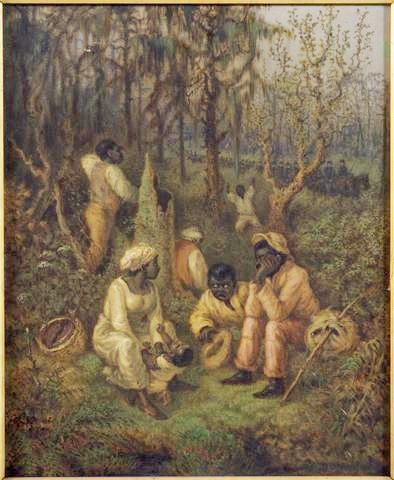
The Great Dismal Swamp maroons were people who inhabited the swamplands of the Great Dismal Swamp in Virginia and North Carolina after escaping enslavement. Although conditions were harsh, research suggests that thousands lived there between about 1700 and the 1860s. Harriet Beecher Stowe told the maroon people's story in her 1856 novel Dred: A Tale of the Great Dismal Swamp. The most significant research on the settlements began in 2002 with a project by Dan Sayers of American University.
The first Africans brought to the English colony of Virginia arrived in 1619 on the White Lion, an English privateer operating under a letter of marque from the Dutch Republic. These Africans, numbering roughly 20-strong, had been seized from the Portuguese slave ship São João Bautista by the crew of White Lion as the slaver was transporting them from Portuguese Angola to the Americas. The Africans were legally deemed to be indentured servants, since slave codes were not passed in Virginia until 1661. As indentured servants, they were automatically entitled to freedom after the passage of a certain period of time, and were also allowed to purchase freedom as well. Other indentured servants gained freedom by converting to Christianity, since the English colonists of Virginia were opposed to the enslavement of Christians. Slave labor was used in many efforts to drain and log the Great Dismal Swamp during the 18th and 19th centuries. People who escaped slavery by running away to the countryside came to be known as maroons.
Maroonage, self-liberated Africans in isolated or hidden settlements, existed in all the Southern states, and swamp-based maroon communities existed in the Deep South, in Alabama, Florida, Georgia, Louisiana, and South Carolina. Maroonage in the Upper South was largely limited to Virginia and the Great Dismal Swamp.
The origin of the word maroon is uncertain, with competing theories linking it to Spanish, Arawak or Taino root words. In all likelihood, the words maroon and Seminole share the same etymology in the Spanish word cimarrón, meaning "wild" or "untamed". This word usually referred to self-liberated Africans who escaped enslavement and is ultimately derived from the word for "thicket" in Old Spanish.
At the beginning of the 18th century, maroons came to live in the Great Dismal Swamp. Most settled on mesic islands, the high and dry parts of the swamp. Inhabitants included people who had purchased their freedom as well as those who had escaped. Other people used the swamp as a route on the Underground Railroad as they made their way further north. Some formerly enslaved lived there in semi-free conditions, but how much independence they actually enjoyed there has been a topic of much debate. Nearby whites often left maroons alone so long as they paid a quota in logs or shingles, and businesses may have ignored the fugitive status of people who provided work in exchange for trade goods.
Herbert Aptheker stated already in 1939, in "Maroons Within the Present Limits of the United States", that likely "about two thousand Negroes, fugitives, or the descendants of fugitives" lived in the Great Dismal Swamp, trading with white people outside the swamp. Results of a study published in 2007, "The Political Economy of Exile in the Great Dismal Swamp", say that thousands of people lived in the swamp between 1630 and 1865, Native Americans, maroons and enslaved laborers on the canal. A 2011 study speculated that thousands may have lived in the swamp between the 1600s and 1860. While the precise number of maroons who lived in the swamp at that time is unknown, it is believed to have been one of the largest maroon colonies in the United States. It is established that "several thousand" were living there by the 19th century.
Fear of slave unrest and fugitive slaves living among maroon population caused concern amongst local whites. A militia force with dogs went into the swamp in 1823 in an attempt to remove the maroons and destroy their community, but most people escaped. In 1847, North Carolina passed a law specifically aimed at apprehending the maroons in the swamp. However, unlike other maroon communities, where local militias often captured the residents and destroyed their homes, those in the Great Dismal Swamp mostly avoided capture or the discovery of their homes.
The Chesapeake, the Nansemonds, the Recharians, and the Merrians are all Native American tribes that had connections to the swamp in the 17th century. The presence of hunting bolas indicates that the area may have served as a hunting ground as far back as 5,000 years ago. Native American communities were already in existence in the swamp when the maroons began to settle there. Because leaving the area could lead to recapture, the inhabitants often used what was readily available in the swamp, even recycling tool remnants left by Native Americans.
Hub AI
Great Dismal Swamp maroons AI simulator
(@Great Dismal Swamp maroons_simulator)
Great Dismal Swamp maroons
The Great Dismal Swamp maroons were people who inhabited the swamplands of the Great Dismal Swamp in Virginia and North Carolina after escaping enslavement. Although conditions were harsh, research suggests that thousands lived there between about 1700 and the 1860s. Harriet Beecher Stowe told the maroon people's story in her 1856 novel Dred: A Tale of the Great Dismal Swamp. The most significant research on the settlements began in 2002 with a project by Dan Sayers of American University.
The first Africans brought to the English colony of Virginia arrived in 1619 on the White Lion, an English privateer operating under a letter of marque from the Dutch Republic. These Africans, numbering roughly 20-strong, had been seized from the Portuguese slave ship São João Bautista by the crew of White Lion as the slaver was transporting them from Portuguese Angola to the Americas. The Africans were legally deemed to be indentured servants, since slave codes were not passed in Virginia until 1661. As indentured servants, they were automatically entitled to freedom after the passage of a certain period of time, and were also allowed to purchase freedom as well. Other indentured servants gained freedom by converting to Christianity, since the English colonists of Virginia were opposed to the enslavement of Christians. Slave labor was used in many efforts to drain and log the Great Dismal Swamp during the 18th and 19th centuries. People who escaped slavery by running away to the countryside came to be known as maroons.
Maroonage, self-liberated Africans in isolated or hidden settlements, existed in all the Southern states, and swamp-based maroon communities existed in the Deep South, in Alabama, Florida, Georgia, Louisiana, and South Carolina. Maroonage in the Upper South was largely limited to Virginia and the Great Dismal Swamp.
The origin of the word maroon is uncertain, with competing theories linking it to Spanish, Arawak or Taino root words. In all likelihood, the words maroon and Seminole share the same etymology in the Spanish word cimarrón, meaning "wild" or "untamed". This word usually referred to self-liberated Africans who escaped enslavement and is ultimately derived from the word for "thicket" in Old Spanish.
At the beginning of the 18th century, maroons came to live in the Great Dismal Swamp. Most settled on mesic islands, the high and dry parts of the swamp. Inhabitants included people who had purchased their freedom as well as those who had escaped. Other people used the swamp as a route on the Underground Railroad as they made their way further north. Some formerly enslaved lived there in semi-free conditions, but how much independence they actually enjoyed there has been a topic of much debate. Nearby whites often left maroons alone so long as they paid a quota in logs or shingles, and businesses may have ignored the fugitive status of people who provided work in exchange for trade goods.
Herbert Aptheker stated already in 1939, in "Maroons Within the Present Limits of the United States", that likely "about two thousand Negroes, fugitives, or the descendants of fugitives" lived in the Great Dismal Swamp, trading with white people outside the swamp. Results of a study published in 2007, "The Political Economy of Exile in the Great Dismal Swamp", say that thousands of people lived in the swamp between 1630 and 1865, Native Americans, maroons and enslaved laborers on the canal. A 2011 study speculated that thousands may have lived in the swamp between the 1600s and 1860. While the precise number of maroons who lived in the swamp at that time is unknown, it is believed to have been one of the largest maroon colonies in the United States. It is established that "several thousand" were living there by the 19th century.
Fear of slave unrest and fugitive slaves living among maroon population caused concern amongst local whites. A militia force with dogs went into the swamp in 1823 in an attempt to remove the maroons and destroy their community, but most people escaped. In 1847, North Carolina passed a law specifically aimed at apprehending the maroons in the swamp. However, unlike other maroon communities, where local militias often captured the residents and destroyed their homes, those in the Great Dismal Swamp mostly avoided capture or the discovery of their homes.
The Chesapeake, the Nansemonds, the Recharians, and the Merrians are all Native American tribes that had connections to the swamp in the 17th century. The presence of hunting bolas indicates that the area may have served as a hunting ground as far back as 5,000 years ago. Native American communities were already in existence in the swamp when the maroons began to settle there. Because leaving the area could lead to recapture, the inhabitants often used what was readily available in the swamp, even recycling tool remnants left by Native Americans.
Recent media