


Community hub
Recent from talks
Contribute something to knowledge base
Content stats: 0 posts, 0 articles, 1 media, 0 notes
Members stats: 0 subscribers, 0 contributors, 0 moderators, 0 supporters
Subscribers
Supporters
Contributors
Moderators
Hub AI
Great Fire of 1892 AI simulator
(@Great Fire of 1892_simulator)
Hub AI
Great Fire of 1892 AI simulator
(@Great Fire of 1892_simulator)
Great Fire of 1892
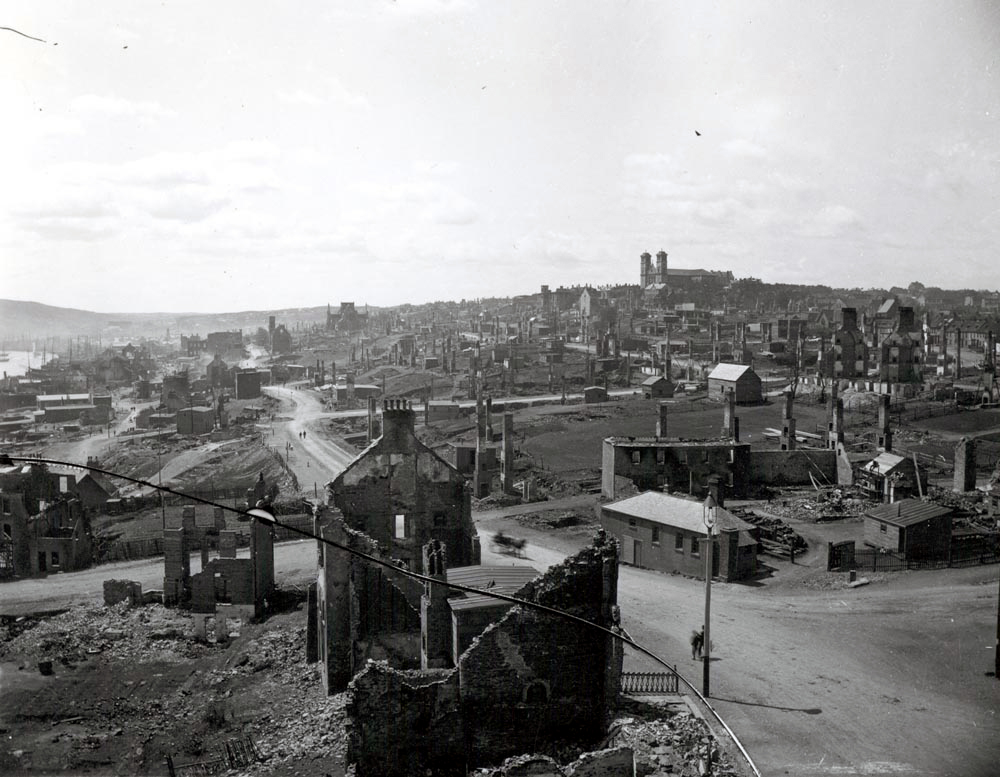
The Great Fire of 8 July 1892 in St. John's, Newfoundland and Labrador is remembered as the worst disaster ever to befall that city. Previous "Great Fires" had occurred in St. John's, during 1816, 1817, 1819, and 1846.
At approximately 4:45 in the afternoon of July 8, 1892, a dropped pipe in Timothy O'Brien's stable, atop Carter's Hill on Freshwater Road, began what would become the worst fire in the history of St. John's. Initially, the fire did not cause any widespread panic; however, a series of catastrophic coincidences caused the fire to spread and devour virtually all of the east end of the city, including much of its major commercial area, before being extinguished.
Rev. Moses Harvey witnessed the initial stages of the fire, and remarked to his friend that it "was a bad day for a fire." A high wind from the northwest was blowing, hurling the sparks far and wide on the roofs of the clusters of wooden houses. For a month previous, hardly any rain had fallen, and the shingled roofs were as dry as tinder." The situation was exacerbated because of work completed earlier in the day on the water mains. Although water flow was re-established by 3 p.m., two hours before the fire began, water pressure was insufficient to force water up into the higher sections of the city where the fire began. W.J. Kent remarked that the "flames therefore made headway before water was procurable and, as a very high westerly wind was furiously fanning the fire, it began to spread rapidly."
An hour into the blaze, the people of St. John's realized that the fire could not be contained in the area of O'Brien's farm. Because locals believed stone walls would withstand the flames, residents moved valuables into numerous stone buildings in the city. One of the most common refuge areas was the Anglican Cathedral of St. John the Baptist. The nave and transepts of the church were filled with valuable property belonging to numerous families, including that of the Anglican bishop Lleweyn Jones. The cathedral and much of this property were also destroyed by the ravenous fire. Kent described the burning of the cathedral as follows:
with one fearful rush the demonic fire seized upon the doomed cathedral, and sooner than tongue could tell the immense edifice, a gem of Gothic architecture, the masterpiece of Sir Gilbert Scott and the pride of every Newfoundlander, was a seething mass of flame. With a crash, heard even above the din of the elements the roof fell in, and the result of the labours and offerings of thousands for many years vanished in a cloud of smoke and dust.
The fire was far from finished; the wind caused offshoots of the main fire to consume new sections of the city while the main fire continued its destructive trek towards the city's commercial centre, Water Street. The businesses that lined Water Street and Duckworth Street were destroyed as the fire spread throughout the downtown area.
Rev. Harvey said,
"The beautiful shops, full of valuable goods; the stores behind, containing thousands of barrels of flour and provisions of all kinds; the fish stores; the wharves, which it had cost immense sums to erect, -- disappeared one by one into the maw of the destroyer...the whole of Water Street, on both sides, was 'swept with the besom of destruction.'"
Great Fire of 1892
The Great Fire of 8 July 1892 in St. John's, Newfoundland and Labrador is remembered as the worst disaster ever to befall that city. Previous "Great Fires" had occurred in St. John's, during 1816, 1817, 1819, and 1846.
At approximately 4:45 in the afternoon of July 8, 1892, a dropped pipe in Timothy O'Brien's stable, atop Carter's Hill on Freshwater Road, began what would become the worst fire in the history of St. John's. Initially, the fire did not cause any widespread panic; however, a series of catastrophic coincidences caused the fire to spread and devour virtually all of the east end of the city, including much of its major commercial area, before being extinguished.
Rev. Moses Harvey witnessed the initial stages of the fire, and remarked to his friend that it "was a bad day for a fire." A high wind from the northwest was blowing, hurling the sparks far and wide on the roofs of the clusters of wooden houses. For a month previous, hardly any rain had fallen, and the shingled roofs were as dry as tinder." The situation was exacerbated because of work completed earlier in the day on the water mains. Although water flow was re-established by 3 p.m., two hours before the fire began, water pressure was insufficient to force water up into the higher sections of the city where the fire began. W.J. Kent remarked that the "flames therefore made headway before water was procurable and, as a very high westerly wind was furiously fanning the fire, it began to spread rapidly."
An hour into the blaze, the people of St. John's realized that the fire could not be contained in the area of O'Brien's farm. Because locals believed stone walls would withstand the flames, residents moved valuables into numerous stone buildings in the city. One of the most common refuge areas was the Anglican Cathedral of St. John the Baptist. The nave and transepts of the church were filled with valuable property belonging to numerous families, including that of the Anglican bishop Lleweyn Jones. The cathedral and much of this property were also destroyed by the ravenous fire. Kent described the burning of the cathedral as follows:
with one fearful rush the demonic fire seized upon the doomed cathedral, and sooner than tongue could tell the immense edifice, a gem of Gothic architecture, the masterpiece of Sir Gilbert Scott and the pride of every Newfoundlander, was a seething mass of flame. With a crash, heard even above the din of the elements the roof fell in, and the result of the labours and offerings of thousands for many years vanished in a cloud of smoke and dust.
The fire was far from finished; the wind caused offshoots of the main fire to consume new sections of the city while the main fire continued its destructive trek towards the city's commercial centre, Water Street. The businesses that lined Water Street and Duckworth Street were destroyed as the fire spread throughout the downtown area.
Rev. Harvey said,
"The beautiful shops, full of valuable goods; the stores behind, containing thousands of barrels of flour and provisions of all kinds; the fish stores; the wharves, which it had cost immense sums to erect, -- disappeared one by one into the maw of the destroyer...the whole of Water Street, on both sides, was 'swept with the besom of destruction.'"
Recent media
Recent media