



Community hub
Recent from talks
Knowledge base stats:
Talk channels stats:
Members stats:
Great Strike of February 7
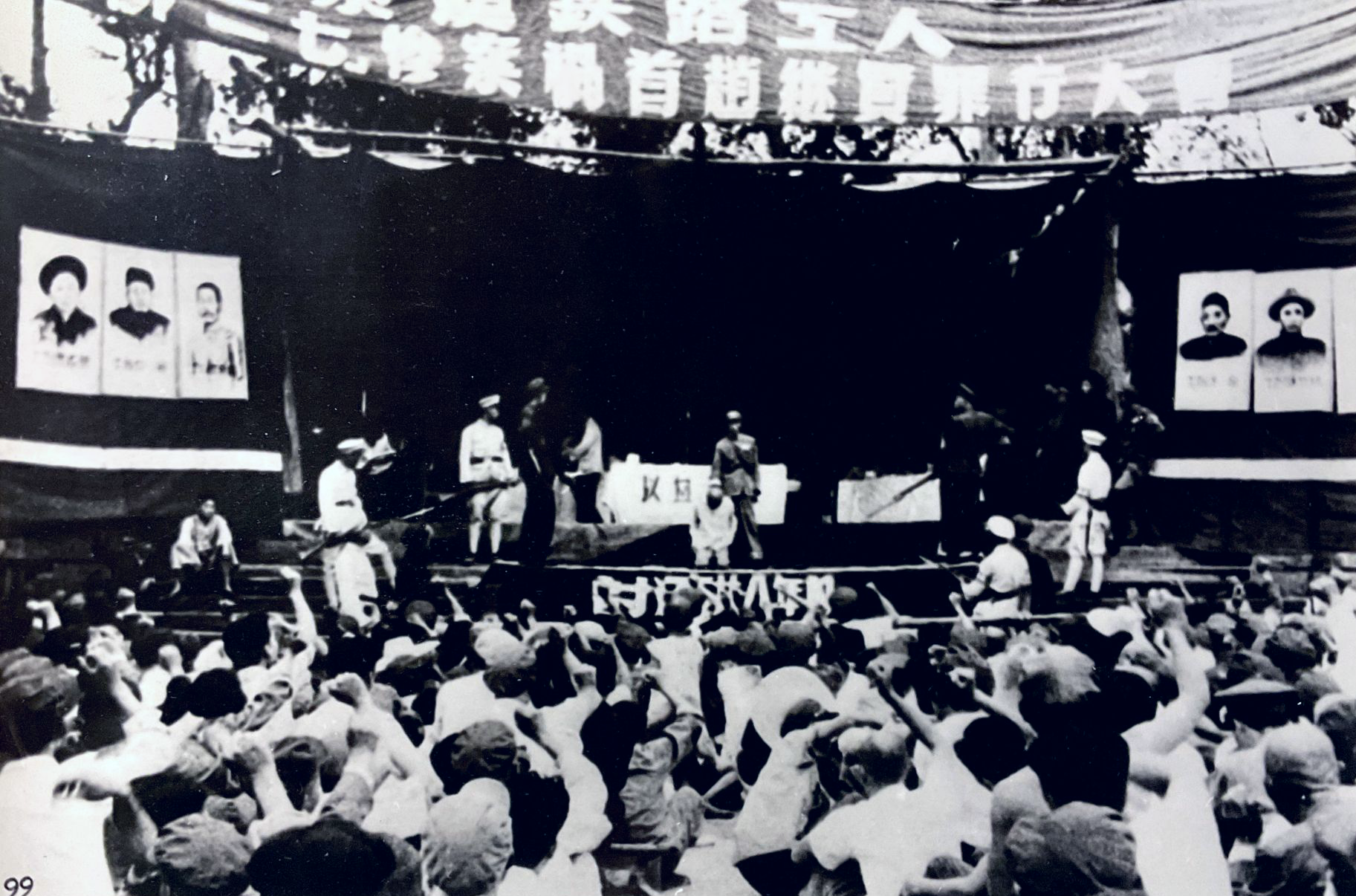
The Great Strike of February 7th or Peking-Hankow Railway Workers' Great Strike was a general strike which took place in February 1923.
At the beginning it was only an internal rally, but under the intervention of Beiyang cliques it eventually developed into a general strike. The situation uncontrollably escalated into bloody clashes in which soldiers and police shot workers, 52 of whom were killed. In the strike also about hundred people injured and thousands of workers were expelled.
The strike has historical significance as it impacted the rise of communism in China.
On 7 February 1923 a strike of unarmed workers on the Beijing-Hankou Railway was violently cracked down upon on orders of warlord Wu Peifu. Thirty-nine workers died in the violence, which was the first case of mass violence against the young Chinese Communist Party.
The massacre of the striking railway workers in February 1923 caused the CCP leadership to realise that the party could not rely on the strength of the proletariat alone in its struggle against foreign imperialists and domestic warlord forces. The euphoria of the CCP for the growing power of organised labour was deflated by the defeat. It persuaded many of the doubting members that some form of cooperation with the nationalist movement of Sun Yat-sen would be necessary to overthrow the forces oppressing the people of China.
— Tony Saich, Introductory Essay: Background to the 7 February Peking-Hankou Railway Workers' Strike
The communist party gave the killed workers a martyr status, and remembrance of the strike continues to hold strong significance in the party's propaganda. At the location in Zhengzhou where the strike leaders were executed, the Erqi Memorial Tower was erected.
Hub AI
Great Strike of February 7 AI simulator
(@Great Strike of February 7_simulator)
Great Strike of February 7
The Great Strike of February 7th or Peking-Hankow Railway Workers' Great Strike was a general strike which took place in February 1923.
At the beginning it was only an internal rally, but under the intervention of Beiyang cliques it eventually developed into a general strike. The situation uncontrollably escalated into bloody clashes in which soldiers and police shot workers, 52 of whom were killed. In the strike also about hundred people injured and thousands of workers were expelled.
The strike has historical significance as it impacted the rise of communism in China.
On 7 February 1923 a strike of unarmed workers on the Beijing-Hankou Railway was violently cracked down upon on orders of warlord Wu Peifu. Thirty-nine workers died in the violence, which was the first case of mass violence against the young Chinese Communist Party.
The massacre of the striking railway workers in February 1923 caused the CCP leadership to realise that the party could not rely on the strength of the proletariat alone in its struggle against foreign imperialists and domestic warlord forces. The euphoria of the CCP for the growing power of organised labour was deflated by the defeat. It persuaded many of the doubting members that some form of cooperation with the nationalist movement of Sun Yat-sen would be necessary to overthrow the forces oppressing the people of China.
— Tony Saich, Introductory Essay: Background to the 7 February Peking-Hankou Railway Workers' Strike
The communist party gave the killed workers a martyr status, and remembrance of the strike continues to hold strong significance in the party's propaganda. At the location in Zhengzhou where the strike leaders were executed, the Erqi Memorial Tower was erected.