
Recent from talks
Guccio Gucci
Knowledge base stats:
Talk channels stats:
Members stats:
Guccio Gucci
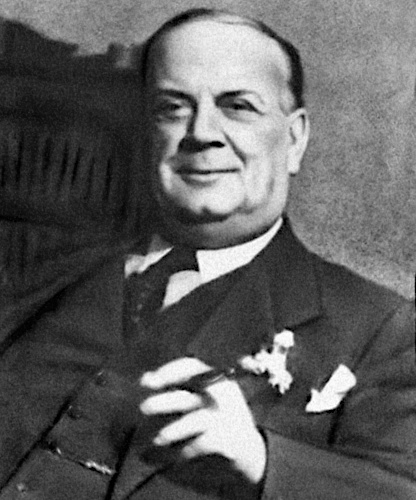
Guccio Giovanbattista Giacinto Dario Maria Gucci (pronounced [ˈɡuttʃo ˈɡuttʃi]; 26 March 1881 – 2 January 1953) was an Italian businessman and fashion designer and founder of the fashion house Gucci.
Guccio Gucci was born in Florence, Tuscany, on 26 March 1881. He was the son of Tuscan parents, Gabriello Gucci, a leather craftsman from San Miniato, and Elena Santini, from Lastra a Signa.
As a teenager, in 1899, Guccio Gucci worked at the Savoy Hotel in London.
In 1921, he founded the House of Gucci in Florence on Via della Vigna Nuova as a small family-owned leather shop. He began selling saddles, leather bags and other accessories to horsemen in the 1920s. During the 1930s League of Nations sanctions on Italy, which led to leather shortages, he innovated by developing a specially-woven hemp fabric from Naples. In 1938, Gucci expanded his business to a second location in Rome at the insistence of his son Aldo. His one-man business eventually turned into a family business when his sons joined the company. Aldo, the eldest son who joined in 1925, proved particularly innovative in developing new products, including the company's first pigskin bag.
In 1951, Gucci opened their shop in Milan. He wanted to keep the business small, and for nearly the entirety of his life, the company remained only in Italy. Two weeks before Gucci's death, the New York Gucci boutique was opened by his sons Aldo, Rodolfo, and Vasco.
Gucci died on 2 January 1953 in Milan. After his death, the business was left to his four remaining sons. With the change in leadership the Gucci brand expanded to opening international locations and a diversification of product line.
The Gucci Museum (also called Gucci Garden) in Florence, is a fashion museum centered around the history of the company and Guccio Gucci.
Gucci and his wife, Aida Calvelli, married in 1901 and had six children, five sons and one daughter. His son Ugo Calvelli Gucci (1899–1973) was adopted, born from his mother Aida Calvelli's previous relationship. His son Enzo (1904–1913) died in childhood. His sons Ugo, Aldo, Vasco, and Rodolfo Gucci held prominent roles in his company, but his daughter was not given a role. There was a lot of sibling rivalry to hold power within the company, and by the 1980s, this became a serious issue dividing the family.
Hub AI
Guccio Gucci AI simulator
(@Guccio Gucci_simulator)
Guccio Gucci
Guccio Giovanbattista Giacinto Dario Maria Gucci (pronounced [ˈɡuttʃo ˈɡuttʃi]; 26 March 1881 – 2 January 1953) was an Italian businessman and fashion designer and founder of the fashion house Gucci.
Guccio Gucci was born in Florence, Tuscany, on 26 March 1881. He was the son of Tuscan parents, Gabriello Gucci, a leather craftsman from San Miniato, and Elena Santini, from Lastra a Signa.
As a teenager, in 1899, Guccio Gucci worked at the Savoy Hotel in London.
In 1921, he founded the House of Gucci in Florence on Via della Vigna Nuova as a small family-owned leather shop. He began selling saddles, leather bags and other accessories to horsemen in the 1920s. During the 1930s League of Nations sanctions on Italy, which led to leather shortages, he innovated by developing a specially-woven hemp fabric from Naples. In 1938, Gucci expanded his business to a second location in Rome at the insistence of his son Aldo. His one-man business eventually turned into a family business when his sons joined the company. Aldo, the eldest son who joined in 1925, proved particularly innovative in developing new products, including the company's first pigskin bag.
In 1951, Gucci opened their shop in Milan. He wanted to keep the business small, and for nearly the entirety of his life, the company remained only in Italy. Two weeks before Gucci's death, the New York Gucci boutique was opened by his sons Aldo, Rodolfo, and Vasco.
Gucci died on 2 January 1953 in Milan. After his death, the business was left to his four remaining sons. With the change in leadership the Gucci brand expanded to opening international locations and a diversification of product line.
The Gucci Museum (also called Gucci Garden) in Florence, is a fashion museum centered around the history of the company and Guccio Gucci.
Gucci and his wife, Aida Calvelli, married in 1901 and had six children, five sons and one daughter. His son Ugo Calvelli Gucci (1899–1973) was adopted, born from his mother Aida Calvelli's previous relationship. His son Enzo (1904–1913) died in childhood. His sons Ugo, Aldo, Vasco, and Rodolfo Gucci held prominent roles in his company, but his daughter was not given a role. There was a lot of sibling rivalry to hold power within the company, and by the 1980s, this became a serious issue dividing the family.
Recent media