
Recent from talks
Guitar amplifier
Knowledge base stats:
Talk channels stats:
Members stats:
Guitar amplifier
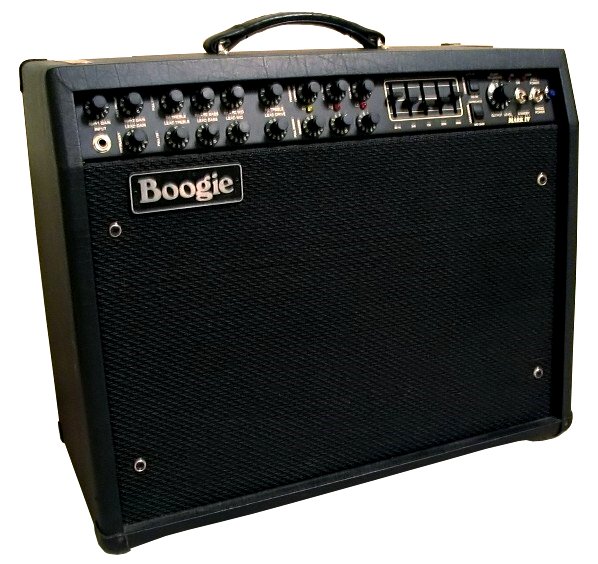
A guitar amplifier (or amp) is an electronic device or system that strengthens the electrical signal from a pickup on an electric guitar, bass guitar, or acoustic guitar so that it can produce sound through one or more loudspeakers, which are typically housed in a wooden cabinet. A guitar amplifier may be a standalone wood or metal cabinet that contains only the power amplifier (and preamplifier) circuits, requiring the use of a separate speaker cabinet–or it may be a combo amplifier, which contains both the amplifier and one or more speakers in a wooden cabinet. There is a wide range of sizes and power ratings for guitar amplifiers, from small, lightweight practice amplifiers with a single 6-inch speaker and a 10-watt amp to heavy combo amps with four 10-inch or four 12-inch speakers and a 100-watt amplifier, which are loud enough to use in a nightclub or bar performance.
Guitar amplifiers can also modify an instrument's tone by emphasizing or de-emphasizing certain frequencies, using equalizer controls, which function the same way as the bass and treble knobs on a home stereo, and by adding electronic effects; distortion (also called overdrive) and reverb are commonly available as built-in features. The input of modern guitar amplifiers is a 1/4" jack, which is fed a signal from an electro-magnetic pickup (from an electric guitar) or a piezoelectric pickup (usually from an acoustic guitar) using a patch cord, or a wireless transmitter. For electric guitar players, their choice of amp and the settings they use on the amplifier are a key part of their signature tone or sound. Some guitar players are longtime users of a specific amp brand or model. Guitarists may also use external effects pedals to alter the sound of their tone before the signal reaches the amplifier.
In the 1920s, it was very hard for a musician playing a pickup-equipped guitar to find an amplifier and speaker to make their instrument louder as the only speakers that could be bought were radio horns of limited frequency range and low acoustic output. The cone speaker was not widely offered for sale until the 1930s and beyond.
The first electric instrument amplifiers were not intended for electric guitars, but were portable PA systems. Engineers invented the first loud, powerful amplifier and speaker systems for public address systems and movie theaters. These systems were very large and very expensive, and so they could not be used by most touring musicians. After 1927, and through the early 1930s, the introduction of electrolytic capacitors and rectifier tubes enabled economical built-in power supplies that could be plugged into a regular wall socket, and these amplifiers quickly became popular with musicians.
During the late 1920s to mid-1930s, small portable PA systems and guitar combo amplifiers were fairly similar, typically having a single volume control, one or two input jacks, field coil speakers, no on-off switch, and thin wooden cabinets. Many had no tone controls, or just some treble adjustment. The limited controls, the early loudspeakers, and the low amplifier power (typically 15 watts or less before the mid-1950s) gave poor high treble and bass output.
People used these amplifiers to amplify acoustic guitar, but electronic amplification of guitar first became widely popular in the 1930s and 1940s craze for Western Swing and Hawaiian music, which extensively used amplified lap steel guitars. The very first recording of an electrically amplified string instrument was the September 1933 recordings of Milton Brown and his Musical Brownies, featuring steel guitarist Bob Dunn
In 1928, the Stromberg-Voisinet firm marketed an electric stringed instrument and amplifier package. There are no records as to how many of the amps were ever built and sold, but the packages launched a new idea, of a portable electric instrument amp with a speaker, in a transportable wooden cabinet. In 1929, Vega electrics launched a portable banjo amplifier. In 1932, Electro String Instruments and amplifier (this is not the same company as Stromberg Electro Instruments) introduced a guitar amp with "high output" and a "string driven magnetic pickup". Electro set out the standard template for combo amps, where a wooden cabinet housed an electronic amplifier mounted inside, with convenient carrying handles.
In 1933, Vivi-Tone amp set-ups were used for live performances and radio shows, Vega started to sell a pickup and amplifier set for musicians to use with existing guitars, and Dobro released an electric guitar and amp package. The combo amp had two 8" Lansing speakers and a five-tube chassis, 12 years before Fender launched its two-speaker Dual Professional/Super combo amp. In 1933, Audio-Vox was founded by Paul Tutmarc, the inventor of the first electric bass (Tutmarc's instrument did not achieve market success until Leo Fender's launched the Precision Bass). In that same year, the Los Angeles-based Volu-Tone company also sold a pickup/amplifier set using a high voltage current to sense string vibration, a potentially dangerous approach that did not become popular.
Hub AI
Guitar amplifier AI simulator
(@Guitar amplifier_simulator)
Guitar amplifier
A guitar amplifier (or amp) is an electronic device or system that strengthens the electrical signal from a pickup on an electric guitar, bass guitar, or acoustic guitar so that it can produce sound through one or more loudspeakers, which are typically housed in a wooden cabinet. A guitar amplifier may be a standalone wood or metal cabinet that contains only the power amplifier (and preamplifier) circuits, requiring the use of a separate speaker cabinet–or it may be a combo amplifier, which contains both the amplifier and one or more speakers in a wooden cabinet. There is a wide range of sizes and power ratings for guitar amplifiers, from small, lightweight practice amplifiers with a single 6-inch speaker and a 10-watt amp to heavy combo amps with four 10-inch or four 12-inch speakers and a 100-watt amplifier, which are loud enough to use in a nightclub or bar performance.
Guitar amplifiers can also modify an instrument's tone by emphasizing or de-emphasizing certain frequencies, using equalizer controls, which function the same way as the bass and treble knobs on a home stereo, and by adding electronic effects; distortion (also called overdrive) and reverb are commonly available as built-in features. The input of modern guitar amplifiers is a 1/4" jack, which is fed a signal from an electro-magnetic pickup (from an electric guitar) or a piezoelectric pickup (usually from an acoustic guitar) using a patch cord, or a wireless transmitter. For electric guitar players, their choice of amp and the settings they use on the amplifier are a key part of their signature tone or sound. Some guitar players are longtime users of a specific amp brand or model. Guitarists may also use external effects pedals to alter the sound of their tone before the signal reaches the amplifier.
In the 1920s, it was very hard for a musician playing a pickup-equipped guitar to find an amplifier and speaker to make their instrument louder as the only speakers that could be bought were radio horns of limited frequency range and low acoustic output. The cone speaker was not widely offered for sale until the 1930s and beyond.
The first electric instrument amplifiers were not intended for electric guitars, but were portable PA systems. Engineers invented the first loud, powerful amplifier and speaker systems for public address systems and movie theaters. These systems were very large and very expensive, and so they could not be used by most touring musicians. After 1927, and through the early 1930s, the introduction of electrolytic capacitors and rectifier tubes enabled economical built-in power supplies that could be plugged into a regular wall socket, and these amplifiers quickly became popular with musicians.
During the late 1920s to mid-1930s, small portable PA systems and guitar combo amplifiers were fairly similar, typically having a single volume control, one or two input jacks, field coil speakers, no on-off switch, and thin wooden cabinets. Many had no tone controls, or just some treble adjustment. The limited controls, the early loudspeakers, and the low amplifier power (typically 15 watts or less before the mid-1950s) gave poor high treble and bass output.
People used these amplifiers to amplify acoustic guitar, but electronic amplification of guitar first became widely popular in the 1930s and 1940s craze for Western Swing and Hawaiian music, which extensively used amplified lap steel guitars. The very first recording of an electrically amplified string instrument was the September 1933 recordings of Milton Brown and his Musical Brownies, featuring steel guitarist Bob Dunn
In 1928, the Stromberg-Voisinet firm marketed an electric stringed instrument and amplifier package. There are no records as to how many of the amps were ever built and sold, but the packages launched a new idea, of a portable electric instrument amp with a speaker, in a transportable wooden cabinet. In 1929, Vega electrics launched a portable banjo amplifier. In 1932, Electro String Instruments and amplifier (this is not the same company as Stromberg Electro Instruments) introduced a guitar amp with "high output" and a "string driven magnetic pickup". Electro set out the standard template for combo amps, where a wooden cabinet housed an electronic amplifier mounted inside, with convenient carrying handles.
In 1933, Vivi-Tone amp set-ups were used for live performances and radio shows, Vega started to sell a pickup and amplifier set for musicians to use with existing guitars, and Dobro released an electric guitar and amp package. The combo amp had two 8" Lansing speakers and a five-tube chassis, 12 years before Fender launched its two-speaker Dual Professional/Super combo amp. In 1933, Audio-Vox was founded by Paul Tutmarc, the inventor of the first electric bass (Tutmarc's instrument did not achieve market success until Leo Fender's launched the Precision Bass). In that same year, the Los Angeles-based Volu-Tone company also sold a pickup/amplifier set using a high voltage current to sense string vibration, a potentially dangerous approach that did not become popular.
Recent media