


Community hub
Recent from talks
Contribute something to knowledge base
Content stats: 0 posts, 0 articles, 1 media, 0 notes
Members stats: 0 subscribers, 0 contributors, 0 moderators, 0 supporters
Subscribers
Supporters
Contributors
Moderators
Hub AI
Gurez AI simulator
(@Gurez_simulator)
Hub AI
Gurez AI simulator
(@Gurez_simulator)
Gurez
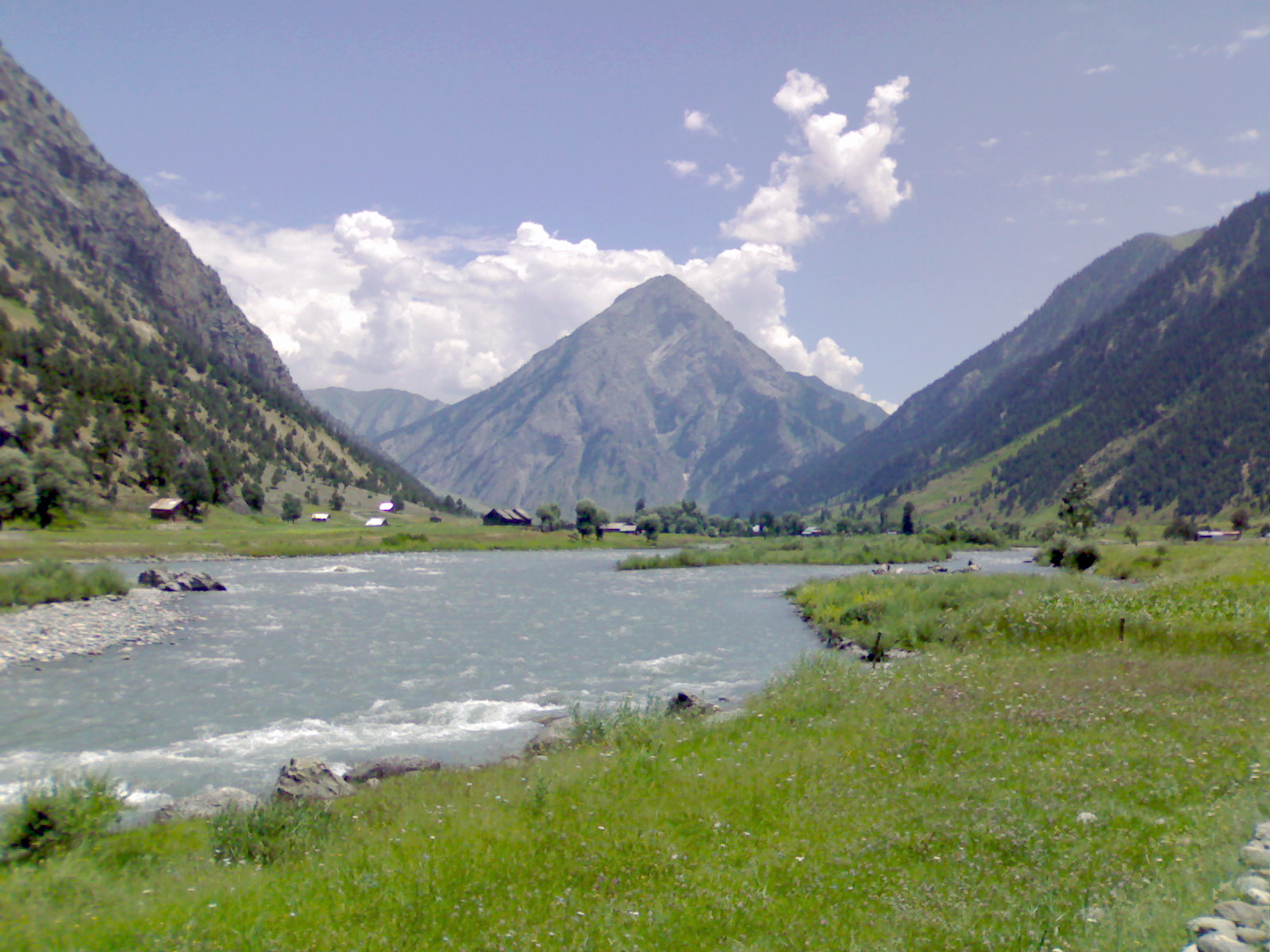
Gurez, or Gurais (Guráai in the local Shina language), is a valley located in the high Himalayas of Jammu and Kashmir, India. It is located to the north of the Kashmir Valley, separated from it by the great Himalayan range, and is situated about 86 kilometres (53 mi) from Bandipore and 123 kilometres (76 mi) from Srinagar. At about 2,400 metres (8,000 ft) above sea level, the valley is surrounded by snow-capped mountains. The fauna include the Himalayan brown bear and the snow leopard. The Kishanganga River flows through the valley.
The valley lies near the Line of Control, which separates it from the Astore and Neelum districts of Pakistan-occupied Kashmir. It is very close to the Burzil Pass, which leads into Astore, and the inhabitants are ethnic Dards/Shins. They speak the Shina language and have the same styles of dress and culture as their kinsmen in Pakistani-administered Gilgit-Baltistan.
Dawar is the central township in the area. The population of the area is estimated to be about 30,000, and is scattered among fifteen villages.
Due to heavy snowfall (around 2 metres (7 ft)) and closure of Razdan Pass in winter, the valley remains cut off for six months of the year.
Gurez is 125 km from Srinagar.
Historically, Gurez was part of ancient Dardistan, stretching between Sharada Peeth in the west, Minimarg in the north, Drass in the east, and Bagtore in the south. The valley falls along the ancient Silk Route, which connected the Kashmir Valley with Gilgit, before continuing further to Kashgar. Archaeological surveys in valleys north of Gurez have uncovered hundreds of carved inscriptions in Kharoshthi, Brahmi, and Tibetan.
The ancient capital of the Dards, Dawar, is located in the Gurez Valley. Other archaeological sites in the valley include Kanzalwan.
Franklin Delano Roosevelt visited before he was the US president. During the colonial period, Jawaharlal Nehru and his daughter Indira Gandhi visited the area in the 1940s.
Gurez
Gurez, or Gurais (Guráai in the local Shina language), is a valley located in the high Himalayas of Jammu and Kashmir, India. It is located to the north of the Kashmir Valley, separated from it by the great Himalayan range, and is situated about 86 kilometres (53 mi) from Bandipore and 123 kilometres (76 mi) from Srinagar. At about 2,400 metres (8,000 ft) above sea level, the valley is surrounded by snow-capped mountains. The fauna include the Himalayan brown bear and the snow leopard. The Kishanganga River flows through the valley.
The valley lies near the Line of Control, which separates it from the Astore and Neelum districts of Pakistan-occupied Kashmir. It is very close to the Burzil Pass, which leads into Astore, and the inhabitants are ethnic Dards/Shins. They speak the Shina language and have the same styles of dress and culture as their kinsmen in Pakistani-administered Gilgit-Baltistan.
Dawar is the central township in the area. The population of the area is estimated to be about 30,000, and is scattered among fifteen villages.
Due to heavy snowfall (around 2 metres (7 ft)) and closure of Razdan Pass in winter, the valley remains cut off for six months of the year.
Gurez is 125 km from Srinagar.
Historically, Gurez was part of ancient Dardistan, stretching between Sharada Peeth in the west, Minimarg in the north, Drass in the east, and Bagtore in the south. The valley falls along the ancient Silk Route, which connected the Kashmir Valley with Gilgit, before continuing further to Kashgar. Archaeological surveys in valleys north of Gurez have uncovered hundreds of carved inscriptions in Kharoshthi, Brahmi, and Tibetan.
The ancient capital of the Dards, Dawar, is located in the Gurez Valley. Other archaeological sites in the valley include Kanzalwan.
Franklin Delano Roosevelt visited before he was the US president. During the colonial period, Jawaharlal Nehru and his daughter Indira Gandhi visited the area in the 1940s.
Recent media
Recent media