
Recent from talks
Gustav Vasa
Knowledge base stats:
Talk channels stats:
Members stats:
Gustav Vasa
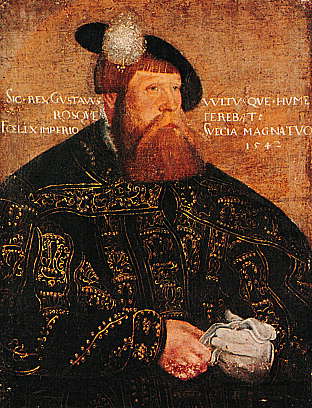
Gustav Eriksson Vasa (12 May 1496 – 29 September 1560), also known as Gustav I, was King of Sweden from 1523 until his death in 1560. He was previously self-recognised Protector of the Realm (Riksföreståndare) from 1521, during the Swedish War of Liberation against King Christian II of Denmark, Norway and Sweden. Gustav rose to lead this war following the Stockholm Bloodbath, where his father was executed. Gustav's election as king on 6 June 1523 (the future National Day of Sweden) and his triumphant entry into Stockholm eleven days later marked Sweden's final secession from the Kalmar Union.
During his reign, Gustav initiated the Protestant Swedish reformation, transformed the country from an elective to a hereditary monarchy and established a standing army and navy.
Gustav Eriksson, a son of Cecilia Månsdotter Eka and Erik Johansson Vasa, was probably born in 1496. The birth most likely took place in Rydboholm Castle, northeast of Stockholm, the manor house of the father, Erik. The newborn got his name, Gustav, from Erik's grandfather Gustav Anundsson.
Erik Johansson's parents were Johan Kristersson and Birgitta Gustafsdotter of the dynasties Vasa and Sture respectively, both dynasties of high nobility. Birgitta Gustafsdotter was the sister of Sten Sture the Elder, regent of Sweden, and their mother was a half-sister of King Charles VIII of Sweden. Being a relative and ally of uncle Sten Sture, Erik inherited the regent's estates in Uppland and Södermanland when the latter died in 1503. Although a member of a family with considerable properties since childhood, Gustav Eriksson would later be the holder of possessions of a much greater dimension.
Both of Gustav's parents descended from Gregers, the illegitimate son of Birger Jarl; Gustav's father descended from Gregers through his maternal great-grandmother Margareta Karlsdotter, while Gustav's mother descended from him through her father Magnus Karlsson Eka. Additionally, Birgitta Gustafsdotter and Sten Sture (and consequently also Gustav) descended from King Sverker II of Sweden through King Sverker's granddaughter Benedikte Sunesdotter (who was married to Svantepolk Knutsson, son of Duke of Reval).
Since the end of the 14th century, Sweden had been a part of the Kalmar Union with Denmark and Norway. The Danish dominance in this union occasionally led to uprisings in Sweden. During Gustav's childhood, parts of the Swedish nobility tried to make Sweden independent. Gustav and his father Erik supported the party of Sten Sture the Younger, regent of Sweden from 1512, and its struggle against King Christian II of Denmark. Following the battle of Brännkyrka in 1518, where Sten Sture's troops beat the Danish forces, it was decided that Sten Sture and King Christian would meet in Österhaninge for negotiations. To guarantee the safety of the king, the Swedish side sent six men as hostages to be kept by the Danes for as long as the negotiations lasted. However, Christian did not show up for the negotiations, violated the deal with the Swedish side and took the hostages aboard ships carrying them to Copenhagen. The six members of the kidnapped hostage were Hemming Gadh, Lars Siggesson (Sparre), Jöran Siggesson (Sparre), Olof Ryning, Bengt Nilsson (Färla) – and Gustav Eriksson. Gustav was held in Kalø Castle where he was treated very well after promising he would not make attempts to escape. A reason for this gentle treatment was King Christian's hope to convince the six men to switch sides, and turn against their leader Sten Sture. This strategy was successful regarding all men but Gustav, who stayed loyal to the Sture party.
In 1519, Gustav Eriksson escaped from Kalø. He fled to the Hanseatic city of Lübeck where he arrived on 30 September. How he managed to escape is not certain, but according to a somewhat likely story, he disguised himself as a bullocky. For this, Gustav got the nicknames "King Oxtail" and "Gustav Cow Butt", something he indeed disliked. When a swordsman drank to His Majesty "Gustav Cow Butt" in Kalmar in 1547, the swordsman was killed.
While staying in Lübeck, Gustav could hear about developments in his native Sweden. While he was there, Christian II mobilised to attack Sweden in an effort to seize power from Sten Sture and his supporters. In 1520, the forces of King Christian were triumphant. Sten Sture died in March, but some strongholds, including the Swedish capital Stockholm, were still able to withstand the Danish forces. Gustav left Lübeck on a ship, and was put ashore south of Kalmar on 31 May.
Hub AI
Gustav Vasa AI simulator
(@Gustav Vasa_simulator)
Gustav Vasa
Gustav Eriksson Vasa (12 May 1496 – 29 September 1560), also known as Gustav I, was King of Sweden from 1523 until his death in 1560. He was previously self-recognised Protector of the Realm (Riksföreståndare) from 1521, during the Swedish War of Liberation against King Christian II of Denmark, Norway and Sweden. Gustav rose to lead this war following the Stockholm Bloodbath, where his father was executed. Gustav's election as king on 6 June 1523 (the future National Day of Sweden) and his triumphant entry into Stockholm eleven days later marked Sweden's final secession from the Kalmar Union.
During his reign, Gustav initiated the Protestant Swedish reformation, transformed the country from an elective to a hereditary monarchy and established a standing army and navy.
Gustav Eriksson, a son of Cecilia Månsdotter Eka and Erik Johansson Vasa, was probably born in 1496. The birth most likely took place in Rydboholm Castle, northeast of Stockholm, the manor house of the father, Erik. The newborn got his name, Gustav, from Erik's grandfather Gustav Anundsson.
Erik Johansson's parents were Johan Kristersson and Birgitta Gustafsdotter of the dynasties Vasa and Sture respectively, both dynasties of high nobility. Birgitta Gustafsdotter was the sister of Sten Sture the Elder, regent of Sweden, and their mother was a half-sister of King Charles VIII of Sweden. Being a relative and ally of uncle Sten Sture, Erik inherited the regent's estates in Uppland and Södermanland when the latter died in 1503. Although a member of a family with considerable properties since childhood, Gustav Eriksson would later be the holder of possessions of a much greater dimension.
Both of Gustav's parents descended from Gregers, the illegitimate son of Birger Jarl; Gustav's father descended from Gregers through his maternal great-grandmother Margareta Karlsdotter, while Gustav's mother descended from him through her father Magnus Karlsson Eka. Additionally, Birgitta Gustafsdotter and Sten Sture (and consequently also Gustav) descended from King Sverker II of Sweden through King Sverker's granddaughter Benedikte Sunesdotter (who was married to Svantepolk Knutsson, son of Duke of Reval).
Since the end of the 14th century, Sweden had been a part of the Kalmar Union with Denmark and Norway. The Danish dominance in this union occasionally led to uprisings in Sweden. During Gustav's childhood, parts of the Swedish nobility tried to make Sweden independent. Gustav and his father Erik supported the party of Sten Sture the Younger, regent of Sweden from 1512, and its struggle against King Christian II of Denmark. Following the battle of Brännkyrka in 1518, where Sten Sture's troops beat the Danish forces, it was decided that Sten Sture and King Christian would meet in Österhaninge for negotiations. To guarantee the safety of the king, the Swedish side sent six men as hostages to be kept by the Danes for as long as the negotiations lasted. However, Christian did not show up for the negotiations, violated the deal with the Swedish side and took the hostages aboard ships carrying them to Copenhagen. The six members of the kidnapped hostage were Hemming Gadh, Lars Siggesson (Sparre), Jöran Siggesson (Sparre), Olof Ryning, Bengt Nilsson (Färla) – and Gustav Eriksson. Gustav was held in Kalø Castle where he was treated very well after promising he would not make attempts to escape. A reason for this gentle treatment was King Christian's hope to convince the six men to switch sides, and turn against their leader Sten Sture. This strategy was successful regarding all men but Gustav, who stayed loyal to the Sture party.
In 1519, Gustav Eriksson escaped from Kalø. He fled to the Hanseatic city of Lübeck where he arrived on 30 September. How he managed to escape is not certain, but according to a somewhat likely story, he disguised himself as a bullocky. For this, Gustav got the nicknames "King Oxtail" and "Gustav Cow Butt", something he indeed disliked. When a swordsman drank to His Majesty "Gustav Cow Butt" in Kalmar in 1547, the swordsman was killed.
While staying in Lübeck, Gustav could hear about developments in his native Sweden. While he was there, Christian II mobilised to attack Sweden in an effort to seize power from Sten Sture and his supporters. In 1520, the forces of King Christian were triumphant. Sten Sture died in March, but some strongholds, including the Swedish capital Stockholm, were still able to withstand the Danish forces. Gustav left Lübeck on a ship, and was put ashore south of Kalmar on 31 May.
Recent media