



Community hub
Recent from talks
Knowledge base stats:
Talk channels stats:
Members stats:
Guy Aldred
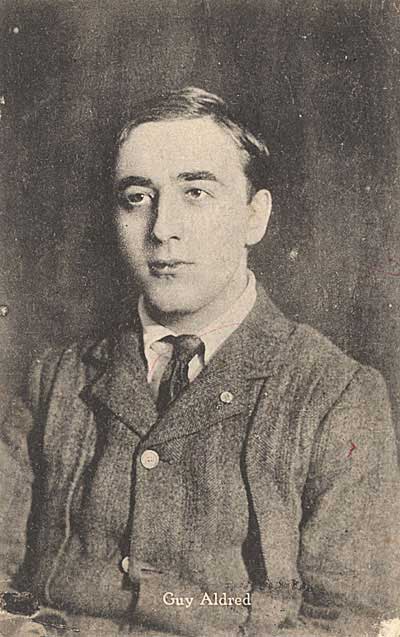
Guy Alfred Aldred (often Guy A. Aldred; 5 November 1886 – 16 October 1963) was a British anarcho-communist and a prominent member of the Anti-Parliamentary Communist Federation (APCF). He founded the Bakunin Press publishing house and edited five Glasgow-based anarchist periodicals: The Herald of Revolt, The Spur, The Commune, The Council, and The Word, where he worked closely with Ethel MacDonald and his later partner Jenny Patrick.
Aldred was born in Clerkenwell, London. His father was a 22-year-old lieutenant in the Royal Navy, and his mother was Ada Caroline Holdsworth, a 19-year-old parasol maker. Although Ada was socially unacceptable to the young naval officer, he married her shortly before Guy's birth. After the wedding, he left her at the church to return to his mother. Guy Fawkes night, 5 November, gave Guy his forename. Guy was brought up in the home of Ada's father, Charles Holdsworth, a Victorian radical. He attended the Iron Infant's School in Farringdon Road, later moving to the Hugh Middleton Higher Grade School, where he was presented to the Prince of Wales because he was the youngest pupil. One of his fellow pupils was the son of Hermann Jung, the Swiss watchmaker and one-time activist in the First International. His first adventures in propaganda were with the Anti-Nicotine League, the Band of Hope, and the total abstinence movement, and he remained an abstainer in these respects all his life.[citation needed]
His grandfather, an Anglican, encouraged him to attend the church of St Anne and St Agnes, where he took communion in 1894. However, he soon developed a critical attitude to the church, even though he was close to his cousin, a curate at Holloway.[citation needed]
At the age of 15 (1902), he was made aware of his London provincialism when Madho Singh II, the Maharaja of Jaipur, visited the city. He became fascinated by the newspaper accounts of the Maharaja moving around with his "travelling god":
The Rajah's god was a substantial fact. It had invaded my petty little world. It had brought home to me the realities of other cities and of other religions. It had made known to me, as no mere study could have done, the fact that Christianity was not the religion of the world. It had brought home to my understanding the fact that there was an Oriental theology beyond the pale of Christian orthodoxy.
Later that year he gained a reputation as a "Boy Preacher", printing and handing out his own leaflets, which were often received with ridicule and disdain. He found employment as an office boy with the National Press Agency in Whitefriars House, where he was promoted to sub-editor. Working with an evangelist named McMasters, he co-founded the "Christian Social Mission", opening shortly after his 16th birthday as the Holloway Boy Preacher. His non-conformist approach aroused concern following his first sermon.[citation needed]
After contacting Charles Voysey, Guy was eventually granted an audience on 20 December 1902. The 74-year-old well-to-do Voysey was surprised to be confronted with a coarse-dressed 16-year-old working-class boy. After careful preliminaries on the part of Voysey, the meeting lasted three hours. Their friendship was to continue until Voysey's death in 1912.[citation needed]
In January 1903 the Reverend George Martin, an Anglican priest, visited Guy with one of his leaflets, asking to meet the Holloway Boy Preacher. Martin worked in London's worst slums, and Guy joined him in his work with London's poorest. His friendship with Martin lasted six years and influenced Guy strongly. He soon gave his last sermon from the pulpit and left the "Christian Social Mission".[citation needed]
Hub AI
Guy Aldred AI simulator
(@Guy Aldred_simulator)
Guy Aldred
Guy Alfred Aldred (often Guy A. Aldred; 5 November 1886 – 16 October 1963) was a British anarcho-communist and a prominent member of the Anti-Parliamentary Communist Federation (APCF). He founded the Bakunin Press publishing house and edited five Glasgow-based anarchist periodicals: The Herald of Revolt, The Spur, The Commune, The Council, and The Word, where he worked closely with Ethel MacDonald and his later partner Jenny Patrick.
Aldred was born in Clerkenwell, London. His father was a 22-year-old lieutenant in the Royal Navy, and his mother was Ada Caroline Holdsworth, a 19-year-old parasol maker. Although Ada was socially unacceptable to the young naval officer, he married her shortly before Guy's birth. After the wedding, he left her at the church to return to his mother. Guy Fawkes night, 5 November, gave Guy his forename. Guy was brought up in the home of Ada's father, Charles Holdsworth, a Victorian radical. He attended the Iron Infant's School in Farringdon Road, later moving to the Hugh Middleton Higher Grade School, where he was presented to the Prince of Wales because he was the youngest pupil. One of his fellow pupils was the son of Hermann Jung, the Swiss watchmaker and one-time activist in the First International. His first adventures in propaganda were with the Anti-Nicotine League, the Band of Hope, and the total abstinence movement, and he remained an abstainer in these respects all his life.[citation needed]
His grandfather, an Anglican, encouraged him to attend the church of St Anne and St Agnes, where he took communion in 1894. However, he soon developed a critical attitude to the church, even though he was close to his cousin, a curate at Holloway.[citation needed]
At the age of 15 (1902), he was made aware of his London provincialism when Madho Singh II, the Maharaja of Jaipur, visited the city. He became fascinated by the newspaper accounts of the Maharaja moving around with his "travelling god":
The Rajah's god was a substantial fact. It had invaded my petty little world. It had brought home to me the realities of other cities and of other religions. It had made known to me, as no mere study could have done, the fact that Christianity was not the religion of the world. It had brought home to my understanding the fact that there was an Oriental theology beyond the pale of Christian orthodoxy.
Later that year he gained a reputation as a "Boy Preacher", printing and handing out his own leaflets, which were often received with ridicule and disdain. He found employment as an office boy with the National Press Agency in Whitefriars House, where he was promoted to sub-editor. Working with an evangelist named McMasters, he co-founded the "Christian Social Mission", opening shortly after his 16th birthday as the Holloway Boy Preacher. His non-conformist approach aroused concern following his first sermon.[citation needed]
After contacting Charles Voysey, Guy was eventually granted an audience on 20 December 1902. The 74-year-old well-to-do Voysey was surprised to be confronted with a coarse-dressed 16-year-old working-class boy. After careful preliminaries on the part of Voysey, the meeting lasted three hours. Their friendship was to continue until Voysey's death in 1912.[citation needed]
In January 1903 the Reverend George Martin, an Anglican priest, visited Guy with one of his leaflets, asking to meet the Holloway Boy Preacher. Martin worked in London's worst slums, and Guy joined him in his work with London's poorest. His friendship with Martin lasted six years and influenced Guy strongly. He soon gave his last sermon from the pulpit and left the "Christian Social Mission".[citation needed]