Hubbry Logo
Gyula TrebitschGyula TrebitschMain
Open search
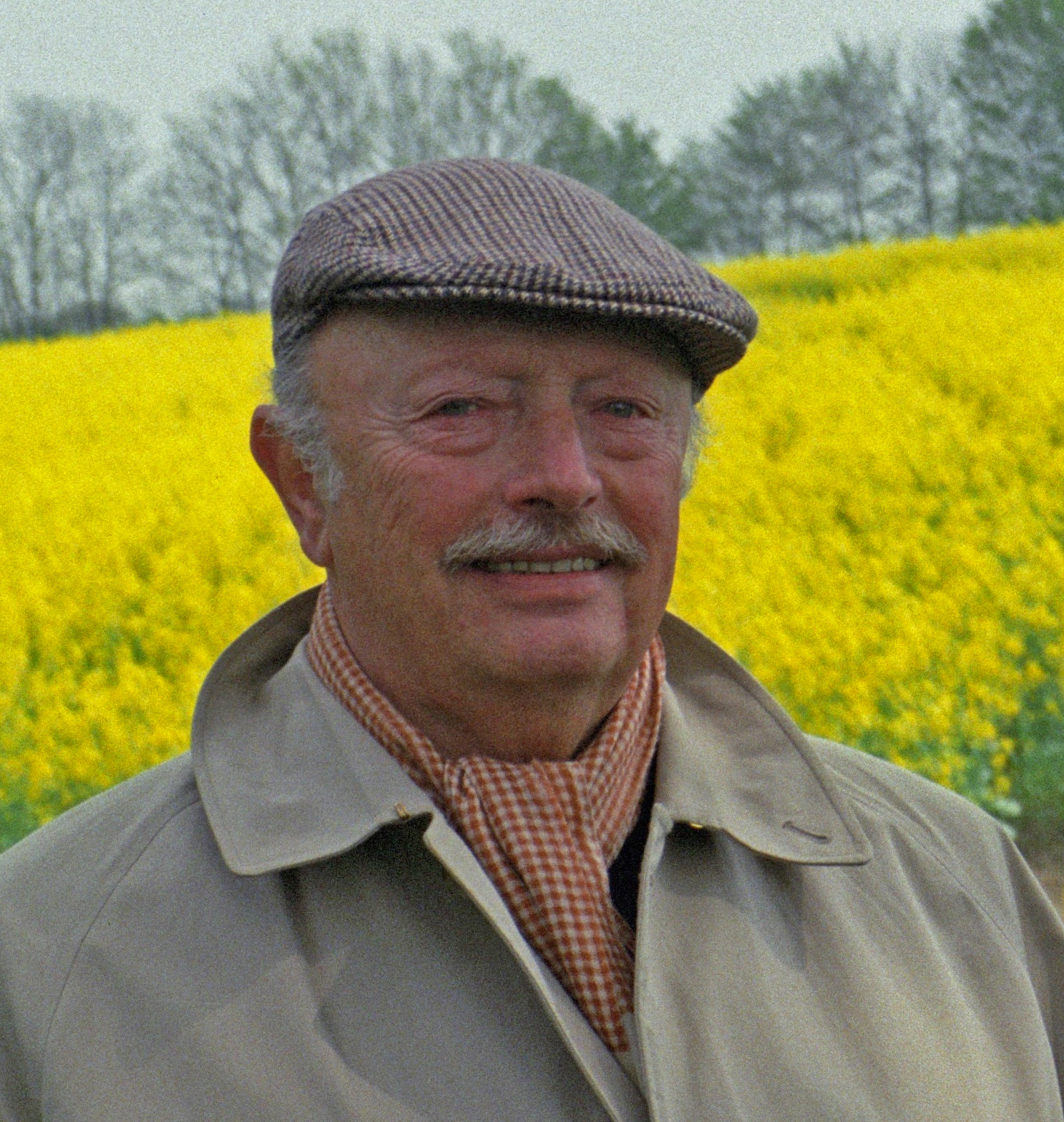
Gyula Trebitsch
Community hub
Gyula Trebitsch
logo
8 pages, 0 posts
0 subscribers
Be the first to start a discussion here.
Gyula Trebitsch
Gyula Trebitsch
from Wikipedia

Gyula Trebitsch (3 November 1914 – 12 December 2005) was a German film producer born in Budapest, Hungary. He was nominated in 1956 for the Academy Award for Best Foreign Language Film along with Walter Koppel for their film The Captain of Kopenick.

Key Information

Along with Walter Koppel he founded the Hamburg-based studio Real Film in 1947.

Selected filmography

[edit]

Awards

[edit]
  • 1983: Golden Camera
  • 1992: Hamburg Citizen's Award of the CDU Hamburg (he was member of the SPD)
  • 1997: Telestar Special Award for Lifetime Achievement
  • 2000: Honorary Award of the German Film for Lifetime Achievement
[edit]
Revisions and contributorsEdit on WikipediaRead on Wikipedia
from Grokipedia
Gyula Trebitsch is a Hungarian-born German film producer known for co-founding Studio Hamburg and his extensive contributions to post-war German cinema and television, including producing the Academy Award-nominated film The Captain from Köpenick. Born in Budapest in 1914, Trebitsch entered the film industry at age 18 in 1932 as an apprentice at the Budapest affiliate of Germany's UFA. He lost his position due to Nazi persecution of Jews, survived years of hardship as a prisoner and slave laborer, and lost two brothers in the Holocaust while his parents emigrated to Israel. After the war, he settled in Hamburg and in 1947 co-founded Real-Film with partner Walter Koppel, a company later renamed Studio Hamburg, where he served as managing director until 1980. During his tenure at Studio Hamburg, Trebitsch produced notable films such as The Devil's General and The Captain from Köpenick, the latter receiving an Academy Award nomination for Best Foreign Language Film in 1957. In 1980 he established Trebitsch Produktionen, which specialized in locally successful television series and continued his prolific output across feature films and TV projects. His efforts helped Germany relearn to dream and laugh during the reconstruction years and played a major role in establishing Hamburg as a key media center. Trebitsch died of natural causes in Hamburg on December 12, 2005, at age 91, survived by three children, two of whom remained active in the film industry.

Early life

Birth and background

Gyula Trebitsch was born on 3 November 1914 in Budapest, Austria-Hungary (now Hungary). He was of Hungarian nationality and born into a Jewish family in the Hungarian capital. His parents later emigrated to Israel.

Early career

Entry into film industry

Gyula Trebitsch entered the film industry in 1932 at the age of 18, when he became an apprentice at the Budapest affiliate of Germany's UFA studio. His early career was interrupted by Nazi persecution of Jews, which led to the loss of his position at UFA and years of hardship as a prisoner and slave laborer. His earliest documented film credits date to 1937, when he worked as production manager on several Hungarian comedy films. He served in this role on Tokay Rhapsody (original title Tokaji rapszódia), directed by János Vaszary and released on December 23, 1937. Trebitsch also held production manager credits on the 1937 films Rád bízom a feleségem and Édes a bosszú. No film credits for Trebitsch are known between 1938 and 1948, a period encompassing World War II and the immediate postwar years. Following the war, he relocated to Hamburg, where he would later resume his career.

Post-war return and Real Film

Relocation to Hamburg and co-founding Real Film

After surviving Nazi persecution and forced labor during World War II, Gyula Trebitsch relocated to Hamburg. In January 1947, he co-founded Real-Film GmbH with Walter Koppel, marking a key step in the revival of film production in northern Germany amid the postwar reconstruction. Trebitsch served as the company's head of production (Produktionschef), while Koppel oversaw overall management. Real-Film quickly established itself as the largest film production company in northern Germany during this period. Through this venture, Trebitsch contributed significantly to rebuilding the German film industry by enabling productions that helped the public "relearn to dream and laugh during the hard years of reconstruction," as later acknowledged by Hamburg's mayor Ole von Beust, who also credited him with helping make Hamburg an important media center. Real-Film served as the direct predecessor to Studio Hamburg, though the latter name and structure emerged in later years.

Major film productions in the 1950s

In the 1950s, Gyula Trebitsch served as producer or executive producer on numerous feature films through Real Film, the Hamburg-based company he co-founded with Walter Koppel in 1947, contributing significantly to West German cinema's post-war revival with a mix of comedies, dramas, and literary adaptations. His credits during this period included Derby (1949), where he was credited as producer, and Unter den tausend Laternen (Under the Thousand Lanterns, 1952), where he served as executive producer. He also produced Keine Angst vor großen Tieren (Not Afraid of Big Animals, 1953) and Des Teufels General (The Devil's General, 1955), the latter starring Curd Jürgens as a notable post-war classic. A major highlight was Der Hauptmann von Köpenick (The Captain from Köpenick, 1956), directed by Helmut Käutner and starring Heinz Rühmann, which Trebitsch produced in collaboration with Koppel and which received an Academy Award nomination for Best Foreign Language Film at the 29th Academy Awards in 1957. Trebitsch's involvement continued into the early 1960s with executive producer roles on films such as Pension Schöller (1960).

Studio Hamburg

Evolution from Real Film and leadership role

Following the establishment of Real-Film GmbH on March 1, 1947, by Gyula Trebitsch and his partner Walter Koppel, the company quickly advanced post-war German film production and laid essential groundwork for future infrastructure development. Construction of dedicated studio facilities began in Hamburg-Tonndorf in 1948, enabling expanded operations beyond makeshift post-war arrangements. In 1959, Trebitsch co-founded the Real-Film Atelierbetriebsgesellschaft mbH in collaboration with Norddeutscher Rundfunk's advertising subsidiary NWF, focusing on studio operations. The entity was renamed Studio Hamburg Atelierbetriebsgesellschaft mbH in 1960 and assumed control of the full studio complex previously held by Real-Film GmbH, marking the formal transition to Studio Hamburg as a comprehensive film and television production center. This evolution transformed the original production company into one of Germany's leading media facilities, supporting both cinematic and emerging television work in the Hamburg region. Trebitsch held the position of managing director at Studio Hamburg throughout this developmental phase. He continued in that leadership role until 1980, when he departed the company's management. That same year, Trebitsch established his own independent production company, Trebitsch Produktionen, to pursue further projects in film and television. His executive stewardship helped position Hamburg as a key hub for post-war media reconstruction and industry recovery in West Germany.

Contributions to television production

Gyula Trebitsch played a key role in German television production during the later decades of his career, particularly from the 1970s onward, as a producer associated with Studio Hamburg and subsequently as an independent producer. After his executive tenure at Studio Hamburg ended in 1980, he continued contributing through freelance work via his own production company. His credits during this period included several notable television series and movies, often reflecting his long-standing connection to Hamburg-based production. He produced 28 episodes of the series Kümo Henriette from 1979 to 1982 and 30 episodes of St. Pauli-Landungsbrücken from 1979 to 1980, both linked to Studio Hamburg. Other series work encompassed episodes of Motiv Liebe in 1972 and Aller guten Dinge sind drei in 1980. Trebitsch also produced a number of television films and specials, including Ein Zug nach Manhattan in 1981, the mini-series Die Geschwister Oppermann in 1983, and the TV special Heinz Rühmann liest Geschichten zur Weihnacht in der St. Michaelis-Kirche Hamburg in 1984. His production involvement extended into the early 1990s with credits such as episodes of Diese Drombuschs between 1990 and 1992, the TV movie La Paloma fliegt nicht mehr in 1992, and executive production on Herzlichen Glückwunsch: Heinz Rühmann zum 90. Geburtstag in 1992. His active television production effectively concluded around 1992.

Notable productions

Key films as producer

Gyula Trebitsch produced several key films during his long career, with his most significant contributions emerging in the post-war German film industry through Real Film. His notable productions from this period include The Devil's General (1955), starring Curd Jürgens, and The Captain from Köpenick (1956), starring Heinz Rühmann, both regarded as post-war classics that helped revive German cinema during reconstruction. The Captain from Köpenick, an adaptation of Carl Zuckmayer's play directed by Helmut Käutner, represented a particular career highlight and was nominated for the Academy Award for Best Foreign Language Film at the 29th Academy Awards. Trebitsch's earlier work included involvement in the 1937 Hungarian film Tokay Rhapsody, where he served as production manager, marking his early role in feature film production before his relocation and focus on German films after 1945. He continued producing important titles into the late 1950s and early 1960s, such as The Zurich Engagement (1957), Der Schinderhannes (1958), and Pension Schöller (1960), contributing to a range of popular and critically appreciated works during the height of West German commercial cinema.

Television credits

Gyula Trebitsch produced a substantial number of television programs through Studio Hamburg during the later phase of his career, with credits extending from the early 1970s until 1992. His work in television often involved collaborations with regional broadcasters such as Norddeutscher Rundfunk (NDR), encompassing episodic series, mini-series, and specials that contributed to German public television output. Among his notable credits are the crime series Hamburg Transit (1970-1974), produced by Studio Hamburg during his tenure. In the late 1970s and early 1980s, he produced significant portions of popular Hamburg-set series, including 30 episodes of St. Pauli-Landungsbrücken (1979–1980) and 28 episodes of Kümo Henriette (1979–1982). He also produced the acclaimed 1983 mini-series Die Geschwister Oppermann, a two-part adaptation of Lion Feuchtwanger's novel depicting the experiences of a Jewish family in Berlin amid the rise of Nazism in 1932–1933, which earned two awards and a user rating of 7.9/10. Trebitsch frequently worked on specials and television movies featuring the renowned actor Heinz Rühmann, including reading performances and biographical tributes such as Heinz Rühmann liest Geschichten zur Weihnacht in der St. Michaelis-Kirche Hamburg (1984) and Herzlichen Glückwunsch: Heinz Rühmann zum 90. Geburtstag (1992). His final television production credits appeared in 1992, including the TV movie La Paloma fliegt nicht mehr and additional Rühmann-related shorts.

Awards and honors

Recognition in later career

In his later career, Gyula Trebitsch received multiple prestigious awards that honored his decades-long impact on German film and television production. In 1983, he was awarded the Golden Camera by the magazine Hörzu for his production of the television miniseries Die Geschwister Oppermann (simultaneously recognizing his overall lifetime work in the industry). In 1992, Trebitsch received the Hamburg Citizen's Award of the CDU Hamburg, an honor that stood out given his long-standing membership in the SPD and underscored his broad respect across political lines in the city. Further recognition followed in 1997 with the Telestar Special Award for Lifetime Achievement, presented by the jury in acknowledgment of his sustained contributions to media production. In 2000, Trebitsch was presented with the Honorary Award of the German Film for Lifetime Achievement by the Deutscher Filmpreis, given for his outstanding services to German cinema.

Death and legacy

Final years and passing

Gyula Trebitsch died on 12 December 2005 in Hamburg, Germany, at the age of 91. He passed away from natural causes. He had been based in Hamburg since relocating there after World War II and remained involved in film and television production into his later years through his company Trebitsch Produktionen. He was survived by his three children, including Markus and Katharina, who continued to work in the film business.

Impact on German film and television

Gyula Trebitsch played a pivotal role in rebuilding the German film industry after World War II, co-founding Real-Film with Walter Koppel in 1947, which later became Studio Hamburg. This production company created influential post-war films that contributed to cultural recovery, including Des Teufels General and Der Hauptmann von Köpenick, the latter receiving an Academy Award nomination for Best Foreign Language Film in 1957. As Hamburg's mayor Ole von Beust noted upon Trebitsch's death, "Gyula Trebitsch created the pictures which had Germany relearn to dream and laugh during the hard years of reconstruction." Trebitsch's leadership as managing director of Studio Hamburg until 1980 helped transform it into one of Europe's major media centers, facilitating the transition from cinema to television production in northern Germany. He had a considerable share in establishing Hamburg as an important media city, supporting the growth of both film and television infrastructure. After stepping down from Studio Hamburg, Trebitsch founded Trebitsch Produktionen, which focused on producing numerous locally successful television series and further bridged the film and television eras. His career, spanning from the 1930s to the early 1990s, made him a central figure in the post-war reconstruction of West German media and the development of television as a key entertainment medium in the region. Trebitsch's contributions extended beyond specific productions to shaping the institutional and cultural landscape of German audiovisual media.
Add your contribution
Related Hubs
User Avatar
No comments yet.