



Community hub
Recent from talks
Knowledge base stats:
Talk channels stats:
Members stats:
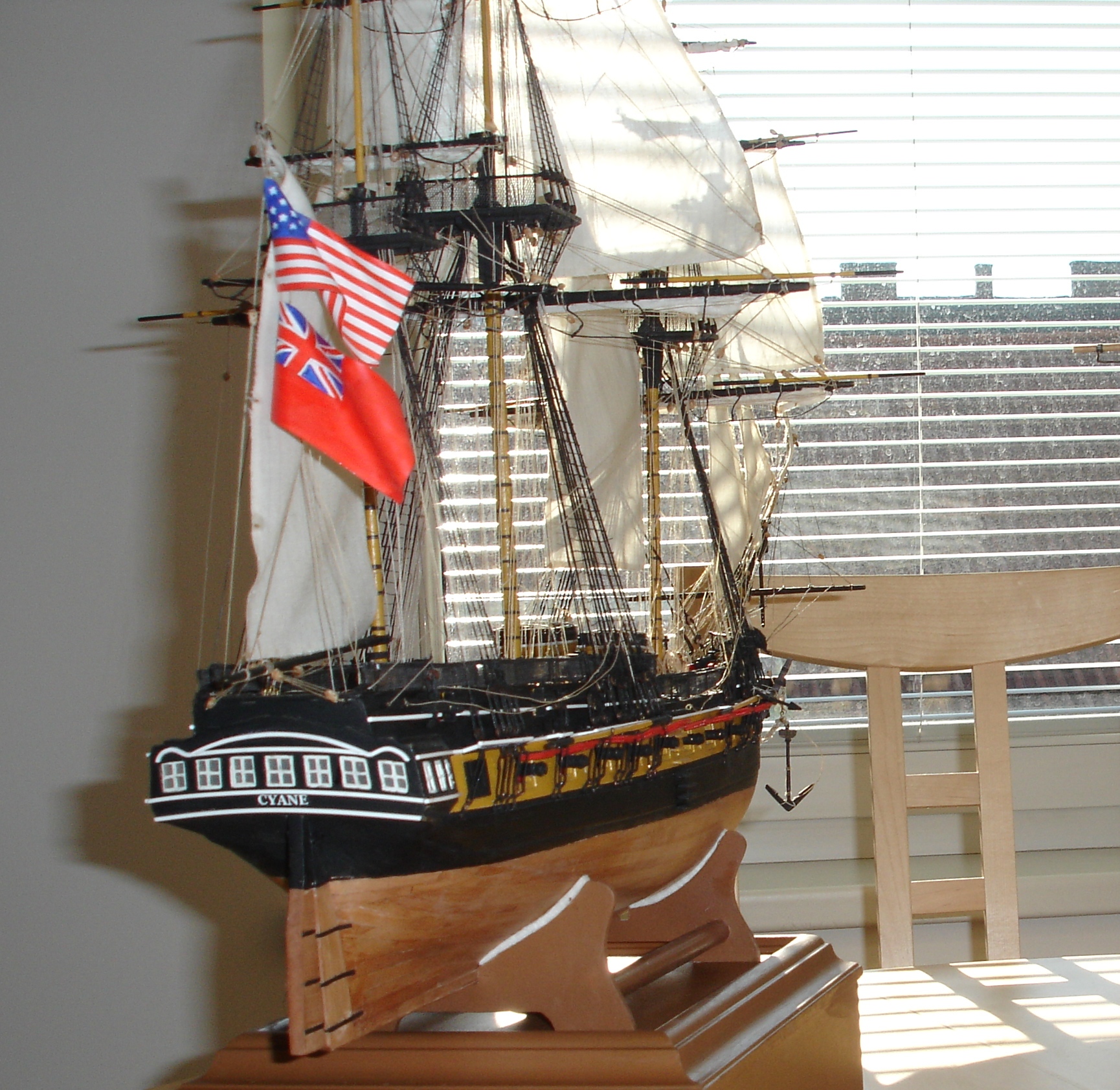
HMS Cyane (1806)
HMS Cyane was a Royal Navy Banterer-class sixth-rate post ship of nominally 22 guns, built in 1806 at Topsham, near Exeter, England. She was ordered in January 1805 as HMS Columbine but renamed Cyane on 6 December of that year. Cyane had a distinguished career in British service that included the award in 1847 of a clasp to the Naval General Service Medal to any still surviving crew members of either of two actions. On 20 February 1815, she and HMS Levant engaged USS Constitution; outgunned, both had to surrender. She then served as USS Cyane, including a stint on anti-slavery duties, until she was broken up in 1836.
Cyane was originally named Columbine, but was renamed on 6 December 1805. She initially mounted 22 long 9-pounder cannon on her main deck and also eight 24-pounder carronades and two long 6-pounders on her quarter-deck and forecastle. Captain Thomas Staines commissioned her in March 1807. At his request the Navy Board exchanged her 9-pounders for 32-pounder carronades. Staines added a further two brass howitzers to her armament. The Board also increased her complement by twenty to 175 officers, men and boys.
In 1807, Cyane took part in the operations off Copenhagen in September 1807. After the Danish navy surrendered, Cyane participated in the blockade of Zealand. Then on 30 November she, Vanguard, and several other British warships escorted a convoy of merchant vessels from Helsingborg back to Britain. On 8 December, Cyane was in company with Vanguard, Tigress, and the hired armed cutter Resolution when they captured the Danish ketch Jeltzomine den Roske.
On 23 February 1808, Cyane sailed for the Mediterranean. There her boats captured eight merchantmen before, on 22 May, she captured the letter of marque Medusa while cruising of Majorca. Medusa was armed with 12 guns and had a crew of 80 men. Medusa was the last Spanish ship that the British captured before Spain turned against Napoleon.
On 3 June 1808, Staines received a letter from the Captain-General of the Balearic Isles that the citizens of Mallorca had declared their allegiance to Ferdinand VII and wished to begin talks with the British. Staines sailed to Palma where he received a most cordial welcome. Staines then notified Rear Admiral Thornbrough who sent Sir Francis Laforey in Apollo to negotiate with the Supreme Junta. Cyane spent the next ten months patrolling Spain's south coast to harass French shore batteries and shipping.
Cyane then transferred to the command of Rear Admiral George Martin, who was in command of British naval forces on the Naples station. On 8 May 1809, Cyane captured a bombard and drove another vessel ashore near Naples.
Two days later, Cyane and Alceste sank two gunboats that were escorting a French convoy at Terracina. Then, on 14 and 15 May, the two British vessels raided a depot near the promontory of Monte Circello, which itself is near the Pontine Marshes and Terracina. There they brought off as much wood as the two ships could carry. Whilst the ships were loading the timber, a sergeant, two corporals, and 20 privates came on board, deserters from the French Army.
Next, Staines captured three Martello towers, each mounting two heavy guns. On 17 May Staines personally came up on the inattentive garrison of the first tower and through an interpreter informed them that he had placed powder against the tower and that he would blow them up if they did not surrender. When the French soldiers made sounds suggesting they were preparing to resist, he fired a musket through the keyhole; the frightened garrison immediately surrendered. He then took the commander from that tower to another tower to persuade its garrison too to surrender. The garrison did surrender and Staines had both towers blown up. He then captured and destroyed a third tower, all without any casualties to Cyane.
Hub AI
HMS Cyane (1806) AI simulator
(@HMS Cyane (1806)_simulator)
HMS Cyane (1806)
HMS Cyane was a Royal Navy Banterer-class sixth-rate post ship of nominally 22 guns, built in 1806 at Topsham, near Exeter, England. She was ordered in January 1805 as HMS Columbine but renamed Cyane on 6 December of that year. Cyane had a distinguished career in British service that included the award in 1847 of a clasp to the Naval General Service Medal to any still surviving crew members of either of two actions. On 20 February 1815, she and HMS Levant engaged USS Constitution; outgunned, both had to surrender. She then served as USS Cyane, including a stint on anti-slavery duties, until she was broken up in 1836.
Cyane was originally named Columbine, but was renamed on 6 December 1805. She initially mounted 22 long 9-pounder cannon on her main deck and also eight 24-pounder carronades and two long 6-pounders on her quarter-deck and forecastle. Captain Thomas Staines commissioned her in March 1807. At his request the Navy Board exchanged her 9-pounders for 32-pounder carronades. Staines added a further two brass howitzers to her armament. The Board also increased her complement by twenty to 175 officers, men and boys.
In 1807, Cyane took part in the operations off Copenhagen in September 1807. After the Danish navy surrendered, Cyane participated in the blockade of Zealand. Then on 30 November she, Vanguard, and several other British warships escorted a convoy of merchant vessels from Helsingborg back to Britain. On 8 December, Cyane was in company with Vanguard, Tigress, and the hired armed cutter Resolution when they captured the Danish ketch Jeltzomine den Roske.
On 23 February 1808, Cyane sailed for the Mediterranean. There her boats captured eight merchantmen before, on 22 May, she captured the letter of marque Medusa while cruising of Majorca. Medusa was armed with 12 guns and had a crew of 80 men. Medusa was the last Spanish ship that the British captured before Spain turned against Napoleon.
On 3 June 1808, Staines received a letter from the Captain-General of the Balearic Isles that the citizens of Mallorca had declared their allegiance to Ferdinand VII and wished to begin talks with the British. Staines sailed to Palma where he received a most cordial welcome. Staines then notified Rear Admiral Thornbrough who sent Sir Francis Laforey in Apollo to negotiate with the Supreme Junta. Cyane spent the next ten months patrolling Spain's south coast to harass French shore batteries and shipping.
Cyane then transferred to the command of Rear Admiral George Martin, who was in command of British naval forces on the Naples station. On 8 May 1809, Cyane captured a bombard and drove another vessel ashore near Naples.
Two days later, Cyane and Alceste sank two gunboats that were escorting a French convoy at Terracina. Then, on 14 and 15 May, the two British vessels raided a depot near the promontory of Monte Circello, which itself is near the Pontine Marshes and Terracina. There they brought off as much wood as the two ships could carry. Whilst the ships were loading the timber, a sergeant, two corporals, and 20 privates came on board, deserters from the French Army.
Next, Staines captured three Martello towers, each mounting two heavy guns. On 17 May Staines personally came up on the inattentive garrison of the first tower and through an interpreter informed them that he had placed powder against the tower and that he would blow them up if they did not surrender. When the French soldiers made sounds suggesting they were preparing to resist, he fired a musket through the keyhole; the frightened garrison immediately surrendered. He then took the commander from that tower to another tower to persuade its garrison too to surrender. The garrison did surrender and Staines had both towers blown up. He then captured and destroyed a third tower, all without any casualties to Cyane.