
Recent from talks
HMS M2 (1918)
Knowledge base stats:
Talk channels stats:
Members stats:
HMS M2 (1918)
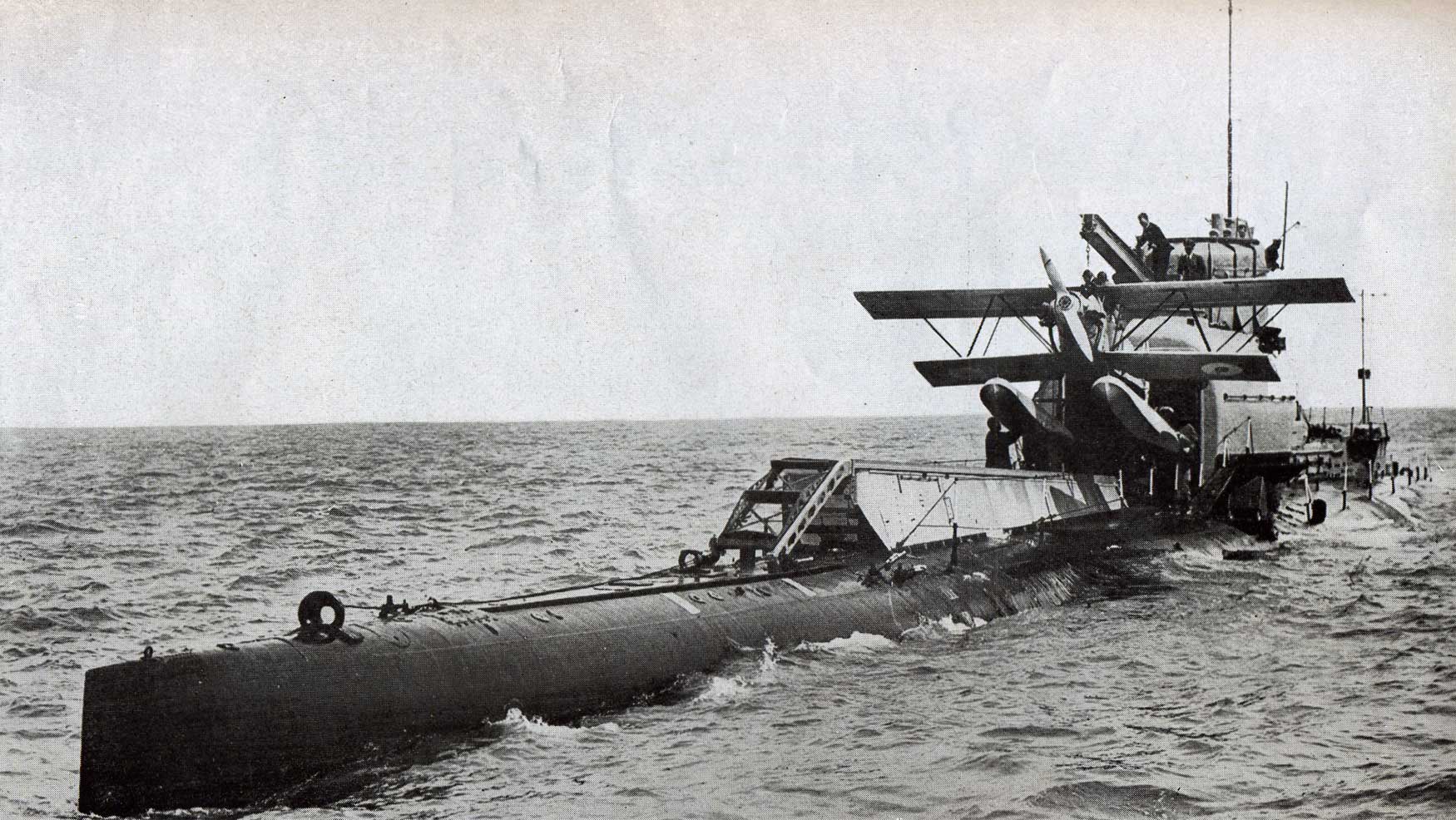
HMS M2 was a Royal Navy submarine monitor completed in 1919, converted in 1927 into a submarine aircraft carrier. She was wrecked in Lyme Bay, Dorset, Britain, on 26 January 1932. She was one of three M-class boats completed.
Four M-class submarines replaced the order for the last four K-class submarines, K17-K21. Although they were similar in size, the M class was an entirely different design from the K class, although it is possible that some material ordered for the K-boats went into them. In any event, the end of the First World War meant that only three were completed.
M2 was laid down at Vickers shipyard at Barrow in Furness in 1916, and launched in 1918. Like the other members of her class, she was armed with a single fixed 12-inch (305mm) gun as well as torpedo tubes. The Mark IX gun was taken from spares held for the Formidable-class battleships.
The M-class submarines were very large for the time at 296 feet (90 m) long. They were designed to operate as submarine monitors or cruisers. They displaced 1,600 long tons (1,626 t) on the surface and 1,950 long tons (1,981 t) when submerged. Two 12-cylinder diesel engines producing 2,400 hp (1,800 kW) drove them on the surface; underwater, they were driven by electric motors producing 1,500 hp (1,100 kW).
After the accidental sinking of M1 in 1925, M2 and her sister M3 were taken out of service and reassigned for experimental use. Her 12-inch gun was removed, replaced by a small aircraft hangar, the work being completed in 1927. This could carry a small Parnall Peto seaplane, specially designed for the M2, which, once its wings had been unfolded, could be lowered onto the sea alongside by a derrick for take off. On landing, the aircraft was hoisted back onto the deck and replaced into the hangar. In October 1928, a hydraulic aircraft catapult was fitted, to enable the seaplane to take off directly from the deck. The submarine was intended to operate ahead of the battle fleet in a reconnaissance role, flying off her unarmed seaplane as a scout.
The concept of a submarine cruiser was pursued with X1, but was not a success and was later abandoned.
M2 left her base at Portland on 26 January 1932, for an exercise in West Bay, Dorset, carrying Parnall Peto serial N255. Her last communication was a radio message at 10:11 to her submarine depot ship, Titania, to announce that she would dive at 10:30. The captain of a passing merchant ship, the Newcastle coaster Tynesider, mentioned that he had seen a large submarine dive stern first at around 11:15. Unaware of the significance of this, he only reported it in passing once he reached port.
Her entire crew of 60 was killed in the accident. The submarine was found on 3 February, eight days after her loss. Ernest Cox, the salvage expert who had raised the German battleships at Scapa Flow, was hired to salvage the M2. In an operation lasting nearly a year and 1,500 dives, on 8 December 1932, she was lifted to within 20 ft (6 m) of the surface before a gale sprang up, sending her down to her final resting place.
Hub AI
HMS M2 (1918) AI simulator
(@HMS M2 (1918)_simulator)
HMS M2 (1918)
HMS M2 was a Royal Navy submarine monitor completed in 1919, converted in 1927 into a submarine aircraft carrier. She was wrecked in Lyme Bay, Dorset, Britain, on 26 January 1932. She was one of three M-class boats completed.
Four M-class submarines replaced the order for the last four K-class submarines, K17-K21. Although they were similar in size, the M class was an entirely different design from the K class, although it is possible that some material ordered for the K-boats went into them. In any event, the end of the First World War meant that only three were completed.
M2 was laid down at Vickers shipyard at Barrow in Furness in 1916, and launched in 1918. Like the other members of her class, she was armed with a single fixed 12-inch (305mm) gun as well as torpedo tubes. The Mark IX gun was taken from spares held for the Formidable-class battleships.
The M-class submarines were very large for the time at 296 feet (90 m) long. They were designed to operate as submarine monitors or cruisers. They displaced 1,600 long tons (1,626 t) on the surface and 1,950 long tons (1,981 t) when submerged. Two 12-cylinder diesel engines producing 2,400 hp (1,800 kW) drove them on the surface; underwater, they were driven by electric motors producing 1,500 hp (1,100 kW).
After the accidental sinking of M1 in 1925, M2 and her sister M3 were taken out of service and reassigned for experimental use. Her 12-inch gun was removed, replaced by a small aircraft hangar, the work being completed in 1927. This could carry a small Parnall Peto seaplane, specially designed for the M2, which, once its wings had been unfolded, could be lowered onto the sea alongside by a derrick for take off. On landing, the aircraft was hoisted back onto the deck and replaced into the hangar. In October 1928, a hydraulic aircraft catapult was fitted, to enable the seaplane to take off directly from the deck. The submarine was intended to operate ahead of the battle fleet in a reconnaissance role, flying off her unarmed seaplane as a scout.
The concept of a submarine cruiser was pursued with X1, but was not a success and was later abandoned.
M2 left her base at Portland on 26 January 1932, for an exercise in West Bay, Dorset, carrying Parnall Peto serial N255. Her last communication was a radio message at 10:11 to her submarine depot ship, Titania, to announce that she would dive at 10:30. The captain of a passing merchant ship, the Newcastle coaster Tynesider, mentioned that he had seen a large submarine dive stern first at around 11:15. Unaware of the significance of this, he only reported it in passing once he reached port.
Her entire crew of 60 was killed in the accident. The submarine was found on 3 February, eight days after her loss. Ernest Cox, the salvage expert who had raised the German battleships at Scapa Flow, was hired to salvage the M2. In an operation lasting nearly a year and 1,500 dives, on 8 December 1932, she was lifted to within 20 ft (6 m) of the surface before a gale sprang up, sending her down to her final resting place.
Recent media