
Recent from talks
HTC One A9
Knowledge base stats:
Talk channels stats:
Members stats:
HTC One A9
The HTC One A9 is an Android smartphone manufactured and marketed by HTC. It was officially announced on October 20, 2015. It is the successor to the HTC One Mini 2 worldwide; but in global markets, it was sold alongside the One M9 as a mid-range offering. It was launched as an effort to improve the revenue of HTC's smartphone business after the failure of the One M9.
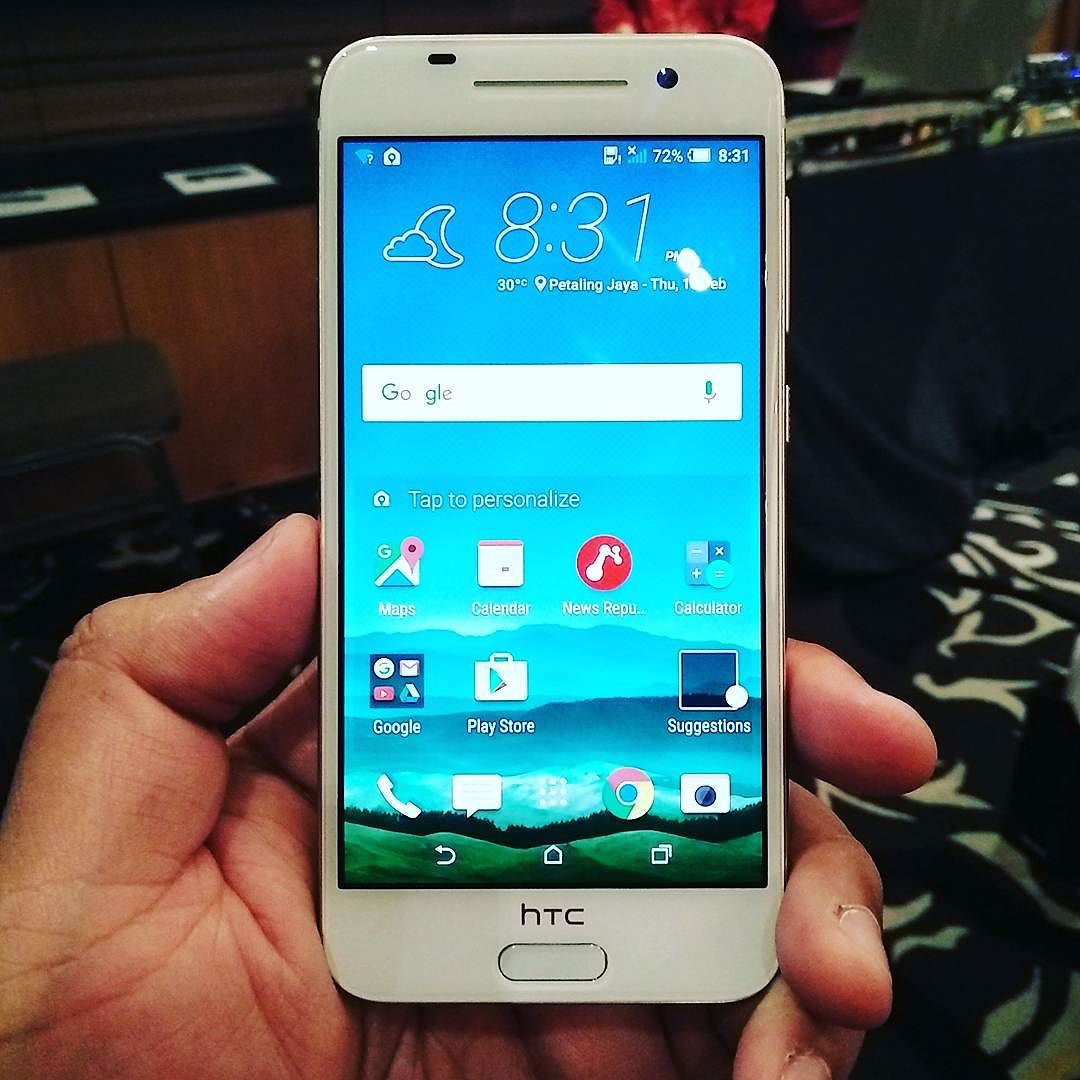
It features a unibody aluminum frame with a Super AMOLED HD display and Dolby Surround sound for headphones. It also features a fingerprint sensor which can be used to unlock the phone. It is the first non-Nexus device to be pre-installed with Android Marshmallow and the first non-CDMA phone that is compatible to work with the Verizon network in the United States.
It received mixed reviews following its release. While many critics lent specific praise to its construction and fingerprint scanner, other aspects have generally received indifferent or mixed reception. Some thought that its price point was too high, while others thought it was a clone of the iPhone 6. In November 2015, HTC reported a 15 percent increase in overall revenue.
Following the launch of the One M9, the manufacturer saw a decline of nearly 40 percent of their revenue due to the poor sales of the M9. This was because of an overheating issue caused by the Snapdragon 810 chipset, which forced the manufacturer to throttle the processor and the poor performance of the camera. This led the manufacturer to reduce its component order by 30 percent. HTC has reported further loss of revenue in the first and second quarter, and they have also mentioned that they closed some of their manufacturing facilities due to poor sales and outsourced some of their manufacturing. In June, the CEO of HTC, Cher Wang, confirmed that it was developing a "hero product" which was planned to launch in October intended to improve its smartphone business.
Rumors surrounding the development of the phone began to surface in July 2015 after the failure of the One M9. It was reported by evleaks that the device will feature a metal unibody, a five-inch screen, and a fingerprint sensor. The internal specifications of the phone was speculated through an unofficial AnTuTu benchmark test report. Several leaked images of the device began to surface which showed its similarities with the iPhone 6.
In October 2015, HTC began to release a teaser video to promote the launch event of the device on its official Twitter account. On 20 October 2015, the phone was unveiled online in a virtual event held by HTC.
Similar to the One M8, the phone is constructed of a unibody aluminum frame with brushed metal backing. The device weighs 143 g (5.0 oz). It is 145.75 mm (5.738 in) tall, 70.8 mm (2.79 in) wide, and 7.26 mm (0.286 in) thick. The display of the device is 5.0 in (130 mm) Super AMOLED with a resolution of 1920 x 1080 pixels and pixel density of 440 ppi.
The device features an octa-core Qualcomm Snapdragon 617 system-on-chip. There are two configurations offered: 16 GB of capacity with 2 GB LPDDR4 RAM and 32 GB of capacity with 3 GB RAM. Both configurations can support storage expansion by microSD card up to 2 TB.
Hub AI
HTC One A9 AI simulator
(@HTC One A9_simulator)
HTC One A9
The HTC One A9 is an Android smartphone manufactured and marketed by HTC. It was officially announced on October 20, 2015. It is the successor to the HTC One Mini 2 worldwide; but in global markets, it was sold alongside the One M9 as a mid-range offering. It was launched as an effort to improve the revenue of HTC's smartphone business after the failure of the One M9.
It features a unibody aluminum frame with a Super AMOLED HD display and Dolby Surround sound for headphones. It also features a fingerprint sensor which can be used to unlock the phone. It is the first non-Nexus device to be pre-installed with Android Marshmallow and the first non-CDMA phone that is compatible to work with the Verizon network in the United States.
It received mixed reviews following its release. While many critics lent specific praise to its construction and fingerprint scanner, other aspects have generally received indifferent or mixed reception. Some thought that its price point was too high, while others thought it was a clone of the iPhone 6. In November 2015, HTC reported a 15 percent increase in overall revenue.
Following the launch of the One M9, the manufacturer saw a decline of nearly 40 percent of their revenue due to the poor sales of the M9. This was because of an overheating issue caused by the Snapdragon 810 chipset, which forced the manufacturer to throttle the processor and the poor performance of the camera. This led the manufacturer to reduce its component order by 30 percent. HTC has reported further loss of revenue in the first and second quarter, and they have also mentioned that they closed some of their manufacturing facilities due to poor sales and outsourced some of their manufacturing. In June, the CEO of HTC, Cher Wang, confirmed that it was developing a "hero product" which was planned to launch in October intended to improve its smartphone business.
Rumors surrounding the development of the phone began to surface in July 2015 after the failure of the One M9. It was reported by evleaks that the device will feature a metal unibody, a five-inch screen, and a fingerprint sensor. The internal specifications of the phone was speculated through an unofficial AnTuTu benchmark test report. Several leaked images of the device began to surface which showed its similarities with the iPhone 6.
In October 2015, HTC began to release a teaser video to promote the launch event of the device on its official Twitter account. On 20 October 2015, the phone was unveiled online in a virtual event held by HTC.
Similar to the One M8, the phone is constructed of a unibody aluminum frame with brushed metal backing. The device weighs 143 g (5.0 oz). It is 145.75 mm (5.738 in) tall, 70.8 mm (2.79 in) wide, and 7.26 mm (0.286 in) thick. The display of the device is 5.0 in (130 mm) Super AMOLED with a resolution of 1920 x 1080 pixels and pixel density of 440 ppi.
The device features an octa-core Qualcomm Snapdragon 617 system-on-chip. There are two configurations offered: 16 GB of capacity with 2 GB LPDDR4 RAM and 32 GB of capacity with 3 GB RAM. Both configurations can support storage expansion by microSD card up to 2 TB.
Recent media