
Recent from talks
Hakuin Ekaku
Knowledge base stats:
Talk channels stats:
Members stats:
Hakuin Ekaku
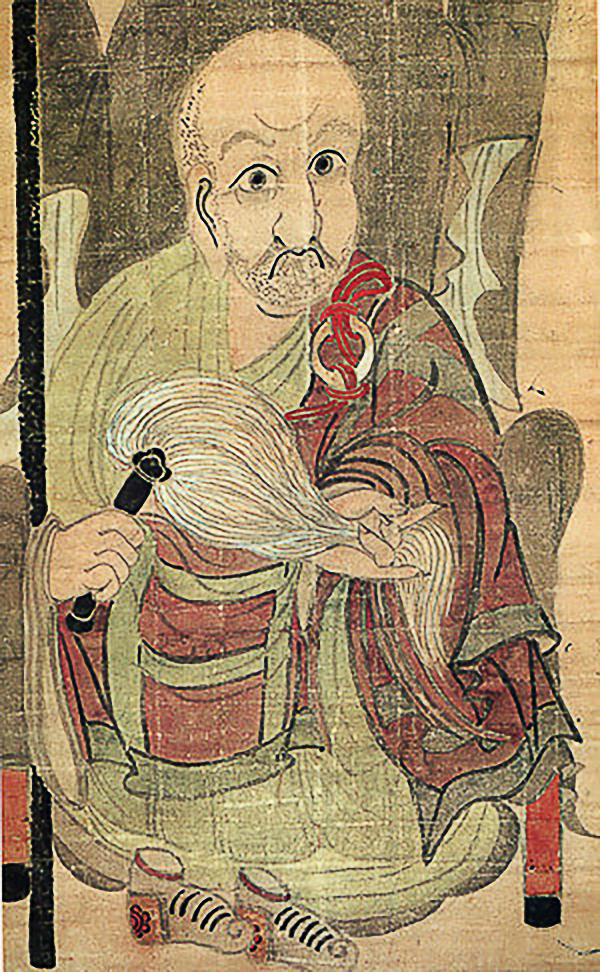
Hakuin Ekaku (白隠 慧鶴; January 19, 1686 – January 18, 1769) was one of the most influential figures in Japanese Zen Buddhism, who regarded bodhicitta, working for the benefit of others, as the ultimate concern of Zen-training. While never having received formal dharma transmission, he is regarded as the reviver of the Japanese Rinzai school from a period of stagnation, focusing on rigorous training methods integrating meditation and koan practice.
Hakuin was born in 1686 in the small village of Hara, at the foot of Mount Fuji. His mother was a devout Nichiren Buddhist, and it is likely that her piety was a major influence on his decision to become a Buddhist monk. As a child, Hakuin attended a lecture by a Nichiren monk on the topic of the Eight Hot Hells. This deeply impressed the young Hakuin, and he developed a pressing fear of hell, seeking a way to escape it. He eventually came to the conclusion that it would be necessary to become a monk.
At the age of fifteen, he obtained consent from his parents to join the monastic life, and was ordained at the local Zen temple, Shōin-ji, by the residing priest Tanrei Soden. Tanrei had a poor health, and Hakuin was soon sent to a neighboring temple, Daishō-ji, where he served as a novice for three or four years, studying Buddhist texts. While at Daisho-ji, he read the Lotus Sutra, considered by the Nichiren sect to be the king of all Buddhist sutras, and found it disappointing, saying "it consisted of nothing more than simple tales about cause and effect".
At age eighteen, he left Daishō-ji for Zensō-ji, a temple close to Hara. At the age of nineteen, he came across in his studies the story of the Chinese Ch'an master Yantou Quanhuo, who had been brutally murdered by bandits. Hakuin despaired over this story, as it showed that even a great monk could not be saved from a bloody death in this life. How then could he, just a simple monk, hope to be saved from the tortures of hell in the next life? He gave up his goal of becoming an enlightened monk, and not wanting to return home in shame, traveled around studying literature and poetry.
Travelling with twelve other monks, Hakuin made his way to Zuiun-ji, the residence of Baō Rōjin, a respected scholar but also a tough-minded teacher. While studying with the poet-monk Bao, he had an experience that put him back along the path of monasticism. He saw a number of books piled out in the temple courtyard, books from every school of Buddhism. Struck by the sight of all these volumes of literature, Hakuin prayed to the gods of the Dharma to help him choose a path. He then reached out and took a book; it was a collection of Zen stories from the Ming Dynasty. Inspired by this, he repented and dedicated himself to the practice of Zen.
He again went traveling for two years, settling down at the Eigen-ji temple when he was twenty-three. It was here that Hakuin had his first entrance into enlightenment when he was twenty-four. He locked himself away in a shrine in the temple for seven days, and eventually reached an intense awakening upon hearing the ringing of the temple bell. However, his master refused to acknowledge this enlightenment, and Hakuin left the temple.
Hakuin left again, to study for a mere eight months with Shōju Rōjin (Dokyu Etan, 1642–1721), an enigmatic teacher whose historicity has been questioned. According to Hakuin and his biographers, Shoju was an intensely demanding teacher, who hurled insults and blows at Hakuin, in an attempt to free him from his limited understanding and self-centeredness. When asked why he had become a monk, Hakuin said that it was out of terror to fall into hell, to which Shōju replied "You're a self-centered rascal, aren't you!" Shōju assigned him a series of "hard-to-pass" koans. These led to three isolated moments of satori, but it was only eighteen years later that Hakuin really understood what Shōju meant with this.
Hakuin left Shoju after eight months of study, but in later life, when he had realized Shoju's teachings on the importance of bodhicitta, Hakuin considered Shoju Rojin his primary teacher, and solidly identified himself with Shoju's dharma-lineage. Today Hakuin is considered to have received dharma transmission from Shoju, though he didn't receive formal dharma transmission from Shoju Rojin, nor from any other teacher, a contradiction for the Rinzai's school emphasis on formal dharma-transmission.
Hub AI
Hakuin Ekaku AI simulator
(@Hakuin Ekaku_simulator)
Hakuin Ekaku
Hakuin Ekaku (白隠 慧鶴; January 19, 1686 – January 18, 1769) was one of the most influential figures in Japanese Zen Buddhism, who regarded bodhicitta, working for the benefit of others, as the ultimate concern of Zen-training. While never having received formal dharma transmission, he is regarded as the reviver of the Japanese Rinzai school from a period of stagnation, focusing on rigorous training methods integrating meditation and koan practice.
Hakuin was born in 1686 in the small village of Hara, at the foot of Mount Fuji. His mother was a devout Nichiren Buddhist, and it is likely that her piety was a major influence on his decision to become a Buddhist monk. As a child, Hakuin attended a lecture by a Nichiren monk on the topic of the Eight Hot Hells. This deeply impressed the young Hakuin, and he developed a pressing fear of hell, seeking a way to escape it. He eventually came to the conclusion that it would be necessary to become a monk.
At the age of fifteen, he obtained consent from his parents to join the monastic life, and was ordained at the local Zen temple, Shōin-ji, by the residing priest Tanrei Soden. Tanrei had a poor health, and Hakuin was soon sent to a neighboring temple, Daishō-ji, where he served as a novice for three or four years, studying Buddhist texts. While at Daisho-ji, he read the Lotus Sutra, considered by the Nichiren sect to be the king of all Buddhist sutras, and found it disappointing, saying "it consisted of nothing more than simple tales about cause and effect".
At age eighteen, he left Daishō-ji for Zensō-ji, a temple close to Hara. At the age of nineteen, he came across in his studies the story of the Chinese Ch'an master Yantou Quanhuo, who had been brutally murdered by bandits. Hakuin despaired over this story, as it showed that even a great monk could not be saved from a bloody death in this life. How then could he, just a simple monk, hope to be saved from the tortures of hell in the next life? He gave up his goal of becoming an enlightened monk, and not wanting to return home in shame, traveled around studying literature and poetry.
Travelling with twelve other monks, Hakuin made his way to Zuiun-ji, the residence of Baō Rōjin, a respected scholar but also a tough-minded teacher. While studying with the poet-monk Bao, he had an experience that put him back along the path of monasticism. He saw a number of books piled out in the temple courtyard, books from every school of Buddhism. Struck by the sight of all these volumes of literature, Hakuin prayed to the gods of the Dharma to help him choose a path. He then reached out and took a book; it was a collection of Zen stories from the Ming Dynasty. Inspired by this, he repented and dedicated himself to the practice of Zen.
He again went traveling for two years, settling down at the Eigen-ji temple when he was twenty-three. It was here that Hakuin had his first entrance into enlightenment when he was twenty-four. He locked himself away in a shrine in the temple for seven days, and eventually reached an intense awakening upon hearing the ringing of the temple bell. However, his master refused to acknowledge this enlightenment, and Hakuin left the temple.
Hakuin left again, to study for a mere eight months with Shōju Rōjin (Dokyu Etan, 1642–1721), an enigmatic teacher whose historicity has been questioned. According to Hakuin and his biographers, Shoju was an intensely demanding teacher, who hurled insults and blows at Hakuin, in an attempt to free him from his limited understanding and self-centeredness. When asked why he had become a monk, Hakuin said that it was out of terror to fall into hell, to which Shōju replied "You're a self-centered rascal, aren't you!" Shōju assigned him a series of "hard-to-pass" koans. These led to three isolated moments of satori, but it was only eighteen years later that Hakuin really understood what Shōju meant with this.
Hakuin left Shoju after eight months of study, but in later life, when he had realized Shoju's teachings on the importance of bodhicitta, Hakuin considered Shoju Rojin his primary teacher, and solidly identified himself with Shoju's dharma-lineage. Today Hakuin is considered to have received dharma transmission from Shoju, though he didn't receive formal dharma transmission from Shoju Rojin, nor from any other teacher, a contradiction for the Rinzai's school emphasis on formal dharma-transmission.
Recent media