
Recent from talks
Hand-held camera
Knowledge base stats:
Talk channels stats:
Members stats:
Hand-held camera
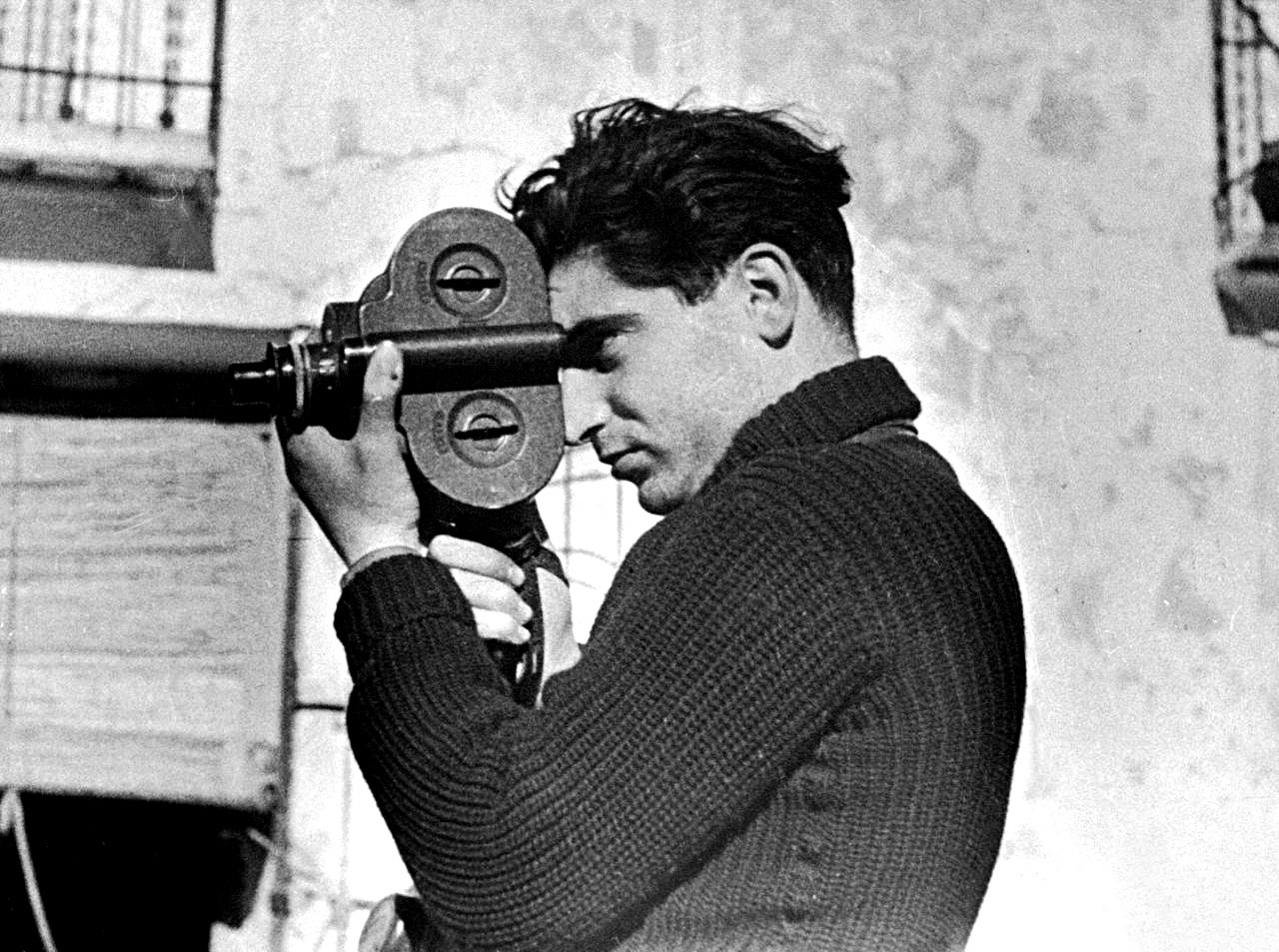
Hand-held camera or hand-held shooting is a filmmaking and video production technique in which a camera is held in the camera operator's hands as opposed to being mounted on a tripod or other base. Hand-held cameras are used because they are conveniently sized for travel and because they allow greater freedom of motion during filming. Newsreel camera operators frequently gathered images using a hand-held camera. Virtually all modern video cameras are small enough for hand-held use, but many professional video cameras are designed specifically for hand-held use such as for electronic news-gathering (ENG), and electronic field production (EFP).
Hand-held camera shots often result in a shaky image, unlike the stable image from a tripod-mounted camera. Purposeful use of this technique is called shaky camera and can be heightened by the camera operator during filming, or artificially simulated in post-production. To prevent shaky shots, a number of image stabilization technologies have been used on hand-held cameras including optical, digital and mechanical methods. The Steadicam, which is not considered to be a "hand-held" camera, uses a stabilizing mount to make smoother shots.
The first silent film era movie cameras that could be carried by the cameraman were bulky and not very practical to simultaneously support, aim, and crank by hand, yet they were sometimes used in that way by pioneering filmmakers. In the 1890s, brothers Auguste and Louis Lumière developed the fairly compact Cinematograph which could be mounted on a tripod or carried by the cameraman, and it also served as the film projector. In 1908 with a hand-held Lumière camera, Wilbur Wright was filmed flying his aircraft on the outskirts of Paris. Thomas Edison developed a portable film camera in 1896. Polish inventor Kazimierz Prószyński first demonstrated a hand-held film camera in 1898 but it was not reliable.
From 1909 to 1911, directors Francesco Bertolini and Adolfo Padavan, with assistant director Giuseppe de Liguoro, shot scenes for L'Inferno, based on Dante's The Divine Comedy. The film was first shown in 1911 and it included hand-held camera shots as well as innovative camera angles and special film effects. In 1915, Thomas H. Ince's The Italian, directed by Reginald Barker, included two hand-held shots, at least one of which represented the viewpoint of a character. The camera swerved suddenly to match what was happening to the character in the story.
The compact hand-cranked Parvo camera was first made in Paris by André Debrie in 1908. Though expensive, it slowly built in popularity from about 1915. By the mid-1920s it was, in sheer numbers, the most-used film camera of any kind.
The problem of hand-cranking and supporting the camera, and simultaneously aiming and focusing it, was difficult to solve. A variety of automatic cranking systems were developed to free one of the cameraman's hands. Various cameras were invented which replaced the hand crank with an electric motor, or with a mainspring and gears, or with gears driven by compressed air. The Aeroscope was a compressed air camera designed by Prószyński, one that proved reliable and popular. Hundreds of Aeroscopes were used during World War I by British war journalists. Sales continued into the 1920s.
In January 1925, Abel Gance began shooting Napoléon using a wide variety of innovative techniques, including strapping a camera to a man's chest, a snow sled, a horse's saddle, a pendulum swing, and wrapping a large sponge around a hand-held camera so that it could be punched by actors during a fight scene. For the Debrie Parvo camera strapped to the horse's saddle, Gance's technical director, engineer Simon Feldman, devised a reversed steam engine for cranking it, powered by two compressed air tanks. Wearing a costume to fit the scene, cameraman Jules Kruger rode another horse to tend the mechanism between shots. Rather than including one or two hand-held scenes for an unusual effect amid an otherwise static film, Gance strove to make his entire film appear as dynamic as possible. It premiered in early 1927.
In the 1920s, more cameras such as the Zeiss-Ikon Kinamo, Newman-Sinclair, Eyemo, and De Vry were beginning to be created with hand-held ergonomics in mind. The Bolex camera was introduced using half-width 16 mm film stock. These smaller cameras satisfied the demand from both the growing newsreel and documentary fields, as well as the emerging amateur market. They were specifically designed to hold shorter lengths of film—usually 100 to 200 feet (30 to 60 m)—and were driven by hand-wound mainspring clockworks which could last continuously through most or even all of a film roll on one winding. These cameras saw limited use in professional filmmaking. Further examples of limited hand-held work in the late 1920s include J. Stuart Blackton's The Passionate Quest (1926), Sidney Franklin's Quality Street (1927), and Cecil B. DeMille's The King of Kings (1927).
Hub AI
Hand-held camera AI simulator
(@Hand-held camera_simulator)
Hand-held camera
Hand-held camera or hand-held shooting is a filmmaking and video production technique in which a camera is held in the camera operator's hands as opposed to being mounted on a tripod or other base. Hand-held cameras are used because they are conveniently sized for travel and because they allow greater freedom of motion during filming. Newsreel camera operators frequently gathered images using a hand-held camera. Virtually all modern video cameras are small enough for hand-held use, but many professional video cameras are designed specifically for hand-held use such as for electronic news-gathering (ENG), and electronic field production (EFP).
Hand-held camera shots often result in a shaky image, unlike the stable image from a tripod-mounted camera. Purposeful use of this technique is called shaky camera and can be heightened by the camera operator during filming, or artificially simulated in post-production. To prevent shaky shots, a number of image stabilization technologies have been used on hand-held cameras including optical, digital and mechanical methods. The Steadicam, which is not considered to be a "hand-held" camera, uses a stabilizing mount to make smoother shots.
The first silent film era movie cameras that could be carried by the cameraman were bulky and not very practical to simultaneously support, aim, and crank by hand, yet they were sometimes used in that way by pioneering filmmakers. In the 1890s, brothers Auguste and Louis Lumière developed the fairly compact Cinematograph which could be mounted on a tripod or carried by the cameraman, and it also served as the film projector. In 1908 with a hand-held Lumière camera, Wilbur Wright was filmed flying his aircraft on the outskirts of Paris. Thomas Edison developed a portable film camera in 1896. Polish inventor Kazimierz Prószyński first demonstrated a hand-held film camera in 1898 but it was not reliable.
From 1909 to 1911, directors Francesco Bertolini and Adolfo Padavan, with assistant director Giuseppe de Liguoro, shot scenes for L'Inferno, based on Dante's The Divine Comedy. The film was first shown in 1911 and it included hand-held camera shots as well as innovative camera angles and special film effects. In 1915, Thomas H. Ince's The Italian, directed by Reginald Barker, included two hand-held shots, at least one of which represented the viewpoint of a character. The camera swerved suddenly to match what was happening to the character in the story.
The compact hand-cranked Parvo camera was first made in Paris by André Debrie in 1908. Though expensive, it slowly built in popularity from about 1915. By the mid-1920s it was, in sheer numbers, the most-used film camera of any kind.
The problem of hand-cranking and supporting the camera, and simultaneously aiming and focusing it, was difficult to solve. A variety of automatic cranking systems were developed to free one of the cameraman's hands. Various cameras were invented which replaced the hand crank with an electric motor, or with a mainspring and gears, or with gears driven by compressed air. The Aeroscope was a compressed air camera designed by Prószyński, one that proved reliable and popular. Hundreds of Aeroscopes were used during World War I by British war journalists. Sales continued into the 1920s.
In January 1925, Abel Gance began shooting Napoléon using a wide variety of innovative techniques, including strapping a camera to a man's chest, a snow sled, a horse's saddle, a pendulum swing, and wrapping a large sponge around a hand-held camera so that it could be punched by actors during a fight scene. For the Debrie Parvo camera strapped to the horse's saddle, Gance's technical director, engineer Simon Feldman, devised a reversed steam engine for cranking it, powered by two compressed air tanks. Wearing a costume to fit the scene, cameraman Jules Kruger rode another horse to tend the mechanism between shots. Rather than including one or two hand-held scenes for an unusual effect amid an otherwise static film, Gance strove to make his entire film appear as dynamic as possible. It premiered in early 1927.
In the 1920s, more cameras such as the Zeiss-Ikon Kinamo, Newman-Sinclair, Eyemo, and De Vry were beginning to be created with hand-held ergonomics in mind. The Bolex camera was introduced using half-width 16 mm film stock. These smaller cameras satisfied the demand from both the growing newsreel and documentary fields, as well as the emerging amateur market. They were specifically designed to hold shorter lengths of film—usually 100 to 200 feet (30 to 60 m)—and were driven by hand-wound mainspring clockworks which could last continuously through most or even all of a film roll on one winding. These cameras saw limited use in professional filmmaking. Further examples of limited hand-held work in the late 1920s include J. Stuart Blackton's The Passionate Quest (1926), Sidney Franklin's Quality Street (1927), and Cecil B. DeMille's The King of Kings (1927).
Recent media