
Recent from talks
Hanging Church
Knowledge base stats:
Talk channels stats:
Members stats:
Hanging Church
Saint Virgin Mary's Coptic Orthodox Church (Coptic: ϯⲉⲕⲕⲗⲏⲥⲓⲁ̀ ⲛ̀ⲧⲉⲑⲉⲟⲇⲟⲕⲟⲥ ϯⲁ̀ⲅⲓⲁ̀ ⲙⲁⲣⲓⲁ̀ ϧⲉⲛⲃⲁⲃⲩⲗⲟⲛ ⲛ̀ⲭⲏⲙⲓ Church of Mother of God Saint Mary in Egyptian Babylon), also known as the Hanging Church (Arabic: الكنيسة المعلقة, romanized: al-Kanīsa al-Muʿallaqa, Coptic: ⲁ̀ⲛⲁⲃⲁϯ ϧⲉⲛⲡⲓⲥⲡⲉⲗⲉⲟⲛ ϧⲉⲛⲃⲁⲃⲩⲗⲱⲛ ⲛ̀ⲭⲏⲙⲓ), is one of the oldest churches in Egypt which dates to the third century. It belongs to the Coptic Orthodox Church of Alexandria.
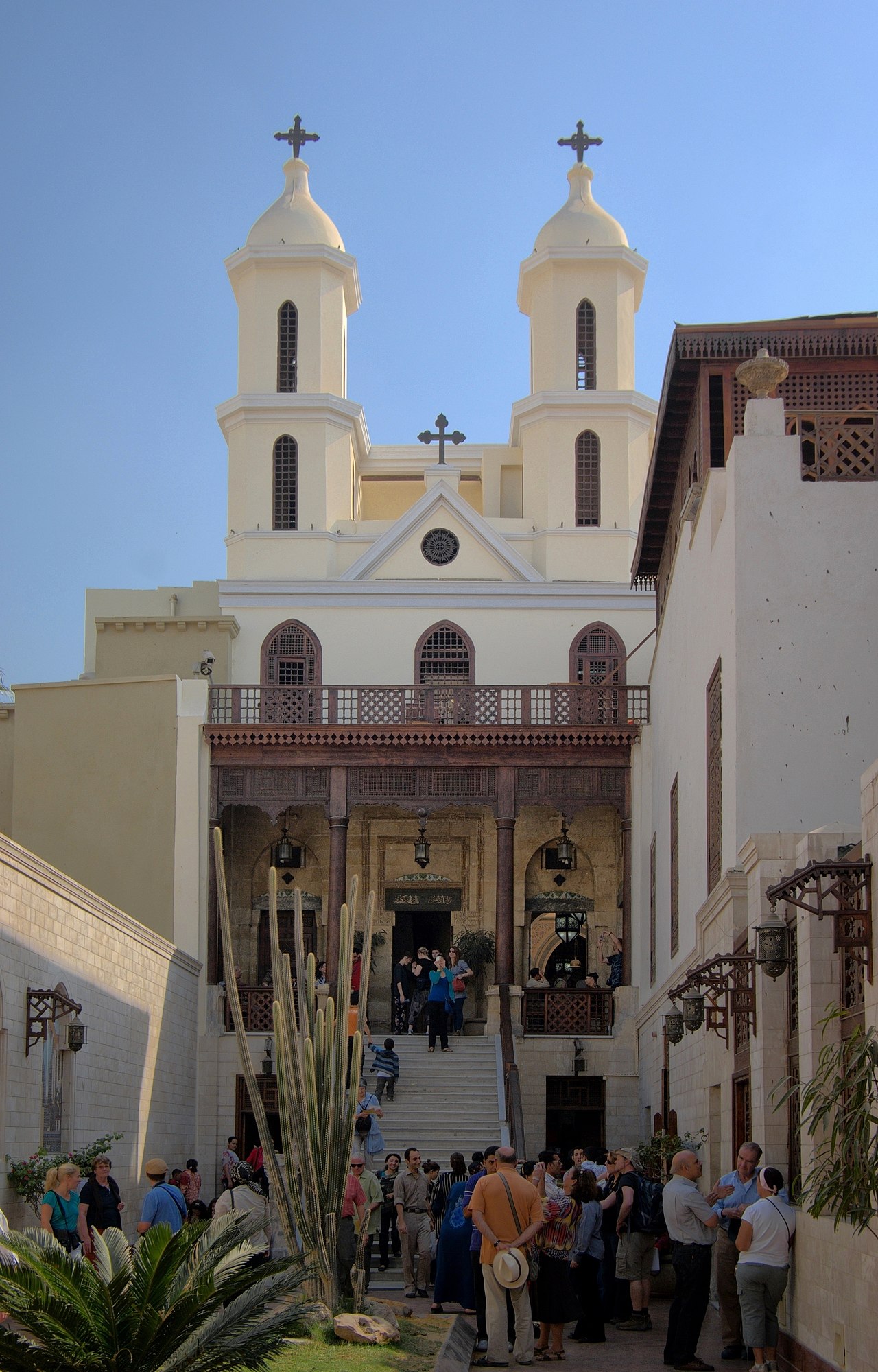
The Hanging Church is named for its location above a gatehouse of Babylon Fortress, the Roman fortress in Coptic Cairo (Old Cairo); its nave is suspended over a passage. The church is approached by twenty-nine steps; early travelers to Cairo dubbed it "the Staircase Church". The land surface has risen by some six metres since the Roman period, so the Roman tower is mostly buried below ground, reducing the visual impact of the church's elevated position.[citation needed]
The entrance from the street is through iron gates under a pointed stone arch. The nineteenth-century facade with twin bell towers is then seen beyond a narrow courtyard decorated with modern art biblical designs. Up the steps and through the entrance is a further small courtyard leading to the eleventh-century outer porch.
The Hanging Church was probably built during the patriarchate of Isaac, though an earlier church building may have elsewhere existed dating as early as the 3rd or 4th century. However, the earliest mention of the church was a statement in the biography of the patriarch Joseph I (831–849), when the governor of Egypt visited the establishment. The church was largely rebuilt by the Pope Abraham (975–978) and has seen many other restorations including an extensive repair and restoration of the church and its surroundings completed in 2011. Objects of historical interest that were no longer of service went to the Coptic Museum. A set of 10 wooden panels from a door at the church that were engraved with Christian iconography in 1300 AD can be found in the British Museum.
The Babylon Fortress was a citadel built by the Romans and its origin is disputed by Coptic historians. Some date its origin to the nineteenth century B.C, after Pharaoh Sesostris defeated the Babylonians and took the prisoners of Egypt as slaves. The prisoners rebelled, building a fortress around their home which became known as Babylon. Others believe the fortress was built in the late sixth century B.C. by Nebuchadnezzar, king of Babylon, after conquering Egypt. The Hanging Church was erected over the citadel's old south Bastions, which marked the main gate to the fortress, and gives the church its ‘hanging’ feature. Beneath the church is the old atrium entrance, with niched walls that once contained statues. Superimposed columns and brick arches were later added to provide reinforcement for the building.
The Hanging Church is among the earliest churches in Cairo, competing only with Saints Sergius and Bacchus Church, or Abu Sargah. The church was restored in the sixth century, erasing much of the evidence of the church's origin. Carved reliefs, believed to belong to the earlier structure, closely resemble those found in the first Syrian churches, which can be dated to the third or fourth century. There is also a carved beam over the entranceway which can be dated to 284 AD., the starting date for the Coptic era.
In 840 AD, governor Ali ibn Yahia the Armenian partially destroyed the church during a conflict with the patriarch Anba Yusab. It was later converted into a mosque until the tenth century, when it was reconsecrated. In the eleventh century, the Hanging church became the residence of the Coptic patriarchate, previously in Alexandria.
Pope Abraham (975-978) commissioned one of the first major restorations of the church. The church has also undergone restorations during the reigns of Caliph Haroun El Rasid, El-Aziz Bi'Allah Al Fatemi and Al-Zaher Al Eazaz Din Allah. In 1983, the chapel ceiling collapsed when an engineer had removed an interior column, damaging much of the artwork inside. The 1992 Cairo earthquake caused further damage to the walls of the structure, leading to an additional restoration in 1998 that was completed in 2011.
Hub AI
Hanging Church AI simulator
(@Hanging Church_simulator)
Hanging Church
Saint Virgin Mary's Coptic Orthodox Church (Coptic: ϯⲉⲕⲕⲗⲏⲥⲓⲁ̀ ⲛ̀ⲧⲉⲑⲉⲟⲇⲟⲕⲟⲥ ϯⲁ̀ⲅⲓⲁ̀ ⲙⲁⲣⲓⲁ̀ ϧⲉⲛⲃⲁⲃⲩⲗⲟⲛ ⲛ̀ⲭⲏⲙⲓ Church of Mother of God Saint Mary in Egyptian Babylon), also known as the Hanging Church (Arabic: الكنيسة المعلقة, romanized: al-Kanīsa al-Muʿallaqa, Coptic: ⲁ̀ⲛⲁⲃⲁϯ ϧⲉⲛⲡⲓⲥⲡⲉⲗⲉⲟⲛ ϧⲉⲛⲃⲁⲃⲩⲗⲱⲛ ⲛ̀ⲭⲏⲙⲓ), is one of the oldest churches in Egypt which dates to the third century. It belongs to the Coptic Orthodox Church of Alexandria.
The Hanging Church is named for its location above a gatehouse of Babylon Fortress, the Roman fortress in Coptic Cairo (Old Cairo); its nave is suspended over a passage. The church is approached by twenty-nine steps; early travelers to Cairo dubbed it "the Staircase Church". The land surface has risen by some six metres since the Roman period, so the Roman tower is mostly buried below ground, reducing the visual impact of the church's elevated position.[citation needed]
The entrance from the street is through iron gates under a pointed stone arch. The nineteenth-century facade with twin bell towers is then seen beyond a narrow courtyard decorated with modern art biblical designs. Up the steps and through the entrance is a further small courtyard leading to the eleventh-century outer porch.
The Hanging Church was probably built during the patriarchate of Isaac, though an earlier church building may have elsewhere existed dating as early as the 3rd or 4th century. However, the earliest mention of the church was a statement in the biography of the patriarch Joseph I (831–849), when the governor of Egypt visited the establishment. The church was largely rebuilt by the Pope Abraham (975–978) and has seen many other restorations including an extensive repair and restoration of the church and its surroundings completed in 2011. Objects of historical interest that were no longer of service went to the Coptic Museum. A set of 10 wooden panels from a door at the church that were engraved with Christian iconography in 1300 AD can be found in the British Museum.
The Babylon Fortress was a citadel built by the Romans and its origin is disputed by Coptic historians. Some date its origin to the nineteenth century B.C, after Pharaoh Sesostris defeated the Babylonians and took the prisoners of Egypt as slaves. The prisoners rebelled, building a fortress around their home which became known as Babylon. Others believe the fortress was built in the late sixth century B.C. by Nebuchadnezzar, king of Babylon, after conquering Egypt. The Hanging Church was erected over the citadel's old south Bastions, which marked the main gate to the fortress, and gives the church its ‘hanging’ feature. Beneath the church is the old atrium entrance, with niched walls that once contained statues. Superimposed columns and brick arches were later added to provide reinforcement for the building.
The Hanging Church is among the earliest churches in Cairo, competing only with Saints Sergius and Bacchus Church, or Abu Sargah. The church was restored in the sixth century, erasing much of the evidence of the church's origin. Carved reliefs, believed to belong to the earlier structure, closely resemble those found in the first Syrian churches, which can be dated to the third or fourth century. There is also a carved beam over the entranceway which can be dated to 284 AD., the starting date for the Coptic era.
In 840 AD, governor Ali ibn Yahia the Armenian partially destroyed the church during a conflict with the patriarch Anba Yusab. It was later converted into a mosque until the tenth century, when it was reconsecrated. In the eleventh century, the Hanging church became the residence of the Coptic patriarchate, previously in Alexandria.
Pope Abraham (975-978) commissioned one of the first major restorations of the church. The church has also undergone restorations during the reigns of Caliph Haroun El Rasid, El-Aziz Bi'Allah Al Fatemi and Al-Zaher Al Eazaz Din Allah. In 1983, the chapel ceiling collapsed when an engineer had removed an interior column, damaging much of the artwork inside. The 1992 Cairo earthquake caused further damage to the walls of the structure, leading to an additional restoration in 1998 that was completed in 2011.
Recent media