Hubbry Logo
HangnailHangnailMain
Open search
Hangnail
Community hub
Hangnail
logo
8 pages, 0 posts
0 subscribers
Be the first to start a discussion here.
Hangnail
Hangnail
from Wikipedia
Hangnail
Other namesAgnail, Stepmother's blessing
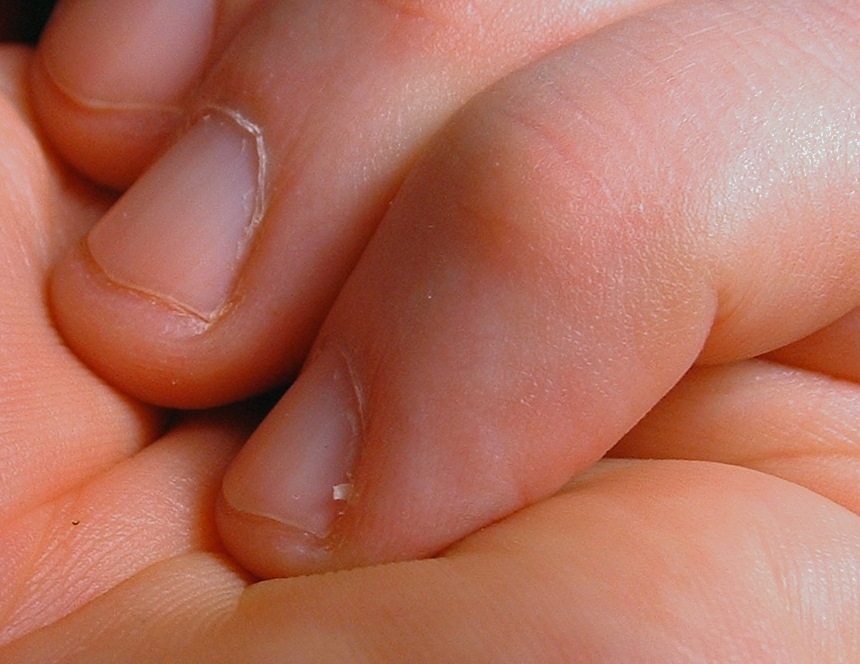
The bottom finger has a hangnail.
SpecialtyDermatology

A hangnail is a small piece of skin or nail next to a fingernail or toenail.[1] Hangnails are typically caused by having dry skin, trauma to the fingers, or ingrown nails.[1]

Complications

[edit]

Hangnails can become infected and cause paronychia, a type of skin infection that causes inflammation around the nails. [2] Hangnails may also cause pain if pulled as they may remain attached to living skin.

Prevention

[edit]

Daily use of hand lotion (or hand cream) or cuticle oil may help prevent the formation of hangnails.[3][4]

Treatment

[edit]

For home treatment, the American Academy of Dermatology recommends clipping the loose piece of skin with a clean nail clipper or nail scissors, and applying over-the-counter antibiotic ointment if the area appears inflamed. Persistent hangnails should be evaluated by a physician.[5]

References

[edit]
Revisions and contributorsEdit on WikipediaRead on Wikipedia
from Grokipedia
A hangnail is a small strip of that has torn or separated from the at the side of a fingernail or toenail, often appearing as a loose, jagged flap. It is a common minor irritation rather than a nail disorder itself, typically resulting from dryness or trauma to the surrounding . Hangnails arise from dry around the nails and can become infected, leading to , especially in individuals with or weakened immune systems.

Definition and Anatomy

Definition

A hangnail is a small, torn piece of that develops at the side or base of a fingernail or toenail, typically originating from the (the extending from the proximal nail fold) or the adjacent paronychium. This condition involves only the soft tissues surrounding the nail and does not affect the nail plate itself. Contrary to a widespread misconception, a hangnail is not a fragment or of the actual nail but rather a strip of dead or irritated that splits away from the or lateral nail folds. The name often leads to confusion, as it implies involvement of the nail structure, whereas the issue stems from the epidermal tissues nearby. The term "hangnail" originates from the "agnail," derived from "angnægl," meaning a painful corn or torn skin, particularly on the fingers or toes, with "ang" denoting pain and "nægl" referring to a nail-like spike or corn. Through , it was altered to "hangnail" in the 17th century, falsely evoking the image of something hanging, despite no etymological connection to suspension or the nail plate.

Nail and Skin Anatomy

The nail bed, also referred to as the sterile matrix, consists of the soft, avascular tissue directly underlying the nail plate, extending from the distal edge of the germinal matrix to the ; it provides attachment and support for the nail without contributing to its growth. The proximal nail fold forms a double-layered structure at the base of the nail, with its dorsal roof overlying the germinal matrix and its ventral floor forming the floor of the proximal nail groove. The , commonly known as the , is the thin, horny layer of extending from the proximal nail fold over the base of the nail plate, serving as a protective barrier. Lateral nail folds, or paronychium, are the folds of flanking the sides of the nail plate, enveloping the lateral margins and preventing ingress of debris. The represents the specialized, thickened epidermal layer beneath the free distal edge of the nail plate, acting as a seal between the nail and the underlying distal digital pulp. Collectively, the nail bed, proximal and lateral nail folds, , paronychium, and constitute the perionychium, the integrated envelope surrounding and supporting the nail unit. This structure is derived from the of the distal digit, with the nail folds exhibiting typical skin including a multilayered and underlying containing fibers, blood vessels, and nerves for nourishment and sensation. The in the perionychium adheres closely to the nail plate at its margins, while the anchors these tissues to deeper structures. A key feature of this is the junctional interface where the perionychial meets the nail plate, particularly along the proximal and lateral edges; these transition zones, including the paronychial sulci and eponychial margin, are structurally delicate due to the thin epidermal attachment and abrupt change in tissue density. Hangnail typically manifests as a small tear originating in these precise anatomical junctions.

Causes and Risk Factors

Environmental Factors

Environmental factors play a significant role in the development of hangnails by compromising the barrier of the perionychial , the surrounding the nail. Low environments, often prevalent in arid regions or during indoor heating seasons, reduce the 's natural hydration, leading to dryness and brittleness that predisposes the perionychial area to tearing. weather exacerbates this effect by constricting blood vessels and further depleting , making the and adjacent more fragile and susceptible to mechanical stress. Harsh climates, such as those with extreme fluctuations or high winds, similarly strip protective oils from the surface, increasing the likelihood of small skin flaps forming at the nail edge. Frequent exposure to water, whether through prolonged hand immersion or repeated wetting and drying cycles, disrupts the skin's lipid barrier, causing it to become chapped and prone to cracking around the nails. Contact with irritants like detergents, solvents, and cleaning chemicals accelerates this process by removing sebum and natural emollients, resulting in irritated and weakened perionychial tissue that easily develops hangnails. These occupational or household exposures are particularly problematic in wet environments combined with chemical use, as they compound the drying effects and heighten vulnerability to minor trauma. Seasonal patterns show a marked increase in hangnail incidence during winter months, attributed to the combined impact of cold outdoor air and low indoor humidity from heating systems, which collectively desiccate the skin and promote . This temporal trend underscores how environmental deficits, rather than personal actions, drive higher rates of perionychial issues in colder seasons.

Behavioral and Medical Factors

Behavioral habits that involve direct manipulation of the nails and surrounding can lead to micro-trauma, increasing the risk of hangnail formation. , also known as onychophagia, damages the and periungual , creating entry points for tears or splits that develop into hangnails. Similarly, picking at cuticles or hangnails exacerbates fragility, often as a stress-related or , further promoting cuticle separation and hangnail occurrence. Improper manicuring techniques, such as cutting nails too short or aggressively trimming cuticles, cause similar micro-injuries by disrupting the protective barrier around the nail bed. Underlying medical conditions impair skin integrity and healing, predisposing individuals to recurrent hangnails. Vitamin deficiencies, particularly in , , and zinc, weaken nail and skin structure; leads to brittle nails prone to splitting, contributes to dry, fragile cuticles that tear easily, and zinc deficiency can cause skin dryness and impaired barrier function. Chronic dermatological disorders such as eczema (atopic dermatitis), contact dermatitis, and compromise the skin's moisture retention and barrier function, making the periungual area more susceptible to cracks and hangnails. Furthermore, factors such as aging (which reduces natural skin oil production and moisture retention), dehydration, and certain medical conditions or medications that affect skin moisture can contribute to dry, cracked skin around the nails, thereby increasing the risk of hangnails. also heightens vulnerability by impairing circulation and , delaying healing of minor skin traumas and increasing hangnail frequency. Occupational risks stem from repetitive hand use that induces trauma or dryness, amplifying hangnail predisposition in certain professions. Manual laborers, such as construction workers, face frequent mechanical stress and abrasions to hands, leading to cuticle damage and hangnail development. Professions involving prolonged hand immersion or frequent washing, like healthcare workers and cleaners, strip natural oils from the skin, causing dryness that environmental factors can further exacerbate.

Signs and Symptoms

Uncomplicated Presentation

A hangnail in its uncomplicated presentation appears as a small, torn or jagged piece of that is partially detached and hanging loosely from the side or base of the fingernail, often along the or nail edge. This flap of is typically a minor, ragged strip that can catch on or other surfaces. The primary sensations associated with an uncomplicated hangnail include tenderness around the affected area and that can make routine activities uncomfortable. If the loose is snagged or pulled, it may cause sharp, localized pain, and further tearing can lead to minor bleeding without significant tissue damage. In terms of progression, an uncomplicated hangnail often begins as a small crack in the skin near the nail and evolves into a distinct loose flap over the course of a few days if left undisturbed. Without intervention, the flap may persist as a minor annoyance but generally resolves spontaneously within a week, provided it is not aggravated.

Infected Presentation

When a hangnail becomes infected, it typically presents as , an of the skin surrounding the nail, characterized by redness, swelling, and warmth around the affected area. The infection often leads to throbbing pain that intensifies with pressure or movement, and may accumulate under the skin or nail fold, forming an in more advanced cases. These local signs indicate bacterial entry through the breached skin barrier at the hangnail site. Infections are classified as acute or chronic paronychia based on duration and etiology. Acute paronychia develops suddenly, lasting less than six weeks, and is predominantly bacterial, most commonly caused by , resulting in rapid onset of the aforementioned inflammatory signs and purulent discharge. In contrast, chronic paronychia persists for more than six weeks and is frequently fungal, often involving Candida species, particularly in individuals exposed to prolonged moisture such as those with frequent hand immersion in water or irritants. This type may show less acute pain but persistent tenderness and swelling, sometimes with nail plate changes. In severe cases, the infection can spread beyond the local area, manifesting systemic symptoms such as fever or swelling of nearby lymph nodes, signaling potential or deeper involvement. Red streaks extending from the nail may also appear, indicating .

Treatment

Home Care

For uncomplicated hangnails, focuses on softening the skin, safely removing the excess tissue, and protecting the area to promote healing and prevent . This approach is suitable for mild cases without signs of redness, swelling, or pus. Begin by soaking the affected finger in warm, soapy water for 10 to to soften the skin, reduce discomfort, and minimize the risk of tearing during removal. Adding Epsom salt to the water can provide additional soothing effects by helping to draw out , though plain soapy water is sufficient for most cases. Repeat the soak 2 to 4 times daily as needed until the hangnail is resolved. After soaking and gently drying the area, use clean, sterilized nail clippers or to trim the hangnail as close to the base as possible, cutting parallel to the skin to avoid injuring surrounding healthy tissue. Sterilize the tools by wiping them with beforehand, and wash your hands thoroughly with and water before and after the procedure to reduce risk. Do not tear, bite, or pull the hangnail, as this can worsen the injury. Following trimming, apply a thin layer of or over-the-counter ointment to keep the area moist and protected from . Cover it with a sterile for 1 to 2 days, changing the bandage daily or if it becomes wet or dirty, while keeping the finger dry otherwise to support . Monitor for any worsening symptoms, such as increased or discharge, which may indicate the need for professional evaluation.

Professional Interventions

When hangnails progress to bacterial that does not respond to initial measures or shows signs of spreading infection, professional intervention is warranted, typically involving antimicrobial therapy and, if necessary, surgical drainage. Oral antibiotics such as cephalexin are commonly prescribed for acute bacterial , with a standard adult dosage of 250 to 500 mg four times daily for 7-10 days to target staphylococcal and streptococcal pathogens. Topical antibiotics may be used adjunctively in milder cases, but systemic treatment is preferred for more severe presentations to ensure resolution within 5-7 days. For chronic paronychia, particularly those involving candidal overgrowth, topical antifungals like clotrimazole 1% cream applied twice daily for 2-4 weeks are recommended to address the fungal component, often combined with topical corticosteroids for . Oral antifungals such as may be considered in refractory cases, but topical agents are first-line due to their efficacy and lower risk profile. If an forms, is the definitive procedure, performed under by elevating the eponychial fold or making a small parallel incision to release , followed by and packing if needed. This intervention, often done in an outpatient setting, prevents further complications like felon formation and is typically followed by antibiotics. Persistent or recurrent hangnails may indicate underlying dermatologic conditions such as , necessitating referral to a dermatologist for evaluation and , including systemic treatments if is confirmed. Early specialist involvement ensures comprehensive management of associated nail dystrophy or inflammatory disorders.

Prevention

Daily Habits

Incorporating simple daily habits can significantly reduce the risk of developing hangnails by protecting the skin and from and . One key practice is to avoid and picking at the skin around the , as these behaviors can tear the delicate area and create entry points for hangnails. To deter , applying bitter-tasting nail polishes serves as an effective barrier, discouraging the habit through an unpleasant flavor that interrupts the urge. Similarly, refraining from picking helps maintain the integrity of the nail bed and surrounding . Gentle nail trimming is another essential routine to prevent snags that lead to skin tears. should be cut straight across using sharp manicure scissors or clippers, followed by lightly filing the corners to a slight curve, which avoids sharp edges that could catch and pull on adjacent . This method promotes even growth and minimizes the chance of the nail trapping or damaging nearby tissue. Protecting hands during routine activities involving moisture or irritants is crucial for preserving barrier function. Wearing cotton-lined rubber gloves while washing dishes, cleaning, or handling chemicals prevents excessive water exposure and chemical drying, both of which can weaken the skin near the . Complementing these habits, regular moisturizing supports overall hydration, though detailed strategies fall under long-term maintenance.

Long-Term Strategies

To prevent recurrent hangnails, consistent moisturization of the skin around is essential, as dry cuticles are a primary cause of and splits. Dermatologists recommend applying a thick ointment or cream containing or multiple times daily, particularly immediately after or exposure to , to lock in moisture and maintain skin barrier integrity. , derived from sheep's wool, acts as an occlusive agent that mimics the skin's natural , reducing and promoting flexibility in the perionychium. Similarly, urea-based formulations at concentrations of 10-20% serve as humectants that draw into the skin while gently exfoliating dead cells, thereby softening hardened cuticles over time. This regimen should be integrated into daily routines, with overnight application under gloves for enhanced absorption and efficacy. Additionally, using a in dry environments can help maintain ambient moisture levels, reducing dryness that contributes to hangnail formation, especially during winter or in arid regions. Addressing nutritional factors can further bolster resilience against hangnail formation, particularly by ensuring adequate intake, as rare deficiencies may contribute to dry or scaly and brittle , indirectly increasing susceptibility to tears around the . -rich foods such as eggs, almonds, and provide this B-vitamin naturally, supporting production; adults should aim for the recommended adequate intake of 30 micrograms daily through diet. If recurrent hangnails persist despite other measures, consulting a healthcare provider for blood testing to identify or other deficiencies is advisable, potentially leading to targeted supplementation—typically 2.5-5 mg daily—which has shown benefits in improving nail and surrounding quality in clinical studies for brittle . However, supplementation should only follow confirmed deficiency, as excess can interfere with lab tests. Individuals with underlying conditions like eczema or face heightened hangnail risk due to impaired hydration and healing, necessitating proactive management of these comorbidities to enhance overall dermal resilience. For eczema, adhering to prescribed topical corticosteroids or calcineurin inhibitors, combined with fragrance-free emollients, helps control and dryness that predispose to cuticle tears. In , maintaining optimal glycemic control through medication, diet, and monitoring reduces hyperglycemia-induced vulnerability, including slower wound repair and increased susceptibility around nails; regular foot and hand inspections, along with daily moisturization, are critical components of this approach. Treating these conditions holistically not only mitigates hangnail recurrence but also prevents escalation to more severe cutaneous issues.

Complications

Infections

Hangnail-related infections primarily manifest as , an of the skin surrounding the nail fold, where pathogens enter through the torn or skin barrier created by the hangnail. These infections are classified as acute or chronic based on duration and etiology, with acute cases typically bacterial and chronic often fungal, while viral infections like represent a distinct pathway. Acute bacterial infections arise rapidly when bacteria such as Staphylococcus aureus or Streptococcus species invade the disrupted skin from a hangnail tear, often within hours to days. This leads to localized redness, swelling, warmth, and tenderness in the nail fold, progressing to pus accumulation and potential abscess formation if the infection intensifies. Without intervention, the infection can extend beyond the nail area, causing cellulitis—a spreading bacterial inflammation of the surrounding skin and subcutaneous tissues. Chronic fungal infections develop more gradually over weeks to months, frequently triggered by repeated moisture exposure or irritants that compromise the nail fold barrier, allowing opportunistic fungi like Candida species to proliferate. Symptoms include persistent swelling, nail discoloration, and thickening or ridging of the nail plate, often affecting multiple digits due to ongoing environmental factors. These infections differ from acute bacterial ones by their slower progression and lower acute pain levels, but they can persist and alter nail growth patterns. Viral infections, such as caused by (HSV-1 or HSV-2), can occur if the hangnail site becomes a portal for viral entry, particularly in individuals with prior HSV exposure. This presents with clustered, painful vesicles or blisters on the finger, mimicking bacterial symptoms initially but progressing to tingling, burning, and eventual crusting over 7–10 days, with risks of recurrence. A key risk across these infections is progression to deeper structures; for instance, untreated bacterial from a hangnail can spread to the fingertip pulp, resulting in a felon—a closed-space causing severe throbbing and potential tissue due to poor in that area. Such complications heighten the danger of systemic spread, particularly in immunocompromised individuals, though they remain uncommon with prompt recognition.

Chronic Issues

Repeated trauma from untreated or recurrent hangnails can lead to chronic , an condition of the nail folds that disrupts normal nail growth and structure. This ongoing irritation often results in nail deformities such as longitudinal ridges, splitting of the nail plate. These changes arise because the affects the nail matrix, the area responsible for nail formation, causing irregular production and permanent alterations in nail shape. In the healing process of chronic hangnails, repeated in the perionychium—the surrounding the nail—can cause , a thickening and scarring of the nail fold . This fibrotic tissue impairs the natural regeneration of the , leading to persistently brittle and fragile cuticles that are prone to further tearing. Over time, this scarring creates a cycle of vulnerability, as the compromised barrier allows easier entry for irritants and exacerbates tissue damage. Chronic issues from hangnails may also trigger or worsen secondary conditions, including exacerbation of underlying , where the irritated skin becomes more inflamed and eczematous. Additionally, prolonged can contribute to , the separation of the nail plate from the nail bed, often starting at the distal edge and progressing proximally due to persistent moisture and trauma. These complications highlight the importance of addressing recurrent hangnails to prevent escalation into broader dermatologic problems.

References

Add your contribution
Related Hubs
User Avatar
No comments yet.