
Recent from talks
Harlequinade
Knowledge base stats:
Talk channels stats:
Members stats:
Harlequinade
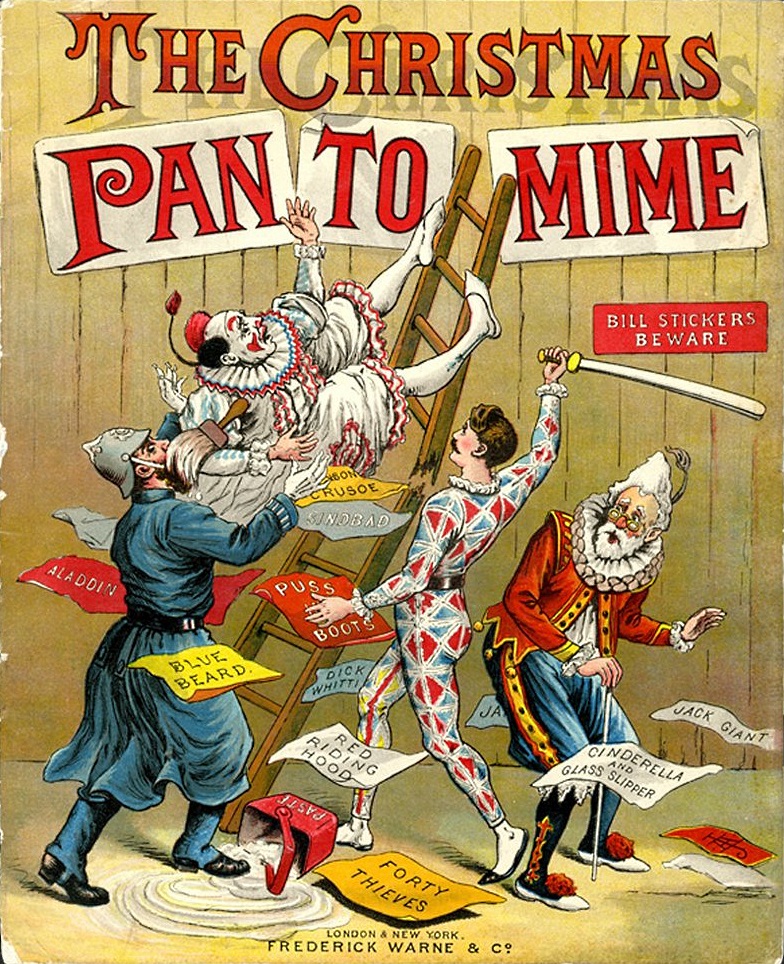
Harlequinade is an English comic theatrical genre, defined by the Oxford English Dictionary as "that part of a pantomime in which the harlequin and clown play the principal parts". It developed in England between the 17th and mid-19th centuries. It was originally a slapstick adaptation or variant of the commedia dell'arte, which originated in Italy and reached its apogee there in the 16th and 17th centuries. The story of the Harlequinade revolves around a comic incident in the lives of its five main characters: Harlequin, who loves Columbine; Columbine's greedy and foolish father Pantaloon (evolved from the character Pantalone), who tries to separate the lovers in league with the mischievous Clown; and the servant, Pierrot, usually involving chaotic chase scenes with a bumbling policeman.
Originally a mime (silent) act with music and stylised dance, the harlequinade later employed some dialogue, but it remained primarily a visual spectacle. Early in its development, it achieved great popularity as the comic closing part of a longer evening of entertainment, following a more serious presentation with operatic and balletic elements. An often elaborate magical transformation scene, presided over by a fairy, connected the unrelated stories, changing the first part of the pantomime, and its characters, into the harlequinade. In the late 18th and 19th centuries, the harlequinade became the larger part of the entertainment, and the transformation scene was presented with increasingly spectacular stage effects. The harlequinade lost popularity towards the end of the 19th century and disappeared altogether in the 1930s, although Christmas pantomimes continue to be presented in Britain without the harlequinade.
During the 16th century, commedia dell'arte spread from Italy throughout Europe, and by the 17th century adaptations of its characters were familiar in English plays. In English versions, harlequinades differed in two important respects from the commedia original. First, instead of being a rogue, Harlequin became the central figure and romantic lead. Secondly, the characters did not speak; this was because of the large number of French performers who played in London, following the suppression of unlicensed theatres in Paris. Although this constraint was only temporary, English harlequinades remained primarily visual, though some dialogue was later admitted.
By the early years of the 18th century, "Italian night scenes" presented versions of commedia traditions in familiar London settings. From these, the standard English harlequinade developed, depicting the eloping lovers Harlequin and Columbine, pursued by the girl's foolish father, Pantaloon, and his comic servants. The basic plot remained essentially the same for more than 150 years. In the first two decades of the century, two rival London theatres, Lincoln's Inn Fields Theatre and the Theatre Royal, Drury Lane, presented productions that began seriously with classical stories with elements of opera and ballet and ended with a comic "night scene". In 1716 John Weaver, the dancing master at Drury Lane, presented "The Loves of Mars and Venus – a new Entertainment in Dancing after the manner of the Antient Pantomimes". At Lincoln's Inn, John Rich presented and performed as Harlequin in similar productions. The theatre historian David Mayer explains the use of the "batte" or slapstick and the "transformation scene":
Rich gave his Harlequin the power to create stage magic in league with offstage craftsmen who operated trick scenery. Armed with a magic sword or bat (actually a slapstick), Rich's Harlequin treated his weapon as a wand, striking the scenery to sustain the illusion of changing the setting from one locale to another. Objects, too, were transformed by Harlequin's magic bat.
Rich's productions were a hit, and other producers, like David Garrick, began producing their own pantomimes. For the rest of the century this pattern persisted in London theatres. When producers ran short of plots from Greek or Roman mythology they turned to British folk stories, popular literature and, by 1800, nursery tales. But whatever the story shown in the first part of the entertainment, the harlequinade remained essentially the same. At the end of the first part, stage illusions were employed in a spectacular transformation scene, initiated by a fairy, turning the pantomime characters into Harlequin, Columbine and their fellows.
In the early 19th century, the popular comic performer Joseph Grimaldi turned the role of Clown from "a rustic booby into the star of metropolitan pantomime". Two developments in 1800, both involving Grimaldi, greatly changed the pantomime characters: For the pantomime Peter Wilkins: or Harlequin in the Flying World, new costume designs were introduced. Clown traded in his tatty servant's costume for a flamboyant, colourful one. In Harlequin Amulet; or, The Magick of Mona, later the same year, Harlequin was modified, becoming an increasingly stylised romantic character leaving the mischief and chaos to Grimaldi's Clown.
Clown now appeared in a range of roles, from the rival suitor to household cook or nurse. Grimaldi's popularity changed the balance of the evening's entertainment, with the first, relatively serious, section soon dwindling to what Mayer calls "little more than a pretext for determining the characters who were to be transformed into those of the harlequinade." In the 19th century, theatrical presentations typically ran for four hours or more, with the pantomime and harlequinade concluding the evening after a long drama. The pantomimes had double titles, describing the two unconnected stories such as "Little Miss Muffet and Little Boy Blue, or Harlequin and Old Daddy Long-Legs."
Hub AI
Harlequinade AI simulator
(@Harlequinade_simulator)
Harlequinade
Harlequinade is an English comic theatrical genre, defined by the Oxford English Dictionary as "that part of a pantomime in which the harlequin and clown play the principal parts". It developed in England between the 17th and mid-19th centuries. It was originally a slapstick adaptation or variant of the commedia dell'arte, which originated in Italy and reached its apogee there in the 16th and 17th centuries. The story of the Harlequinade revolves around a comic incident in the lives of its five main characters: Harlequin, who loves Columbine; Columbine's greedy and foolish father Pantaloon (evolved from the character Pantalone), who tries to separate the lovers in league with the mischievous Clown; and the servant, Pierrot, usually involving chaotic chase scenes with a bumbling policeman.
Originally a mime (silent) act with music and stylised dance, the harlequinade later employed some dialogue, but it remained primarily a visual spectacle. Early in its development, it achieved great popularity as the comic closing part of a longer evening of entertainment, following a more serious presentation with operatic and balletic elements. An often elaborate magical transformation scene, presided over by a fairy, connected the unrelated stories, changing the first part of the pantomime, and its characters, into the harlequinade. In the late 18th and 19th centuries, the harlequinade became the larger part of the entertainment, and the transformation scene was presented with increasingly spectacular stage effects. The harlequinade lost popularity towards the end of the 19th century and disappeared altogether in the 1930s, although Christmas pantomimes continue to be presented in Britain without the harlequinade.
During the 16th century, commedia dell'arte spread from Italy throughout Europe, and by the 17th century adaptations of its characters were familiar in English plays. In English versions, harlequinades differed in two important respects from the commedia original. First, instead of being a rogue, Harlequin became the central figure and romantic lead. Secondly, the characters did not speak; this was because of the large number of French performers who played in London, following the suppression of unlicensed theatres in Paris. Although this constraint was only temporary, English harlequinades remained primarily visual, though some dialogue was later admitted.
By the early years of the 18th century, "Italian night scenes" presented versions of commedia traditions in familiar London settings. From these, the standard English harlequinade developed, depicting the eloping lovers Harlequin and Columbine, pursued by the girl's foolish father, Pantaloon, and his comic servants. The basic plot remained essentially the same for more than 150 years. In the first two decades of the century, two rival London theatres, Lincoln's Inn Fields Theatre and the Theatre Royal, Drury Lane, presented productions that began seriously with classical stories with elements of opera and ballet and ended with a comic "night scene". In 1716 John Weaver, the dancing master at Drury Lane, presented "The Loves of Mars and Venus – a new Entertainment in Dancing after the manner of the Antient Pantomimes". At Lincoln's Inn, John Rich presented and performed as Harlequin in similar productions. The theatre historian David Mayer explains the use of the "batte" or slapstick and the "transformation scene":
Rich gave his Harlequin the power to create stage magic in league with offstage craftsmen who operated trick scenery. Armed with a magic sword or bat (actually a slapstick), Rich's Harlequin treated his weapon as a wand, striking the scenery to sustain the illusion of changing the setting from one locale to another. Objects, too, were transformed by Harlequin's magic bat.
Rich's productions were a hit, and other producers, like David Garrick, began producing their own pantomimes. For the rest of the century this pattern persisted in London theatres. When producers ran short of plots from Greek or Roman mythology they turned to British folk stories, popular literature and, by 1800, nursery tales. But whatever the story shown in the first part of the entertainment, the harlequinade remained essentially the same. At the end of the first part, stage illusions were employed in a spectacular transformation scene, initiated by a fairy, turning the pantomime characters into Harlequin, Columbine and their fellows.
In the early 19th century, the popular comic performer Joseph Grimaldi turned the role of Clown from "a rustic booby into the star of metropolitan pantomime". Two developments in 1800, both involving Grimaldi, greatly changed the pantomime characters: For the pantomime Peter Wilkins: or Harlequin in the Flying World, new costume designs were introduced. Clown traded in his tatty servant's costume for a flamboyant, colourful one. In Harlequin Amulet; or, The Magick of Mona, later the same year, Harlequin was modified, becoming an increasingly stylised romantic character leaving the mischief and chaos to Grimaldi's Clown.
Clown now appeared in a range of roles, from the rival suitor to household cook or nurse. Grimaldi's popularity changed the balance of the evening's entertainment, with the first, relatively serious, section soon dwindling to what Mayer calls "little more than a pretext for determining the characters who were to be transformed into those of the harlequinade." In the 19th century, theatrical presentations typically ran for four hours or more, with the pantomime and harlequinade concluding the evening after a long drama. The pantomimes had double titles, describing the two unconnected stories such as "Little Miss Muffet and Little Boy Blue, or Harlequin and Old Daddy Long-Legs."
Recent media