
Recent from talks
Harpoot
Knowledge base stats:
Talk channels stats:
Members stats:
Harpoot
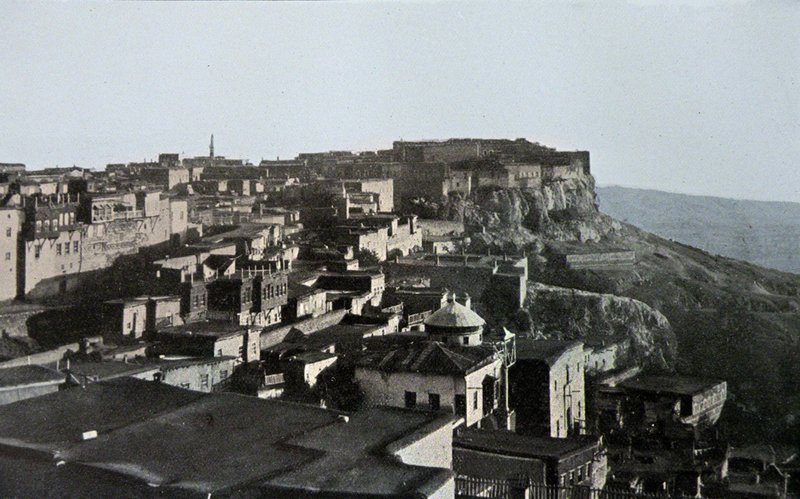
Harpoot (Turkish: Harput) or Kharberd (Armenian: Խարբերդ, romanized: Kharberd) is an ancient town located in the Elazığ Province of Turkey. It now forms a small district of the city of Elazığ. In the late Ottoman period, it fell under the Mamuret-ul-Aziz Vilayet (also known as the Harput Vilayet). Artifacts from around 2000 BC have been found in the area. The town is famous for its Harput Castle, and incorporates a museum, old mosques, a church, and the Buzluk (Ice) Cave. Harput is about 1,100 kilometres (700 mi) from Istanbul.
Harput was a largely Armenian populated region in medieval times and had a significant Armenian population until the Armenian genocide. By the 20th century, Harput had been absorbed into Mezre (renamed Elazığ in 1937), a town on the plain below Harput that significantly grew in size in the 19th century.
Kharberd was first interpreted as consisting of the Armenian words kʻar ("rock") and berd ("castle, fortress"), as if meaning "a fortress surrounded by rock faces." Others have connected the name with a Hurrian word, har/khar, meaning "path" or "road." Nicholas Adontz proposed a connection with Kharta, a city mentioned in Assyrian cuneiform inscriptions, putatively having developed into Khartberd and later Kharberd. Another proposed etymology connects it with the name of a Hittite and Hurrian goddess. Kharbed is sometimes identified with Hoṛeberd, a fortress in the Antzitene canton of the province of Sophene of the Kingdom of Armenia; according to this view, Kharberd is a corrupted form of the name Hoṛeberd (with the proposed development Hoṛeberd-Khoreberd-Kharberd).
Arabic sources referred to Kharberd as Khartbirt or as Hisn Ziyad, from the Syriac Hesna d-Ziyad, meaning "the fortress of Ziyad." The medieval geographer Al-Dimashqi wrote that Khartbirt was the name of the city, while Hisn Ziyad referred to the ancient citadel.
Harput is located on a hilltop above a rich, fertile plain historically dotted with villages, about 14 km away from the left bank of the Murat River․ To its southeast is Lake Hazar (previously known as Gölcük in Turkish and Tsovkʻ in Armenian), the source of the Tigris River.
Historian Hakob Manandian believed Harput to be the site of Ura, the main fortress of the Bronze Age Hayasa-Azzi confederation. Harput was a fortress town of the Iron Age Kingdom of Urartu. In the classical period, Harput was a part of the Kingdom of Sophene and later the Armenian province of Sophene. Some scholars consider it to be the site of Carcathiocerta, the initial capital of the Kingdom of Sophene.
Harput was developed as a military base during the second Byzantine occupation of the region, after 938. An imposing fortress was built on a wide rock outcropping overlooking the valley from the south. A town grew around the fortress, with a primarily Armenian and Syriac population that came from nearby villages as well as the city of Arsamosata further east. By the late 11th century, Harput had eclipsed Arsamosata to become the main settlement in the region. Around 1085, a Turkish warlord named Çubuk conquered Harput and was confirmed as its ruler by the Seljuk Sultan Malik-Shah I. The Great Mosque of Harput was built opposite the citadel by either Çubuk or his son (attested as the ruler here in 1107). William of Tyre wrote that Joscelin I, Count of Edessa (Jocelyn) of Courtenay, and King Baldwin II of Jerusalem were prisoners of Belek Ghazi in Kharput's castle and that they were rescued by their Armenian allies. William of Tyre calls the place Quart Piert or Pierre.[citation needed]
The first Artukid ruler of Harput was Balak, who was related to the Artukid rulers of Mardin and Hisn Kayfa but not directly part of either ruling family. Balak died young in 1124 and the Artukids of Hisn Kayfa took over. Later, Imad ad-Din Abu Bakr, an Artukid prince who had previously attempted to usurp the throne of Hisn Kayfa, gained control of Harput. Harput remained an independent Artukid principality until 1234, when it was conquered by the Seljuks. It was during the Artukid period that the former population of Arsamosata became fully absorbed by Harput. In the early 1200s, one of the Artukid princes may have entirely rebuilt the citadel. In the subsequent period of Seljuk rule, not much was built in Harput.
Hub AI
Harpoot AI simulator
(@Harpoot_simulator)
Harpoot
Harpoot (Turkish: Harput) or Kharberd (Armenian: Խարբերդ, romanized: Kharberd) is an ancient town located in the Elazığ Province of Turkey. It now forms a small district of the city of Elazığ. In the late Ottoman period, it fell under the Mamuret-ul-Aziz Vilayet (also known as the Harput Vilayet). Artifacts from around 2000 BC have been found in the area. The town is famous for its Harput Castle, and incorporates a museum, old mosques, a church, and the Buzluk (Ice) Cave. Harput is about 1,100 kilometres (700 mi) from Istanbul.
Harput was a largely Armenian populated region in medieval times and had a significant Armenian population until the Armenian genocide. By the 20th century, Harput had been absorbed into Mezre (renamed Elazığ in 1937), a town on the plain below Harput that significantly grew in size in the 19th century.
Kharberd was first interpreted as consisting of the Armenian words kʻar ("rock") and berd ("castle, fortress"), as if meaning "a fortress surrounded by rock faces." Others have connected the name with a Hurrian word, har/khar, meaning "path" or "road." Nicholas Adontz proposed a connection with Kharta, a city mentioned in Assyrian cuneiform inscriptions, putatively having developed into Khartberd and later Kharberd. Another proposed etymology connects it with the name of a Hittite and Hurrian goddess. Kharbed is sometimes identified with Hoṛeberd, a fortress in the Antzitene canton of the province of Sophene of the Kingdom of Armenia; according to this view, Kharberd is a corrupted form of the name Hoṛeberd (with the proposed development Hoṛeberd-Khoreberd-Kharberd).
Arabic sources referred to Kharberd as Khartbirt or as Hisn Ziyad, from the Syriac Hesna d-Ziyad, meaning "the fortress of Ziyad." The medieval geographer Al-Dimashqi wrote that Khartbirt was the name of the city, while Hisn Ziyad referred to the ancient citadel.
Harput is located on a hilltop above a rich, fertile plain historically dotted with villages, about 14 km away from the left bank of the Murat River․ To its southeast is Lake Hazar (previously known as Gölcük in Turkish and Tsovkʻ in Armenian), the source of the Tigris River.
Historian Hakob Manandian believed Harput to be the site of Ura, the main fortress of the Bronze Age Hayasa-Azzi confederation. Harput was a fortress town of the Iron Age Kingdom of Urartu. In the classical period, Harput was a part of the Kingdom of Sophene and later the Armenian province of Sophene. Some scholars consider it to be the site of Carcathiocerta, the initial capital of the Kingdom of Sophene.
Harput was developed as a military base during the second Byzantine occupation of the region, after 938. An imposing fortress was built on a wide rock outcropping overlooking the valley from the south. A town grew around the fortress, with a primarily Armenian and Syriac population that came from nearby villages as well as the city of Arsamosata further east. By the late 11th century, Harput had eclipsed Arsamosata to become the main settlement in the region. Around 1085, a Turkish warlord named Çubuk conquered Harput and was confirmed as its ruler by the Seljuk Sultan Malik-Shah I. The Great Mosque of Harput was built opposite the citadel by either Çubuk or his son (attested as the ruler here in 1107). William of Tyre wrote that Joscelin I, Count of Edessa (Jocelyn) of Courtenay, and King Baldwin II of Jerusalem were prisoners of Belek Ghazi in Kharput's castle and that they were rescued by their Armenian allies. William of Tyre calls the place Quart Piert or Pierre.[citation needed]
The first Artukid ruler of Harput was Balak, who was related to the Artukid rulers of Mardin and Hisn Kayfa but not directly part of either ruling family. Balak died young in 1124 and the Artukids of Hisn Kayfa took over. Later, Imad ad-Din Abu Bakr, an Artukid prince who had previously attempted to usurp the throne of Hisn Kayfa, gained control of Harput. Harput remained an independent Artukid principality until 1234, when it was conquered by the Seljuks. It was during the Artukid period that the former population of Arsamosata became fully absorbed by Harput. In the early 1200s, one of the Artukid princes may have entirely rebuilt the citadel. In the subsequent period of Seljuk rule, not much was built in Harput.
Recent media