
Recent from talks
Hattori Hanzō
Knowledge base stats:
Talk channels stats:
Members stats:
Hattori Hanzō
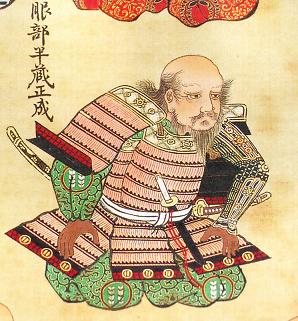
Hattori Hanzō (服部 半蔵; c. 1542 – January 2, 1597) or Second Hanzō, nicknamed Oni no Hanzō (鬼の半蔵, Demon Hanzō), was a famous samurai of the Sengoku era. He served the Tokugawa clan as a general and is credited with saving the life of Tokugawa Ieyasu, later helping him to become the ruler of united Japan.
Hanzō was known as an expert tactician and a master of sword fighting, and was included in cultural sobriquet as one of Tokugawa's 16 divine generals (Tokugawa jūrokushinshō).
He became known as the Second Hanzō. He would later earn the nickname Oni no Hanzō (鬼の半蔵, Demon Hanzō) because of his formidable tactics; this moniker also distinguished him from Watanabe Hanzō (Watanabe Moritsuna), who is nicknamed Yari no Hanzō (槍の半蔵, Spear Hanzō).
Hattori Hanzō was born the son of Hattori Yasunaga (服部 保長), the First Hanzō, a minor samurai in the service of the Matsudaira (later Tokugawa) clan. His real name was Hattori Masanari (服部 正成). Despite being born in Mikawa Province (now Iga-chō, Okazaki, Aichi), he often paid visits to Iga Province, home of the Hattori clan. At the age of 15, his first battle was a nighttime attack during the siege of Uto castle in 1557.
In 1561, Hanzō served Tokugawa Ieyasu (who at the time was still called Matsudaira Motoyasu) and has great contribution with Ieyasu's rise to power, helping the future shogun bring down the Imagawa clan. After Imagawa Ujizane had held Tokugawa's wife and son as hostages, Hanzō made a successful hostage rescue of Tokugawa's family at Kaminogo castle in 1562.
In 1563, a major incident occurred which involved Hanzō. The Ikkō-ikki followers had rebelled in Mikawa and fought against Ieyasu. Moreover, the majority of the Tokugawa clan's vassals were followers of the Ikko sect. Honda Masanobu and most of the vassals joined the Ikko Ikki and began to take hostile action against Ieyasu. During that time, Hanzō, who was also a follower of the Ikkō-ikki, instead kept his loyalty to the Tokugawa clan and supported Ieyasu to fight the rebels.
In 1569, Hanzō went on to lay siege to Kakegawa castle against the Imagawa clan.[citation needed]
From 1570 to 1573, Hanzō served with distinction at the battles of Anegawa and Mikatagahara respectively; it was during this conflict that Hanzō received the nickname Oni no Hanzō. According to the Kansei Chōshū Shokafu, Hattori Hanzō rendered meritorious service during the Battle of Mikatagahara and became commander of an Iga unit consisting of one hundred fifty men. He captured a Takeda spy named Chikuan, and when Takeda's troops invaded Totomi, Hanzō counterattacked with only thirty warriors at the Tenryū River. He and Watanabe Moritsuna performed with exceptional skill with their spears. This prompting Moritsuna to gain a nickname of Yari no Hanzō (Spear Hanzo) while Hanzō being nicknamed as Oni no Hanzō, (Hanzō the demon).
Hub AI
Hattori Hanzō AI simulator
(@Hattori Hanzō_simulator)
Hattori Hanzō
Hattori Hanzō (服部 半蔵; c. 1542 – January 2, 1597) or Second Hanzō, nicknamed Oni no Hanzō (鬼の半蔵, Demon Hanzō), was a famous samurai of the Sengoku era. He served the Tokugawa clan as a general and is credited with saving the life of Tokugawa Ieyasu, later helping him to become the ruler of united Japan.
Hanzō was known as an expert tactician and a master of sword fighting, and was included in cultural sobriquet as one of Tokugawa's 16 divine generals (Tokugawa jūrokushinshō).
He became known as the Second Hanzō. He would later earn the nickname Oni no Hanzō (鬼の半蔵, Demon Hanzō) because of his formidable tactics; this moniker also distinguished him from Watanabe Hanzō (Watanabe Moritsuna), who is nicknamed Yari no Hanzō (槍の半蔵, Spear Hanzō).
Hattori Hanzō was born the son of Hattori Yasunaga (服部 保長), the First Hanzō, a minor samurai in the service of the Matsudaira (later Tokugawa) clan. His real name was Hattori Masanari (服部 正成). Despite being born in Mikawa Province (now Iga-chō, Okazaki, Aichi), he often paid visits to Iga Province, home of the Hattori clan. At the age of 15, his first battle was a nighttime attack during the siege of Uto castle in 1557.
In 1561, Hanzō served Tokugawa Ieyasu (who at the time was still called Matsudaira Motoyasu) and has great contribution with Ieyasu's rise to power, helping the future shogun bring down the Imagawa clan. After Imagawa Ujizane had held Tokugawa's wife and son as hostages, Hanzō made a successful hostage rescue of Tokugawa's family at Kaminogo castle in 1562.
In 1563, a major incident occurred which involved Hanzō. The Ikkō-ikki followers had rebelled in Mikawa and fought against Ieyasu. Moreover, the majority of the Tokugawa clan's vassals were followers of the Ikko sect. Honda Masanobu and most of the vassals joined the Ikko Ikki and began to take hostile action against Ieyasu. During that time, Hanzō, who was also a follower of the Ikkō-ikki, instead kept his loyalty to the Tokugawa clan and supported Ieyasu to fight the rebels.
In 1569, Hanzō went on to lay siege to Kakegawa castle against the Imagawa clan.[citation needed]
From 1570 to 1573, Hanzō served with distinction at the battles of Anegawa and Mikatagahara respectively; it was during this conflict that Hanzō received the nickname Oni no Hanzō. According to the Kansei Chōshū Shokafu, Hattori Hanzō rendered meritorious service during the Battle of Mikatagahara and became commander of an Iga unit consisting of one hundred fifty men. He captured a Takeda spy named Chikuan, and when Takeda's troops invaded Totomi, Hanzō counterattacked with only thirty warriors at the Tenryū River. He and Watanabe Moritsuna performed with exceptional skill with their spears. This prompting Moritsuna to gain a nickname of Yari no Hanzō (Spear Hanzo) while Hanzō being nicknamed as Oni no Hanzō, (Hanzō the demon).
Recent media