
Recent from talks
Hecatomnids
Knowledge base stats:
Talk channels stats:
Members stats:
Hecatomnids
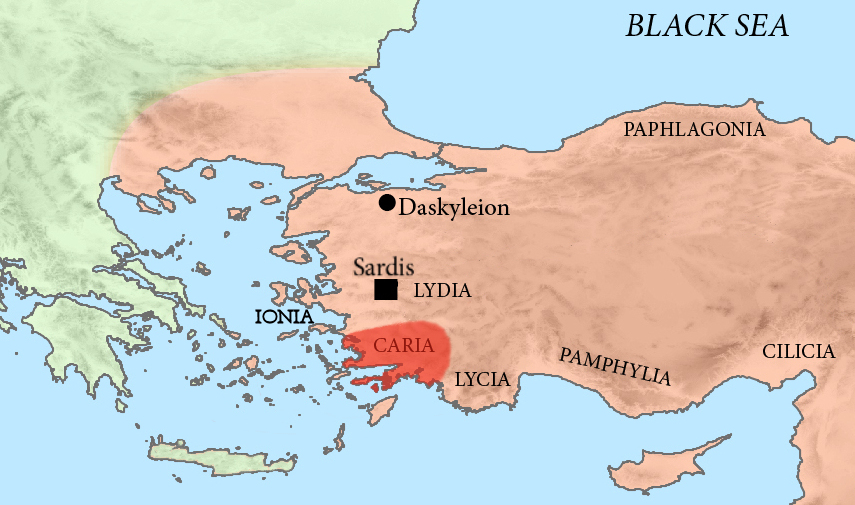
The Hecatomnid dynasty or Hecatomnids were the rulers of Caria and surrounding areas c. 395 – c. 330 BCE. They were satraps (governors) under the Achaemenid Empire, although they ruled with considerable autonomy as a hereditary dynasty. The dynasty had previously ruled the city of Mylasa, which became the capital of Hecatomnus, the first indigenous satrap of Caria. The dynastic capital was moved to Halicarnassus by Mausolus and Artemisia, who built the Mausoleum at Halicarnassus, one of the Seven Wonders of the Ancient World, there. The dynasty survived the conquest of the Achaemenid Empire by Alexander the Great when Ada I, the final Hecatomnid ruler of Caria, adopted Alexander the Great as her son. The small family was remarkable for containing so many sets of married siblings.
The earliest known member of the Hecatomnid family was the dynasty Hyssaldomus. He was the father of Hecatomnus, better known as the founder of the dynasty, and a woman named Aba, who may also have been the mother of Hecatomnus' children. He may have been the first satrap of Caria before his son Hecatomnus, as has been suggested by Louis Robert, although there is no conclusive evidence that this was the case. Several silver coins may have been struck by Hyssaldomus in his capacity as the dynast of Mylasa; these coins have typical Mylasan iconography, but are marked with the Carian letters Ш (w) or 𐋐 (y), which may stand for the unknown equivalent of Hyssaldomus' name in the Carian language.
The Hecatomnids were therefore one of many minor dynasties in Caria. Their seat was originally Mylasa, a major city in central Caria. The family may have gained control of the city when Heracleides of Mylasa fled Caria after the Ionian Revolt. Herodotus records how, during the Ionian Revolt, the dynasts of Cindye included a Mausolus and a Pixodarus. The reuse of those names by later members of the Hecatomnid dynasty suggests that the same family which ruled Mylasa at the start of the fourth century BCE previously ruled Kindye at the start of the fifth, and moved from the smaller town to the larger city at some point before they became satraps of Caria.
The first satrap of the dynasty was Hecatomnus, the son of Hyssaldomus. He was appointed as the first Carian satrap of Caria in the late 390s BCE. Previously, Caria had been governed as part of Lydia, by the satrap Tissaphernes based in Sardis. Tissaphernes was executed by Tithraustes on the orders of Artaxerxes II Memnon in 395 BCE. If Hecatomnus did not become satrap immediately upon the death of Tissaphernes, he was in office by 392 BCE, when he made war on Evagoras of Salamis on the orders of Artaxerxes. Hecatomnus therefore became satrap of Caria c. 395 – c. 392 BCE.
Hecatomnus had five children: three sons (Mausolus, Idrieus, and Pixodarus) and two daughters (Artemisia and Ada). These were arranged into two pairs of married siblings: Mausolus with Artemisia and Idrieus with Ada. Pixodarus, the youngest of the five, married outside the family. Incestuous marriages between cosanguinous siblings were uncommon in the ancient world. Because neither pair of sibling-spouses were known to have had children, it is thought that their marriages were symbolic, and helped to preserve royal power within the family. The parents of this second generation of satraps may themselves have been siblings, if Aba was the wife of Hecatomnus as well as his sister, although the evidence that this was the case is inconclusive. The five children, Hecatomnus, and a woman presumed to be Aba, are all depicted in the art of the lavish but unfinished tomb of Hecatomnus in Mylasa.
During the government of the Hecatomnids, both wife and husband ruled alongside one another, although only men are ever called satrap or issue coinage in their own names. Hecatomnid women are known to have issued laws alongside their husbands and led military actions on their own. On the deaths of Mausolus and Idrieus, Artemisia and Ada respectively assumed sole rule of Caria.
Mausolus and Artemisia II succeeded their father upon his death in 377 BCE. Of the two of them, Mausolus was the only one to put his name on coinage or ever be referred to as satrap; nonetheless, Artemisia had a limited amount of power while her brother was still alive.
Artemisia is often referred to as Artemisia II to prevent confusion with the earlier dynast also called Artemisia (I), who ruled Halicarnassus in the early fifth century BCE and played a prominent role in the Battle of Salamis during the Greco-Persian Wars. Artemisia I was a member of the Lygdamid dynasty who were prominent in Caria c. 520 – c. 450 BCE.
Hub AI
Hecatomnids AI simulator
(@Hecatomnids_simulator)
Hecatomnids
The Hecatomnid dynasty or Hecatomnids were the rulers of Caria and surrounding areas c. 395 – c. 330 BCE. They were satraps (governors) under the Achaemenid Empire, although they ruled with considerable autonomy as a hereditary dynasty. The dynasty had previously ruled the city of Mylasa, which became the capital of Hecatomnus, the first indigenous satrap of Caria. The dynastic capital was moved to Halicarnassus by Mausolus and Artemisia, who built the Mausoleum at Halicarnassus, one of the Seven Wonders of the Ancient World, there. The dynasty survived the conquest of the Achaemenid Empire by Alexander the Great when Ada I, the final Hecatomnid ruler of Caria, adopted Alexander the Great as her son. The small family was remarkable for containing so many sets of married siblings.
The earliest known member of the Hecatomnid family was the dynasty Hyssaldomus. He was the father of Hecatomnus, better known as the founder of the dynasty, and a woman named Aba, who may also have been the mother of Hecatomnus' children. He may have been the first satrap of Caria before his son Hecatomnus, as has been suggested by Louis Robert, although there is no conclusive evidence that this was the case. Several silver coins may have been struck by Hyssaldomus in his capacity as the dynast of Mylasa; these coins have typical Mylasan iconography, but are marked with the Carian letters Ш (w) or 𐋐 (y), which may stand for the unknown equivalent of Hyssaldomus' name in the Carian language.
The Hecatomnids were therefore one of many minor dynasties in Caria. Their seat was originally Mylasa, a major city in central Caria. The family may have gained control of the city when Heracleides of Mylasa fled Caria after the Ionian Revolt. Herodotus records how, during the Ionian Revolt, the dynasts of Cindye included a Mausolus and a Pixodarus. The reuse of those names by later members of the Hecatomnid dynasty suggests that the same family which ruled Mylasa at the start of the fourth century BCE previously ruled Kindye at the start of the fifth, and moved from the smaller town to the larger city at some point before they became satraps of Caria.
The first satrap of the dynasty was Hecatomnus, the son of Hyssaldomus. He was appointed as the first Carian satrap of Caria in the late 390s BCE. Previously, Caria had been governed as part of Lydia, by the satrap Tissaphernes based in Sardis. Tissaphernes was executed by Tithraustes on the orders of Artaxerxes II Memnon in 395 BCE. If Hecatomnus did not become satrap immediately upon the death of Tissaphernes, he was in office by 392 BCE, when he made war on Evagoras of Salamis on the orders of Artaxerxes. Hecatomnus therefore became satrap of Caria c. 395 – c. 392 BCE.
Hecatomnus had five children: three sons (Mausolus, Idrieus, and Pixodarus) and two daughters (Artemisia and Ada). These were arranged into two pairs of married siblings: Mausolus with Artemisia and Idrieus with Ada. Pixodarus, the youngest of the five, married outside the family. Incestuous marriages between cosanguinous siblings were uncommon in the ancient world. Because neither pair of sibling-spouses were known to have had children, it is thought that their marriages were symbolic, and helped to preserve royal power within the family. The parents of this second generation of satraps may themselves have been siblings, if Aba was the wife of Hecatomnus as well as his sister, although the evidence that this was the case is inconclusive. The five children, Hecatomnus, and a woman presumed to be Aba, are all depicted in the art of the lavish but unfinished tomb of Hecatomnus in Mylasa.
During the government of the Hecatomnids, both wife and husband ruled alongside one another, although only men are ever called satrap or issue coinage in their own names. Hecatomnid women are known to have issued laws alongside their husbands and led military actions on their own. On the deaths of Mausolus and Idrieus, Artemisia and Ada respectively assumed sole rule of Caria.
Mausolus and Artemisia II succeeded their father upon his death in 377 BCE. Of the two of them, Mausolus was the only one to put his name on coinage or ever be referred to as satrap; nonetheless, Artemisia had a limited amount of power while her brother was still alive.
Artemisia is often referred to as Artemisia II to prevent confusion with the earlier dynast also called Artemisia (I), who ruled Halicarnassus in the early fifth century BCE and played a prominent role in the Battle of Salamis during the Greco-Persian Wars. Artemisia I was a member of the Lygdamid dynasty who were prominent in Caria c. 520 – c. 450 BCE.
Recent media