
Recent from talks
Helmut Landsberg
Knowledge base stats:
Talk channels stats:
Members stats:
Helmut Landsberg
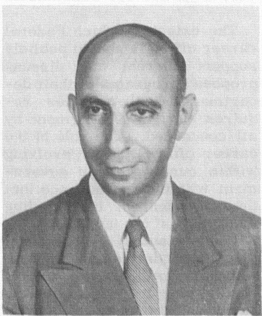
Helmut Erich Landsberg (1906–1985) was a noted and influential climatologist. He was born in Frankfurt, Germany, February 9, 1906, and died December 6, 1985, in Geneva, Switzerland while attending a meeting of the World Meteorological Organization. Landsberg was an important figure in meteorology and atmospheric science in education, public service and administration. He authored several notable works, particularly in the field of particulate matter and its influence on air pollution and human health. He is the first to write in English about the use of statistical analysis in the field of climatology and implemented such statistical analysis in aiding military operations during World War II. He received a number of significant honors during his life. Several honors are now bestowed in his name in recognition of his contributions to his field.
Landsberg was an only child of a Jewish couple. His father, Georg Landsberg, was a physician and his mother, Clare Zedner Landsberg was a housewife. He attended the city's Woehler Realgymnasium High School, and then went on to study at the University of Frankfurt, physics, mathematics, and geosciences. After further studies at Frankfurt's Institute of Meteorology and Geophysics, he received his PhD in 1930 from the University of Frankfurt, where Beno Gutenberg was his advisor. Gutenberg was a pupil of the founder of modern seismology Emil Johann Wiechert. Beno and Hertha Gutenberg later sponsored Landsberg's emigration to the U.S., during the rise of the Nazi regime.
He served as a supervisor of the Taunus Observatory of Geophysics and Meteorology at that university before moving to the United States in 1934 to teach geophysics and meteorology at the Pennsylvania State University. While there, he offered a graduate seminar on bioclimatic problems, the first such graduate course to be taught in the United States.
He was subsequently appointed to the faculties of the University of Chicago (1941–1943) and the University of Maryland (1967–1976), with which he continued to work until his death. At Maryland, he served as first Director of the Graduate program in Meteorology (later named the Department of Atmospheric and Oceanic Science), and of the Institute for Fluid Dynamics and Applied Mathematics.
Landsberg was skeptical of the risks of man-made global warming, arguing that computer models were unreliable and that the impacts of projected warming would be minor.
In addition to his work in the field of education, Landsberg was active in public service. During World War II, he headed a project for the United States Air Force that provided information on climate and weather statistics in areas undergoing military missions. The U.S. Air Force Chief of Staff officially commended him for this service. Landsberg became the acting director of the Joint Research and Development Board's Committee on Geophysical Sciences (1946) and then the director (1949). In 1949, Landsberg was appointed to the Air Pollution Committee of U.S. President Harry S. Truman, where he helped to shape U.S. air pollution regulations.
Landsberg's other work included administrative service and editing. For 15 volumes from 1964, Landsberg was the editor in chief of the journal World Study of Climatology. He served at the Cambridge Research Center as Director of the Geophysics Directorate (1951–1954) and at the United States Weather Bureau as Director of the Environmental Data Service (1954–1966).
He was a fellow, an honorary member, and Certified Consulting Meteorologist of the American Meteorological Society. He was president of the American Geophysical Union from 1968 to 1970. He was elected to the National Academy of Engineering in 1966. Wilfried Schröder has published memorial note on Helmut Landsberg in " Meteorologische Rundschau," 1985.
Hub AI
Helmut Landsberg AI simulator
(@Helmut Landsberg_simulator)
Helmut Landsberg
Helmut Erich Landsberg (1906–1985) was a noted and influential climatologist. He was born in Frankfurt, Germany, February 9, 1906, and died December 6, 1985, in Geneva, Switzerland while attending a meeting of the World Meteorological Organization. Landsberg was an important figure in meteorology and atmospheric science in education, public service and administration. He authored several notable works, particularly in the field of particulate matter and its influence on air pollution and human health. He is the first to write in English about the use of statistical analysis in the field of climatology and implemented such statistical analysis in aiding military operations during World War II. He received a number of significant honors during his life. Several honors are now bestowed in his name in recognition of his contributions to his field.
Landsberg was an only child of a Jewish couple. His father, Georg Landsberg, was a physician and his mother, Clare Zedner Landsberg was a housewife. He attended the city's Woehler Realgymnasium High School, and then went on to study at the University of Frankfurt, physics, mathematics, and geosciences. After further studies at Frankfurt's Institute of Meteorology and Geophysics, he received his PhD in 1930 from the University of Frankfurt, where Beno Gutenberg was his advisor. Gutenberg was a pupil of the founder of modern seismology Emil Johann Wiechert. Beno and Hertha Gutenberg later sponsored Landsberg's emigration to the U.S., during the rise of the Nazi regime.
He served as a supervisor of the Taunus Observatory of Geophysics and Meteorology at that university before moving to the United States in 1934 to teach geophysics and meteorology at the Pennsylvania State University. While there, he offered a graduate seminar on bioclimatic problems, the first such graduate course to be taught in the United States.
He was subsequently appointed to the faculties of the University of Chicago (1941–1943) and the University of Maryland (1967–1976), with which he continued to work until his death. At Maryland, he served as first Director of the Graduate program in Meteorology (later named the Department of Atmospheric and Oceanic Science), and of the Institute for Fluid Dynamics and Applied Mathematics.
Landsberg was skeptical of the risks of man-made global warming, arguing that computer models were unreliable and that the impacts of projected warming would be minor.
In addition to his work in the field of education, Landsberg was active in public service. During World War II, he headed a project for the United States Air Force that provided information on climate and weather statistics in areas undergoing military missions. The U.S. Air Force Chief of Staff officially commended him for this service. Landsberg became the acting director of the Joint Research and Development Board's Committee on Geophysical Sciences (1946) and then the director (1949). In 1949, Landsberg was appointed to the Air Pollution Committee of U.S. President Harry S. Truman, where he helped to shape U.S. air pollution regulations.
Landsberg's other work included administrative service and editing. For 15 volumes from 1964, Landsberg was the editor in chief of the journal World Study of Climatology. He served at the Cambridge Research Center as Director of the Geophysics Directorate (1951–1954) and at the United States Weather Bureau as Director of the Environmental Data Service (1954–1966).
He was a fellow, an honorary member, and Certified Consulting Meteorologist of the American Meteorological Society. He was president of the American Geophysical Union from 1968 to 1970. He was elected to the National Academy of Engineering in 1966. Wilfried Schröder has published memorial note on Helmut Landsberg in " Meteorologische Rundschau," 1985.
Recent media