Hubbry Logo
Helmut RingelmannHelmut RingelmannMain
Open search
Helmut Ringelmann
Community hub
Helmut Ringelmann
logo
8 pages, 0 posts
0 subscribers
Be the first to start a discussion here.
Helmut Ringelmann
Helmut Ringelmann
from Wikipedia

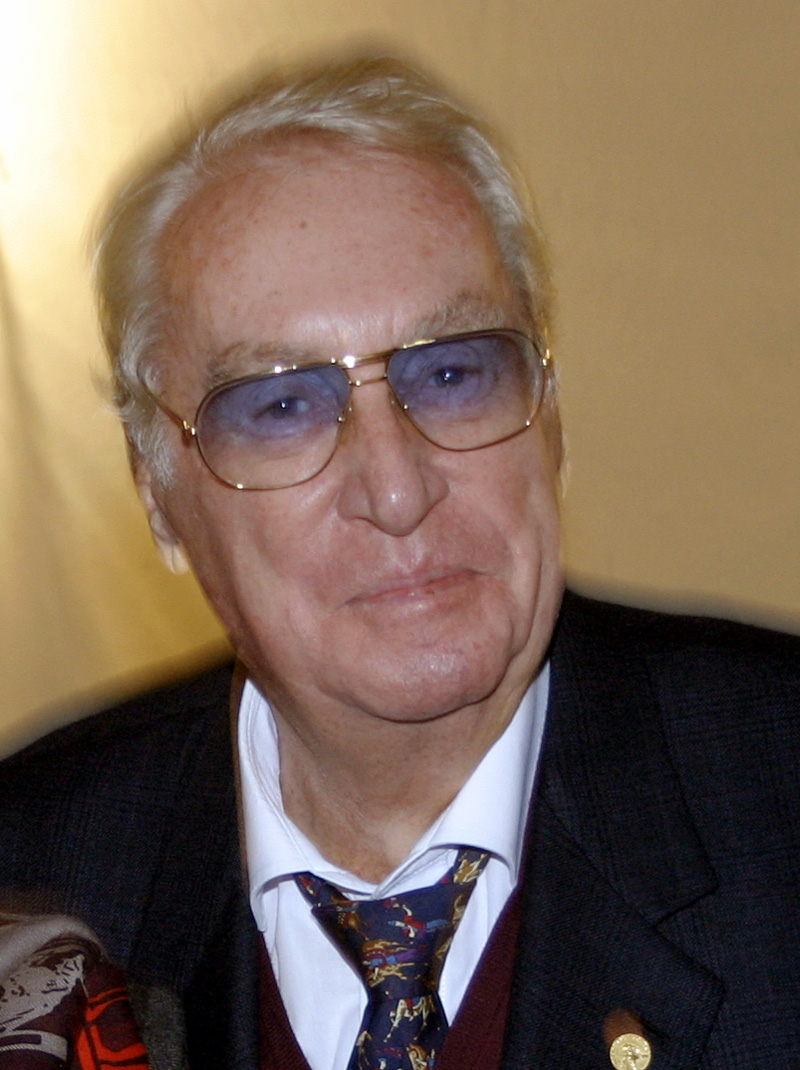
Helmut Ringelmann (4 September 1926 – 20 February 2011) was a German film and television producer.

Key Information

Ringelmann was born in Munich, he produced a number of television series, including the long running Der Kommissar from 1968 to 1974. He is best remembered as the Producer of the Derrick TV series. Ringelmann died in his house in Grünwald near Munich.[1][2]

References

[edit]
[edit]
Revisions and contributorsEdit on WikipediaRead on Wikipedia
from Grokipedia
Helmut Ringelmann was a German television and film producer known for shaping the German television crime genre through iconic long-running series such as Der Kommissar, Derrick, Der Alte, and Siska. Born in Munich in 1926, he began his career in theater after training as an actor and serving as an assistant to director Heinz Hilpert for seven years, before transitioning to film and television production. He gained early international experience as a production manager on Stanley Kubrick's Paths of Glory in 1957 and produced his first ZDF crime program, Kriminalmuseum, in 1963. In 1967 he founded his own company, Neue Münchner Fernsehproduktion, which became a cornerstone of his prolific output focused on psychological crime dramas emphasizing strong scripts and casting. Ringelmann's close collaboration with screenwriter Herbert Reinecker helped establish the signature style of his series, which prioritized emotional depth, character-driven stories, and high-quality acting over action spectacle, making German television crime internationally competitive and exporting Derrick to more than 100 countries. His productions, often broadcast on ZDF and later including private broadcasters, dominated Friday evening programming for decades and launched or featured many notable German actors. He remained active into his later years, handing over his company in 2010, and received numerous honors including three Goldene Bambi awards, a Goldene Kamera, the Bayerischer Fernsehpreis, and the Bundesverdienstkreuz Erster Klasse. Ringelmann, who described script reading as his great hobby and credited his success to an instinct for compelling stories and talent, died on February 20, 2011, in Grünwald near Munich at the age of 84.

Early life

Birth and early years

Helmut Ringelmann was born on 4 September 1926 in Munich, Germany. His childhood and youth were spent in large international hotels that his parents managed. Ringelmann grew up in Munich, the city that would later become the base for his professional career in film and television production. Details about his earliest family life or specific experiences during this period remain limited in available biographical accounts.

Early career

Film production roles

Helmut Ringelmann began his career in the film industry in the mid-1950s, working primarily in production management and unit management roles on feature films and early television productions, initially based in his hometown of Munich. He served as production manager (uncredited) on Max Ophüls' Lola Montès (1955), an international co-production filmed in part at Bavaria Studios. In 1957, Ringelmann worked as unit manager on Stanley Kubrick's Paths of Glory, a major American anti-war film also shot in Germany with German crew involvement. Throughout the late 1950s and 1960s, Ringelmann accumulated extensive experience in the production department on German films and television projects. His credits during this period include production manager on the television adaptation Hamlet (1960) and on several German feature films and TV movies, such as Unterm Birnbaum (1964) and various productions in 1963 including Tote zahlen keine Steuern and Mein Herz ist im Hochland. He also took on roles such as production assistant on international series filmed in Germany, including episodes of Tales of the Vikings (1959–1960). By the late 1960s, Ringelmann increasingly focused on television production management, contributing to TV movies and episodic series as production manager before shifting toward broader producing responsibilities in the medium.

Television production

Der Kommissar

Helmut Ringelmann produced the police procedural series Der Kommissar, which aired on ZDF from 3 January 1969 to 30 January 1976. As executive producer through his Neue Münchner Fernsehproduktion, he oversaw 97 episodes that focused on self-contained stories emphasizing psychological depth over action. Ringelmann collaborated closely with screenwriter Herbert Reinecker, whose dialogue-heavy, chamber-play-style scripts explored emotions such as love, hate, and pity while maintaining a patriarchal, authoritative tone that contrasted with the era's social upheavals. The series featured Erik Ode as Kommissar Herbert Keller of the Munich homicide squad, with assistants portrayed by Fritz Wepper, Günther Schramm, and Reinhard Glemnitz, and regularly included prominent guest actors such as Curd Jürgens and Lilli Palmer. Directors including Zbyněk Brynych contributed distinctive visual elements like unusual camera movements and music integration, helping the production achieve high popularity with audiences reaching up to 60 percent in West Germany. Ringelmann's insistence on casting Ode, despite initial ZDF reservations about the actor's age and style, proved pivotal in establishing a reassuring sense of law and order amid the late-1960s zeitgeist. Der Kommissar marked Ringelmann's breakthrough in long-form television crime drama and set a precedent for psychological, character-driven formats in German television series on ZDF.

Derrick

Helmut Ringelmann served as producer and executive producer on the German crime drama series Derrick, which aired from 1974 to 1998. He is credited as producer on 173 episodes of the series. Derrick was written entirely by Herbert Reinecker, who scripted all 281 episodes during the show's run, marking a key long-term collaboration between Reinecker and Ringelmann. The series, produced by Ringelmann's company Telenova Film und Fernsehproduktion in partnership with ZDF and others, followed Detective Chief Inspector Stephan Derrick and his assistant Harry Klein as they investigated murders in Munich. Derrick achieved widespread international broadcast reach and cultural impact, particularly in Europe, where it gained popularity in countries such as France, Italy, the Netherlands, and Norway, with continued reruns and cult status in several markets. It was also broadcast in non-European territories including Australia, India, and China, contributing to its status as one of the most exported German television programs.

Der Alte

Der Alte marked one of Helmut Ringelmann's most enduring commitments as a producer, with his involvement spanning from the series premiere in 1977 until 2011. He produced 344 episodes during this period, overseeing the long-running ZDF crime drama that featured rotating senior detectives solving complex cases. Building on the success of his prior crime series in the genre, Ringelmann sustained Der Alte's consistent procedural format across more than three decades through his hands-on production role. Ringelmann remained credited as producer until near his death on February 20, 2011, in Grünwald near Munich. His continued oversight helped establish the series as a staple of German television, with the format proving resilient enough to persist beyond his lifetime. Following his passing, production of Der Alte continued at ZDF without his involvement, maintaining its place in the broadcaster's lineup with new casts and ongoing episodes.

Other productions

In addition to his flagship crime series, Helmut Ringelmann produced a number of other television series and formats that demonstrated his versatility across genres, including comedy and lighter drama. One of his longest-running side projects was the police comedy Polizeiinspektion 1, which aired from 1977 to 1988 and spanned 130 episodes. The series, featuring Walter Sedlmayr in a lead role, offered humorous depictions of everyday police work and ran parallel to Ringelmann's more serious crime output. Toward the later stage of his career, Ringelmann produced the crime series Siska, which broadcast from 1998 to 2008 for 85 episodes. He also created Der Mann ohne Schatten in 1996, a 15-episode series that marked his first collaboration with the private broadcaster RTL. Other credits include Eichbergers besondere Fälle (1987–1988, 13 episodes) and Unsere schönsten Jahre (1983–1985, 12 episodes). Ringelmann additionally produced various television movies and specials, such as the Christmas-themed Der große Karpfen Ferdinand und andere Weihnachtsgeschichten (1978) and Die Karten lügen nicht und andere Geschichten (1981), contributing to seasonal and anthology programming on German television. These works, while less internationally prominent than his primary crime series, underscored his broad influence across different styles of TV production.

Personal life

Marriages and family

Helmut Ringelmann was first married to Lilo Altmann, with whom he had a son named Tobias. In 1986, he married actress Evelyn Opela in his second marriage, a union that lasted until his death in 2011. Evelyn Opela, described as his great love, was with him at his home in Grünwald near Munich when he died. He was survived by his wife and his son from his first marriage, with no other children documented in available sources.

Death and legacy

Passing and influence

Helmut Ringelmann died on February 20, 2011, at the age of 84 in his home in Grünwald, Bavaria, Germany, due to organ failure following a fall and subsequent rehabilitation. His passing occurred unexpectedly despite his prior health issues, with his wife Evelyn Opela at his side. A private burial was planned in the immediate family circle, followed by a memorial reception for friends and colleagues at Munich's Cuvilliés-Theater. Ringelmann is regarded as a foundational figure in German television who introduced and shaped the crime drama genre, making it a dominant and internationally competitive format. Through his long-running series, he defined the German Krimi for decades, attracting massive domestic audiences and contributing to the genre's global reach. His psychological storytelling focused on human emotions such as love, hate, and pity rather than action spectacle, setting a distinctive tone that resonated widely and influenced viewer preferences, to the extent that the 1980s saw complaints from the gastronomy sector about reduced Friday evening outings due to television crime slots. His productions collectively featured commissioners solving over 1000 murders on screen across numerous episodes, reflecting the scale of his output and lasting impact on the medium. Derrick, in particular, was broadcast in more than 100 countries, with anecdotal accounts crediting it with enhancing Germany's international reputation more than many political efforts. Ringelmann's emphasis on strong scripts, emotional depth, and consistent casting established benchmarks for the genre and cemented his role in defining German television crime drama.
Add your contribution
Related Hubs
User Avatar
No comments yet.