
Recent from talks
Heman Marion Sweatt
Knowledge base stats:
Talk channels stats:
Members stats:
Heman Marion Sweatt
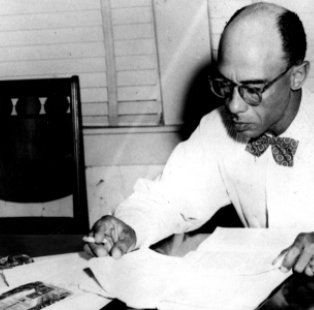
Heman Marion Sweatt (December 11, 1912 – October 3, 1982) was an African-American civil rights activist who confronted Jim Crow laws. He is best known for the Sweatt v. Painter lawsuit, which challenged the "separate but equal" doctrine and was one of the earliest of the events that led to the desegregation of American higher education.
Heman Marion Sweatt (nicknamed "Bill") was born on December 11, 1912, in Houston, Texas, the fourth of six children born to James Leonard Sweatt and Ella Rose Perry. His father James Sweatt had attended Prairie View Normal and Industrial College and became a school teacher and principal in Beaumont before moving to Houston for better economic opportunity.
Heman grew up in a relatively desegregated area of Houston, the third ward on Chenevert Street. Even though his home area was relatively integrated, he still experienced racism and Jim Crow in full. In October 1920 the KKK opened its Houston chapter.
His father passed his love of education on to Heman and his siblings. "At home, our father always stressed the value of an education, he instilled in us an idea of integration at an early age," recalled one of James Sweatt's sons. All of them would go on to attend and graduate from college. Only Heman would attend school in Texas.
In April 1940 he married his high school sweetheart, Constantine Mitchell, and purchased a home.
Like his father before him, Heman's first interaction with the law was because of his concern with the practices within the postal workers union. “Concerned with discrimination against blacks in the post office, where a worker had to be a clerk before promotion to a supervisory position and where blacks were systematically excluded from such positions, Sweatt challenged these practices in his capacity as local secretary of the National Alliance of Postal Employees. “
Heman Sweatt was also a member of Houston's Baháʼí Faith community.
During the early 1940s, he participated in voter-registration drives and raised funds for lawsuits against the white primary. Sweatt had an opportunity to write several columns for the Houston Informer, thanks to Sweatt's father's friend, black Dallas publisher Carter W. Wesley. Post offices stopped promoting blacks to supervisory positions by systematically excluding them from clerical positions which would make them eligible to be promoted. Being a local secretary of the National Alliance of Postal Employees, Sweatt was concerned with discrimination and challenged these practices. While preparing documentation for this case with an attorney, he became more interested in the law. A few years later, in the mid-1940s, Sweatt decided to attend law school and asked William J. Durham to help him. Since Durham knew Texas didn't have law schools for blacks, he advised Sweatt to apply to the University of Texas School of Law. Sweatt not only sought admission but, responding to an appeal Lulu B. White made to a group of Houston blacks for a volunteer to file a lawsuit, also agreed to serve as the NAACP's plaintiff if he was rejected on the basis of race.
Hub AI
Heman Marion Sweatt AI simulator
(@Heman Marion Sweatt_simulator)
Heman Marion Sweatt
Heman Marion Sweatt (December 11, 1912 – October 3, 1982) was an African-American civil rights activist who confronted Jim Crow laws. He is best known for the Sweatt v. Painter lawsuit, which challenged the "separate but equal" doctrine and was one of the earliest of the events that led to the desegregation of American higher education.
Heman Marion Sweatt (nicknamed "Bill") was born on December 11, 1912, in Houston, Texas, the fourth of six children born to James Leonard Sweatt and Ella Rose Perry. His father James Sweatt had attended Prairie View Normal and Industrial College and became a school teacher and principal in Beaumont before moving to Houston for better economic opportunity.
Heman grew up in a relatively desegregated area of Houston, the third ward on Chenevert Street. Even though his home area was relatively integrated, he still experienced racism and Jim Crow in full. In October 1920 the KKK opened its Houston chapter.
His father passed his love of education on to Heman and his siblings. "At home, our father always stressed the value of an education, he instilled in us an idea of integration at an early age," recalled one of James Sweatt's sons. All of them would go on to attend and graduate from college. Only Heman would attend school in Texas.
In April 1940 he married his high school sweetheart, Constantine Mitchell, and purchased a home.
Like his father before him, Heman's first interaction with the law was because of his concern with the practices within the postal workers union. “Concerned with discrimination against blacks in the post office, where a worker had to be a clerk before promotion to a supervisory position and where blacks were systematically excluded from such positions, Sweatt challenged these practices in his capacity as local secretary of the National Alliance of Postal Employees. “
Heman Sweatt was also a member of Houston's Baháʼí Faith community.
During the early 1940s, he participated in voter-registration drives and raised funds for lawsuits against the white primary. Sweatt had an opportunity to write several columns for the Houston Informer, thanks to Sweatt's father's friend, black Dallas publisher Carter W. Wesley. Post offices stopped promoting blacks to supervisory positions by systematically excluding them from clerical positions which would make them eligible to be promoted. Being a local secretary of the National Alliance of Postal Employees, Sweatt was concerned with discrimination and challenged these practices. While preparing documentation for this case with an attorney, he became more interested in the law. A few years later, in the mid-1940s, Sweatt decided to attend law school and asked William J. Durham to help him. Since Durham knew Texas didn't have law schools for blacks, he advised Sweatt to apply to the University of Texas School of Law. Sweatt not only sought admission but, responding to an appeal Lulu B. White made to a group of Houston blacks for a volunteer to file a lawsuit, also agreed to serve as the NAACP's plaintiff if he was rejected on the basis of race.
Recent media