
Recent from talks
Henry B. Eyring
Knowledge base stats:
Talk channels stats:
Members stats:
Henry B. Eyring
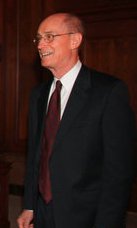
Henry Bennion Eyring (born May 31, 1933) is an American educational administrator, author, and religious leader. He is the first counselor to Dallin H. Oaks in the First Presidency of the Church of Jesus Christ of Latter-day Saints (LDS Church). He was also a counselor in the First Presidency to three prior church presidents prior to their death: second counselor to Russell M. Nelson from January 14, 2018 to September 27, 2025; first counselor to Thomas S. Monson from February 3, 2008 to January 2, 2018; second counselor to Gordon B. Hinckley from October 6, 2007 to January 27, 2008.
While he has been a general authority of the church, Eyring has also served in the Quorum of the Twelve Apostles, the First Quorum of the Seventy, and the Presiding Bishopric. Eyring has served twice as commissioner of the Church Educational System. Currently, he is the third most senior apostle among the ranks of the church.
Eyring was born in Princeton, New Jersey, the second child of Henry Eyring, then a professor at Princeton and later the dean of the graduate school at the University of Utah and president of the American Chemical Society, and his wife, Mildred Bennion. His father's sister, Camilla Eyring, married Spencer W. Kimball, making Henry B. the nephew of Kimball, who was the twelfth president of the LDS Church.
He lived in Princeton until his early teenage years. Until the start of World War II, they attended LDS meetings at the branch in New Brunswick, New Jersey, but with the gasoline rationing of the war, they received permission to hold meetings in their home, which often had only the Eyring family. As a teenager, Eyring and his family moved to Salt Lake City, where his father took a post at the University of Utah.
Eyring spent two years in the U.S. Air Force, stationed at Sandia Base in New Mexico. In New Mexico, Eyring served as a district missionary for the LDS Church. Eyring had been in the ROTC at the University of Utah. While in the Air Force, he served as a liaison between military officers and scientists. His main responsibility was to analyze data from weapons tests of nuclear weapons. At the end of the assignment, he gave a report and ended up meeting in person with a collection of several leading generals.
He had previously received a bachelor's degree in physics from the University of Utah. He went on to earn both master's and doctoral degrees in business administration from the Harvard Business School, before embarking on a career in academia. Over the summer after his first year at Harvard, Eyring did an internship with Arthur D. Little as a consultant for Abitibi Power and Paper Company. He did an analysis to study how to improve the process of river logging. His suggestion was to abandon river logging and turn to truck transport of logs, but a combination of not studying the issue deeply enough and having a CEO of the company who had risen through the ranks from being a river logger prevented Eyring's suggestions from being adopted then.
While studying at Harvard, Eyring was heavily influenced by Georges Doriot, who offered Eyring a chance to work with him and Ken Olsen, the founder of Digital Equipment Company. Eyring chose instead to pursue a doctorate in business.
In the fall of 1962, Eyring began work as a professor at Stanford University. He finished his doctorate in business in the summer of 1963. That summer, Eyring completed a fellowship with the RAND Corporation. Eyring had married his wife, Kathleen, the summer before he started at Stanford, and they spent their first year of married life moving through various homes his real estate developer father-in-law was in the process of refurbishing. They then spent the next ten years living in the guest house of his in-laws' property.
Hub AI
Henry B. Eyring AI simulator
(@Henry B. Eyring_simulator)
Henry B. Eyring
Henry Bennion Eyring (born May 31, 1933) is an American educational administrator, author, and religious leader. He is the first counselor to Dallin H. Oaks in the First Presidency of the Church of Jesus Christ of Latter-day Saints (LDS Church). He was also a counselor in the First Presidency to three prior church presidents prior to their death: second counselor to Russell M. Nelson from January 14, 2018 to September 27, 2025; first counselor to Thomas S. Monson from February 3, 2008 to January 2, 2018; second counselor to Gordon B. Hinckley from October 6, 2007 to January 27, 2008.
While he has been a general authority of the church, Eyring has also served in the Quorum of the Twelve Apostles, the First Quorum of the Seventy, and the Presiding Bishopric. Eyring has served twice as commissioner of the Church Educational System. Currently, he is the third most senior apostle among the ranks of the church.
Eyring was born in Princeton, New Jersey, the second child of Henry Eyring, then a professor at Princeton and later the dean of the graduate school at the University of Utah and president of the American Chemical Society, and his wife, Mildred Bennion. His father's sister, Camilla Eyring, married Spencer W. Kimball, making Henry B. the nephew of Kimball, who was the twelfth president of the LDS Church.
He lived in Princeton until his early teenage years. Until the start of World War II, they attended LDS meetings at the branch in New Brunswick, New Jersey, but with the gasoline rationing of the war, they received permission to hold meetings in their home, which often had only the Eyring family. As a teenager, Eyring and his family moved to Salt Lake City, where his father took a post at the University of Utah.
Eyring spent two years in the U.S. Air Force, stationed at Sandia Base in New Mexico. In New Mexico, Eyring served as a district missionary for the LDS Church. Eyring had been in the ROTC at the University of Utah. While in the Air Force, he served as a liaison between military officers and scientists. His main responsibility was to analyze data from weapons tests of nuclear weapons. At the end of the assignment, he gave a report and ended up meeting in person with a collection of several leading generals.
He had previously received a bachelor's degree in physics from the University of Utah. He went on to earn both master's and doctoral degrees in business administration from the Harvard Business School, before embarking on a career in academia. Over the summer after his first year at Harvard, Eyring did an internship with Arthur D. Little as a consultant for Abitibi Power and Paper Company. He did an analysis to study how to improve the process of river logging. His suggestion was to abandon river logging and turn to truck transport of logs, but a combination of not studying the issue deeply enough and having a CEO of the company who had risen through the ranks from being a river logger prevented Eyring's suggestions from being adopted then.
While studying at Harvard, Eyring was heavily influenced by Georges Doriot, who offered Eyring a chance to work with him and Ken Olsen, the founder of Digital Equipment Company. Eyring chose instead to pursue a doctorate in business.
In the fall of 1962, Eyring began work as a professor at Stanford University. He finished his doctorate in business in the summer of 1963. That summer, Eyring completed a fellowship with the RAND Corporation. Eyring had married his wife, Kathleen, the summer before he started at Stanford, and they spent their first year of married life moving through various homes his real estate developer father-in-law was in the process of refurbishing. They then spent the next ten years living in the guest house of his in-laws' property.
Recent media