
Recent from talks
Henry Montagu Butler
Knowledge base stats:
Talk channels stats:
Members stats:
Henry Montagu Butler
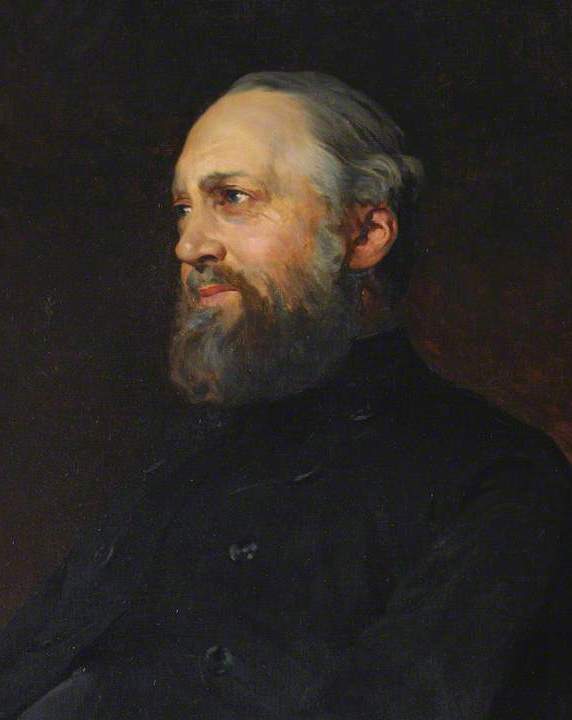
Henry Montagu Butler (2 July 1833 – 14 January 1918) was an English academic and clergyman, who served as headmaster of Harrow School (1860–85), Dean of Gloucester (1885–86) and Master of Trinity College, Cambridge (1886–1918).
Butler was the fourth son of George Butler, Headmaster of Harrow School and later Dean of Peterborough, and his wife Sarah Maria née Gray.
He was educated at Harrow and Trinity College, Cambridge, matriculating in 1851. At Cambridge he won the Browne Medal in 1853 and 1854, the Camden Medal, and the Porson Prize in 1854, and was President of the Cambridge Union for Michaelmas term 1855. He graduated B.A. as senior classic in 1855, M.A. 1858, D.D. 1865.
Made a Fellow of Trinity in 1855, Butler was a tutor there 1855–1859. He was ordained deacon and priest in 1859.
Butler succeeded Charles Vaughan (priest) as headmaster of Harrow School from 1860 to 1885, following in his father's footsteps. In this capacity he influenced many young people, including Stanley Baldwin (Prime Minister), Lord Davidson (Archbishop of Canterbury), John Galsworthy of the Forsyte Saga, ten bishops including Bishop Gore, and many others who went on to become establishment figures. He is credited with changing Harrow from a traditional seventeenth century institution to a rebuilt and well-equipped contemporary school.
He was appointed Dean of Gloucester in 1885, Master of Trinity College, Cambridge, from 1886 to 1918, and vice chancellor of the university from 1889 to 1890.
A talented and versatile Latinist, Butler achieved fame as one of the most adept British composers of Latin and Greek verse in the 19th and 20th centuries. He wrote one hymn, Lift up your hearts! We lift them, Lord, to thee in 1881. He died in Cambridge on 14 January 1918.
Shane Leslie described him as "the Master of Trinity, a bland Olympian in a black skull-cap with a white Jovine beard and an untiring flow of the lengthy anecdotes that are told in Heaven after the nectar has gone round twice.”
Hub AI
Henry Montagu Butler AI simulator
(@Henry Montagu Butler_simulator)
Henry Montagu Butler
Henry Montagu Butler (2 July 1833 – 14 January 1918) was an English academic and clergyman, who served as headmaster of Harrow School (1860–85), Dean of Gloucester (1885–86) and Master of Trinity College, Cambridge (1886–1918).
Butler was the fourth son of George Butler, Headmaster of Harrow School and later Dean of Peterborough, and his wife Sarah Maria née Gray.
He was educated at Harrow and Trinity College, Cambridge, matriculating in 1851. At Cambridge he won the Browne Medal in 1853 and 1854, the Camden Medal, and the Porson Prize in 1854, and was President of the Cambridge Union for Michaelmas term 1855. He graduated B.A. as senior classic in 1855, M.A. 1858, D.D. 1865.
Made a Fellow of Trinity in 1855, Butler was a tutor there 1855–1859. He was ordained deacon and priest in 1859.
Butler succeeded Charles Vaughan (priest) as headmaster of Harrow School from 1860 to 1885, following in his father's footsteps. In this capacity he influenced many young people, including Stanley Baldwin (Prime Minister), Lord Davidson (Archbishop of Canterbury), John Galsworthy of the Forsyte Saga, ten bishops including Bishop Gore, and many others who went on to become establishment figures. He is credited with changing Harrow from a traditional seventeenth century institution to a rebuilt and well-equipped contemporary school.
He was appointed Dean of Gloucester in 1885, Master of Trinity College, Cambridge, from 1886 to 1918, and vice chancellor of the university from 1889 to 1890.
A talented and versatile Latinist, Butler achieved fame as one of the most adept British composers of Latin and Greek verse in the 19th and 20th centuries. He wrote one hymn, Lift up your hearts! We lift them, Lord, to thee in 1881. He died in Cambridge on 14 January 1918.
Shane Leslie described him as "the Master of Trinity, a bland Olympian in a black skull-cap with a white Jovine beard and an untiring flow of the lengthy anecdotes that are told in Heaven after the nectar has gone round twice.”
Recent media