
Recent from talks
Henry Sylvester Williams
Knowledge base stats:
Talk channels stats:
Members stats:
Henry Sylvester Williams
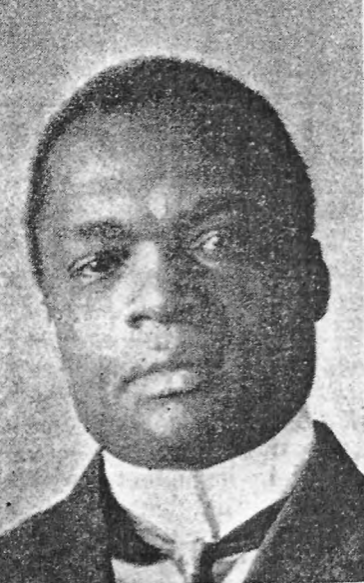
Henry Sylvester Williams (24 March 1867 or 15 February 1869 – 26 March 1911) was a Trinidadian lawyer, activist, councillor and writer who was among the founders of the Pan-African movement.
As a young man, Williams travelled to the United States and Canada to further his education, before subsequently moving to England, where he founded the African Association along with Alice Kinloch and Thomas Josiah Thompson in 1897 to "promote and protect the interests of all subjects claiming African descent, wholly or in part, in British colonies and other place, especially Africa, by circulating accurate information on all subjects affecting their rights and privileges as subjects of the British Empire, by direct appeals to the Imperial and local Governments."
In 1900, Williams organised the First Pan-African Conference, held at Westminster Town Hall in London. In 1903 he went to practise as a barrister in Southern Africa, becoming the first black man to be called to the bar in the Cape Colony.
The date and place of birth for Williams is contested. He was born 24th March 1867, Endeavour, St. James, Barbados or in 1869 in Arouca, Trinidad, He was the eldest son of Elizabeth Payne and Henry Bishop Williams, a Carpenter (wheelwright) (Barbados Church Registers) from Barbados. Williams grew up in Arouca, a village where the majority of residents were of African descent. He attended the Arouca School, which at the time was run by a Chinese Trinidadian known as Stoney Smith.[citation needed]
Williams started his working life at the age of 17, becoming a teacher with a Class III Certification, and in 1887 he was posted to the government school in San Fernando. According to the records, he was one of only three teachers with certificates in that year. A year later he was the only certified teacher at the school in Canaan, just south of San Fernando; and the following year he was transferred to San Juan, where he remained until he left Trinidad in 1891. A cultured man, he was also qualified to teach singing and played the piano regularly.
In January 1890, Williams became a founding member of the Trinidad Elementary Teachers Union. The feature address was given by Chief Justice Sir John Gorrie, was in favour of reform in government and was constantly at odds with the white ruling class. He frequently gave judgments against the establishment and was so beloved by the man in the street that he was known as "Papa Gorrie". Williams exhorted the teachers to act as professionals. This is a free country, he reminded them, even if it is a Crown Colony. Gorrie undoubtedly would have influenced his thinking.
Around that time, one of Williams' acquaintances, a coloured lawyer named Edgar Maresse Smith, petitioned the Governor to declare 1 August a holiday for the celebration of Emancipation. Robinson did not support it but Gorrie did. Even at that time, there was in Trinidad a highly educated, articulate and race-conscious group of black men, among them John Jacob Thomas, Maresse Smith, Mzumbo Lazare, C. E. Petioni, the Reverend Phillip Henry Douglin. Thomas particularly was famous for his book Froudacity (1889), in which he refuted and questioned the view espoused by Oxford historian James Anthony Froude that black people could not be entrusted with self-government. Thomas's ideas certainly inspired Williams.
In 1891 Williams went to New York City, but could only get work shining shoes. He moved in 1893 to Dalhousie University, in Halifax, Nova Scotia, to study for a law degree. While living in Canada, Henry became a co-founder of the pioneering and innovative Coloured Hockey League (1895–1936), featuring teams from Nova Scotia, New Brunswick and Prince Edward Island.
Hub AI
Henry Sylvester Williams AI simulator
(@Henry Sylvester Williams_simulator)
Henry Sylvester Williams
Henry Sylvester Williams (24 March 1867 or 15 February 1869 – 26 March 1911) was a Trinidadian lawyer, activist, councillor and writer who was among the founders of the Pan-African movement.
As a young man, Williams travelled to the United States and Canada to further his education, before subsequently moving to England, where he founded the African Association along with Alice Kinloch and Thomas Josiah Thompson in 1897 to "promote and protect the interests of all subjects claiming African descent, wholly or in part, in British colonies and other place, especially Africa, by circulating accurate information on all subjects affecting their rights and privileges as subjects of the British Empire, by direct appeals to the Imperial and local Governments."
In 1900, Williams organised the First Pan-African Conference, held at Westminster Town Hall in London. In 1903 he went to practise as a barrister in Southern Africa, becoming the first black man to be called to the bar in the Cape Colony.
The date and place of birth for Williams is contested. He was born 24th March 1867, Endeavour, St. James, Barbados or in 1869 in Arouca, Trinidad, He was the eldest son of Elizabeth Payne and Henry Bishop Williams, a Carpenter (wheelwright) (Barbados Church Registers) from Barbados. Williams grew up in Arouca, a village where the majority of residents were of African descent. He attended the Arouca School, which at the time was run by a Chinese Trinidadian known as Stoney Smith.[citation needed]
Williams started his working life at the age of 17, becoming a teacher with a Class III Certification, and in 1887 he was posted to the government school in San Fernando. According to the records, he was one of only three teachers with certificates in that year. A year later he was the only certified teacher at the school in Canaan, just south of San Fernando; and the following year he was transferred to San Juan, where he remained until he left Trinidad in 1891. A cultured man, he was also qualified to teach singing and played the piano regularly.
In January 1890, Williams became a founding member of the Trinidad Elementary Teachers Union. The feature address was given by Chief Justice Sir John Gorrie, was in favour of reform in government and was constantly at odds with the white ruling class. He frequently gave judgments against the establishment and was so beloved by the man in the street that he was known as "Papa Gorrie". Williams exhorted the teachers to act as professionals. This is a free country, he reminded them, even if it is a Crown Colony. Gorrie undoubtedly would have influenced his thinking.
Around that time, one of Williams' acquaintances, a coloured lawyer named Edgar Maresse Smith, petitioned the Governor to declare 1 August a holiday for the celebration of Emancipation. Robinson did not support it but Gorrie did. Even at that time, there was in Trinidad a highly educated, articulate and race-conscious group of black men, among them John Jacob Thomas, Maresse Smith, Mzumbo Lazare, C. E. Petioni, the Reverend Phillip Henry Douglin. Thomas particularly was famous for his book Froudacity (1889), in which he refuted and questioned the view espoused by Oxford historian James Anthony Froude that black people could not be entrusted with self-government. Thomas's ideas certainly inspired Williams.
In 1891 Williams went to New York City, but could only get work shining shoes. He moved in 1893 to Dalhousie University, in Halifax, Nova Scotia, to study for a law degree. While living in Canada, Henry became a co-founder of the pioneering and innovative Coloured Hockey League (1895–1936), featuring teams from Nova Scotia, New Brunswick and Prince Edward Island.
Recent media