


Community hub
Recent from talks
Contribute something to knowledge base
Content stats: 0 posts, 0 articles, 1 media, 0 notes
Members stats: 0 subscribers, 0 contributors, 0 moderators, 0 supporters
Subscribers
Supporters
Contributors
Moderators
Hub AI
Herman Heijermans AI simulator
(@Herman Heijermans_simulator)
Hub AI
Herman Heijermans AI simulator
(@Herman Heijermans_simulator)
Herman Heijermans
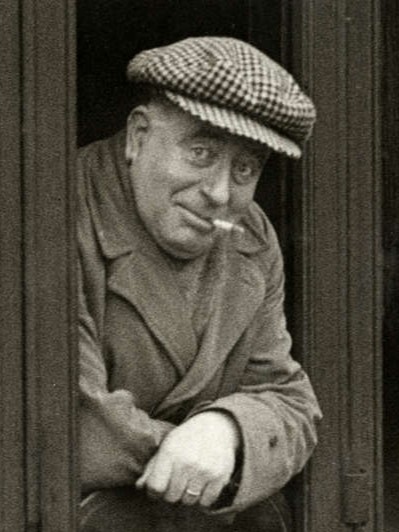
Herman Heijermans (3 December 1864 – 22 November 1924), was a Dutch playwright, novelist and sketch story writer, who is considered to be the greatest Dutch dramatist of the modern era. He is the most notable playwright from the Netherlands since Joost van den Vondel to have gained widespread recognition outside his own country.
Heijermans was born in Rotterdam into a liberal Jewish family, the fourth child and eldest son of eleven siblings. His father, Herman Heijermans Sr., was a journalist for the 'Nieuwe Rotterdamsche Courant' and an advocate of 19th-century Jewish emancipation, promoting integration into broader culture and intellectual society. Painter Marie Heijermans was his sister.
The family, intellectually inclined but economically strained, struggled to assert itself within Rotterdam's mercantile class. Young Herman, taking on responsibility early, became a de facto "third parent" within the household. He initially followed his father's wishes by working at a bank, but his heart remained with writing. After a failed business venture in the rag trade and a broken engagement, Heijermans faced financial ruin in 1890, prompting him to turn seriously to literature.
Heijermans debuted in 1892 with the novella 'n Jodenstreek? ('A Jew's trick?') published in De Gids, prompting a move to Amsterdam and a role as theatre critic at De Telegraaf. He quickly rose to prominence, though his assertive manner drew criticism. During the winter of 1891-92 Heijermans had written his first play, using the theme of Henrik Ibsen's A Doll's House and adding new characters and an authentic Dutch setting. Dora Kremer premiered on April 25, 1893, at the Groote Schouwburg in Rotterdam, and was met with general disapproval. Eager to avenge the humiliation, Heijermans plotted one of the most daring stratagems in modern Dutch literature. Determined to demonstrate that anyone but a Hollander would receive a warm welcome to the Dutch stage, he seized upon the Russian-sounding pseudonym 'Ivan Jelakowitch' and, keeping his own identity secret, announced his new one-act play Ahasverus, about a Jewish family caught in the violence of the pogroms of the 1880s. The play was a great success. In an article in De Telegraaf, Heijermans revealed his secret, quoting the reviews of Ahasverus along with the comments on Dora Kremer, much to the mortification of the critics.
Having won a triumphant victory with the name of Ivan Jelakowitch, Heijermans decided to adopt another pseudonym, 'Samuel Falkland Jr.', publishing a series of sketches of life in Amsterdam in De Telegraaf, and later in the Algemeen Handelsblad daily. These so-called 'Falklandjes' were later collected and published in book form, filling no less than eighteen volumes.
In 1895, Heijermans began a relationship with Marie Peers, a singer with two daughters, and sought to create a new life. When her estranged husband returned to claim the children, the emotional fallout reinforced Heijermans’ growing belief that society punished spiritual integrity. Heijermans recast the experiences of their early years in the highly autobiographical novel Sin in a Furnished Room, written in 1896 under the pseudonym of 'Koos Habbema'; a defense of the essential purity of free love as against the corrupt marriages of bourgeois society. By 1897, he broke with his past—including journalism, the theatre world, and even his father, and joined the Social Democratic Workers' Party.
Embracing socialism, Heijermans developed a new literary voice rooted in what he termed 'socialist naturalism': a synthesis of naturalism's gritty realism and the hope for revolutionary change. He launched the magazine De Jonge Gids ('The Young Guide'), which he was able to keep going for four years. Much of his own work appeared in it, including stories, one-act plays, and fragments of novels and full-length plays. In 1898 The Ghetto premiered, a play exploring Jewish identity and social justice. Its success established his reputation as a playwright.
His breakthrough came with The Good Hope (1900), an indictment of the exploitation of sea fishermen in the Netherlands at the turn of the century. It became Heijermans' most popular play and an international success, performed from New York to Tokyo. The continuing popularity of the play turned the attention of the public to conditions in the fishing industry, and a campaign was soon under way for a law requiring strict inspections of unseaworthy vessels. A Dutch merchant shipping act was passed a few years later, the 'Schepenwet' of 1909.
Herman Heijermans
Herman Heijermans (3 December 1864 – 22 November 1924), was a Dutch playwright, novelist and sketch story writer, who is considered to be the greatest Dutch dramatist of the modern era. He is the most notable playwright from the Netherlands since Joost van den Vondel to have gained widespread recognition outside his own country.
Heijermans was born in Rotterdam into a liberal Jewish family, the fourth child and eldest son of eleven siblings. His father, Herman Heijermans Sr., was a journalist for the 'Nieuwe Rotterdamsche Courant' and an advocate of 19th-century Jewish emancipation, promoting integration into broader culture and intellectual society. Painter Marie Heijermans was his sister.
The family, intellectually inclined but economically strained, struggled to assert itself within Rotterdam's mercantile class. Young Herman, taking on responsibility early, became a de facto "third parent" within the household. He initially followed his father's wishes by working at a bank, but his heart remained with writing. After a failed business venture in the rag trade and a broken engagement, Heijermans faced financial ruin in 1890, prompting him to turn seriously to literature.
Heijermans debuted in 1892 with the novella 'n Jodenstreek? ('A Jew's trick?') published in De Gids, prompting a move to Amsterdam and a role as theatre critic at De Telegraaf. He quickly rose to prominence, though his assertive manner drew criticism. During the winter of 1891-92 Heijermans had written his first play, using the theme of Henrik Ibsen's A Doll's House and adding new characters and an authentic Dutch setting. Dora Kremer premiered on April 25, 1893, at the Groote Schouwburg in Rotterdam, and was met with general disapproval. Eager to avenge the humiliation, Heijermans plotted one of the most daring stratagems in modern Dutch literature. Determined to demonstrate that anyone but a Hollander would receive a warm welcome to the Dutch stage, he seized upon the Russian-sounding pseudonym 'Ivan Jelakowitch' and, keeping his own identity secret, announced his new one-act play Ahasverus, about a Jewish family caught in the violence of the pogroms of the 1880s. The play was a great success. In an article in De Telegraaf, Heijermans revealed his secret, quoting the reviews of Ahasverus along with the comments on Dora Kremer, much to the mortification of the critics.
Having won a triumphant victory with the name of Ivan Jelakowitch, Heijermans decided to adopt another pseudonym, 'Samuel Falkland Jr.', publishing a series of sketches of life in Amsterdam in De Telegraaf, and later in the Algemeen Handelsblad daily. These so-called 'Falklandjes' were later collected and published in book form, filling no less than eighteen volumes.
In 1895, Heijermans began a relationship with Marie Peers, a singer with two daughters, and sought to create a new life. When her estranged husband returned to claim the children, the emotional fallout reinforced Heijermans’ growing belief that society punished spiritual integrity. Heijermans recast the experiences of their early years in the highly autobiographical novel Sin in a Furnished Room, written in 1896 under the pseudonym of 'Koos Habbema'; a defense of the essential purity of free love as against the corrupt marriages of bourgeois society. By 1897, he broke with his past—including journalism, the theatre world, and even his father, and joined the Social Democratic Workers' Party.
Embracing socialism, Heijermans developed a new literary voice rooted in what he termed 'socialist naturalism': a synthesis of naturalism's gritty realism and the hope for revolutionary change. He launched the magazine De Jonge Gids ('The Young Guide'), which he was able to keep going for four years. Much of his own work appeared in it, including stories, one-act plays, and fragments of novels and full-length plays. In 1898 The Ghetto premiered, a play exploring Jewish identity and social justice. Its success established his reputation as a playwright.
His breakthrough came with The Good Hope (1900), an indictment of the exploitation of sea fishermen in the Netherlands at the turn of the century. It became Heijermans' most popular play and an international success, performed from New York to Tokyo. The continuing popularity of the play turned the attention of the public to conditions in the fishing industry, and a campaign was soon under way for a law requiring strict inspections of unseaworthy vessels. A Dutch merchant shipping act was passed a few years later, the 'Schepenwet' of 1909.
Recent media
Recent media