



Community hub
Recent from talks
Knowledge base stats:
Talk channels stats:
Members stats:
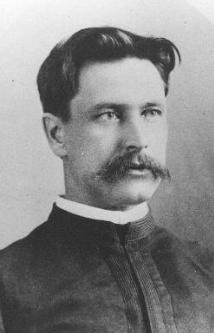
Herman Koehler
Herman John Koehler (December 14, 1859 – July 1, 1927) was an American football coach, athletics administrator, and United States Army officer. He served as the head football coach at the United States Military Academy from 1897 to 1900, compiling a record of 19–11–3.
Koehler was also the Master of the Sword from 1885 to 1923 and director of West Point's first program of physical education instruction. Due to his long-serving tenure and his impact on the Department of Physical Education, he is held in high regard and is considered the "father of the Department of Physical Education" at West Point. His daughter Beatrix was the wife of Major General Edmund L. Daley and mother of Lieutenant General John P. Daley. Koehler is buried in the West Point Cemetery.
Koehler was born in Milwaukee, Wisconsin on December 14, 1859. A second generation German-American, Koehler was an 1882 graduate of the Milwaukee Normal School of Physical Training (a Turnvereine school) and worked as Director of School Gymnastics for the Oshkosh, Wisconsin city schools from 1882 to 1885. A member of the Milwaukee Turners, Koehler revitalized their programs by professionalizing instruction and expanding the visibility of physical training both locally and nationally. His success as a competitive gymnast and educator helped elevate the Turner tradition and bring it to wider prominence. He had also become well known for competing on the national and international level in gymnastics, finishing first against a field of 300 at an event in Frankfurt am Main, Germany in 1881.
On February 1, 1885 Superintendent of the United States Military Academy Col. Wesley Merritt appointed him as a civilian to the position of Master of the Sword. Professor Koehler implemented a systematic program of physical education, compulsory for cadets of the fourth class, and became the driving force in-house for a new gymnasium, which was completed in 1892.
His first program included strength tests and anthropometric measurements of cadets. The physical education curriculum he instituted included not just fencing, but also gymnastics, swimming, dancing, and equestrian arts. Swimming in particular was a welcomed inclusion by the cadets and became a rite of passage. The calisthenics program, mandatory for plebes, was grounded in the Turnvereine philosophy, conducted in mass formation stressing precise execution, good posture, and energetic flair, but never performed to the point of exhaustion. Based on his initial experiences, in 1887 he authored a text, A System of Calisthenic Exercises for Use in the School of the Soldier, whose provisions were adopted Army-wide in 1892 as The Manual of Calisthenic Exercises. His system of "setting up" exercises (later termed "Disciplinary Physical Training") concentrated on strengthening a soldier's shoulders, chest, arms, and legs.
In 1889 the USMA Board of Visitors praised his work and recommended that he be commissioned, stating that he was "doing unaided the duties...of three or four instructors at the Naval Academy." However, not until the 1899–1900 class year did he receive an assistant in instruction, and not until 1901 was he direct-commissioned as a first lieutenant of Infantry and transferred to the Department of Tactics as "instructor in military gymnastics and physical culture. The position of Master of the Sword thereafter has been held since only by members of the Regular Army, all of whom have also been graduates of West Point. In 1895 Koehler began lobbying academy superintendents that physical education be compulsory for all four cadet classes but was unsuccessful until he gained the support of Commandant of Cadets Col. Charles G. Treat. In 1905, when boxing and wrestling were added to the curriculum, Superintendent Brig. Gen. Albert L. Mills made such training mandatory for the entire Corps of Cadets.
From his first days at the academy Koehler promoted Army's participation in intercollegiate athletics, a move resisted by the Academic Board until 1890, when Army was challenged to a game of football by Navy. Army lost the inaugural Army–Navy Game by a score of 24–0. Koehler also fostered intramural sports as a third leg of his physical education philosophy using academic good standing as a requisite to provide an educational incentive, but such sports remained voluntarily until 1920 when Brig. Gen. Douglas MacArthur became superintendent. A more modern gymnasium, still existing today as the Hayes Gymnasium, was constructed in 1910.
In addition to his academy duties, Koehler helped found a recruit school for the New York Police Department in 1913, provided instruction for state militia regiments of New York and Massachusetts from 1911 to 1913, and instructed New York Army National Guard units called up to duty in 1916 as a result of the Pancho Villa Expedition.
Hub AI
Herman Koehler AI simulator
(@Herman Koehler_simulator)
Herman Koehler
Herman John Koehler (December 14, 1859 – July 1, 1927) was an American football coach, athletics administrator, and United States Army officer. He served as the head football coach at the United States Military Academy from 1897 to 1900, compiling a record of 19–11–3.
Koehler was also the Master of the Sword from 1885 to 1923 and director of West Point's first program of physical education instruction. Due to his long-serving tenure and his impact on the Department of Physical Education, he is held in high regard and is considered the "father of the Department of Physical Education" at West Point. His daughter Beatrix was the wife of Major General Edmund L. Daley and mother of Lieutenant General John P. Daley. Koehler is buried in the West Point Cemetery.
Koehler was born in Milwaukee, Wisconsin on December 14, 1859. A second generation German-American, Koehler was an 1882 graduate of the Milwaukee Normal School of Physical Training (a Turnvereine school) and worked as Director of School Gymnastics for the Oshkosh, Wisconsin city schools from 1882 to 1885. A member of the Milwaukee Turners, Koehler revitalized their programs by professionalizing instruction and expanding the visibility of physical training both locally and nationally. His success as a competitive gymnast and educator helped elevate the Turner tradition and bring it to wider prominence. He had also become well known for competing on the national and international level in gymnastics, finishing first against a field of 300 at an event in Frankfurt am Main, Germany in 1881.
On February 1, 1885 Superintendent of the United States Military Academy Col. Wesley Merritt appointed him as a civilian to the position of Master of the Sword. Professor Koehler implemented a systematic program of physical education, compulsory for cadets of the fourth class, and became the driving force in-house for a new gymnasium, which was completed in 1892.
His first program included strength tests and anthropometric measurements of cadets. The physical education curriculum he instituted included not just fencing, but also gymnastics, swimming, dancing, and equestrian arts. Swimming in particular was a welcomed inclusion by the cadets and became a rite of passage. The calisthenics program, mandatory for plebes, was grounded in the Turnvereine philosophy, conducted in mass formation stressing precise execution, good posture, and energetic flair, but never performed to the point of exhaustion. Based on his initial experiences, in 1887 he authored a text, A System of Calisthenic Exercises for Use in the School of the Soldier, whose provisions were adopted Army-wide in 1892 as The Manual of Calisthenic Exercises. His system of "setting up" exercises (later termed "Disciplinary Physical Training") concentrated on strengthening a soldier's shoulders, chest, arms, and legs.
In 1889 the USMA Board of Visitors praised his work and recommended that he be commissioned, stating that he was "doing unaided the duties...of three or four instructors at the Naval Academy." However, not until the 1899–1900 class year did he receive an assistant in instruction, and not until 1901 was he direct-commissioned as a first lieutenant of Infantry and transferred to the Department of Tactics as "instructor in military gymnastics and physical culture. The position of Master of the Sword thereafter has been held since only by members of the Regular Army, all of whom have also been graduates of West Point. In 1895 Koehler began lobbying academy superintendents that physical education be compulsory for all four cadet classes but was unsuccessful until he gained the support of Commandant of Cadets Col. Charles G. Treat. In 1905, when boxing and wrestling were added to the curriculum, Superintendent Brig. Gen. Albert L. Mills made such training mandatory for the entire Corps of Cadets.
From his first days at the academy Koehler promoted Army's participation in intercollegiate athletics, a move resisted by the Academic Board until 1890, when Army was challenged to a game of football by Navy. Army lost the inaugural Army–Navy Game by a score of 24–0. Koehler also fostered intramural sports as a third leg of his physical education philosophy using academic good standing as a requisite to provide an educational incentive, but such sports remained voluntarily until 1920 when Brig. Gen. Douglas MacArthur became superintendent. A more modern gymnasium, still existing today as the Hayes Gymnasium, was constructed in 1910.
In addition to his academy duties, Koehler helped found a recruit school for the New York Police Department in 1913, provided instruction for state militia regiments of New York and Massachusetts from 1911 to 1913, and instructed New York Army National Guard units called up to duty in 1916 as a result of the Pancho Villa Expedition.