
Recent from talks
Hill of Beith Castle
Knowledge base stats:
Talk channels stats:
Members stats:
Hill of Beith Castle
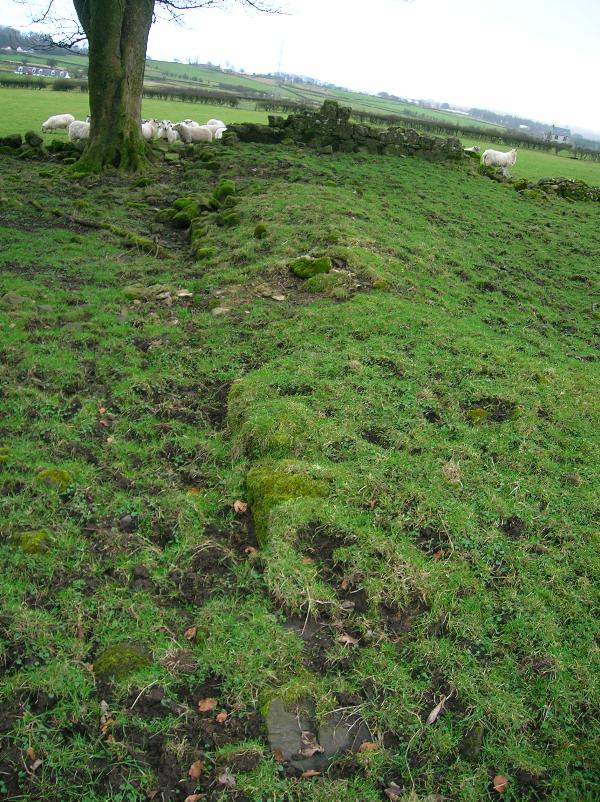
The old Barony and castle, fortalice, or tower house of Hill of Beith lay in the feudal Regality of Kilwinning, within the Baillerie of Cunninghame, and the Sherrifdom of Ayr, now the Parish of Beith, North Ayrshire, Scotland.
The Tironensian monks of Kilwinning Abbey held a Grange or farmland at Beith, given to the abbey by Sir William de Cunninghame in the early 14th century. This ownership involved the monks in extensive agricultural activities and details of the rents from their farms show a considerable annual production of cheese in particular, 268 recorded for one year alone.
The Barony of Beith had been given to the Kilwinning monks by Richard de Morville's wife towards the end of the 12th century and the monks as ecclesiastical barons, with the feudal right of 'pit and gallows', had a court hill where they delivered local justice. This artificial earth mound is still in existence, standing close to Boghall House. The abbey's farm or Grange was most likely at Grangehill, a small estate nearby.
The abbot may have stayed at the Hill of Beith castle when in the locality as this tower may have been the main residential building of the monks' grange, becoming secularised upon the dissolution of the monastery and passing into the hands of the aristocracy. The site is prominent, commanding a fine view of the surrounding countryside and being well defended by the natural slopes, overlooking the old Loch Brand site that protected its north-westerly boundary.
The abbot of Kilwinning feued out the 'Lands of Hill of Beith' to a cadet branch of the Cuninghames of Kilmaurs, Earls of Glencairn, in the person of John Cuninghame, son of Sir William Cuninghame of Caddel, near Giffordland outside Dalry.
At the Reformation, James Hamilton, son of Gavin Hamilton the last abbot of Kilwinning, obtained the twenty-four shilling land of old extent with the teinds of the same of Overhill (Easter) Hill of Beith and then in around 1579 he sold them to Lord Robert Boyd. The Cunninghames however once again held the castle and lands in the early 1600s at the time of Timothy Pont's famous survey of Cunninghame.
Records show that the title 'Beith', 'Hill of Beith' or 'Gudeman of Beith' was applied to John Cuninghame, who was also the ruling elder for the parish of Beith in 1647 and 1649. John was the defender in the process of setting the stipend of the Rev. James Fullarton. Minister of Beith. In 1662 John Cuninghame was heavily fined, the amount being £626 13s 4d, for his support of the religious zealots Colonel Strachan and Colonel Ker who as members of the Covenanter Army had in 1650 caused considerable damage to the lands of the Earl of Queensberry.
The fact that John Cuninghame was recorded as the 'Gudeman of Beith' suggests that he held his lands from the 'true' laird, possibly Lord Boyd as previously mentioned. A feudal laird held land from the King, however a proprietor who held lands from the laird by purchase or otherwise was referred to as the Gudeman of that Ilk; also a man of equal rank or the head of a household.
Hub AI
Hill of Beith Castle AI simulator
(@Hill of Beith Castle_simulator)
Hill of Beith Castle
The old Barony and castle, fortalice, or tower house of Hill of Beith lay in the feudal Regality of Kilwinning, within the Baillerie of Cunninghame, and the Sherrifdom of Ayr, now the Parish of Beith, North Ayrshire, Scotland.
The Tironensian monks of Kilwinning Abbey held a Grange or farmland at Beith, given to the abbey by Sir William de Cunninghame in the early 14th century. This ownership involved the monks in extensive agricultural activities and details of the rents from their farms show a considerable annual production of cheese in particular, 268 recorded for one year alone.
The Barony of Beith had been given to the Kilwinning monks by Richard de Morville's wife towards the end of the 12th century and the monks as ecclesiastical barons, with the feudal right of 'pit and gallows', had a court hill where they delivered local justice. This artificial earth mound is still in existence, standing close to Boghall House. The abbey's farm or Grange was most likely at Grangehill, a small estate nearby.
The abbot may have stayed at the Hill of Beith castle when in the locality as this tower may have been the main residential building of the monks' grange, becoming secularised upon the dissolution of the monastery and passing into the hands of the aristocracy. The site is prominent, commanding a fine view of the surrounding countryside and being well defended by the natural slopes, overlooking the old Loch Brand site that protected its north-westerly boundary.
The abbot of Kilwinning feued out the 'Lands of Hill of Beith' to a cadet branch of the Cuninghames of Kilmaurs, Earls of Glencairn, in the person of John Cuninghame, son of Sir William Cuninghame of Caddel, near Giffordland outside Dalry.
At the Reformation, James Hamilton, son of Gavin Hamilton the last abbot of Kilwinning, obtained the twenty-four shilling land of old extent with the teinds of the same of Overhill (Easter) Hill of Beith and then in around 1579 he sold them to Lord Robert Boyd. The Cunninghames however once again held the castle and lands in the early 1600s at the time of Timothy Pont's famous survey of Cunninghame.
Records show that the title 'Beith', 'Hill of Beith' or 'Gudeman of Beith' was applied to John Cuninghame, who was also the ruling elder for the parish of Beith in 1647 and 1649. John was the defender in the process of setting the stipend of the Rev. James Fullarton. Minister of Beith. In 1662 John Cuninghame was heavily fined, the amount being £626 13s 4d, for his support of the religious zealots Colonel Strachan and Colonel Ker who as members of the Covenanter Army had in 1650 caused considerable damage to the lands of the Earl of Queensberry.
The fact that John Cuninghame was recorded as the 'Gudeman of Beith' suggests that he held his lands from the 'true' laird, possibly Lord Boyd as previously mentioned. A feudal laird held land from the King, however a proprietor who held lands from the laird by purchase or otherwise was referred to as the Gudeman of that Ilk; also a man of equal rank or the head of a household.
Recent media