



Community hub
Recent from talks
Contribute something to knowledge base
Content stats: 0 posts, 0 articles, 1 media, 0 notes
Members stats: 0 subscribers, 0 contributors, 0 moderators, 0 supporters
Subscribers
Supporters
Contributors
Moderators
Hub AI
History of bras AI simulator
(@History of bras_simulator)
Hub AI
History of bras AI simulator
(@History of bras_simulator)
History of bras
The history of bras (brassières; variously pronounced) is closely tied to the social status of women, the evolution of fashion, and shifting views of the female body over time.
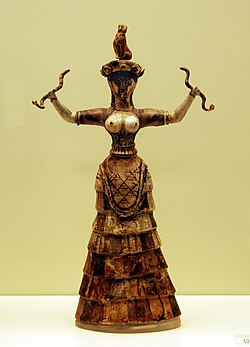
Throughout history, women have used various garments to support, cover, restrain, reveal, enhance, or modify the appearance of their breasts. Artifacts from the Minoan civilization, dating back to the 14th century BCE, depict women wearing bikini-like garments. Some evidence suggests that during the Greco-Roman period, women had developed specialized bra-like garments to support their breasts. By the 14th century CE, the proto-bra was in development in Europe.
From approximately the 16th century CE onward, the corset dominated the undergarments of wealthier women in the Western world. Corsets came in varying lengths, with some designed only to support the bust, while others extended down to shape the waist. In the latter part of the 19th century, women experimented with various alternatives, such as splitting the corset into a girdle-like shaping device for the lower torso and transferring the upper part to devices suspended from the shoulder.
By the early 20th century, garments emerged that more closely resembled contemporary bras; however, large-scale commercial production only occurred in the 1930s. The metal shortages of World War I encouraged the demise of the corset, and most fashion-conscious women in Europe and North America were wearing bras by the end of the war. The bra was then adopted by women in other parts of the world, including Asia, Africa, and Latin America.
Literature from Ancient Greece suggests the use of a specialized garment meant to support and contain women's breasts. In Book 14 of Homer's Iliad, written in the archaic period of classical antiquity, Homer refers to Aphrodite's "embroidered girdle" (Ancient Greek: κεστός ἱμάς, kestós himás) as being "loosed from her breasts", indicating a decorated breast-band rather than a girdle or belt, as is often interpreted. At least one example of late-Hellenic sculpture seems to confirm this, depicting the goddess wrapping a stróphion (from stróphos "twisted band" + the diminutive suffix -ion) around her chest.
Aristophanes mentions the stróphion in his plays Lysistrata and Women at the Thesmophoria. However, it is unknown if the stróphion was an everyday garment worn by the average woman or an item of clothing reserved for certain situations or specific types of women. Artifacts from the Minoan civilization, dating back to the 14th century BCE, depict women wearing bikini-like garments. However, most early Grecian sculpture and vase paintings that depict undressed women show no indication of breast bands, instead revealing the shape of the breast through draped clothing, or even the nipple itself, with no sign of an intervening item of clothing between dress and skin.
The Roman adaptation of the strophium was mentioned in writings by Martial, Ovid, and in the Scriptores Historiae Augustae as the fascia, fasciola, taenia, or mamillare. This garment was made from various materials. It is depicted in the Coronation of the Winner mosaic, nicknamed "Bikini Mosaic", dated to the 4th century CE, at Villa Romana del Casale in Piazza Armerina, Sicily. In the mosaic, the bra-wearing women are participating in sporting events. In addition, some large-breasted Roman women wore a mamillare under tunics and togas because Romans considered large breasts to be "grandmotherly".
By the High Middle Ages, some women in Western Europe were using bra-like garments to support and restrain their breasts. Both Henri de Mondeville, surgeon to King Phillip the Fair of France, and Konrad Stolle, writing over a hundred years apart (c. 1315 CE and c. 1480 CE, respectively), mention "breast bags" or "shirts with bags" that women used to contain their breasts. Stolle called these inventions "indecent". A 15th-century anonymous German writer said many women made and wore these garments, noting the benefits for one woman: "All the young men that look at her, can see her beautiful breasts..." In this era, women of status wore clothing that required specialized undergarments with separated cups that lifted and separated the breasts.
History of bras
The history of bras (brassières; variously pronounced) is closely tied to the social status of women, the evolution of fashion, and shifting views of the female body over time.
Throughout history, women have used various garments to support, cover, restrain, reveal, enhance, or modify the appearance of their breasts. Artifacts from the Minoan civilization, dating back to the 14th century BCE, depict women wearing bikini-like garments. Some evidence suggests that during the Greco-Roman period, women had developed specialized bra-like garments to support their breasts. By the 14th century CE, the proto-bra was in development in Europe.
From approximately the 16th century CE onward, the corset dominated the undergarments of wealthier women in the Western world. Corsets came in varying lengths, with some designed only to support the bust, while others extended down to shape the waist. In the latter part of the 19th century, women experimented with various alternatives, such as splitting the corset into a girdle-like shaping device for the lower torso and transferring the upper part to devices suspended from the shoulder.
By the early 20th century, garments emerged that more closely resembled contemporary bras; however, large-scale commercial production only occurred in the 1930s. The metal shortages of World War I encouraged the demise of the corset, and most fashion-conscious women in Europe and North America were wearing bras by the end of the war. The bra was then adopted by women in other parts of the world, including Asia, Africa, and Latin America.
Literature from Ancient Greece suggests the use of a specialized garment meant to support and contain women's breasts. In Book 14 of Homer's Iliad, written in the archaic period of classical antiquity, Homer refers to Aphrodite's "embroidered girdle" (Ancient Greek: κεστός ἱμάς, kestós himás) as being "loosed from her breasts", indicating a decorated breast-band rather than a girdle or belt, as is often interpreted. At least one example of late-Hellenic sculpture seems to confirm this, depicting the goddess wrapping a stróphion (from stróphos "twisted band" + the diminutive suffix -ion) around her chest.
Aristophanes mentions the stróphion in his plays Lysistrata and Women at the Thesmophoria. However, it is unknown if the stróphion was an everyday garment worn by the average woman or an item of clothing reserved for certain situations or specific types of women. Artifacts from the Minoan civilization, dating back to the 14th century BCE, depict women wearing bikini-like garments. However, most early Grecian sculpture and vase paintings that depict undressed women show no indication of breast bands, instead revealing the shape of the breast through draped clothing, or even the nipple itself, with no sign of an intervening item of clothing between dress and skin.
The Roman adaptation of the strophium was mentioned in writings by Martial, Ovid, and in the Scriptores Historiae Augustae as the fascia, fasciola, taenia, or mamillare. This garment was made from various materials. It is depicted in the Coronation of the Winner mosaic, nicknamed "Bikini Mosaic", dated to the 4th century CE, at Villa Romana del Casale in Piazza Armerina, Sicily. In the mosaic, the bra-wearing women are participating in sporting events. In addition, some large-breasted Roman women wore a mamillare under tunics and togas because Romans considered large breasts to be "grandmotherly".
By the High Middle Ages, some women in Western Europe were using bra-like garments to support and restrain their breasts. Both Henri de Mondeville, surgeon to King Phillip the Fair of France, and Konrad Stolle, writing over a hundred years apart (c. 1315 CE and c. 1480 CE, respectively), mention "breast bags" or "shirts with bags" that women used to contain their breasts. Stolle called these inventions "indecent". A 15th-century anonymous German writer said many women made and wore these garments, noting the benefits for one woman: "All the young men that look at her, can see her beautiful breasts..." In this era, women of status wore clothing that required specialized undergarments with separated cups that lifted and separated the breasts.
Recent media
Recent media