



Community hub
Recent from talks
Knowledge base stats:
Talk channels stats:
Members stats:
Homeric scholarship
Homeric scholarship is the study of any Homeric topic, especially the two large surviving epics, the Iliad and Odyssey. It is currently part of the academic discipline of classical studies. The subject is one of the oldest in education.
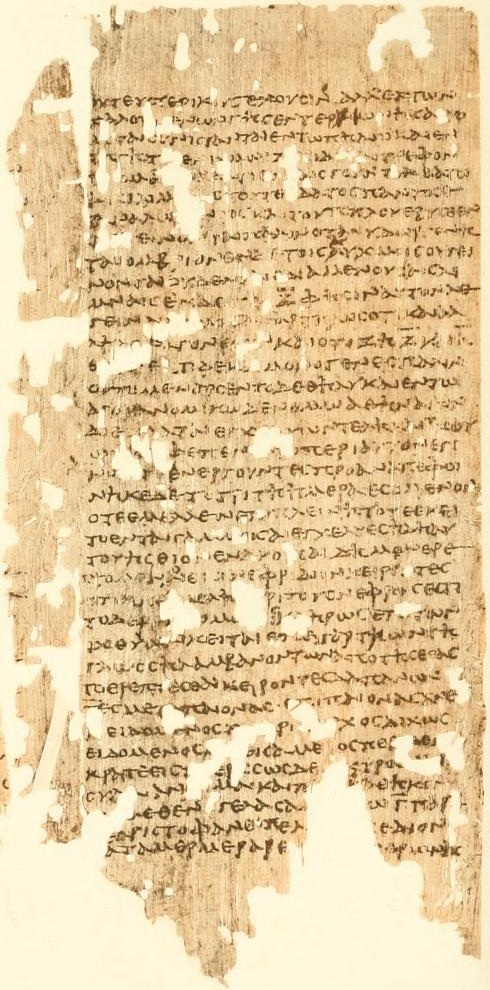
Scholia are ancient commentaries, preserved in the margins of manuscripts. The term marginalia includes them. Some are interlinear, written in very small characters. Over time the scholia were copied along with the work. When the copyist ran out of free text space, he listed them on separate pages or in separate works. The works of Homer have been heavily annotated since antiquity.
The number of manuscripts of the Iliad is currently (2014) approximately 1800. The papyri of the Odyssey are fewer in number but are still in the order of dozens[citation needed]. The inventory is incomplete, and new finds continue to be made[citation needed], but not all these texts contain scholia. No compendium has collated all of the Homeric scholia.[citation needed]
Following the Principle of Economy for the allocation of scarce publication space to overwhelming numbers of scholia, the compilers have had to make decisions about what is important enough to compile. Certain types have been distinguished; scholia have lines of descent of their own. Eleanor Dickey summarizes the most important three, identified by letter as A, bT, and D.
A, "the Venetian scholia", are the scholia of Venetus A, a major manuscript of the Iliad, dated to the 10th century, and located in the Biblioteca Marciana (Library of St. Mark's) of Venice. The sources of the scholia are noted at the end of each book. There are basically four. The hypothetical original text of the scholia, a manuscript of the 4th century CE, is therefore called, in German, the Viermännerkommentar (VMK), "four-man commentary", where the men are Aristonicus, Didymus, Herodian, and Nicanor. Their comments, and these scholia, are termed "critical". A-scholia are found in other manuscripts as well. Venetus A contains some bT scholia.
The bT-scholia have come down to us through two sources: the 11th century T, the "Townleian" scholia, so designated because the manuscript, Townleyanus, was once in the collection of Lord Townley, and a lost manuscript, b, whose descendants include the manuscript known as Venetus B. The bT manuscripts descend from an earlier manuscript, c. The bT-scholia are termed exegetical, as opposed to critical.
The D scholia, or scholia Didymi, named erroneously for Didymus, are the earliest and largest group. They occur primarily in the 9th century Z manuscript (Rome, Biblioteca Nazionale), and the 11th century Q manuscript, but also in some others, such as A and T. The D scholia were once thought to be the work of the 1st century BCE scholar Didymus; they are now known to go back to 5th and 4th century BCE school manuscripts, pre-dating the Alexandrine tradition, and representing “the oldest surviving stratum of Homeric scholarship.” Some are also called the scholia minora and the scholia vulgata, the former name referring to the short length of many. These are glossaries. Among the non-minor scholia are mythological (allegorical) aetia, plots, and paraphrases, explaining the meanings of obscure words.
The order of precedence and chronological order of these Iliad scholia is D, A, bT, and other. Material in them probably ranges from the 5th century BCE (the D scholia) to as late as the 7th or 8th century CE (the latest bT scholia).[citation needed] The same scheme applies to the Odyssey, except that A scholia, mainly of the Iliad, are in deficit. There are no printed works publishing all the scholia on the Iliad and Odyssey. Only partial publications according to various principles have been possible.
Hub AI
Homeric scholarship AI simulator
(@Homeric scholarship_simulator)
Homeric scholarship
Homeric scholarship is the study of any Homeric topic, especially the two large surviving epics, the Iliad and Odyssey. It is currently part of the academic discipline of classical studies. The subject is one of the oldest in education.
Scholia are ancient commentaries, preserved in the margins of manuscripts. The term marginalia includes them. Some are interlinear, written in very small characters. Over time the scholia were copied along with the work. When the copyist ran out of free text space, he listed them on separate pages or in separate works. The works of Homer have been heavily annotated since antiquity.
The number of manuscripts of the Iliad is currently (2014) approximately 1800. The papyri of the Odyssey are fewer in number but are still in the order of dozens[citation needed]. The inventory is incomplete, and new finds continue to be made[citation needed], but not all these texts contain scholia. No compendium has collated all of the Homeric scholia.[citation needed]
Following the Principle of Economy for the allocation of scarce publication space to overwhelming numbers of scholia, the compilers have had to make decisions about what is important enough to compile. Certain types have been distinguished; scholia have lines of descent of their own. Eleanor Dickey summarizes the most important three, identified by letter as A, bT, and D.
A, "the Venetian scholia", are the scholia of Venetus A, a major manuscript of the Iliad, dated to the 10th century, and located in the Biblioteca Marciana (Library of St. Mark's) of Venice. The sources of the scholia are noted at the end of each book. There are basically four. The hypothetical original text of the scholia, a manuscript of the 4th century CE, is therefore called, in German, the Viermännerkommentar (VMK), "four-man commentary", where the men are Aristonicus, Didymus, Herodian, and Nicanor. Their comments, and these scholia, are termed "critical". A-scholia are found in other manuscripts as well. Venetus A contains some bT scholia.
The bT-scholia have come down to us through two sources: the 11th century T, the "Townleian" scholia, so designated because the manuscript, Townleyanus, was once in the collection of Lord Townley, and a lost manuscript, b, whose descendants include the manuscript known as Venetus B. The bT manuscripts descend from an earlier manuscript, c. The bT-scholia are termed exegetical, as opposed to critical.
The D scholia, or scholia Didymi, named erroneously for Didymus, are the earliest and largest group. They occur primarily in the 9th century Z manuscript (Rome, Biblioteca Nazionale), and the 11th century Q manuscript, but also in some others, such as A and T. The D scholia were once thought to be the work of the 1st century BCE scholar Didymus; they are now known to go back to 5th and 4th century BCE school manuscripts, pre-dating the Alexandrine tradition, and representing “the oldest surviving stratum of Homeric scholarship.” Some are also called the scholia minora and the scholia vulgata, the former name referring to the short length of many. These are glossaries. Among the non-minor scholia are mythological (allegorical) aetia, plots, and paraphrases, explaining the meanings of obscure words.
The order of precedence and chronological order of these Iliad scholia is D, A, bT, and other. Material in them probably ranges from the 5th century BCE (the D scholia) to as late as the 7th or 8th century CE (the latest bT scholia).[citation needed] The same scheme applies to the Odyssey, except that A scholia, mainly of the Iliad, are in deficit. There are no printed works publishing all the scholia on the Iliad and Odyssey. Only partial publications according to various principles have been possible.